

Back surgery can carry serious risks, including infection and paralysis. For people considering alternatives to back surgery in Bismarck, Mandan, and surrounding local communities, conservative care may include physical therapy, chiropractic care, medication, and lifestyle changes; some conditions may also have non-fusion surgical options. The right path depends on the diagnosis, symptoms, and how the condition affects daily function.
It’s understandable to want relief without rushing into a major procedure. At Boundless Full Body Chiropractic & Rehab, we help patients understand their options. This article explains nonsurgical treatments, outlines non-fusion alternatives, and describes what can help determine whether conservative care may suit your situation. You’ll also learn about potential surgery risks and when symptoms call for prompt medical evaluation.
Key Takeaways
- Conservative care may include physical therapy, medication, and lifestyle changes, with treatment chosen to address your symptoms and daily function.
- Non-fusion procedures and nonsurgical treatments are different options; the diagnosis and treatment goals help determine which may be considered.
- Imaging findings, symptom severity, overall health, and response to prior care all help assess whether nonsurgical treatment may suit your condition.
- Understand the potential risks and recovery demands of surgery, and seek medical evaluation when back pain persists or symptoms worsen.
Lifestyle changes, physical therapy, and medications
Conservative care may combine movement, therapy, and medication to address back symptoms and support daily function. The right approach depends on the cause of pain and how you respond to treatment.
Physical and Occupational Therapy
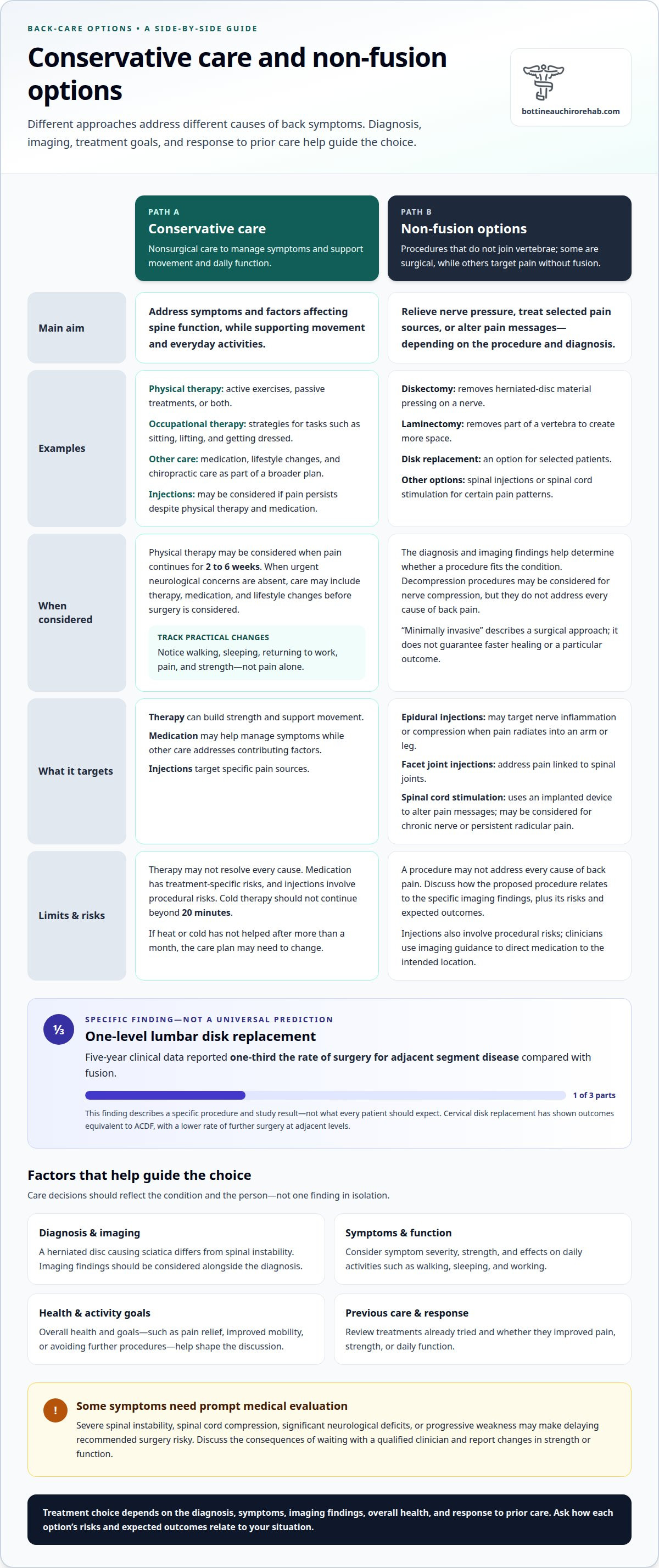
Physical therapy may be considered when pain continues for 2 to 6 weeks. A therapist can use active exercises, passive treatments, or both to address pain sources and musculoskeletal function. Occupational therapy focuses on daily tasks, such as sitting, lifting, or getting dressed, and can develop ways to manage those activities with less strain.
In North Dakota, referral requirements depend on the insurer and care setting. Referral pathways for physical therapy and spine specialists can differ from patient to patient.
Medication and Injection Options
Medication may help manage symptoms, while a broader care plan can address factors contributing to spine pain. Injections may be considered when pain persists despite physical therapy and medication. Epidural injections target nerve inflammation or compression when pain radiates into an arm or leg; facet joint injections address pain linked to spinal joints.
North Dakota Medicaid and private insurance coverage depends on the plan, diagnosis, service, and any authorization requirements. Coverage for physical therapy, injections, and other treatments can vary.
Benefits and Risks of Conservative Care
Physical therapy can build strength and support movement, while medication may help manage pain as other care addresses its cause. Injections target specific pain sources. Chiropractic care may be considered as part of a broader plan. Each option has limits: therapy may not resolve every cause, medication can carry treatment-specific risks, and injections involve procedural risks. Discuss how each option fits the diagnosis, symptoms, and activity goals before treatment begins. Cold therapy should not continue beyond 20 minutes, and if heat or cold hasn’t helped after more than a month, the care plan may need to change.
Non-fusion alternatives to spinal fusion
Spinal fusion joins vertebrae, while some procedures relieve pressure on nerves without joining bones. The appropriate approach depends on the diagnosis, imaging findings, and treatment goals.
Diskectomy and laminectomy are decompression procedures. A diskectomy removes material from a herniated disc pressing on a nerve; a laminectomy removes part of a vertebra to create more space. These procedures may be considered for nerve compression, but they do not address every cause of back pain. Minimally invasive describes a surgical approach, not a guarantee of faster healing or a particular outcome. Ask how the proposed procedure relates to the specific imaging findings.
Disk replacement is another alternative for selected patients. Five-year clinical data for one-level lumbar disk replacement showed one-third the rate of surgery for adjacent segment disease compared with fusion. Cervical disk replacement has shown outcomes equivalent to ACDF, with a lower rate of further surgery at adjacent levels. Adjacent-level problems can occur after ACDF, so discuss the potential risks and benefits with your surgeon. These figures describe specific procedures and findings, not every patient’s expected result.
Spinal injections can target a source of pain without fusion. Facet joint injections address pain originating in spinal joints, while epidural steroid injections may be used for pain linked to herniated discs, sciatica, or spinal stenosis. Clinicians use fluoroscopy, contrast dye, and X-ray technology to guide medication to the intended location. Spinal cord stimulation uses an implanted device to alter pain messages and may be considered for chronic nerve pain or persistent radicular pain.
For a second opinion before surgery, arrange an evaluation with another spine surgeon. Bring the diagnosis, imaging, reports, previous treatments, and proposed procedure. Ask how the risks and expected outcomes of each option compare.
Delaying recommended surgery can be risky with severe spinal instability, spinal cord compression, significant neurological deficits, or progressive weakness. These conditions may require surgery. Discuss the potential consequences of waiting with a qualified clinician, and report changes in strength or function.
For non-surgical support with movement and function, spinal rehabilitation may be part of a conservative care plan.
Assessing candidacy for non-surgical treatment
Choosing care starts with the diagnosis, symptom severity, imaging findings, overall health, and activity goals. Together, these factors help determine whether conservative care or surgery better fits the condition.
For people weighing alternatives to back surgery in North Dakota, previous treatments and their effects on daily function matter. A herniated disc causing sciatica differs from spinal instability. Orthopedic spine surgeons diagnose conditions such as disc herniation and sciatica, then discuss suitable techniques and surgical options.
Trying Treatment Before Surgery
When urgent neurological concerns aren’t present, care may include physical therapy, medication, and lifestyle changes before surgery is considered. Track practical changes, such as walking, sleeping, or returning to work, as well as pain and strength. If function doesn’t improve, the care team can review the diagnosis, imaging, and next steps with a spine specialist.
Comparing Treatment Outcomes
Outcomes depend on the condition and your goals, such as pain relief, improved mobility, or avoiding further procedures. Conservative care can improve function without an operation; surgery may be recommended when treatment hasn’t helped or a structural problem needs correction. The National Institute of Neurological Disorders and Stroke cautions that evidence is limited on which back surgery procedures work best for particular indications. This makes diagnosis-specific comparisons important.
Costs for nonsurgical treatment in North Dakota vary by service, duration of care, and insurance coverage. Treatment type and number of visits affect the total, so costs depend on the individual case.
Local options may include physical therapy clinics, chiropractic practices, pain management services, and orthopedic spine clinics. Physical therapists support rehabilitation, while orthopedic spine surgeons assess surgical concerns. People comparing alternatives to back surgery in North Dakota can use these different roles to identify the kind of evaluation they need.
Severe spinal instability, spinal cord compression, significant neurological deficits, or progressive weakness can require surgical evaluation. These findings may shift the balance from continued conservative care toward timely surgery.
Conservative and nonsurgical treatment before surgery
Most lower back pain can be treated without surgery. One research estimate says alternative measures can treat 92% of back injuries and degenerative spine conditions. A practical plan matches treatment to the suspected cause, then tracks changes in pain, movement, and daily function. For example, a clinician may combine physical therapy with medication rather than rely on medication alone.
Spinal injections are often considered after physical therapy and medication, but before surgery. An epidural injection may target nerve inflammation or compression when pain radiates into an arm or leg. For chronic spine pain, radiofrequency ablation uses heat to interrupt signals from specific nerves. Relief may last six months to over a year, while the National Institute of Neurological Disorders and Stroke notes that radiofrequency denervation provides temporary relief and has limited supporting evidence.
Other options have different evidence and goals. Acupuncture needles are left in place for about 20 minutes, and five or ten treatment periods may help assess its value for pain management. Platelet-rich plasma and other biologic-based therapies are also used as regenerative approaches. The National Institute of Neurological Disorders and Stroke describes intradiscal electrothermal therapy as having questionable benefit, so treatment claims deserve careful review.
Recovery planning matters even when surgery is avoided. Extended bed rest isn’t encouraged because muscles may deteriorate; a care plan balances rest with exercise. Research suggests 20 to 40 percent of back surgeries aren’t successful, but that figure doesn’t predict an individual outcome or show that avoiding needed surgery is safer. Progressive weakness, spinal cord compression, or severe instability can change the decision and call for timely surgical assessment.
For a structured conservative plan, explore spinal rehabilitation options focused on movement and function.
Response over time can help guide next steps, but keep expectations measured: radiofrequency ablation for chronic spine pain may provide relief lasting six months to over a year. Five or ten acupuncture treatment periods are recommended before making a final decision about its effectiveness for pain management.
After other options have been explored, a pain management specialist can help determine whether back surgery is appropriate. This discussion can weigh symptom relief, mobility, and daily function against the limits of nonsurgical care, supporting a decision tailored to the individual.
Boundless Full Body Chiropractic & Rehab
Boundless Full Body Chiropractic & Rehab in Bottineau provides conservative care for back-related pain and movement limits. Its services include Full-Body Adjustments, Physical Therapy, and Sports Injury Rehab to support rehabilitation goals without surgical procedures. Extremity Adjusting can also address movement concerns beyond the back.
Consider this care when you’re looking for professional support with mobility, musculoskeletal symptoms, or recovery from a sports injury. A suitable plan depends on your condition and treatment goals. Urgent symptoms such as progressive weakness or spinal cord compression require prompt medical evaluation rather than routine conservative care.
Contact Boundless Full Body Chiropractic & Rehab in Bottineau to discuss conservative care for your needs.
Choose a Clear Next Step for Your Back
For people considering alternatives to back surgery in North Dakota, the next step is to connect the care plan to a specific goal. That might mean standing through a work shift, returning to a favorite activity, or moving with fewer limitations. A clear goal makes it easier to discuss what treatment should address and how progress will be assessed.
Bring your concerns and priorities to the conversation. Explain which movements are hardest, which daily tasks you want to regain, and what you hope to understand before deciding about surgery. Boundless Full Body Chiropractic & Rehab in Bottineau can help you explore conservative care suited to your movement and recovery needs. Your symptoms, diagnosis, and response to care guide which approach is appropriate.
Contact Boundless Full Body Chiropractic & Rehab to discuss a practical next step. You deserve a care plan that takes your goals seriously and helps you move forward with greater clarity.
Frequently Asked Questions
When should I consider back surgery?
Consider a surgical evaluation when conservative treatments haven’t relieved pain or improved function, or when serious spinal findings are present. Severe spinal instability, spinal cord compression, significant neurological deficits, and progressive weakness may require surgery. Seek medical evaluation promptly for worsening weakness or changes in neurological function. A specialist can assess your diagnosis, imaging, overall health, and previous treatments before discussing appropriate options.
What non-surgical treatments can help back pain or spinal conditions?
Options may include physical therapy, medication, lifestyle changes, chiropractic care, and selected injections. The combination depends on the diagnosed condition and the activities symptoms limit. For example, a treatment plan might aim to make walking or work tasks easier while addressing pain. A clinician can assess the cause of symptoms and whether a particular treatment fits your health and recovery goals.
When should back surgery be considered versus conservative treatment?
Conservative treatment is often considered when symptoms can be managed without correcting an urgent structural problem, especially if function responds to care. Surgery may enter the discussion when pain and limitations persist despite treatment, or when findings such as progressive weakness or spinal cord compression raise concern. The decision weighs diagnosis, imaging, symptom severity, overall health, previous care, and the risks of waiting.


