

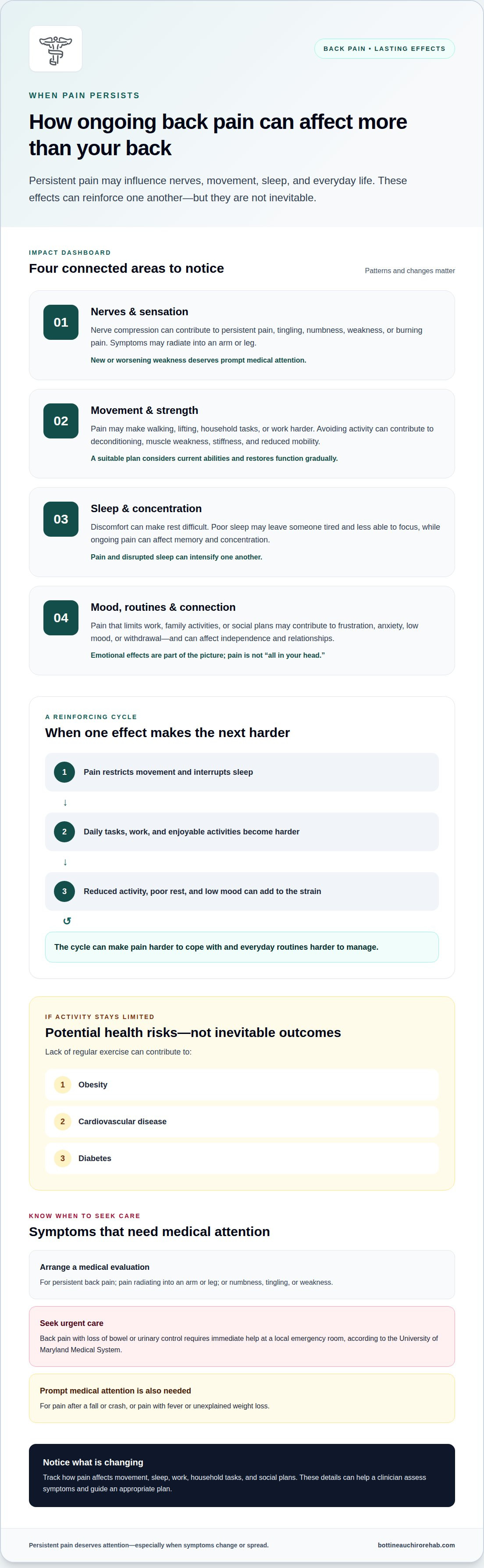
The long-term effects of untreated back pain can include persistent discomfort, reduced mobility, and nerve-related symptoms that spread into the legs or other areas. Ongoing pain may also interfere with sleep, work, and everyday activities. These effects aren’t inevitable, but pain that continues or changes deserves attention.
It can be tempting to wait for back pain to settle, especially when it begins as a mild ache. But if it lingers, worsens, or starts radiating, its effects can extend beyond your back and make everyday movement harder.
Learn how persistent pain may affect your nerves, mobility, sleep, and daily life, and which symptoms need prompt medical attention. Understanding what may be driving the pain can help you choose an informed next step.
Key Takeaways
- Notice when back pain persists, changes, or begins to travel beyond your back; these patterns can help guide your next steps.
- Learn how ongoing pain and changes in the nervous system may contribute to heightened sensitivity and persistent symptoms.
- Understand how pain, disrupted sleep, low mood, and reduced daily function can reinforce one another.
- See how limiting movement may affect strength and mobility, and why gradual return to activity matters.
Can Nerve Compression Cause Back Pain That Won’t Go Away?
Yes. Nerve compression can contribute to persistent back pain, tingling, numbness, or weakness. The cause and pattern of symptoms matter, so an assessment can guide an appropriate plan.
Defining Chronic Back Pain
Chronic back pain can persist beyond the expected healing period, while chronic pain may continue after an injury or illness should have healed. These timeframes help distinguish lingering symptoms from short-term pain. Persistent pain may involve changes in how the nervous system processes pain, so its duration and effect on movement are important details to discuss during an evaluation.
Nerve Changes and Lasting Weakness
Chronic pain can involve changes in the brain and spinal nerves, which may keep pain signals active after an initial injury. Nerve compression can also cause weakness, numbness, tingling, or burning pain. Untreated nerve pain may cause lasting damage or disability, according to the University of Maryland Medical System. Back pain with new or worsening weakness deserves prompt medical attention, especially when symptoms extend into an arm or leg.
Effects on Daily Activities and Work
Chronic back pain can make routine tasks harder, from walking and sleeping to lifting at work. Stiffness or persistent aching may limit movement, while difficulty concentrating can affect work duties and family activities. If pain is reducing independence or disrupting daily life, an early assessment can help identify its cause and shape a treatment plan around function, symptom management, and movement.
Symptoms Requiring Medical Attention
Arrange a medical evaluation for persistent pain, pain that radiates into an arm or leg, or symptoms such as numbness, tingling, or weakness. A clinician typically considers your symptom history and examines movement and nerve-related signs; further tests depend on those findings and the suspected cause. Seek urgent care for back pain with loss of bowel or urinary control. The University of Maryland Medical System advises immediate help at a local emergency room for this symptom. Pain after a fall or crash, or pain with fever or unexplained weight loss, also needs prompt medical attention.
What Happens If Pain is Not Treated?
Persistent back pain can affect more than movement. It may disrupt sleep, mood, concentration, and relationships. These effects can reinforce one another, making everyday routines harder to manage.
The Pain and Disability Cycle
Pain can restrict movement, interrupt sleep, and make work or household tasks difficult. When daily activities shrink, frustration and low mood may grow, while poor sleep can make pain harder to cope with. This cycle matters because disability can extend beyond physical limits, affecting independence and social connection. An early assessment can help identify possible causes and guide a treatment plan focused on function and relief.
Mental Health, Sleep, and Focus
Chronic pain is commonly associated with anxiety, depression, insomnia, and other sleep disturbances. A difficult night can leave someone tired and less able to focus at work; ongoing pain may also affect memory and concentration. Pain and sleep can feed into each other: discomfort makes rest harder, and too little sleep can intensify the pain experience. Tell a healthcare professional when these changes accompany back pain, especially if they interfere with daily responsibilities.
Anxiety, Depression, and Isolation
When pain makes social plans, family activities, or work harder, a person may begin withdrawing. Isolation can reduce opportunities for support and enjoyable routines, while anxiety about movement or worsening symptoms may further narrow daily life. This pattern doesn’t mean pain is “all in your head.” It shows why physical symptoms and emotional effects both matter. A healthcare professional can assess persistent pain and discuss appropriate care, including therapy when relevant.
Back pain treatment costs in the United States depend on the evaluation, care needed, and treatment plan; pricing is provided after a quote request. If persistent pain is limiting movement or daily function, explore physical therapy for back pain as a potential part of care.
Health risks associated with reduced physical activity
Back pain may make movement feel difficult, but avoiding activity can affect health beyond the back. The risks depend partly on how much pain limits everyday movement.
Limited Activity and Sedentary Living
Severe or persistent symptoms can lead someone to avoid exercise, walking, or routine tasks such as carrying groceries. Less movement may contribute to physical deconditioning, muscle weakness, stiffness, and reduced mobility. These changes can make it harder to return to activity, reinforcing a sedentary lifestyle. Left unaddressed, pain and reduced movement may affect health in several ways.
A lack of regular exercise can contribute to obesity, cardiovascular disease, and diabetes. These are potential risks, not inevitable outcomes for everyone with back pain. Pain management should account for why movement is limited and the person’s current abilities. An evaluation can help identify underlying factors and guide appropriate care, rather than treating inactivity as a personal failing.
Effects on Daily Life and Relationships
Reduced activity can make everyday routines harder. For example, someone who avoids bending may struggle with laundry, while pain during walking may limit errands or time with family. Chronic and severe back pain can also interfere with work and other activities. As tasks become harder, people may lose independence or withdraw from plans, affecting relationships and quality of life.
Notice which activities have changed: walking, household chores, work duties, or social plans. These examples show how symptoms affect function and give a clinician useful context when assessing pain. The goal isn’t to push through severe pain or assume every activity is safe. An appropriate plan considers the cause, current movement limits, and ways to restore function gradually.
When pain reduces activity, its effects can reach beyond physical fitness. Less movement may weaken muscles and increase stiffness, while missed work or family activities can add stress. Addressing these changes early keeps the focus on practical needs, such as walking comfortably, completing daily tasks, and staying connected with others.
Back pain radiating to other body parts
Back pain that travels into an arm or leg can point to irritated or compressed nerves, rather than just a sore muscle. The location and pattern of symptoms help explain why pain may extend beyond the back and affect mobility.
Sciatica is one example: severe back pain with shooting pain down a leg may signal it, and sciatica often results from a herniated disk. Nerve-related pain can feel burning, tingling, or electric, and may also involve weakness or numbness. These sensations differ from localized soreness after lifting, though symptoms alone can’t identify the exact cause.
The path of the pain matters. A clinician will want to know whether it reaches the buttock, thigh, calf, foot, or arm, and whether coughing, standing, or certain movements change it. These details can help distinguish a possible nerve issue from other causes, including joint, muscle, or spine conditions such as arthritis. They also show how symptoms affect your ability to walk, stand, sleep, or complete daily tasks.
Radiating pain can reduce quality of life when a short walk triggers leg pain or sitting becomes difficult. Persistent numbness, tingling, burning, or weakness merits medical evaluation, especially if symptoms worsen or interfere with movement. Sudden loss of bowel or bladder control alongside back pain requires immediate emergency care. Don’t dismiss a major change in strength or control as ordinary back discomfort.
Tracking where pain travels and what changes it gives a doctor useful context. Note whether symptoms follow one leg, reach the foot, or come with weakness; describe how they affect walking and standing. An evaluation can help identify the likely cause and guide care suited to your symptoms. Seek an assessment for radiating back pain when nerve-like symptoms persist or limit everyday movement.
Boundless Full Body Chiropractic & Rehab
Boundless Full Body Chiropractic & Rehab in Bottineau, North Dakota, provides chiropractic care and spinal rehabilitation to help patients recover from injuries, avoid surgery, and get back to work, sports, and life. If discomfort persists, returns, or affects everyday activity, an evaluation can help determine whether Full-Body Adjustments or physical therapy fits your needs. Sports Injury Rehab may be appropriate when symptoms follow a sports injury.
Care should match the problem and your goals, such as moving more comfortably or returning to regular activities. For sudden weakness, loss of bowel or bladder control, or another urgent warning sign, seek emergency medical care rather than waiting for a routine appointment.
Contact Boundless Full Body Chiropractic & Rehab to discuss your back pain and possible next steps.
Take the Next Step Toward Moving With Confidence
Persistent back pain can make it tempting to keep adjusting your routine around discomfort. Instead, use the changes you’ve noticed to start a focused conversation about your movement goals and concerns. Understanding the long term effects of untreated back pain can help you recognize when waiting is no longer serving your daily life.
Boundless Full Body Chiropractic & Rehab in Bottineau provides Extremity Adjusting, Full-Body Adjustments, and Sports Injury Rehab when clinically appropriate. These services may be worth discussing when back or related musculoskeletal symptoms limit your activity. If symptoms are severe or urgent, seek appropriate medical care without delay.
When you’re ready to talk through a next step, contact Boundless Full Body Chiropractic & Rehab. A clear conversation about what’s changing can help you move forward with greater confidence.
Frequently Asked Questions
What Is Chronic Pain?
Chronic pain persists for 12 weeks or longer, even after an initial injury or cause of acute low back pain has been treated. It can also continue beyond the time an illness or injury would usually be expected to heal. For example, ongoing aching after a back strain has healed may warrant assessment, particularly if it affects sleep, movement, or everyday responsibilities.
Can Herniated Discs Cause Long-Term Spine Pain?
Yes. A herniated disk can contribute to persistent back pain, especially if it irritates nearby nerves. Symptoms may include pain that travels into a leg, tingling, numbness, or weakness. A herniated disk is also a common cause of sciatica. Because these symptoms can have different causes, a clinician considers their pattern and examination findings before recommending a plan.
Could Degenerative Disc Disease Be Causing Persistent Back Pain?
Degenerative disc disease can be associated with persistent back pain, and symptoms may become more severe as the condition advances. However, back pain alone doesn’t establish that diagnosis. A clinician considers your symptoms, medical history, and examination findings to assess possible causes. Describe which movements worsen the pain, whether it spreads, and how it affects daily activities.
What are the long-term effects of untreated back pain?
Ongoing back pain may limit movement, disrupt sleep, and make work or daily tasks harder. If irritated nerves are involved, symptoms can include radiating pain, numbness, tingling, or weakness. Reduced activity may also affect strength and mobility. Effects vary with the cause and symptoms, so persistent or changing pain is a reason to seek an evaluation rather than assume it will resolve.
Can chronic back pain lead to reduced mobility or disability?
Yes. Persistent pain can restrict movement and interfere with work, walking, or household activities. When someone avoids activity because movement hurts, muscle weakness and stiffness may develop, making ordinary tasks harder. Disability isn’t inevitable. Notice changes such as needing help with errands or struggling to stand, and discuss these functional limits during an assessment.
What are the risks of untreated back pain from a herniated disc or spinal stenosis?
Persistent pain from a herniated disk or spinal stenosis may affect movement and occur alongside nerve symptoms such as pain radiating into a leg, numbness, tingling, or weakness. Symptoms alone can’t confirm which condition is responsible. Seek prompt medical assessment for worsening weakness or persistent nerve-related symptoms. Loss of bowel or bladder control with back pain requires immediate emergency care.


