

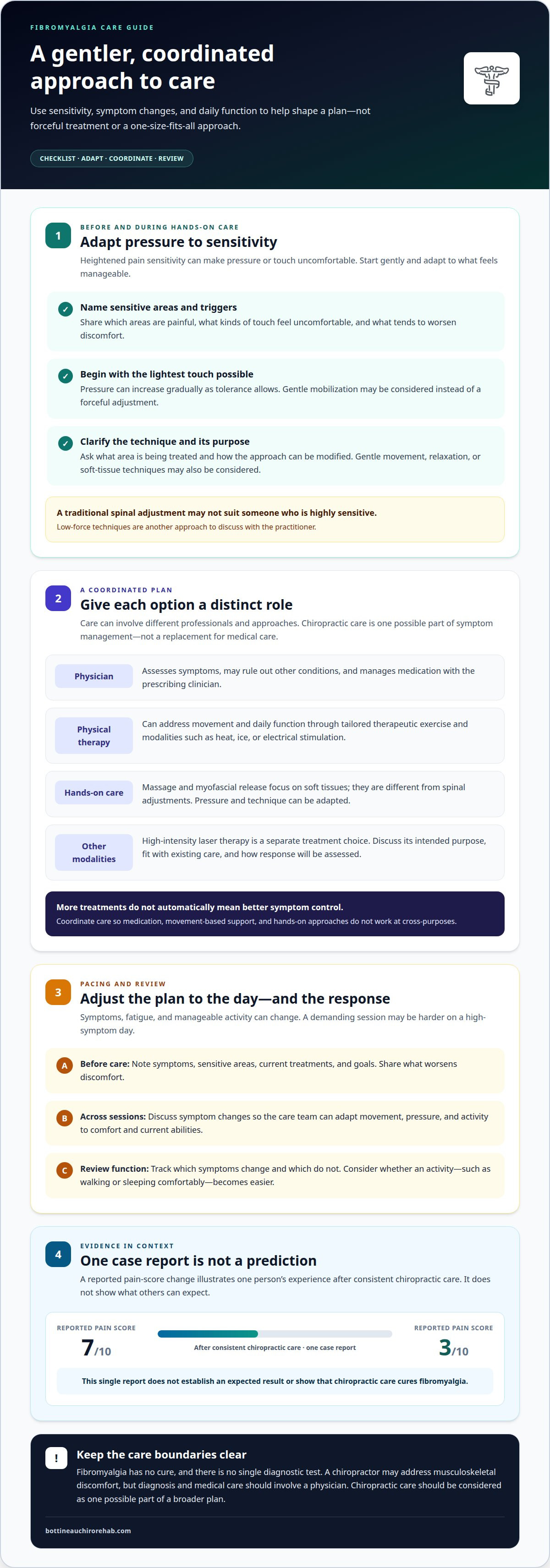
Chiropractic care may support fibromyalgia symptom management, but it doesn’t cure the condition. Whether a chiropractor can help with fibromyalgia depends on the person and the goal of care. One case report described a pain score dropping from 7/10 to 3/10 after consistent chiropractic care, but that result doesn’t show what others can expect.
Living with widespread pain and heightened sensitivity can make hands-on treatment feel daunting. Fibromyalgia can involve increased sensitivity to pressure, so gentle approaches may be more appropriate than forceful adjustments. Chiropractic care is best considered as one possible part of a broader treatment plan, not a replacement for medical care.
This article explains what research says about chiropractic care for fibromyalgia, what it may and may not help with, and how it can fit alongside options such as physical therapy, gentle exercise, and medication. You’ll also learn why careful pacing matters when pain sensitivity is part of the picture.
Key Takeaways
- Learn why fibromyalgia diagnosis doesn’t rely on a single test and why similar symptoms can make assessment complex.
- Understand central sensitization and how an overactive pain response can affect the way the body processes touch and other signals.
- See how chiropractic care can fit alongside physical therapy, medication, and support from other health professionals.
- Explore what a case report can contribute to the research picture, and why it’s only one piece of evidence.
Can Chiropractic Care Cure Fibromyalgia?
No. Fibromyalgia has no cure, and chiropractic care doesn’t cure it. Carefully adapted care may address musculoskeletal discomfort as one part of symptom management.
Chiropractic and Spinal Adjustments
Chiropractic adjustments use hands or instruments to apply controlled force to joints; spinal adjustments focus on joints in the spine. Their aim is to affect joint movement and related discomfort, not to cure fibromyalgia or realign the whole body.
For someone with fibromyalgia, the key question is whether an adjustment fits their symptoms and sensitivity. A practitioner can explain the intended treatment, the area involved, and how the approach may be modified. Gentle movement, relaxation, or soft-tissue techniques such as massage may also be considered as part of care.
Adjusting Care for Sensitivity
Fibromyalgia can involve heightened pain sensitivity, so treatment should start with the lightest touch possible and increase pressure gradually as tolerance allows. Traditional spinal adjustments may not suit someone who is highly sensitive; low-force techniques offer another approach.
Tell the chiropractor which areas are painful, what kinds of touch feel uncomfortable, and how symptoms respond during care. The practitioner can adapt pressure and technique to avoid overloading sensitive tissues. For example, care may begin with gentle mobilization rather than a forceful adjustment.
A chiropractor can address musculoskeletal symptoms, but fibromyalgia diagnosis and medical care should involve a physician. There’s no single test for fibromyalgia, and assessment may include ruling out other conditions.
In the United States, treatment cost depends on the case and is provided after a quote request; insurance coverage varies by plan and service. Review your benefits and ask your insurer how your policy handles chiropractic treatment.
Choose a chiropractor prepared to adapt techniques for pain sensitivity and coordinate care with your physician. Before a visit, note your symptoms, sensitive areas, current treatments, and goals. Share what worsens your discomfort so the care approach can account for it.
Combining chiropractic care with physical therapy, massage, and medication
A coordinated plan gives each treatment a distinct role without treating chiropractic adjustments as a replacement for medical care. For example, a physician may manage medication while physical therapy addresses movement and daily function. The plan should account for symptoms, fatigue, and how much activity feels manageable.
Physical therapy can include therapeutic exercise and physical modalities such as heat, ice, or electrical stimulation. A therapist can tailor movement work to a patient’s comfort and current abilities. For people with fibromyalgia, pacing matters: a demanding session may be harder to manage on a high-symptom day. Discussing symptom changes across sessions helps the care team adjust the approach.
Massage and myofascial release are hands-on options that focus on soft tissues. Myofascial release uses sustained, gentle pressure or stretching around connective tissue. These methods are not the same as spinal adjustments. Tell the practitioner which areas are sensitive and whether touch increases discomfort, so the technique and pressure can be adapted.
High-intensity laser therapy is a separate modality, not another name for massage or chiropractic care. Its use should be discussed as a distinct treatment choice within the overall plan. Ask what it is intended to address, how it fits with existing care, and how the response will be assessed. Avoid assuming that adding more treatments automatically means better symptom control.
Medication decisions belong with the prescribing clinician. Share changes in pain, sleep, fatigue, and activity with that clinician and the other professionals involved. This helps keep medication, physical therapy, and hands-on care coordinated rather than working at cross-purposes. For a plan that includes movement-based support, explore physical therapy options as part of a broader approach.
Fibromyalgia symptoms and central sensitization
Fibromyalgia can affect pain, energy, sleep, and thinking at the same time. Common symptoms include widespread muscle pain, fatigue, sleep problems, headaches, memory difficulties, anxiety, depression, and heightened sensitivity to pressure. That mix can disrupt daily function: a light touch that feels comfortable to someone else may hurt. The pattern also helps explain why care focused on one painful muscle or tissue area may not address every symptom.
Central sensitization describes an overactive nervous system responding to signals that would not normally cause pain. Repeated nerve stimulation can change how the spinal cord and brain process signals, while pain receptors may overreact to painful and nonpainful input. For example, pressure from clothing or a gentle touch may feel unusually intense. This sensitivity is different from a simple alignment problem, so chiropractic treatment should not be framed as correcting the cause of fibromyalgia.
Symptoms can start after physical trauma, infection, or surgery, and they can also develop without a clear trigger. Infections, genetics, and emotional or physical events are among the factors associated with changes linked to fibromyalgia. Similar symptoms can occur with other conditions, including arthritis, which can make diagnosis challenging. There is no single test; a physician assesses symptoms and may rule out other conditions.
Symptom relief and treatment response vary. Chiropractic care may address specific musculoskeletal concerns, such as back or neck pain, but that is not the same as relieving widespread fibromyalgia symptoms. The practical measure is function: whether an activity, such as walking or sleeping comfortably, becomes easier. Keep track of which symptoms change and which do not. Women are twice as likely as men to develop fibromyalgia, according to the National Institute of Arthritis and Musculoskeletal and Skin Diseases, but individual symptoms still differ.
Research on chiropractic care for fibromyalgia
Research offers a limited basis for judging chiropractic care’s effects on fibromyalgia. A case report illustrates a possible response, but it cannot predict results for everyone.
Research Findings on Chiropractic Care
A case report described a veteran whose fibromyalgia pain score fell from 7/10 to 3/10 after consistent chiropractic care. That change is an individual observation, not proof that chiropractic techniques reliably reduce widespread chronic pain. A single case also cannot show whether the same result would occur for another person, or which part of care mattered most.
Use this finding as a reason for measured expectations, not as a promise. If considering treatment, define a practical goal, such as making a daily activity easier, and track whether it changes over time.
Comparison With Evidence-Based Treatments
Chiropractic care is a complementary therapy, not a replacement for medical treatment. Medication, exercise, and relaxation can help manage fibromyalgia symptoms; a chiropractor’s techniques may be considered alongside those approaches, not instead of them. This distinction matters because fibromyalgia can affect several areas of daily life, while hands-on care addresses only part of a broader treatment plan.
For comparison, discuss the purpose of each treatment with the professionals involved. Medication decisions belong with the prescribing clinician, while exercise can be paced around symptoms and function. Chiropractic care may focus on musculoskeletal discomfort. No single case report establishes that it works as well as, or better than, these other approaches.
A useful next step is to track pain, sleep, fatigue, and activity before and during care. Share those changes with your healthcare providers. If symptoms worsen or daily function declines, revisit the plan with them rather than assuming more sessions are the answer.
To explore how chiropractic techniques may fit into coordinated care, review chiropractic care options.
Boundless Full Body Chiropractic & Rehab
Boundless Full Body Chiropractic & Rehab in Bottineau provides chiropractic care for musculoskeletal concerns that may accompany fibromyalgia. Full-body and extremity adjustments can address joint and movement issues, while care should complement, not replace, medical treatment for fibromyalgia.
If pain, stiffness, or sensitivity is affecting daily movement, discuss your symptoms and treatment goals during a visit. The right approach depends on your comfort and the concerns being addressed. Be clear about sensitive areas and which activities have become difficult.
Contact Boundless Full Body Chiropractic & Rehab in Bottineau to discuss whether chiropractic care may fit alongside your existing fibromyalgia treatment plan.
Choose a Next Step That Fits Your Goals
Decide what you want daily life to look like with better symptom management. It might mean moving more comfortably, returning to a valued activity, or finding a manageable way to address a specific area of musculoskeletal discomfort. A clear goal can guide a practical conversation about how chiropractic care fits alongside your medical treatment plan.
If you’re considering whether a chiropractor can help with fibromyalgia, focus on the concern you want addressed and how sensitive areas respond to touch. Boundless Full Body Chiropractic & Rehab offers Extremity Adjusting, Full-Body Adjustments, and Sports Injury Rehab in Bottineau. These services address movement and musculoskeletal concerns, while fibromyalgia care should remain coordinated with your medical providers. Your goals and comfort can shape the discussion about an appropriate approach.
For a conversation about your movement concerns and care options, contact Boundless Full Body Chiropractic & Rehab. A thoughtful next step can help you make informed choices and move forward at a pace that feels right for you.
Frequently Asked Questions
What Is Fibromyalgia?
Fibromyalgia is a chronic condition associated with widespread pain and heightened sensitivity. Fatigue, sleep problems, headaches, and difficulty concentrating can also occur. Symptoms may overlap with other conditions, including arthritis, so a clinician considers the whole pattern rather than one sore area. There is no single diagnostic test; a physician evaluates symptoms and may rule out other possible causes.
Is Chiropractic Treatment Safe for Fibromyalgia Patients?
Chiropractic treatment needs to account for each person’s pain sensitivity and response to touch. Someone who finds light pressure painful should tell the practitioner before hands-on care begins. Gentle, low-force techniques may be considered instead of stronger pressure. During a visit, report discomfort as it occurs so the practitioner can adjust the technique or stop that part of the session.
Can chiropractic care relieve fibromyalgia pain or other symptoms?
Whether a chiropractor can help with fibromyalgia depends on the symptoms being addressed and how the person responds to care. Chiropractic treatment may address specific musculoskeletal concerns, such as localized neck discomfort, but it isn’t a cure and may not change fatigue or sleep problems. Track a daily activity, such as turning your head comfortably, to see whether that specific concern changes.
What does research say about chiropractic treatment for fibromyalgia?
Research includes a case report describing improvement for one person, but that report cannot establish how well treatment works across a wider group. It also cannot identify which technique caused the change. Treat the finding as limited evidence, not a forecast. Discuss chiropractic care as a possible addition to a plan that may also include exercise, medication, and medical follow-up.
Which chiropractic treatments are used for fibromyalgia, and how do they work?
Care may involve gentle joint mobilization, soft-tissue techniques, patient education, and lifestyle support. Mobilization uses controlled movement; soft-tissue work focuses on muscles and surrounding tissues. For example, a practitioner might adapt pressure around a sensitive shoulder. These approaches aim to address comfort or movement, not to cure fibromyalgia or replace medical care.
Is spinal manipulation safe for people with fibromyalgia?
If you’re asking, “Can a chiropractor help with fibromyalgia?” spinal manipulation is not automatically suitable for everyone. Traditional, forceful adjustments may not fit a person with pronounced pressure sensitivity. Discuss symptoms and current medical care before deciding whether manipulation belongs in the treatment plan. A practitioner can consider gentler techniques and adapt the approach based on your response during care.


