

A tight, band-like headache isn’t always something you should simply push through. Tension headaches commonly cause dull or moderate pressure on both sides of the head, sometimes with tightness in the neck or shoulders. Options for tension headache treatment in Rugby, ND, depend on how often the pain occurs and what may be triggering it.
It makes sense to want relief that eases discomfort and helps you return to your routine. This guide explains how tension headaches may feel, which at-home approaches and pain relievers may help, and how movement, posture, stress, and sleep can affect symptoms. You’ll also learn when recurring headaches may need closer evaluation, and how rehabilitation may support care when muscle tension or movement issues are involved. The goal is practical: understand your options and know what to consider next.
Key Takeaways
- Recognize common tension headache signs, such as pressure across the head and tightness in the neck or shoulders.
- Gentle movement, posture adjustments, and targeted physical therapy may help ease muscle strain linked to headaches.
- Stress, sleep, and frequent use of pain relievers can affect headache patterns, so notice what may be influencing yours.
- When discomfort keeps returning or affects daily activities, explore appropriate care options, including rehabilitation support.
What is a tension headache?
A tension headache often feels like steady pressure or tightness around the head. Recognizing its symptoms, duration, and pattern can help distinguish it from migraine. Tension headache treatment in Rugby, ND depends on how often the pain occurs and what may be contributing to it.
Common Tension Headache Symptoms
Tension headache symptoms commonly include mild to moderate pain on both sides, with pressure across the forehead or around the back of the head and neck. Muscle tenderness, fatigue, and difficulty concentrating may also occur. These effects matter because they can guide practical strategies, such as rest or gentle massage, and help you describe symptoms during an assessment.
Diagnosis considers the overall pattern, not just one symptom. A tension-type headache typically has at least two features, such as pain on both sides or a pressing, tightening sensation. It usually involves no nausea or vomiting and no more than one of light or sound sensitivity. Acetaminophen may ease pain, but relief alone doesn’t identify the headache type or distinguish it from migraine. Describing your symptoms and their pattern clearly can help guide a conversation about care.
Symptom Duration and Warning Signs
An episode can last from 30 minutes to seven days, so note when the pain starts and ends. Duration helps show whether headaches are occasional or frequent. Tension-type headaches occurring on 1-14 days per month for more than 3 months are frequent episodic; those occurring on 15 or more days per month for more than 3 months are chronic. These patterns help frame a clinical discussion.
Notify a health care provider about vision changes, difficulty speaking, limb numbness or tingling, difficulty walking, sudden fever with headache, or a marked change in severity. A sudden or severe headache may warrant urgent medical attention. These warning signs need prompt attention rather than routine headache strategies.
In Rugby, ND, visit costs depend on the evaluation and care involved; the fee is provided after a quote request. Insurance coverage depends on your plan and whether the service is covered, so review your benefits for the care you’re considering.
Exercise, physical therapy, and ergonomic changes
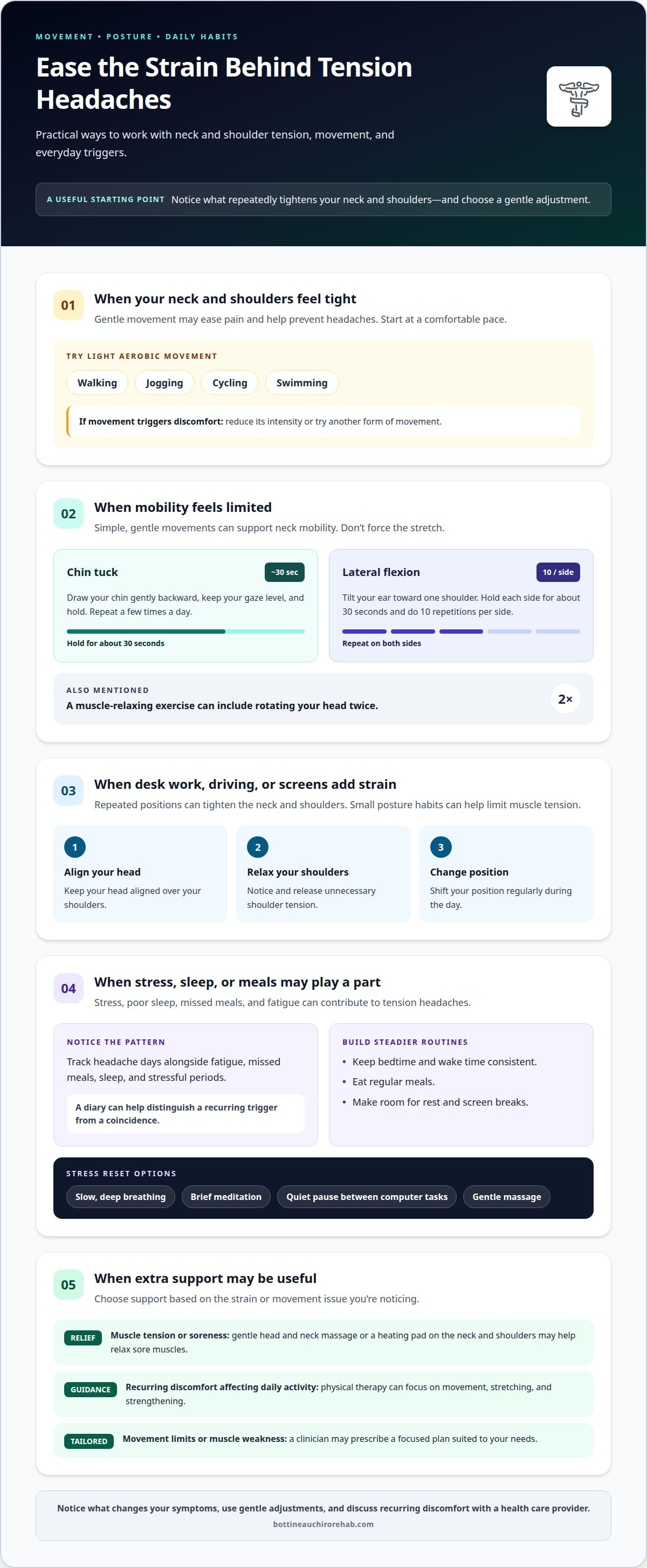
Movement, muscle conditioning, and posture adjustments can address physical strain linked to tension headaches. Focus on activities or positions that repeatedly tighten your neck and shoulders.
Light aerobic exercise, such as walking, jogging, cycling, or swimming, may ease pain and help prevent headaches. Start at a comfortable pace and notice whether movement changes your symptoms. If an activity triggers discomfort, reduce its intensity or try another form of movement. Community exercise opportunities can make regular activity easier to maintain. Counseling may also help people manage stress that interferes with movement or recovery.
Yes. Massage, physical therapy, heat, and relaxation techniques may provide relief. Gentle head and neck massage can ease muscle tension. Physical therapy can focus on movement, stretching, and strengthening. A heating pad on the neck and shoulders may help relax sore muscles.
Simple exercises can support mobility. For a chin tuck, draw your chin gently backward, keep your gaze level, and hold for about 30 seconds. Repeat it a few times a day. For lateral flexion, tilt your ear toward one shoulder, hold each side for about 30 seconds, and do 10 repetitions per side. Move without forcing the stretch. A muscle-relaxing exercise can also include rotating your head twice.
Ergonomics matter during desk work, driving, and screen use. Keep your head aligned over your shoulders, relax your shoulders, and change position regularly. Good posture helps limit muscle tension. Physical therapy can tailor exercises and movement strategies to your needs. Consider physical therapy if recurring discomfort affects daily activity. A clinician may prescribe a focused plan when movement limits or muscle weakness need attention. Discuss medication side effects as part of your care.
Stress reduction and sleep hygiene
Stress, poor sleep, missed meals, and fatigue can all contribute to tension headaches. A busy day at the computer followed by a skipped lunch, for example, may leave you tired and tense. Track these factors alongside headache days to spot patterns and focus prevention efforts.
Build a steadier routine around sleep and meals. Keep bedtime and wake time consistent, and don’t let work or screen use crowd out rest. Eat regular meals instead of going long stretches without food. If fatigue or a missed meal often comes before head pain, record it in a headache diary. These notes can help distinguish a recurring trigger from a coincidence.
Stress management works best as part of everyday life, not only as a response to pain. Try slow, deep breathing, a brief meditation, or a quiet pause between computer tasks. Relaxation exercises can reduce physical tension and help you cope when pressure builds. Gentle massage may also ease stress and headache discomfort. Choose a method you can repeat consistently, then note whether it changes your symptoms.
Frequent or chronic headaches can disrupt sleep, concentration, and daily routines, while poor sleep may increase fatigue. Notice whether worry, work demands, or emotional strain make symptoms harder to manage. Depression can also affect sleep and energy, so mention persistent mood changes to a health care provider. A simple plan might pair regular meals with a screen break and a calming bedtime routine.
Ibuprofen or aspirin may relieve headache pain, but they don’t replace attention to sleep, meals, or stress patterns. Tension headaches usually aren’t accompanied by nausea or vomiting, so discuss nausea or a changing symptom pattern with a health care provider. Connecting daily habits with headache timing gives you practical information to guide prevention and care.
Over-the-counter pain relievers
For mild to moderate tension headache pain, over-the-counter medications are often a first treatment option. Acetaminophen, aspirin, ibuprofen, and naproxen sodium are commonly used. Follow product directions, and consider your health conditions and other medications when choosing a pain reliever. For tension headache treatment in Rugby, ND, a health care provider can help you consider how medication fits your symptoms and health history.
Some combination pain relievers contain caffeine along with aspirin, acetaminophen, or both. These may ease pain more effectively than a single ingredient for some people, but frequent use of caffeine or pain medicine can contribute to rebound headaches. Check labels for active ingredients to avoid accidentally taking the same medicine in multiple products. Meditation, relaxation, and other non-medication techniques can complement pain relief strategies.
Overuse can make headaches more frequent or lead to medication-overuse headache. Regularly taking pain medicine for headaches more than 3 days a week can contribute to rebound headaches. Simple analgesics used on 15 or more days per month for more than 3 months carry a high risk; combination analgesics used on 10 or more days per month also carry a high risk. Track use as well as headache days.
If headaches persist despite occasional pain relievers or become chronic tension headaches, a health care professional may consider other therapies. Preventive medicines can include tricyclic antidepressants, while severe or chronic cases may involve prescription muscle relaxants or anti-seizure medications. These approaches differ from as-needed OTC relief and may take several weeks to work. Frequent pain, including pressure across the forehead, is useful context to share during an evaluation.
Physical therapy can support non-medication care by addressing movement and muscle factors that may contribute to recurring discomfort. If headaches keep interrupting daily activities, consider discussing physical therapy as part of a broader care plan. Explore physical therapy options to discuss care that fits your needs.
Boundless Full Body Chiropractic & Rehab
Boundless Full Body Chiropractic & Rehab in Bottineau, North Dakota, provides full-body adjustments and spinal rehabilitation for musculoskeletal concerns that may accompany recurring head, neck, or shoulder tension. If discomfort overlaps with movement limits or physical strain, these services offer options focused on musculoskeletal care. Extremity adjusting and sports injury rehabilitation are also available when relevant and clinically appropriate.
Headaches can have different causes, so chiropractic care isn’t a substitute for medical assessment of warning symptoms or a changing headache pattern. Consider musculoskeletal care when muscle or movement concerns are part of what you’re experiencing. Contact Boundless Full Body Chiropractic & Rehab to discuss your concerns and next steps.
Choose a next step that fits your needs
Recurring head pain can affect work, rest, and daily routines. Use your symptom pattern and its impact on everyday activities to guide your next conversation about care. If neck or shoulder discomfort also limits movement, mention that when discussing tension headache treatment in Rugby, ND. A clear picture of your symptoms can help focus the discussion on relevant options.
Musculoskeletal care may be useful when movement or physical strain accompanies your headaches. Boundless Full Body Chiropractic & Rehab in Bottineau offers Extremity Adjusting, Full-Body Adjustments, and Sports Injury Rehab. Care should match the concern, and headache warning symptoms need medical attention rather than routine rehabilitation.
Take the next step at your pace. Contact Boundless Full Body Chiropractic & Rehab to discuss your concerns and explore whether its care fits your needs. A thoughtful plan can help you move forward with greater clarity.
Frequently Asked Questions
What causes it?
Tension headaches can be associated with stress, muscle tension, anxiety, or poor posture. Other possible triggers include jaw clenching, teeth grinding, eye strain, fatigue, overexertion, alcohol, and too much caffeine or caffeine withdrawal. A cold, flu, sinus infection, or dental problem may also coincide with head pain. A headache diary can help connect episodes with routines or triggers.
Can you prevent it?
Prevention often involves identifying patterns and addressing factors that contribute to headaches. Record headache dates, start and end times, and medication use. Note related details, such as a long computer session or a missed meal. Regular exercise, adequate sleep, relaxation practice, and attention to posture are useful strategies to discuss with a health care provider.
How is it treated?
Treatment may combine short-term pain relief with habits that reduce contributing strain. Over-the-counter pain relievers are commonly used first, while resting in a quiet room or using a cool cloth may help some people. If headaches recur, discuss their frequency and impact with a health care provider. The pattern can guide whether other therapies or preventive care may be appropriate.
How long will it last?
A tension-type headache episode may last from 30 minutes to seven days. The actual course varies, so record when the pain begins, eases, or returns. Headaches occurring on 15 or more days per month for more than 3 months fit the chronic tension-type pattern described in clinical criteria. Frequent or changing episodes deserve discussion with a health care provider.
What are its common symptoms?
Common symptoms include dull or moderate pain, often on both sides of the head, with pressure or tightness around the forehead or neck. Muscle tenderness, fatigue, and difficulty concentrating can also occur. Tension-type headache typically involves no nausea or vomiting and no more than one of light or sound sensitivity. A distinctly different pattern may need evaluation.
What can your health care provider do?
A health care provider can review your symptom history, medication use, and headache diary, then assess whether the pattern fits tension-type headache. Brain imaging isn’t routinely needed for a stable, typical headache pattern with a normal examination, though it can help rule out serious causes when indicated. Report vision changes, speech difficulty, limb numbness, difficulty walking, or a sudden severe change promptly.


