

A forward-tilted head can place substantial strain on your neck: at a 60-degree tilt, the force on the neck is 60 pounds. Text neck symptoms and treatment often involve neck and shoulder tightness, upper-back discomfort, stiffness, and headaches. Numbness or tingling can also occur in more severe cases. The discomfort is linked to holding your head forward while looking down at a device.
If your neck aches after scrolling or working at a screen, the discomfort is real, and your daily posture may be contributing. “Text neck” is a commonly used term for forward-head posture associated with prolonged device use, not an official medical diagnosis. Understanding possible causes can help you choose sensible next steps.
This article explains how looking down can strain your neck, which symptoms to watch for, and how posture changes, breaks, exercises, and physical therapy may help. You’ll also learn when persistent or concerning symptoms warrant medical attention.
Key Takeaways
- Recognize how forward-head posture can load the neck and contribute to discomfort beyond the neck itself.
- Adjust device position and take regular breaks to reduce time spent looking down.
- See how guided exercises and posture changes can support recovery and help address muscle imbalances.
- Know which symptoms, including tingling or pain spreading into an arm, deserve prompt medical attention.
How can physical therapy help?
Physical therapy can address posture habits, restricted movement, and muscle imbalances associated with text neck. Knowing about text neck symptoms and treatment can help you recognize when posture changes alone aren’t enough. Ongoing strain may contribute to muscle deconditioning, reduced balance control, or chronic pain.
Posture and Device Positioning
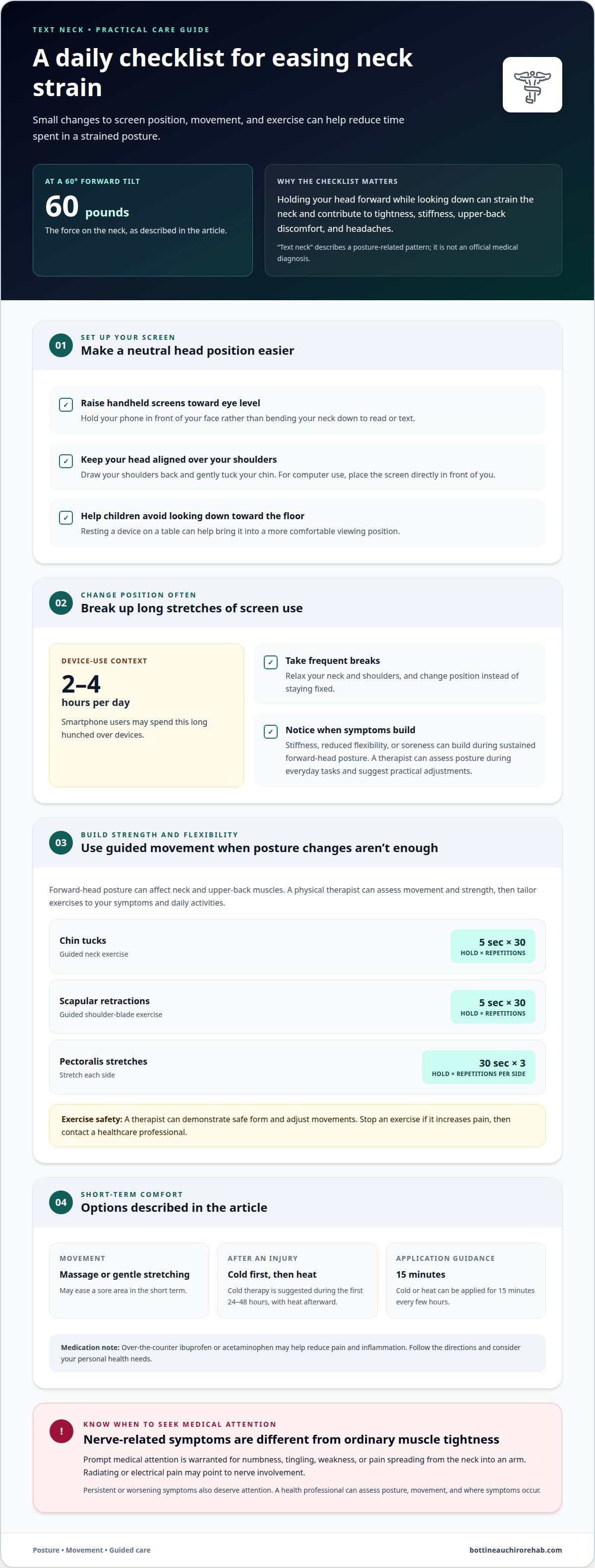
Keep your head aligned over your shoulders by raising a handheld screen toward eye level. This reduces time spent bending your neck forward while texting or reading. Hold your phone in front of your face, draw your shoulders back, and gently tuck your chin. For children, resting a device on a table can help prevent looking down toward the floor.
Duration matters too: smartphone users may spend two to four hours per day hunched over devices. Take frequent breaks, relax your neck and shoulders, and change position instead of staying fixed. A physical therapist can assess your posture during everyday tasks and guide practical adjustments. These changes also apply to computer use, where placing the screen directly in front of you helps limit repeated downward tilting.
Muscle Imbalances and Physical Strain
With forward-head posture, deep neck flexor muscles may become elongated while muscles at the back of the neck shorten. Sustained poor posture can weaken neck and upper-back muscles, making routine screen use a repeated source of strain. A physical therapist can assess your movement and strength, then guide exercises to address patterns affecting your neck.
Neck pain can follow prolonged positioning or physical strain, including holding your head forward while reading. At a 60-degree forward tilt, the force on the neck is 60 pounds. That added load helps explain why discomfort may build during device use. A therapist can guide a posture exercise program when independent changes aren’t helping. The text neck symptoms and treatment approach may include exercises and stretches to improve strength and flexibility.
Persistent or worsening symptoms deserve attention. Text neck may contribute to muscle deconditioning and imbalances in the neck, upper back, and chest, and may reduce balance control. Ongoing forward-head posture has been associated with chronic cervical radiculopathy and premature arthritis. Numbness, tingling, weakness, or pain spreading into an arm warrants prompt medical attention.
How Does Text Neck Cause Pain?
Text neck can develop when prolonged device use keeps the head forward, increasing pressure on neck structures. Assessment considers posture, symptoms, and movement. Yes, it can cause headaches, shoulder pain, numbness, or tingling; radiating arm pain may point to nerve involvement.
Neck, Shoulder, and Upper-Back Pain
Neck, shoulder, and upper-back pain can build around these connected areas during sustained forward-head posture. Greater neck flexion increases pressure on the neck and its structures, so holding a phone low may aggravate soreness. Symptoms can include stiffness, reduced flexibility, and muscle spasms. Changing position and taking breaks can interrupt the strain of staying in one posture.
Poor posture can leave your neck and shoulders tense even after you stop using a device. You may notice morning stiffness or restricted movement that eases, then returns later in the day. Pain may feel sharp when you look down or burning after prolonged neck flexion. A clinician can assess how your posture and movement relate to these symptoms.
Headaches and Eye Pain
Headaches associated with text neck may arise from neck muscle spasms or referred pain. Some people feel discomfort at the base of the skull while using a phone or computer. Eye pain should not automatically be attributed to neck posture. Note when it occurs and whether it accompanies neck stiffness or device use.
Nerve-related symptoms need separate attention. Tingling, numbness, weakness, or electrical, radiating pain from the neck into the shoulders and arms can occur with cervical radiculopathy. A pinched nerve may develop when a ruptured disc presses on a nerve, and some pinched nerves may require surgery. These symptoms differ from ordinary muscle tightness. Arrange medical evaluation for radiating pain or weakness.
“Text neck” describes a posture-related pattern, not an official medical diagnosis. A health professional can review where and when pain occurs, check neck movement and posture, and assess whether symptoms extend into an arm. Recurring neck pain, headaches, shoulder stiffness, and tingling can have different causes, so a careful assessment helps guide the next step.
Physical therapy and other treatments
Relief often involves changing device habits, moving and stretching, and addressing sore muscles. A physical therapist can assess neck motion and strength, then tailor exercises to your symptoms and daily activities. This can be useful when stiffness continues despite posture changes or neck muscles feel weak. A practical plan builds strength and flexibility while addressing habits and physical stress linked to discomfort.
Guided exercises can target the neck, shoulder blades, and chest. Common examples include chin tucks, scapular retractions, and pectoralis stretches. The cited routine holds chin tucks and scapular retractions for 5 seconds, repeating each 30 times; it holds pectoralis stretches for 30 seconds, repeated 3 times on each side. A therapist can demonstrate safe form and adjust the movements. Stop an exercise if it increases pain, then contact a healthcare professional.
Massage or gentle stretching may ease a sore area in the short term. After an injury, cold therapy is suggested during the first 24-48 hours, with heat afterward. Cold or heat can be applied for 15 minutes every few hours. Over-the-counter ibuprofen or acetaminophen may help reduce pain and inflammation. Choose medication according to its directions and personal health needs.
Movement matters beyond a clinic session. Regularly completing prescribed stretches and strengthening exercises at home supports longer-term relief, while frequent breaks from devices reduce sustained strain. A physical therapist can guide a program that restores more normal motion and addresses muscle imbalance. Text neck improvement may take 4-8 weeks after reducing poor posture and rebuilding motion and strength. More persistent symptoms need assessment, especially when pain spreads or daily movement remains limited.
Text neck symptoms
Text neck symptoms often appear during or after looking down at a phone, tablet, or computer. Sharp pain when lowering your head may be an early clue. Other signs include neck muscle aches, spasms, stiffness, or tightness across the shoulders and upper back. Symptoms may become more noticeable after extended screen use, then ease when you change position or rest.
Notice where discomfort starts and how it changes. Soreness limited to the neck and shoulders differs from tingling that travels into an arm or hand. Numbness, tingling, weakness, or electric-like pain can signal nerve involvement rather than tired muscles. Note whether symptoms begin while reading on a mobile device, using a computer, or holding your head forward for another task.
Headaches can accompany neck symptoms. Muscle spasms or pain referred from the neck may contribute to headaches at the base of the skull, particularly during device use. You may notice morning stiffness or reduced neck movement that improves, then returns later in the day. Tracking the timing, location, and activity linked to discomfort can help you describe the pattern during an assessment.
Symptoms alone don’t prove that device posture is the cause. Neck pain can have other sources, so repeated or worsening discomfort deserves attention. Seek prompt medical care for neck pain with a severe headache, fever, nausea, dizziness, unintended weight loss, or symptoms spreading into an arm or hand. If pain continues beyond a week, arrange medical attention rather than relying only on breaks or stretching.
For persistent symptoms linked with screen use, get help assessing your neck discomfort. A clear account of your symptoms, such as pain after computer work or tingling in one hand, can help guide the next steps.
Boundless Full Body Chiropractic & Rehab
Boundless Full Body Chiropractic & Rehab in Bottineau provides chiropractic care and rehabilitation for musculoskeletal concerns. If device-related soreness keeps returning or interferes with everyday activities, physical therapy may support mobility, strength, and practical posture changes. Full-Body Adjustments are also available as part of care, when clinically appropriate.
Care should fit your symptoms and goals. Share when your neck pain occurs, which movements worsen it, and whether you notice stiffness or symptoms spreading into an arm. These details help guide a discussion about appropriate next steps. Contact Boundless Full Body Chiropractic & Rehab in Bottineau to discuss your neck concerns.
Build a neck-care plan that fits your day
Make neck care workable beyond a single screen break. Notice which everyday activities bring discomfort back, then discuss those patterns during an assessment. A plan grounded in your routine can focus on the movements and goals that matter to you instead of relying on guesswork. Consistency is more useful than trying to change everything at once.
For text neck symptoms and treatment, Boundless Full Body Chiropractic & Rehab in Bottineau provides care tailored to your needs. Services include extremity care and sports injury rehabilitation alongside broader musculoskeletal care. If symptoms persist or interfere with daily movement, discuss your concerns and possible next steps with the practice.
Contact Boundless Full Body Chiropractic & Rehab to start that conversation. Take the next step at a pace that feels manageable, and keep moving toward greater comfort.
Frequently Asked Questions
How is neck pain managed or treated?
Neck pain management depends on its cause, severity, and effect on movement. For discomfort linked with device posture, care may combine screen-use adjustments, guided stretching, and strengthening exercises. A physical therapist can assess neck motion and muscle function, then tailor a program. If pain follows an injury, keeps returning, or comes with symptoms spreading into an arm, seek medical evaluation instead of relying only on home care.
How long does it take to heal text neck syndrome?
Recovery varies with symptom severity and whether forward-head posture continues. Mild cases may settle within a few days or weeks with rest, stretching, and improved posture habits. Text-neck symptoms may take 4-8 weeks to improve after reducing poor posture and restoring motion and strength. Persistent pain or symptoms that spread into an arm need assessment, since they may point to a problem beyond muscle strain.
How long does neck pain (cervicalgia) take to heal?
How long neck pain lasts depends on its cause. Acute pain may last from days to six weeks, while chronic neck pain lasts longer than three months. A strain may improve sooner than pain linked with another condition. Track whether discomfort is easing, staying constant, or returning, and note changes in movement or symptoms extending into an arm.
What can I do to relieve neck pain at home?
For mild discomfort, change the activity that brings it on and let your neck rest in a comfortable position. Gentle movement or stretching may help, but stop if it increases pain. For a recent injury, cold therapy is suggested during the first 24-48 hours, followed by heat afterward. Over-the-counter pain medicine may help; follow its label and consider your health needs.
When should I call the doctor if I have neck pain?
Seek medical attention if neck pain lasts more than a week, repeatedly returns, or worsens. Get prompt help if it occurs with a severe headache, fever, nausea, dizziness, or unintended weight loss. Pain, numbness, tingling, or weakness spreading into an arm or hand also needs evaluation. These signs may require assessment beyond self-care, especially when they affect everyday movement.
What are the common symptoms of text neck?
Common symptoms include neck pain or tightness, shoulder and upper-back discomfort, stiffness, muscle soreness, and spasms. Some people feel a sharp pain when looking down at a phone or develop headaches near the base of the skull during screen use. Numbness or tingling may occur in more severe cases. Notice where symptoms appear and whether they travel into an arm or hand.


