

More than one in four older adults falls each year, according to the Centers for Disease Control and Prevention. Stretching can support easier movement, but it does not prevent falls on its own. Maintaining mobility as you age involves flexibility, strength, balance, and regular activity.
If stiffness or unsteadiness makes everyday movement harder, it’s reasonable to ask what may help and when to seek professional guidance. Yoga, regular activity, and strength training can support mobility, while pain, discomfort, or a fall are reasons to speak with a healthcare professional. Choose exercises that suit your abilities, and consider how physical therapy or other professional care could fit into a practical plan. Start with safe, consistent movement and adapt it to your needs.
Key Takeaways
- Build regular movement into your week; the U.S. Department of Health and Human Services recommends at least 150 minutes of moderate-intensity activity weekly.
- Use strength exercises to support the muscles and bones that help you move through daily tasks.
- Combine flexibility work, balance practice, and strength training; yoga can bring several of these elements together.
- Notice changes in comfort or steadiness, and seek professional guidance when pain, discomfort, or mobility concerns affect your movement.
2. Physical activity to prevent mobility disability
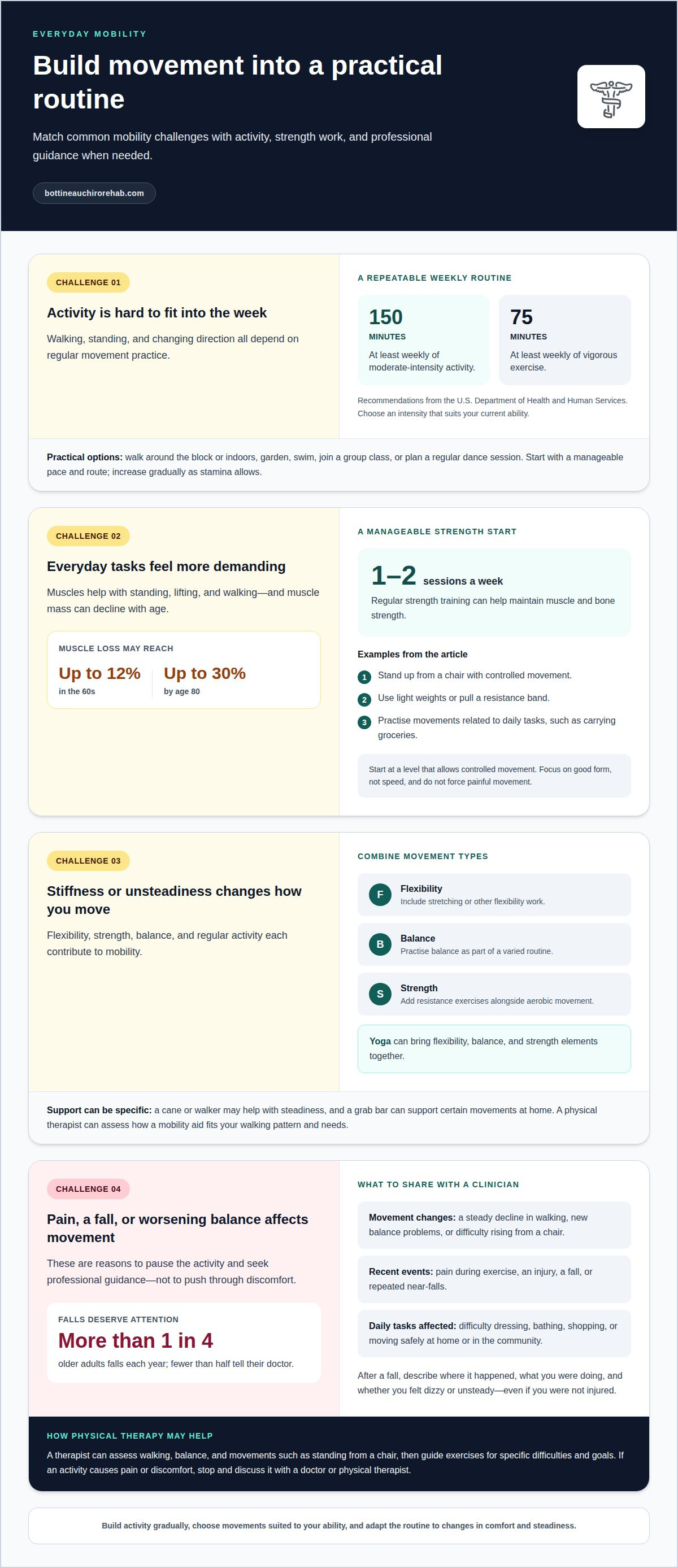
Regular movement helps older adults practice the tasks mobility depends on, including walking, standing, and changing direction. The U.S. Department of Health and Human Services recommends adults get at least 150 minutes of moderate-intensity physical activity a week. The Physical Activity Guidelines for Americans also recommend adults get at least 75 minutes every week of vigorous exercise, according to the U.S. Department of Health and Human Services. Choose an intensity that suits your current ability, then build activity into a repeatable routine.
Walking is one practical option. A walk around the block, trips on indoor corridors, or gardening can add movement to the day. Begin with a manageable route and pace, and increase gradually as your stamina allows. If walking causes pain or discomfort, stop and seek advice from a doctor or physical therapist before continuing. The Centers for Disease Control and Prevention reports about 4.5 million emergency department visits per year due to older people’s falls, resulting in 3.1 million treated and released and 1.4 million hospitalizations. Falls make safe, appropriate activity especially important.
Consistency matters more than finding the perfect exercise. Build activity into your routine, such as walking after breakfast or stretching during an afternoon break. Social activities can help you stick with it: invite a friend for a walk, join a group class, or plan a regular dance session. Choose enjoyable options, such as gardening or swimming, so movement feels like part of daily life rather than another chore.
A cane or walker may help with steadiness, while a grab bar can support specific movements at home. A physical therapist can assess how a mobility aid fits your walking pattern and needs. Costs depend on the device, its features and fit, and payment or coverage arrangements, so there is no single price that applies to everyone.
Everyday habits can support movement, too. Drink water regularly, include protein-rich foods such as eggs or beans, and eat varied meals with fruits and vegetables. These habits complement physical activity; they do not replace exercise or an assessment when pain, injury, or declining balance changes how you move.
3. Strength training to maintain muscle and bone strength
Strength training helps keep the muscles used for standing, lifting, and walking active. People start losing muscle mass as early as their 30s. Muscle loss may reach as much as 12% in their 60s and as much as 30% by age 80. These changes can make everyday tasks feel more demanding, so regular resistance exercise has a practical role in supporting movement.
A practical starting point is one or two strength sessions a week. Choose movements that work major muscle groups, such as standing from a chair, lifting light weights, or pulling a resistance band. Start at a level that allows controlled movement, then adjust the resistance as your ability develops. Strength training should challenge your muscles without forcing painful movement.
Connect exercises to everyday tasks. A controlled chair stand, for example, practices getting up from a seat, while a light lifting movement can help you practise carrying groceries. Focus on smooth movement and good form, not speed. If you’re returning to exercise after a long break, start with simple movements and build a routine you can repeat. Notice which exercises feel comfortable and which cause pain or unusual discomfort.
Strength work supports, rather than replaces, walking and other activity. A balanced routine can include resistance exercises alongside aerobic movement and flexibility work. Regular strength training is recommended one to two times a week to help maintain muscle and bone strength. That rhythm gives you a clear place to begin without making every workout strenuous. For an injury or pain that disrupts exercise, guidance for returning to movement can help you approach activity with care.
4. When to consult a doctor or physical therapist
Some gradual changes, such as moving more slowly or feeling stiff after sitting, can happen with age. A steady decline in walking ability, new balance problems, or difficulty rising from a chair deserves attention, especially if daily tasks are affected. Tell a doctor about pain during exercise, a recent injury, repeated near-falls, or changes that make dressing, bathing, or shopping difficult. These details help clarify how your movement and independence are changing.
Tell your doctor about a fall, even if you weren’t injured. According to the Centers for Disease Control and Prevention, more than one in four older adults falls each year, but fewer than half tell their doctor. Describe where the fall happened, what you were doing, and whether you felt dizzy or unsteady. Mention any new difficulty walking or turning. A clear account can help a clinician identify patterns and decide what assessment or support may be useful.
Physical therapy can assess your walking, balance, and movements such as standing from a chair. A therapist can then guide exercises for specific difficulties, such as leg weakness, a shortened stride, or trouble changing direction. Your plan may include strength, balance, and movement practice suited to your ability and goals. If exercise causes pain or discomfort, stop that activity and discuss it with a doctor or physical therapist rather than pushing through.
Medicare coverage for physical therapy depends on your coverage, the reason for care, and the requirements of your plan. These factors determine whether a course of treatment is covered and what costs may apply. Ask how the recommended therapy relates to a specific task, such as walking safely to the mailbox or rising from a low chair. A useful plan connects exercises to real movement goals and changes as your function does. Seek help promptly if pain, a fall, or worsening balance makes moving around your home or community less safe.
4. What strength, balance, and flexibility exercises are best for seniors?
Choose movements that match your abilities and support the tasks you do every day. The CDC STEADI program highlights flexibility, strength, and balance training as important parts of fall prevention for older adults. Since no single exercise addresses every need, include all three elements in your routine.
For strength, try controlled chair stands, wall push-ups, or light resistance-band rows. These movements work the legs, arms, and upper back for everyday tasks such as getting up from a seat or carrying groceries. Keep sturdy support nearby, move smoothly, and stop if an exercise causes pain. Strength work supports balance but does not replace balance practice.
For balance, practise standing with your feet close together beside a counter, or walk slowly along a clear path with support within reach. A physical therapist can adapt movements if standing or turning feels difficult. Focus on control rather than speed. These exercises challenge steadiness in ways that relate to walking and changing direction.
For flexibility, try gentle stretches for your calves, thighs, hips, chest, and shoulders. Ease into a comfortable stretch without bouncing, and don’t push into pain. Consistency matters more than intensity. Yoga can combine stretching with balance, strength, posture, and body awareness; beginner or chair-based classes may suit different fitness levels. Stretching alone doesn’t prevent falls, but it can complement strength and balance exercises.
Start with movements that feel manageable, then adjust the routine as your comfort and control change. Use a stable chair or countertop for support, clear the walking area, and keep each movement slow and deliberate. If pain or unsteadiness makes an exercise hard to perform safely, get guidance before progressing. Get support tailoring movement to your needs when you need help choosing appropriate exercises.
Boundless Full Body Chiropractic & Rehab
Boundless Full Body Chiropractic & Rehab provides care for movement concerns that affect daily life in Bottineau, North Dakota. If pain, stiffness, or an injury is limiting your activity, physical therapy and spinal rehabilitation can support a plan focused on function. Full-Body Adjustments and Extremity Adjusting address musculoskeletal concerns, while Sports Injury Rehab supports recovery from sports-related injuries.
Consider professional care when discomfort or reduced movement makes walking, exercise, or everyday tasks harder. The next step depends on what is limiting your mobility and how it affects your routine. Contact Boundless Full Body Chiropractic & Rehab in Bottineau, North Dakota, to discuss care for your mobility concerns.
Make your next step a practical one
Choose a movement goal that matters to you, such as walking comfortably through your neighborhood or getting up from a chair with less strain. Then notice what makes that task harder. Sharing details about pain, stiffness, or an old injury can help make a conversation about care and activity more useful.
For maintaining mobility as you age, support should suit your body and daily routine. In Bottineau, North Dakota, Boundless Full Body Chiropractic & Rehab provides Extremity Adjusting, Full-Body Adjustments, and Sports Injury Rehab for musculoskeletal and injury-related concerns. These services can contribute to a broader plan for addressing movement limitations and returning to activities that matter to you.
If discomfort or an injury is affecting how you move, contact Boundless Full Body Chiropractic & Rehab to discuss your concerns and possible next steps. Start with the movement you want to make easier. Small, thoughtful steps can help you keep moving toward a more active daily life.
Frequently Asked Questions
Can stretching help prevent falls?
Stretching alone doesn’t prevent falls, but it can complement balance and strength exercises. Comfortable calf and hip stretches, for example, may make it easier to take a longer step or turn without feeling restricted. Pair flexibility work with balance practice, such as controlled weight shifts near sturdy support. If a stretch causes pain, stop rather than pushing farther.
What is the difference between flexibility and mobility?
Flexibility describes how far muscles can lengthen; mobility describes how well joints move through their available range. For example, flexible hamstrings can lengthen during a seated stretch, while hip mobility affects how comfortably you lift your leg to step into a car. Both can matter in everyday movement, but they describe different aspects of how your body moves.
Why is flexibility important for older adults?
Flexibility can make everyday positions and movements feel less restricted. Reaching a high shelf, turning to look behind you, and putting on a coat all require comfortable movement from muscles and joints. Gentle stretching can help you practise those ranges of motion. Keep each stretch controlled and comfortable, and use a stable chair or counter for support if standing feels unsteady.
What exercises help maintain mobility as you age?
A balanced routine might include walking for aerobic activity, chair stands or resistance-band exercises for strength, and supported standing practice for balance. Gentle yoga can combine controlled movement with flexibility and body awareness. Choose exercises related to tasks you want to keep doing, such as stepping onto a curb or reaching overhead. Adjust your movements if pain or instability arises.
How much physical activity should older adults get each week?
The U.S. Department of Health and Human Services recommends adults get at least 150 minutes of moderate-intensity physical activity a week. Adults can also choose at least 75 minutes every week of vigorous exercise, according to the same department. Walking briskly, if it suits your ability, can contribute toward moderate activity. Spread movement across your routine in a way you can maintain.
How can older adults improve walking speed and range of motion?
Practise walking on a clear, familiar route, focusing on upright posture, steady steps, and relaxed arm movement. To work on range of motion, include comfortable ankle, hip, and shoulder movements in your routine. A physical therapist can observe your stride, turns, and joint movement, then tailor exercises to specific limitations. Seek guidance if walking becomes painful or less steady.


