

Surgery isn’t the only option for carpal tunnel symptoms. Carpal tunnel relief without surgery in Rolla may involve corticosteroid injections, physical therapy and stretching, wrist splints, and simple changes to daily habits. These approaches can help manage symptoms, while persistent pain, numbness, or weakness calls for professional attention.
Hand tingling and discomfort can make work, sleep, and everyday tasks harder. This guide explains non-surgical approaches to carpal tunnel relief without surgery in Rolla, including wrist supports, gentle exercises, and activity changes, and when to seek professional guidance. It also outlines injections as a treatment to discuss with a healthcare professional, so you can make a more informed plan.
Key Takeaways
- Corticosteroid injections can ease symptoms for several months, but their effects are temporary. Learn what the treatment involves and when symptoms need professional attention.
- Gentle stretching and guided physical therapy can support wrist movement. Use careful technique and stop if a movement worsens your symptoms.
- A wrist splint can help keep your wrist neutral at night, reducing positions that may aggravate symptoms.
- Build small self-care changes into your routine, such as taking breaks from repetitive tasks and adjusting your desk posture.
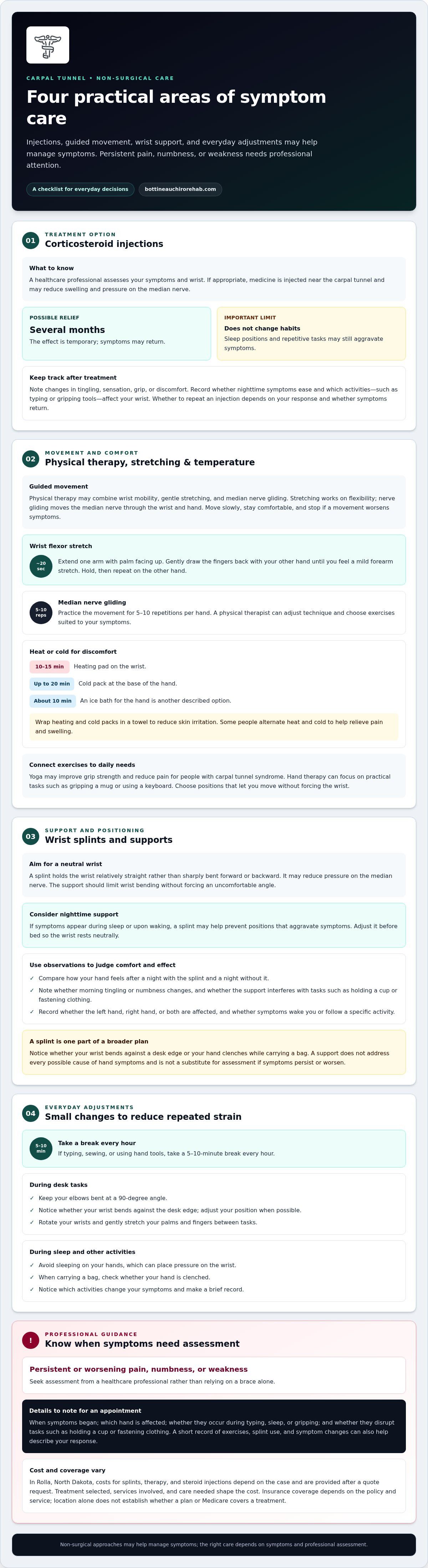
1. Corticosteroid injections
Corticosteroid injections are one treatment a healthcare professional may consider for carpal tunnel symptoms. The medicine is injected near the carpal tunnel and may reduce swelling and pressure on the median nerve, which can contribute to hand tingling, numbness, or pain. An injection addresses the wrist area; it does not change movements or work habits that may aggravate symptoms.
A healthcare professional first assesses your symptoms and wrist. If an injection is appropriate, they place the medicine near the carpal tunnel. Follow the care instructions you receive afterward and note any changes in sensation, grip, or discomfort. For example, tracking whether nighttime tingling eases can help you describe your response at a follow-up. Also note activities that affect your wrist, such as typing or gripping tools.
Relief from an injection may last several months, but its effect is temporary. Whether to repeat an injection depends on your response and whether symptoms return. An injection may reduce pressure-related symptoms, but it does not remove every source of strain. Wrist positions during sleep or repetitive tasks may still need attention.
In Rolla, North Dakota, the cost of splints, therapy, and steroid injections depends on the case and is given after a quote request. The treatment selected, services involved, and care needed shape the cost. Persistent carpal tunnel pain, numbness, or weakness should be assessed by a healthcare professional. Describe when symptoms began, which hand is affected, and whether they occur during typing, sleep, or gripping. Note whether symptoms disrupt tasks like holding a cup or fastening clothing. These details help clarify the problem and guide the next step.
2. Physical therapy and stretching
Physical therapy can guide exercises that combine wrist mobility, gentle stretching, and median nerve gliding. Each addresses a different aspect of hand function: stretching works on flexibility, while nerve gliding moves the median nerve through the wrist and hand. Move slowly and keep each exercise comfortable rather than forcing your wrist.
Try a wrist flexor stretch by extending one arm with the palm facing up. Gently draw the fingers back with the other hand until you feel a mild stretch along the forearm. Hold for about 20 seconds, then repeat with the other hand. Median nerve gliding can also be practiced for 5-10 repetitions per hand. A physical therapist can help adjust technique and select movements suited to your symptoms.
Heat and cold offer another way to manage discomfort. Place a heating pad on the wrist for 10-15 minutes, or hold a cold pack at the base of the hand for up to 20 minutes. Wrap either pack in a towel to reduce skin irritation. Some people alternate heat and cold to help relieve pain and swelling. An ice bath for the hand, held for about 10 minutes, is another described option.
Yoga may improve grip strength and reduce pain for people with carpal tunnel syndrome. Choose hand positions that let you move without forcing the wrist. Hand therapy can also focus on practical tasks, such as gripping a mug or using a keyboard, so exercises connect with daily needs. If you want a guided approach, movement and exercise guidance can help shape a routine around how your wrist moves. Pair any stretch with steady breathing and relaxed fingers, then notice whether symptoms change during the movement. A simple record of the exercise and your response gives useful detail for future therapy sessions.
3. Wrist splints and supports
A wrist splint holds the wrist in a neutral position, relatively straight rather than sharply bent forward or backward. This may reduce pressure on the median nerve inside the carpal tunnel. A brace should limit wrist bending while allowing comfortable hand use. It should support a neutral position, not force your wrist into an uncomfortable angle.
Nighttime splinting may be a practical starting point if symptoms appear during sleep or upon waking. You may bend your wrists or tuck your hands beneath your body without noticing. A splint may help prevent positions that aggravate symptoms. Before bed, adjust the support so your wrist rests neutrally. Note whether morning tingling or numbness changes, and share the pattern at a health appointment.
Use the splint consistently enough to assess its effect, while paying attention to comfort and daily function. Compare how your hand feels after a night wearing it with how it feels after a night without it. If the brace interferes with a task, such as fastening clothing or holding a cup, note when that happens. These observations can help distinguish nighttime support needs from daytime challenges.
Splints do not address every possible cause of hand symptoms, so also pay attention to wrist position. At a desk, notice whether your wrist bends against the edge; when carrying a bag, check whether your hand is clenched. Adjust your position when possible and observe whether symptoms change. A support is one part of a broader plan, not a substitute for assessment if pain, numbness, or weakness persists.
Keep a short symptom log while trying nighttime wrist support. Record whether symptoms affect the left hand, right hand, or both, and whether they wake you or appear after a specific activity. This gives a healthcare professional concrete details to consider alongside your splint use. If symptoms persist or worsen, seek professional assessment rather than relying on a brace alone.
4. Early self-care for carpal tunnel symptoms
Small adjustments can reduce repeated strain during everyday tasks. If you type, sew, or use hand tools, take a 5-10-minute break every hour. During a desk task, keep your elbows bent at a 90-degree angle. Rotate your wrists and gently stretch your palms and fingers between tasks. Avoid sleeping on your hands, which can place pressure on the wrist overnight.
Coverage for splints, therapy, or injections depends on the insurance policy and service. Missouri location alone doesn’t establish whether a particular plan or Medicare covers a treatment. Review the relevant benefits for your own policy before arranging care.
Non-surgical approaches to carpal tunnel symptoms vary in their effects. Over-the-counter NSAIDs may temporarily relieve pain and swelling, while topical menthol products may provide temporary pain relief. Track symptoms, such as tingling during keyboard use or numbness after sleep, to see whether a self-care step is making daily activities easier.
Persistent pain, numbness, or weakness should be evaluated by a healthcare professional. Describe when symptoms began, which hand is affected, and whether tasks such as gripping a cup have become harder. These details help guide the assessment and next steps.
Putting off care can leave persistent symptoms and changes in hand function unassessed. If numbness, pain, or weakness continues, arrange a professional evaluation rather than relying only on breaks or self-care.
For early support, take regular activity breaks, adjust your desk position, and note what changes symptoms. Explore physical therapy options for guided movement and functional care. Use that guidance alongside symptom tracking, especially if everyday tasks remain uncomfortable.
Boundless Full Body Chiropractic & Rehab: Extremity Adjusting
Boundless Full Body Chiropractic & Rehab offers Extremity Adjusting as a care option for people whose hand or wrist symptoms affect daily movement. If tingling or discomfort makes gripping, typing, or household tasks harder, discuss how wrist and hand function can fit into a broader care plan. Physical therapy can also support guided movement and practical exercises. These options focus on function and mobility, not surgery.
Bring specific examples to your appointment: which activities trigger symptoms, whether one or both hands are affected, and which self-care steps you have tried. This information helps guide a useful discussion about next steps. Persistent numbness, pain, or weakness still warrants evaluation by a healthcare professional.
Contact Boundless Full Body Chiropractic & Rehab to discuss Extremity Adjusting and your wrist or hand concerns.
Take the Next Step Toward Easier Hand Function
Make your next step practical: identify one hand task you want to do more comfortably and bring that example to your appointment. A specific goal, such as holding a mug or returning to a hobby, gives the discussion a clear focus. If you are looking for carpal tunnel relief without surgery in Rolla, explain which movements are difficult and what you hope to do more comfortably.
For a conversation about carpal tunnel relief without surgery in Rolla, Boundless Full Body Chiropractic & Rehab offers Extremity Adjusting and Full-Body Adjustments. Sports Injury Rehab is another available service focused on movement and function. These offerings are not injections or surgery, but they may be relevant when exploring hands-on care and rehabilitation.
Choose a next step that fits your needs and keeps your priorities clear. Visit Boundless Full Body Chiropractic & Rehab to learn more about its care options. Keep advocating for comfortable, capable movement, one informed decision at a time.
Frequently Asked Questions
What nonsurgical treatments relieve carpal tunnel syndrome symptoms?
Options to discuss with a healthcare professional include wrist support, activity changes, guided exercises, and corticosteroid injections. The right approach depends on how symptoms affect tasks such as gripping a steering wheel, typing, or preparing a meal. Track which activities bring on tingling or discomfort and share the pattern during an evaluation. Persistent numbness, pain, or weakness needs professional attention, not self-care alone.
Do wrist splints help carpal tunnel, and how should they be worn?
A wrist splint may help limit positions that aggravate symptoms, especially during sleep. Adjust it so your wrist rests comfortably and straight, without forcing it into a bent position. If you wake with more discomfort or the support disrupts your sleep, note that response. This feedback can help guide decisions about continued use and other care.
What carpal tunnel exercises or physical therapy are recommended, and what are the risks?
Common exercises include gentle wrist flexor stretches and median nerve gliding. Physical therapy can tailor movement to your hand function. Describe, for example, whether turning a key or lifting a light pan triggers symptoms. Do not force a stretch or continue a movement that clearly worsens discomfort. A therapist can adjust the exercise and relate practice to daily tasks.
Which medications or injections can treat carpal tunnel without surgery?
Over-the-counter NSAIDs may temporarily ease pain and swelling, while topical menthol products may provide temporary pain relief. A healthcare professional may also consider a corticosteroid injection near the carpal tunnel. These approaches address symptoms differently, and medication suitability depends on personal health factors. Tell the professional discussing treatment about other medicines you take and any health conditions.
Carpal tunnel treatment clinics and hand specialists in Rolla, North Dakota
Boundless Full Body Chiropractic & Rehab provides care in Bottineau and surrounding areas, including Extremity Adjusting and Physical Therapy, when clinically appropriate. For carpal tunnel relief without surgery in Rolla, consult a healthcare professional who can evaluate your hand and wrist symptoms, particularly if weakness or persistent numbness affects daily tasks. If findings exceed the scope of chiropractic care, medical evaluation is needed.
Local care options for hand and wrist symptoms
Boundless Full Body Chiropractic & Rehab offers Extremity Adjusting for hand or wrist symptoms in the Rolla, North Dakota region. Physical therapy can also provide guided movement and practical exercises tailored to your needs.


