

Disc wear does not automatically mean surgery. Degenerative disc disease pain management in Bottineau can start with an assessment and conservative care focused on movement and function. Boundless Full Body Chiropractic & Rehab provides physical therapy and spinal rehabilitation to help patients recover from injuries, avoid surgery, and get back to work, sports, and life. Surgery may be considered for severe symptoms when conservative treatment has not helped.
If back or neck pain is disrupting daily activities, the discomfort is real, but the condition doesn’t affect everyone the same way. Degenerative disc disease describes age-related changes in the spinal discs, and symptoms can flare with sitting, bending, twisting, or lifting. This guide explains what’s happening in the spine, which symptoms deserve attention, and how nonsurgical approaches can help manage pain. You’ll also learn how physical therapy and practical movement changes may support strength and mobility, and when to seek further evaluation. Start with the cause of the pain, then consider the steps that fit your symptoms and goals.
Key Takeaways
- Notice which movements or positions affect your back or neck pain; these patterns can help guide an assessment.
- Conservative care may combine physical therapy, guided exercise, and medication suited to your needs.
- Injections can offer temporary relief in some cases, while procedures are considered when other approaches aren’t enough.
- Learn how spinal rehabilitation and targeted adjustments may support mobility and everyday function.
Medications, injections, physical therapy, and core strengthening
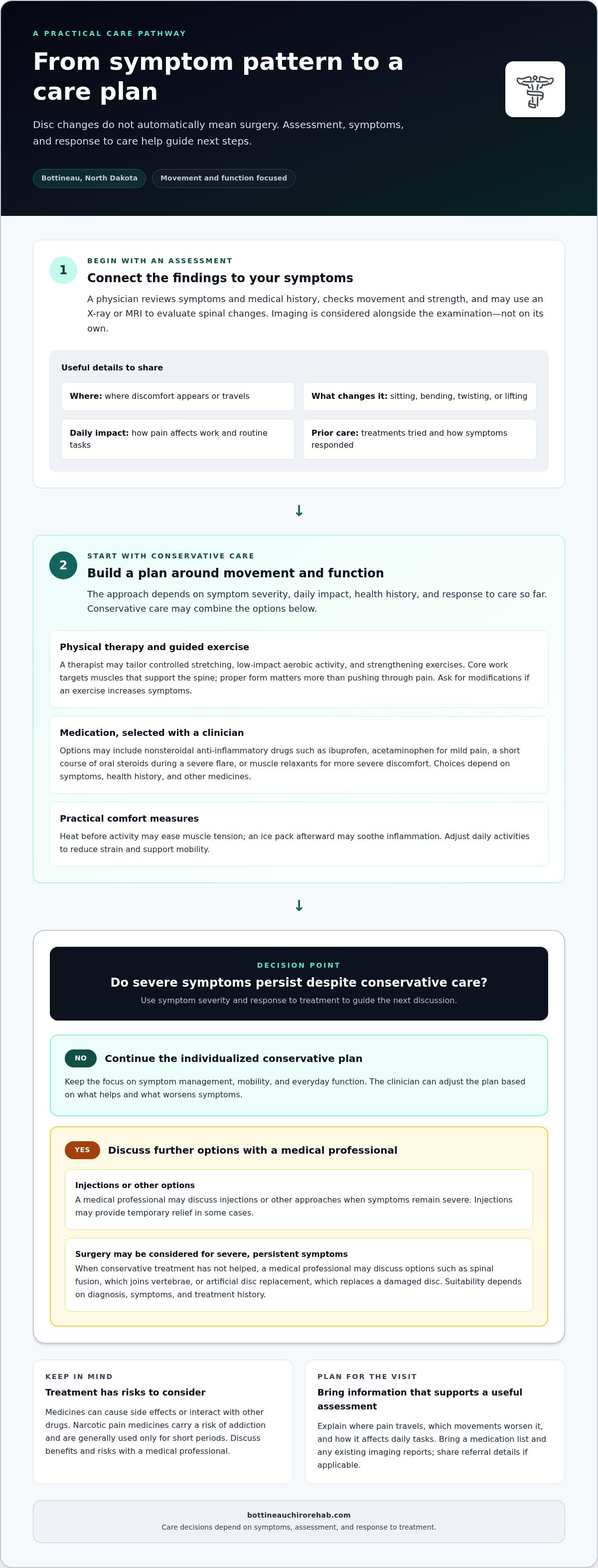
Start with a clinical assessment, not a guess based on scan results alone. A physician reviews your symptoms and medical history, checks movement and strength during a physical examination, and may use an X-ray or MRI to assess spinal changes. Imaging helps evaluate the discs, while your examination and symptoms guide next steps. Degenerative disc disease pain management in Bottineau should begin with understanding how pain affects your movement and routine.
Medication choices depend on your symptoms, health history, and other medicines. Nonsteroidal anti-inflammatory drugs, such as ibuprofen, may help with pain and inflammation. Acetaminophen may help manage mild pain. A physician may prescribe a short course of oral steroids during a severe flare, or muscle relaxants for more severe discomfort. Discuss pain medicines with a doctor before taking them.
Potential risks depend on the treatment. Medicines can cause side effects or interact with other drugs, and injections may provide temporary relief. Narcotic pain medicines carry a risk of addiction and are generally used only for short periods. Discuss treatment risks and benefits with a medical professional.
Physical therapy can turn symptom management into a practical movement plan. A therapist may tailor controlled stretching, low-impact aerobic activity, and strengthening exercises to your needs. Core work targets the muscles that support the spine; proper form matters more than pushing through pain. Ask for modifications if an exercise increases symptoms. Heat before activity may ease muscle tension, while an ice pack afterward may soothe inflammation.
Make the appointment easier to use. When scheduling, explain where pain travels, what movements worsen it, and how it affects daily tasks. Bring a medication list and any existing imaging reports. If a physician referred you, share the referral details and ask whether records are needed before your visit. At the appointment, describe goals such as sitting through work or walking comfortably. These details help shape a plan around function and quality of life. This practical focus supports degenerative disc disease pain management in Bottineau.
What is Degenerative Disc Disease and how can you to get relief for degenerative disc disease?
Spinal discs can change with age, sometimes contributing to pain, stiffness, or reduced movement. Care focuses on managing symptoms and supporting everyday function.
Conservative and Interventional Care
Conservative care may include physical therapy, guided exercise, medication, and practical changes that reduce strain during daily activities. The approach typically focuses on pain management and mobility before more involved treatment is considered. If symptoms remain severe, a medical professional may discuss injections or other options. The right approach depends on symptom severity, daily impact, and response to care so far.
Diagnosis and Treatment Selection
Assessment starts with symptoms, health history, and a physical examination. X-rays or MRI may help evaluate disc changes and other possible causes of pain. A useful plan connects those findings with practical goals, such as sitting more comfortably or returning to work. Describe stiffness, pain patterns, and previous treatments so the clinician can consider your specific needs.
Insurance and Medicare coverage in North Dakota depends on the plan, service, and medical-necessity criteria. Therapy, imaging, injections, and surgery may be handled differently. Review your plan documents or contact your insurer about coverage.
Treatment costs in Bottineau depend on the services involved, such as therapy, imaging, medication, injections, or surgery. The price depends on the case and is given after a quote request.
For severe symptoms that persist despite conservative care, a medical professional may discuss surgical options. Spinal fusion joins vertebrae, while artificial disc replacement replaces a damaged disc. Whether surgery is appropriate depends on the diagnosis, symptoms, and treatment history.
A multidisciplinary approach can coordinate physical rehabilitation with medical evaluation and other treatments. For movement goals and ongoing stiffness, spinal rehabilitation can be part of an individualized plan.
Degenerative disc disease symptoms
Disc changes can occur with aging, but symptoms vary from person to person. Track where discomfort appears and which activities make it worse.
Back and Neck Pain
Disc changes may be associated with neck or back pain, sometimes with numbness or tingling in an arm or leg. Note whether sitting, bending, twisting, or lifting brings on symptoms. For example, pain that starts after prolonged sitting and eases when lying down is useful to mention during an assessment. The pattern matters, but symptoms alone cannot identify the cause.
Lower Back Symptoms
Lower-back symptoms may include pain spreading into the buttocks, upper thighs, or legs. Tingling or numbness in a leg can also occur. Pain may come and go or worsen with lifting, bending, or twisting. Record which side hurts, where discomfort travels, and whether standing, lying down, or moving changes it. These details help explain how symptoms affect walking, work, and daily activities.
Disc changes may be one possible factor, but back or neck pain can have other causes. A clinician considers the overall pattern, including whether discomfort stays near the spine or spreads into a limb. Difficulty bending, reaching, or twisting can also help describe what movements are affected. Do not assume every sore back is caused by disc disease; an assessment helps consider possible causes.
Keep a brief symptom log before seeking care. Note when pain begins, how long a flare lasts, and which activities worsen it. Include examples, such as pain after sitting at a desk or tingling during a walk. Record any changes in sleep or movement, too. This can help focus an assessment and clarify whether conservative care or further evaluation may be appropriate.
Degenerative disc disease overview
Your spine’s 23 discs cushion the bones and absorb everyday movement. With age, discs may dry out, thin, and lose cushioning ability. “Degenerative disc disease” describes these changes, not a disease that automatically causes pain. A disc seen on imaging may show wear, but symptoms and daily function matter when deciding what care makes sense.
Think of a disc as a flexible cushion between vertebrae. As it wears, nearby structures can experience more stress, and a disc may press on spinal nerves. That pressure can contribute to pain or changes in sensation. Smoking is another factor: disc degeneration progresses four times faster in smokers than in nonsmokers. Small daily choices, including taking walking breaks instead of sitting for long periods, can help reduce strain.
Focus on activity you can do comfortably. Walking, cycling, and swimming are low-impact ways to keep moving. Controlled exercise can strengthen muscles that support the spine, while posture and lifting habits affect strain on the lower back. For example, break up long periods of sitting with brief walks and gentle stretches. Build activity around your current ability rather than pushing through worsening pain.
Conservative care aims to manage pain, stabilize the spine, and maintain mobility. Physical therapy, exercise, and medication may be part of that approach. Injections can provide temporary relief for some people. If severe symptoms continue despite conservative treatment, spinal fusion or artificial disc replacement may be considered. Surgery isn’t the starting point for every person with disc wear; symptoms, function, and response to earlier care help shape the decision.
Use these principles to make daily activities more manageable and discuss persistent symptoms with a healthcare professional. Take the next step toward better movement.
Boundless Full Body Chiropractic & Rehab: Extremity Adjusting
Boundless Full Body Chiropractic & Rehab offers spinal rehabilitation for people managing pain and working to maintain everyday movement. If symptoms are limiting daily activities, physical therapy and spinal rehab can support a plan focused on function and mobility. Extremity Adjusting and Full-Body Adjustments are also available for musculoskeletal concerns, while Sports Injury Rehab supports recovery after a sports injury.
Choose care that matches your needs and goals. Describe which movements trigger discomfort and which activities you want to return to, so the conversation can address practical concerns alongside pain management. Chiropractic and rehabilitation care do not replace medical assessment when symptoms need further evaluation.
Contact Boundless Full Body Chiropractic & Rehab to discuss a next step that fits your needs.
Choose a Practical Next Step
Make your next step specific. Choose one daily activity you want to manage more comfortably, such as getting through a workday or taking a walk. Use that goal to guide conversations about care and progress. A clear priority keeps the focus on function, not only on what imaging shows. For degenerative disc disease pain management in Bottineau, connect care decisions to the movements and routines that matter most to you.
Boundless Full Body Chiropractic & Rehab provides Extremity Care, full-body adjustments, physical therapy, and sports injury rehabilitation in Bottineau. These services address different movement and musculoskeletal needs. Share your activity goals and concerns during an assessment to help determine appropriate next steps.
Take action at a pace that feels manageable. Contact Boundless Full Body Chiropractic & Rehab to discuss your needs and explore a path forward. Progress starts with a clear goal and a conversation focused on getting you moving.
Frequently Asked Questions
What is degenerative disc disease and what causes it?
Degenerative disc disease describes gradual changes in the cushioning discs between spinal bones, often as part of aging. Discs can dry out, thin, and absorb everyday movement less effectively. The name does not mean everyone with disc changes will have pain. A clinician considers symptoms and physical findings alongside imaging, since disc wear alone does not explain every ache.
What are common symptoms of degenerative disc disease?
Common symptoms include back or neck pain, sometimes spreading into the buttocks, thighs, arms, or legs. Some people notice tingling or numbness in a limb. Symptoms may vary with posture and activity. Keep a short record of where pain travels, what you were doing when it began, and which positions ease or worsen it. Share that pattern during an assessment.
What are nonsurgical pain management options for degenerative disc disease?
Nonsurgical care may include physical therapy, guided low-impact exercise, medication, and changes to daily routines. For example, a therapist may adapt strengthening movements to your current ability, while a medical professional considers whether a medicine suits your health history. Ask how each part of a plan supports a specific goal, such as walking more comfortably or completing a work task.
When is surgery recommended for degenerative disc disease?
Surgery may be considered when symptoms are severe and conservative treatments have not helped. Options can include spinal fusion, which joins vertebrae, or artificial disc replacement, which replaces a damaged disc. These procedures are not the first step for everyone with disc changes. A treatment discussion should consider symptom severity, daily limitations, diagnostic findings, and care already tried.
Which Bottineau-area clinics or specialists treat degenerative disc disease pain?
In Bottineau, Boundless Full Body Chiropractic & Rehab offers physical therapy and spinal rehabilitation. Dr. Daniel Pozarnsky is listed as the practice’s chiropractor. These services may support mobility and function, while diagnosis and decisions about medication, injections, or surgery call for appropriate medical evaluation. Bring a symptom history and any relevant imaging reports to help make the visit focused.
Where is the nearest physical therapy or spine care clinic to Bottineau?
A Bottineau option for physical therapy and spinal rehabilitation is Boundless Full Body Chiropractic & Rehab, at 116 E. 6th St., Bottineau, ND 58318. The practice offers rehabilitation services for musculoskeletal concerns. Before a visit, write down your main movement limitation and any questions about your goals. That helps keep the conversation centered on the activities you want to manage.


