

Conservative care is often the first step for a pinched nerve in the neck. Treatment for people in Rugby may involve guided exercises, rehabilitation, and time for irritated tissues to settle. The cause matters: a disc problem, age-related changes, or an injury can all contribute to pressure on a nerve. Neck pain that travels into the shoulder or arm, tingling, numbness, or weakness may be signs of cervical radiculopathy.
When pain or unusual sensations disrupt your routine, it’s understandable to want relief and a clear explanation. This guide explains what can cause a pinched nerve, how cervical radiculopathy relates to it, and which conservative treatments may help restore movement and function.
You’ll also learn why treatment is tailored to the cause and symptoms, what rehabilitation may involve, and when persistent or worsening symptoms need professional attention. The goal is practical: understand your options and identify a next step toward moving more comfortably.
Key Takeaways
- Neck pain that travels into the shoulder or arm, tingling, numbness, or weakness can point to nerve irritation, but the underlying cause matters.
- Learn how cervical radiculopathy describes nerve-root irritation in the neck and why it overlaps with the everyday term “pinched nerve.”
- See how guided exercises and other physical therapy approaches can support movement and strength, while traction may be considered as part of care.
- Compare conservative treatment options and recognize when persistent or worsening symptoms deserve professional assessment.
Physical therapy and traction
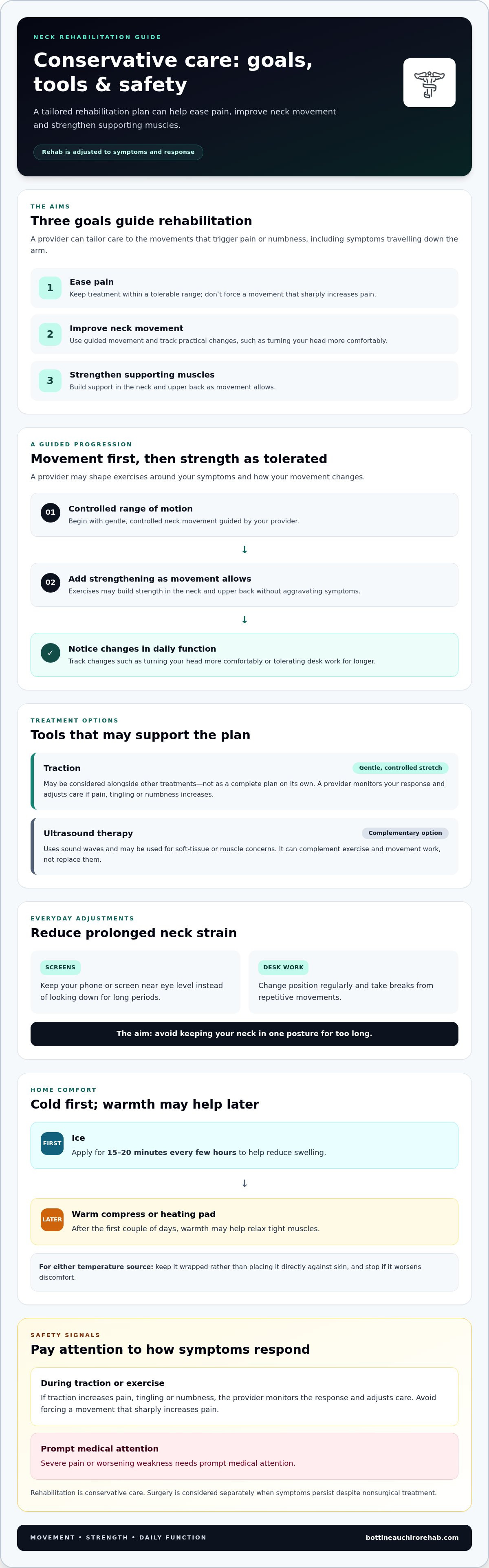
Rehabilitation can focus on three goals: easing pain, improving neck movement, and strengthening supporting muscles. A provider may tailor a plan to movements that trigger symptoms, including pain or numbness that travels down the arm. Track practical changes, such as turning your head more comfortably or tolerating desk work for longer.
Traction applies a controlled, gentle stretch to the neck. It may be considered alongside other treatments, rather than used as a complete plan on its own. The provider monitors your response and adjusts care if traction increases pain, tingling, or numbness. That response helps determine whether it remains appropriate.
Exercises may combine gentle neck movement with strengthening for the neck and upper back. For example, a provider may begin with controlled range-of-motion practice and add strengthening as movement allows. The aim is to improve mobility and muscle support without aggravating symptoms. Don’t force a movement that sharply increases pain.
Simple ergonomic changes can reduce strain during daily tasks. Keep your phone or screen near eye level instead of looking down for long periods. At a desk, change position regularly and take breaks from repetitive movements. These adjustments help avoid keeping your neck in one posture for too long.
For home comfort, ice applied for 15-20 minutes every few hours may help reduce swelling. After the first couple of days, a warm compress or heating pad may help relax tight muscles. Keep either temperature source wrapped rather than placing it directly against skin, and stop if it worsens discomfort.
Ultrasound therapy uses sound waves and may be used for soft-tissue or muscle concerns. It can complement exercise and movement work, not replace them. Rehabilitation is conservative care; surgery is considered separately when symptoms persist despite nonsurgical treatment. Severe pain or worsening weakness needs prompt medical attention. A structured plan helps you track changes in movement, strength, and daily function.
Is cervical radiculopathy the same as a pinched nerve?
They’re closely related, but the terms describe different things. “Pinched nerve” is an informal phrase, not a formal medical term, according to the National Institute of Neurological Disorders and Stroke. Cervical radiculopathy describes irritation or compression of a nerve root in the neck. It can cause pain radiating into the shoulder or arm, tingling, numbness, or weakness. A herniated disk, spinal stenosis, arthritis, or injury can contribute to nerve-root pressure.
Similar symptoms don’t always come from a nerve root in the neck. A nerve compressed elsewhere, such as near the shoulder or arm, can also cause tingling or altered sensation. A medical history and physical examination help distinguish possible causes. A clinician considers where symptoms travel, which movements affect them, and whether muscle weakness is present. Imaging or nerve tests may help clarify the source when needed.
A tackle in Rugby can jar the cervical spine and irritate a nerve. A brief burner or stinger may cause sudden pain, tingling, or weakness through the shoulder and arm, typically lasting seconds to minutes. If symptoms persist, return, or include lasting weakness, stop playing and seek medical assessment rather than treating the episode as routine soreness.
A soft cervical collar may limit neck movement and give muscles a rest, but it is generally used only short term. Wearing one for too long can weaken neck muscles. A collar also doesn’t identify or address the cause of compression. Treatment depends on the cause and symptoms, ranging from guided conservative care to surgery for persistent pain or progressive weakness.
One surgical option is anterior cervical discectomy and fusion, or ACDF. The procedure removes the problematic disk or bone spurs, then joins the affected spinal bones to stabilize the area. Surgery may be considered when nonsurgical treatment hasn’t improved symptoms. It is different from a collar or routine conservative care, and the decision depends on the specific spinal problem.
What Causes Pinched Nerve in the Neck?
Nerve compression develops when nearby tissue presses on a nerve or inflammation narrows its space. In the cervical spine, surrounding bones, ligaments, muscles, or a bulging disk can contribute. Age-related wear may also change the space around a nerve. In people over 50, arthritis and spinal degeneration are common contributors. Repetitive movements or holding one posture for too long can add pressure, especially when the neck stays turned or tilted.
Symptoms depend partly on which nerve is affected. Irritation of a neck nerve can send pain toward the shoulder, arm, or hand, along with tingling, numbness, or weakness. According to the U.S. National Library of Medicine, a herniated disk may cause pain during neck movement or pain traveling into the upper arm, forearm, and fingers. Nerve problems near the shoulder can also cause arm symptoms, while lower-back compression may affect the buttock or leg. The location and path of symptoms offer clues, but don’t identify the cause on their own.
A careful assessment brings these clues together. A healthcare provider may ask when symptoms began, which movements change them, and whether sensation or strength has shifted. A physical examination can assess neck movement, muscle strength, sensation, and reflexes. For example, pain traveling down one arm during a particular neck movement provides different information from local shoulder soreness. Imaging or nerve tests may help when the history and examination leave questions about compression or its location.
Act promptly if you have intense pain or sudden muscle weakness. Progressive weakness also matters because it can signal worsening nerve involvement. Loss of bladder or bowel control alongside neck nerve symptoms is rare but a medical emergency. Don’t continue exercises or sports through sudden weakness. Seek urgent medical attention instead. A clear account of when symptoms began, which areas are affected, and how strength has changed helps guide the next assessment and treatment.
Conservative treatment for pinched nerves
Nonsurgical care is usually the starting point for a pinched nerve. Rest and time may ease symptoms, but prolonged inactivity can weaken supporting muscles and delay a return to normal activity. For pinched nerve in the neck treatment in Rugby, care may begin by reducing movements that trigger pain, such as overhead work or high-impact drills, while maintaining gentle, comfortable motion. A rehabilitation provider can guide exercises to restore neck movement and build strength without worsening tingling.
Cold and heat offer simple comfort measures. During the first 48 hours, ice may help reduce inflammation and swelling. Apply it with a cloth barrier, then stop if discomfort increases. After the first couple of days, a warm compress or heating pad may relax tight muscles. Keep movement within a comfortable range rather than forcing a stretch through sharp pain.
Medication may ease pain and inflammation, but it doesn’t remove pressure from a herniated disk or narrowed opening. Acetaminophen may ease pain; ibuprofen or naproxen may reduce pain and inflammation. A healthcare provider may prescribe other anti-inflammatory medicine or a short course of oral corticosteroids. Steroid injections near an affected nerve can reduce inflammation, but don’t relieve compression caused by a disk or bone narrowing. Medication choices depend on symptoms and health factors.
Conservative care works best as a coordinated plan. A therapist may use controlled exercises to improve motion, then build neck and upper-back strength as symptoms allow. Nerve gliding can support nerve mobility, while manual therapy may address stiffness. Track changes, such as fewer symptom triggers or easier head movement. If pain persists despite nonsurgical care or weakness progresses, a healthcare provider can reassess the cause and discuss next options. Surgery may be considered when conservative treatment hasn’t helped. For pinched nerve in the neck treatment in Rugby, explore physical therapy options.
Boundless Full Body Chiropractic & Rehab: Extremity Adjusting
Boundless Full Body Chiropractic & Rehab provides spinal rehabilitation and physical therapy in Bottineau to help patients restore movement and function. For neck symptoms affecting daily activity or following a sports injury, Sports Injury Rehab can support a structured return to movement. Full-Body Adjustments and Extremity Adjusting are also part of the practice’s care.
These services may be a useful next step when you want conservative care for mobility or musculoskeletal concerns. Treatment should match your symptoms and goals, with attention to changes in pain, sensation, and strength as you progress.
To discuss care for your neck symptoms, contact Boundless Full Body Chiropractic & Rehab or visit bottineauchirorehab.com.
Take the next step toward comfortable movement
Use your next step to turn what you’ve noticed into a clear plan. Before seeking care, note which activities affect your neck, where discomfort travels, and whether movement, sensation, or strength has changed. These details can help focus a conversation on your daily needs, such as working at a screen, sleeping comfortably, or returning to sport.
For a pinched nerve in your neck, treatment in Rugby can begin with discussing how symptoms affect your routine and what support may help you move forward. Boundless Full Body Chiropractic & Rehab offers care including physical therapy and spinal rehabilitation. If you’re ready to discuss your needs, contact Boundless Full Body Chiropractic & Rehab. A thoughtful next step can help you work toward more confident movement.
Frequently Asked Questions
How can I prevent getting a pinched nerve?
Reduce repeated strain by changing position, taking breaks during repetitive tasks, and moving gently throughout the day. For example, alternate desk work with brief movement breaks instead of staying still for long periods. Keep screens near eye level to avoid prolonged downward neck posture. Dynamic warm-ups and gentle mobility drills before and after training can prepare your body for activity. Maintaining a healthy weight can also help reduce strain on the spine.
What are the signs that my pinched nerve is healing?
Improvement often shows up in everyday function. Pain may become less intense, tingling or numbness may occur less often, and neck movement or muscle strength may improve. Notice whether you can complete a task, such as turning to check traffic or carrying a light bag, with fewer symptoms. Track whether fewer movements trigger discomfort, too. A brief daily note can help reveal gradual changes.
What increases your risk of a pinched nerve?
The risk of nerve irritation can rise when nearby tissues narrow or press on a nerve. Age-related spinal wear, arthritis, a bulging or herniated disk, and sudden injury are possible contributors. Repetitive motions and holding one position too long can also add strain. For example, extended screen use with the head bent forward keeps the neck in a sustained posture. A prior neck injury can also influence symptoms.
When should I see a healthcare provider?
Arrange an assessment if symptoms last more than a week without improving with at-home care, or if pain, tingling, or numbness interferes with daily tasks. Seek prompt care for intense pain or sudden muscle weakness. Note when symptoms started, what makes them worse, and whether one or both arms are affected. These details help guide the evaluation and determine whether further testing is needed.
What are the symptoms and causes of a pinched nerve in the neck?
Neck nerve compression can cause pain that travels toward the shoulder, arm, or fingers, along with tingling, numbness, or weakness. Causes include age-related changes, arthritis, a herniated disk, or an injury that irritates the nerve. Symptoms can vary by the affected nerve and the degree of pressure. A medical history and examination help distinguish nerve-root irritation from other sources of arm or shoulder discomfort.
When should neck nerve pain be treated as an emergency?
Get emergency medical help if neck nerve symptoms occur with loss of bladder or bowel control. This is rare but can signal a serious problem. Sudden or worsening muscle weakness also needs urgent assessment, particularly if you can’t use an arm normally. Don’t continue sports or strenuous activity while weakness is developing. Intense pain that starts suddenly also warrants prompt medical attention.


