

What if a recurring headache is connected to your neck, not just your head? Pain that changes with neck movement or prolonged posture can raise that question, but it cannot confirm the cause by itself. If you’re exploring cervicogenic headache treatment Bottineau ND, understanding the signs clinicians consider and how they assess other possible causes can help you prepare for a useful care conversation.
Recurring headaches can disrupt work, sleep, and ordinary routines, especially when you’re unsure where to turn. This guide explains features that may point toward a neck-related headache without asking you to diagnose yourself. You’ll learn what a clinician may ask, what a physical assessment can involve, and why symptoms need to be considered in context.
Individualized care may include chiropractic care, physical therapy, or spinal rehabilitation. At Boundless Full Body Chiropractic & Rehab in Bottineau, these services address musculoskeletal and movement concerns through an assessment-led approach. The first step is to understand your symptoms and decide what care path makes sense for you.
Key Takeaways
- Head pain that changes with neck movement may warrant assessment, but symptoms alone can’t confirm the cause.
- A clinician may consider your headache history, symptom pattern, neck function, and other possible explanations.
- Care depends on your individual assessment. Movement-based rehabilitation and manual approaches may be considered when appropriate.
- Before an appointment, note when headaches occur, how long they last, where you feel pain, possible triggers, and how symptoms affect daily life.
- Learn what to expect from cervicogenic headache treatment Bottineau ND, including how local chiropractic care, physical therapy, and spinal rehabilitation can fit into an individualized care path.
Cervicogenic Headache Treatment in Bottineau: What Does “Neck-Related” Mean?
Recurring head pain can make work, sleep, and everyday routines harder. If it changes with neck movement or posture, it’s reasonable to wonder whether your neck is involved. That pattern can be a clue, not a diagnosis. Understanding what “neck-related” means can help you describe your symptoms and see why assessment matters before choosing care.
Featured-snippet definition: A cervicogenic headache is head pain attributed to a problem in the cervical spine or nearby neck structures, with pain referred from the neck into the head. The label describes a possible source, not something you can confirm from pain location alone. For a broader overview of symptoms, causes, and general approaches, see the Cervicogenic Headache Overview.
What symptoms can point toward a neck-related headache?
Some people notice neck stiffness, reduced ability to turn the head, or discomfort that changes with a particular movement or sustained posture. Pain may begin near the neck or base of the skull and spread toward the head. These details can help a clinician understand the pattern, but they don’t prove the headache starts in the neck.
- Notice whether turning your head or holding your neck in one position affects the pain.
- Pay attention to stiffness or limited movement that occurs with the headache.
- Track where pain begins and whether it spreads to another area.
Patterns vary from person to person. Neck symptoms can also occur alongside other headache conditions, so one feature by itself isn’t enough to identify the cause.
How is a cervicogenic headache different from other headaches?
A possible neck-linked headache may be associated with neck movement, posture, or restricted neck function. Migraine and tension-type headaches can have different patterns, but symptoms may overlap. Some people with migraine, for example, also experience neck discomfort. Pain at the back of the head or elsewhere cannot establish its source on its own.
That’s why clinicians consider the whole picture: the timing and quality of the pain, related symptoms, neck function, and relevant health history. They may also consider whether another headache type or health concern better explains what you’re experiencing. Avoid diagnosing yourself from a checklist. Use your observations to describe the pattern and support an informed evaluation.
For broader local context on rehabilitation, explore this guide to physical therapy and spinal rehabilitation. If you’re considering cervicogenic headache treatment Bottineau ND, the first step is understanding your symptoms in context. An individualized assessment can help clarify whether neck-related factors may be contributing and what care options may be appropriate.
How Clinicians Assess Cervicogenic Headaches in Bottineau
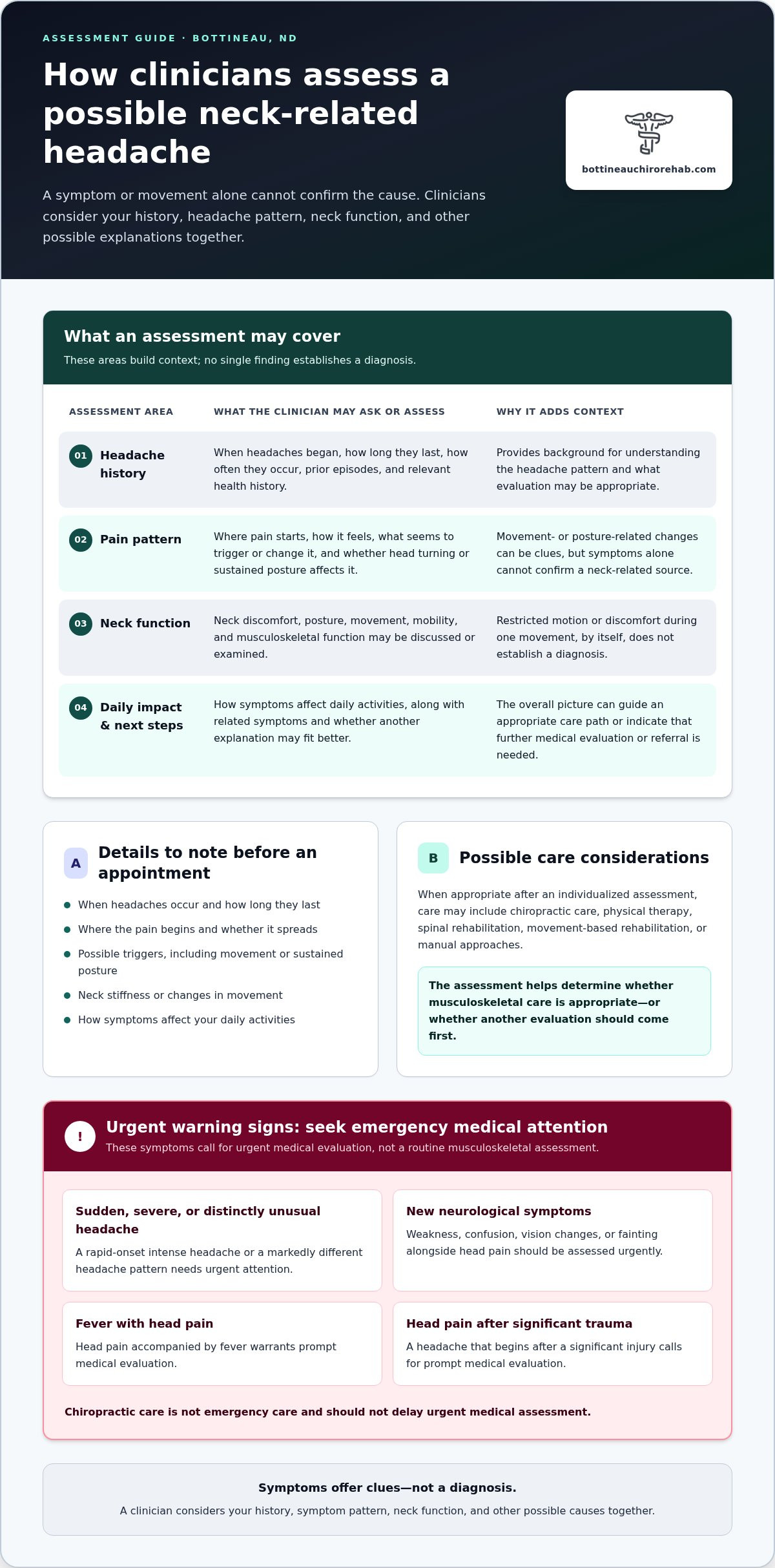
A neck-related headache isn’t identified from one symptom alone. Assessment typically starts with your health history and headache pattern, considers neck function, then helps determine sensible next steps. This process can distinguish clues that may fit a neck-related source from findings that call for a different kind of evaluation.
What happens during a headache and neck assessment?
A clinician may ask when the headaches began, how long they last, where the pain starts, how often it occurs, and what seems to trigger or change it. They may also ask about prior episodes, relevant health history, neck discomfort, posture, and how symptoms affect daily activities. Details such as whether turning your head changes the pain add useful context.
An examination may include observing neck movement and assessing mobility and musculoskeletal function. Findings are considered alongside your history and symptom pattern. A single movement that reproduces discomfort, or limited motion by itself, doesn’t establish a diagnosis. If the picture suggests another cause or needs further medical evaluation, appropriate next steps may include referral for additional assessment.
The American Migraine Foundation’s Understanding Cervicogenic Headaches resource also explains why clinical context matters when distinguishing headache types. For someone considering cervicogenic headache treatment Bottineau ND, a careful review can help determine whether chiropractic care or rehabilitation is appropriate, or whether another evaluation should come first.
When should head pain receive urgent medical attention?
Some symptoms call for urgent medical evaluation rather than a routine musculoskeletal assessment. Seek emergency medical attention for a sudden, severe headache, especially if it is distinctly unusual for you. Don’t wait for a regular appointment if head pain comes with new weakness, confusion, vision changes, fainting, or fever, or begins after significant trauma.
- Sudden or severe: A rapid-onset, intense headache or a markedly different headache pattern needs urgent attention.
- New neurological symptoms: Weakness, confusion, vision changes, or fainting alongside a headache should be assessed urgently.
- Fever or trauma: Head pain with fever or following a significant injury warrants prompt medical evaluation.
Chiropractic care is not emergency care and shouldn’t delay urgent medical assessment. If urgent warning signs aren’t present but recurring headaches or neck movement concerns are affecting your routine, discuss them with the Bottineau chiropractic and rehabilitation team as a non-emergency next step. Share what you’ve noticed so an individualized assessment can help determine an appropriate care path.
Cervicogenic Headache Treatment: Common Assumptions Versus Careful Choices
A neck-related headache doesn’t automatically call for one specific treatment. The right approach depends on whether assessment supports a neck-related source, what your symptoms and health history show, and what you’re comfortable trying. Care may focus on guided movement, manual approaches, or a combination. No single option is right for everyone.
For cervicogenic headache treatment Bottineau ND, think of treatment selection as a decision made after assessment, not a preset plan based on a headache label. A clinician can explain the purpose of an option, how it may fit your situation, and what alternatives make sense.
| Approach | Possible role | Individual considerations |
|---|---|---|
| Assessment-led planning | Connects symptoms and examination findings to a suitable care direction. | Other causes, health history, and your goals may change the plan. |
| Movement-based rehabilitation | May work on comfortable mobility, strength, and everyday function. | Activities should match your ability and symptom response. |
| Manual approaches | A clinician may consider hands-on care to address musculoskeletal concerns. | Technique and suitability depend on screening and individual assessment. |
Can chiropractic adjustments or manual therapy help?
Chiropractic adjustments and other manual approaches may be considered after an appropriate assessment. They aren’t a guaranteed solution, and they aren’t suitable for every person or every headache. Before choosing hands-on care, a clinician should consider your symptoms, examination, relevant health history, and any factors that affect safety. The technique and care plan should be individualized, not assumed from the headache’s location.
If you’re curious about how adjustments are discussed in broader chiropractic care, this full-body chiropractic adjustment guide offers general context. It doesn’t replace a headache-specific assessment or determine which approach is appropriate for you.
Where can physical therapy and home movement fit?
Physical therapy may focus on neck mobility, strength, and moving comfortably through daily activities. A clinician can tailor exercises to your assessed ability and symptoms. An activity that feels manageable for one person may aggravate symptoms for another, so don’t copy a routine without considering how it fits your situation.
Home movement can support a care plan when it’s matched to your needs. Follow the instructions you’re given, notice how your symptoms respond, and share meaningful changes with your clinician. If an exercise brings on sharp or worsening pain, pause and ask for guidance rather than pushing through it.
At Boundless Full Body Chiropractic & Rehab in Bottineau, chiropractic care, physical therapy, and spinal rehabilitation are available as part of individualized care. Assessment helps determine which options fit your concerns and goals, rather than relying on a one-size-fits-all plan.
Preparing for Cervicogenic Headache Care in Bottineau
A few organized notes can make a care discussion more useful. You don’t need to identify the cause yourself or keep a perfect diary. Record what you notice in a notebook or phone, even if the details are approximate. A pattern that seems small, such as symptoms changing after a long drive or a night of poor sleep, may help a clinician understand your experience.
Which details help a clinician understand your headache pattern?
For several episodes, if practical, jot down when head pain starts, how long it lasts, where you feel it, and what was happening beforehand. Note neck symptoms and whether movement, posture, sleep, or activity seems to affect the pain. Record associated symptoms and how the pattern has changed since the headaches began.
- Timing and duration: Note the start time, how long the episode lasts, and whether it returns.
- Location and spread: Describe where pain begins and where it moves, using your own words.
- Possible triggers: Record activities or positions that seem to affect symptoms, such as looking down at a screen or holding one posture.
- Neck symptoms: Include stiffness, discomfort, or trouble moving your neck, if present.
- Daily impact: Note whether symptoms interrupt sleep, work, driving, or usual activities.
- Changes over time: Write down what feels different from earlier episodes, including any associated symptoms.
These notes record observations, not a self-diagnosis. It’s fine to write “not sure” when you can’t identify a trigger or describe the pain precisely.
How can Bottineau-area patients prepare for a care discussion?
Bring relevant medical history and a current medication list, including prescribed and over-the-counter medicines. Share what you’ve already tried and how it affected you. Whether you’re coming from Bottineau or nearby, simple notes are enough; there’s no special format. Be open about your concerns, comfort, and previous care experiences.
- Choose a practical goal, such as turning your head more comfortably or having fewer interruptions to daily activities.
- List questions about assessment, possible care options, and what to do if symptoms change.
- Explain any movements or positions that feel uncomfortable, and mention what helps or aggravates symptoms.
Don’t stop or change prescribed medication based on your notes or an online article. Discuss medication questions with the clinician who manages it. Clear information helps the care team consider your symptoms, health history, and preferences together, without assuming one approach fits everyone.
If you’re ready to discuss cervicogenic headache treatment Bottineau ND, bring your notes to a local care conversation. Start a discussion about your headache and neck concerns with Boundless Full Body Chiropractic & Rehab. Chiropractic care, physical therapy, and spinal rehabilitation can be considered according to your individual assessment.
Finding an Individualized Cervicogenic Headache Care Path in Bottineau
Recurring headaches that seem connected to neck movement deserve a thoughtful next step, not an assumption about what treatment you need. A care discussion can bring your symptoms, health history, examination findings, and goals into one picture. This helps determine whether neck-focused chiropractic care or rehabilitation is appropriate to consider, or whether another evaluation makes more sense.
How can local chiropractic and rehabilitation care support a plan?
Boundless Full Body Chiropractic & Rehab provides chiropractic care, physical therapy, and spinal rehabilitation in Bottineau. These are options to discuss, not a package every person with a headache needs. A clinician can consider how your symptoms affect movement and daily activities, then explain which assessment-led options may fit your situation and preferences.
For example, one person may want to move their neck more comfortably, while another may be focused on how headaches interrupt work or sleep. Those goals can shape the conversation, but they don’t determine a diagnosis or guarantee a particular result. A plan should reflect the findings and be tailored to the individual, rather than starting with an adjustment or exercise routine simply because neck pain is present.
What is a sensible next step for Bottineau residents?
If recurring head pain occurs alongside neck discomfort or movement concerns, consider arranging a non-emergency care discussion. Bring your symptom notes and questions. Share what matters most to you, including previous experiences with care, comfort concerns, and movements or activities you hope to manage more easily. A clear conversation helps you understand the reasoning behind possible next steps and whether local chiropractic care or rehabilitation is relevant to your situation.
This is a discussion, not a promise of a particular diagnosis or outcome. The aim is to make an informed decision based on your presentation. You can ask what an assessment involves, how a proposed option relates to your concerns, and what alternatives may be considered. Explain what you’re comfortable with and what you’d like to understand before deciding how to proceed.
For readers seeking cervicogenic headache treatment Bottineau ND, local care offers a place to discuss headache symptoms and neck-related movement concerns. Keep urgent warning signs in mind: a sudden, severe, or distinctly unusual headache, new weakness, confusion, vision changes, fainting, fever, or headache after significant trauma calls for urgent medical evaluation. Chiropractic care isn’t emergency care and shouldn’t delay it.
If your concern is non-emergency and you’d like to learn about local options, explore care at Boundless.
Move Forward With a Care Conversation
You don’t need to arrive with a diagnosis or a perfect explanation of your headaches. Share what you’ve noticed, explain what you hope to do more comfortably, and ask how an assessment can guide your options. You can also discuss concerns about hands-on care or rehabilitation before deciding what feels appropriate.
If you’re considering cervicogenic headache treatment Bottineau ND, remember that a thoughtful plan begins with your individual situation. A clinician can help you understand whether neck-related factors may be relevant and discuss care options without assuming the same approach fits everyone. Ask questions and take time to understand the reasoning behind a recommendation.
Boundless Full Body Chiropractic & Rehab is based in Bottineau, North Dakota, and offers chiropractic care, physical therapy, and spinal rehabilitation. Explore chiropractic and rehabilitation care in Bottineau and take a practical step toward a clearer path forward. A care conversation can help you decide what comes next.
Frequently Asked Questions
Is a cervicogenic headache the same as a migraine?
No. They’re different headache types, though some symptoms can overlap. Migraine may involve symptoms such as nausea or sensitivity to light and sound, while a cervicogenic pattern is considered in relation to the neck. These features aren’t a reliable way to diagnose yourself, and people can experience more than one headache type. Describe all symptoms, including those that happen before or during the pain, during a clinical assessment.
Can neck movement trigger a cervicogenic headache?
Yes, neck movement may bring on or worsen head pain for some people with a neck-related headache. Turning to check a blind spot or holding your head in one position may seem to affect symptoms. But movement-related pain alone doesn’t confirm the cause. Notice which movements matter, avoid repeatedly testing painful motions, and share the pattern with a clinician.
How long does treatment for a cervicogenic headache take?
There isn’t one treatment duration that applies to everyone. The timeframe depends on the assessment, the care approach considered, your symptoms, and how your body responds. A clinician can discuss how progress may be reviewed and whether the plan needs to change. For cervicogenic headache treatment Bottineau ND, focus on understanding the proposed steps and follow-up plan rather than expecting a guaranteed timeline or result.
Can exercises at home help a neck-related headache?
Home exercises may be part of care when they’re selected for your needs and current ability. A physical therapist or clinician can explain how to perform them and what level of effort is appropriate. Don’t start an online routine simply because it’s labeled for headaches. If an exercise causes new or worsening symptoms, stop that movement and seek guidance before continuing.
What happens if my headache is not caused by my neck?
If the assessment doesn’t support a neck-related source, neck-focused treatment may not be the right next step. The clinician can discuss what the findings suggest and whether further medical evaluation is appropriate. This matters for residents in Bottineau and nearby Rugby, Rolla, Rollette, Dunseith, St. John, Sherwood, Mohall, Willow City, Lake Metigoshi, Belcourt, Kenmare, Minot, and Velva. Don’t assume every headache has the same cause.
Can poor posture cause a cervicogenic headache?
Poor or sustained posture may contribute to neck strain or affect symptoms, but posture alone can’t establish that a headache is cervicogenic. Consider how long you stay in one position and whether changing position affects your comfort. Taking breaks from prolonged screen viewing may be practical, but recurring headaches deserve an individualized assessment rather than a posture-only explanation.
When should I seek urgent care for a headache?
Seek urgent medical evaluation for a sudden, severe, or unusually different headache, or head pain with new weakness, confusion, vision changes, fainting, or fever. A headache after significant trauma also needs prompt assessment. Don’t wait for a routine chiropractic or rehabilitation appointment if these warning signs occur. Chiropractic care isn’t emergency care, and urgent symptoms should be assessed through emergency medical services.


