

Could a chiropractic adjustment be part of migraine management without being a cure? If recurring symptoms are disrupting your routine, it’s understandable to look for answers, especially when neck tension or muscle discomfort seems connected. A search for “chiropractic adjustment for migraines Bottineau” should lead to clear expectations, not sweeping promises.
Chiropractic care may be worth discussing as one part of a broader approach, but it doesn’t replace medical assessment, diagnosis, or prescribed treatment. Evidence about migraine relief has limits, so results shouldn’t be assumed or guaranteed. Knowing the difference can help you make a safer, more informed choice.
This guide explains what research says about chiropractic care and migraines, what an adjustment can and can’t be expected to do, and when symptoms call for medical attention instead of routine care. It also explains how Boundless Full Body Chiropractic & Rehab’s full-body adjustments, physical therapy, and spinal rehabilitation can fit into a conversation about your movement and musculoskeletal goals in Bottineau. Start with realistic expectations and choose a next step that supports your health and daily function.
Key Takeaways
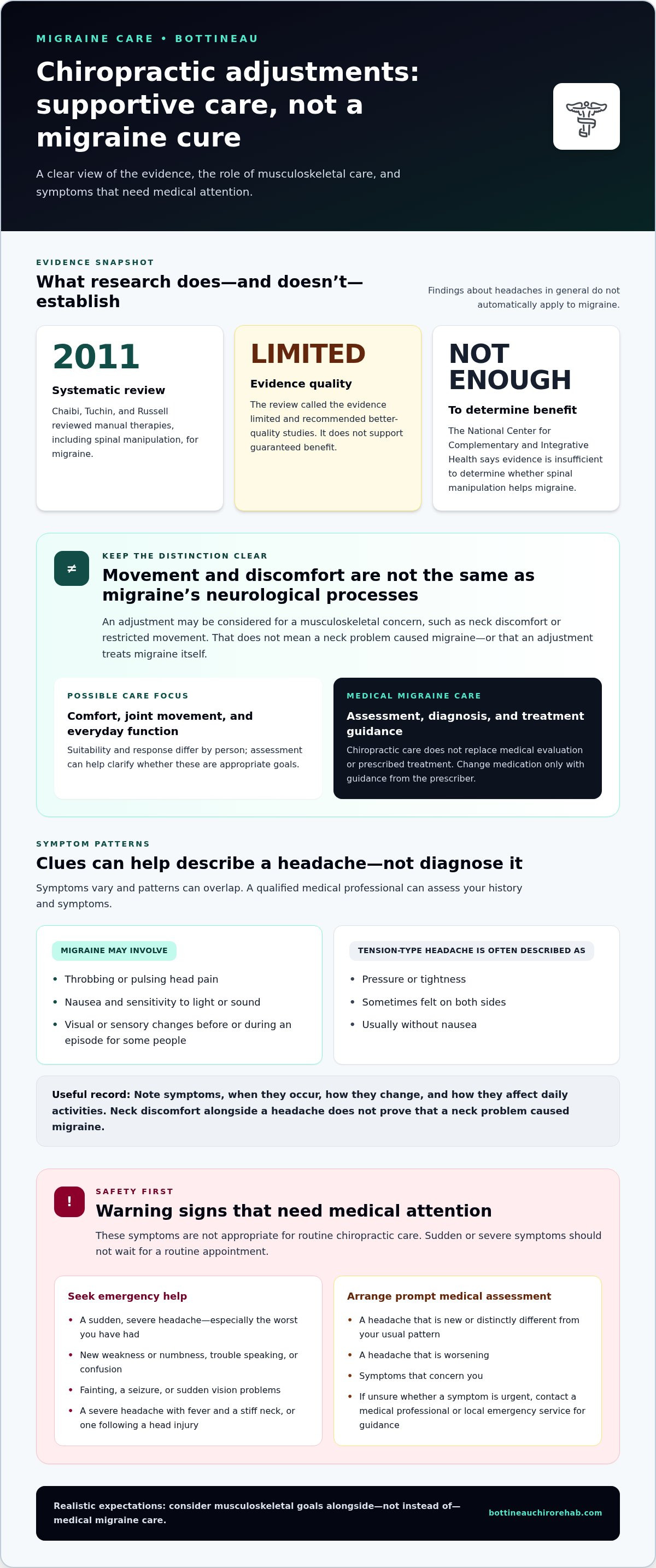
- Migraines are a neurological disorder. Nausea and sensitivity to light or sound can help distinguish migraine symptoms from other headaches, but symptoms alone can’t confirm a diagnosis.
- A chiropractic adjustment addresses musculoskeletal concerns. Neck discomfort can occur alongside migraine, but it doesn’t prove that a neck problem causes the condition.
- Consider chiropractic care only in its role alongside medical migraine care. Change prescribed medication only with guidance from the prescriber.
- Prepare for a visit by recording symptoms and patterns, listing medications, and noting your movement concerns and goals.
- Discuss a chiropractic adjustment for migraines Bottineau with Boundless as part of a function-focused approach, without assuming migraine relief is guaranteed.
Migraines in Bottineau: What They Are and When to Seek Help
Recurring head pain can interrupt work, family routines, and everyday plans. Migraine is more than an especially intense headache. The American Migraine Foundation describes it as a neurological disease that can involve head pain alongside other symptoms. Symptoms vary from person to person and from one episode to another. A symptom list can offer clues, but it can’t confirm a diagnosis. A qualified medical professional can assess your history and symptoms and determine what may be causing them.
How migraine symptoms differ from an ordinary headache
Migraine may involve throbbing or pulsing head pain, often with nausea and sensitivity to light or sound. Some people also experience visual or sensory changes before or during an episode. Tension-type headaches are often described as pressure or tightness, sometimes on both sides, and usually don’t include nausea. These patterns can overlap, so don’t diagnose yourself based on one symptom or assume every recurring headache is migraine.
Keep track of what you experience, when symptoms occur, how they change, and how they affect daily activities. This record can help a medical professional assess the pattern. Neck discomfort may happen alongside a headache, but it doesn’t by itself show that a neck problem caused the migraine.
Headache warning signs that need medical attention
Act quickly if a headache begins suddenly and severely, especially if it feels like the worst headache you’ve had. Seek emergency help for new weakness or numbness, trouble speaking, confusion, fainting, a seizure, or sudden vision problems. A severe headache with fever and a stiff neck, or one that follows a head injury, also needs urgent assessment. These warning signs can have serious causes and aren’t appropriate for routine chiropractic care.
Arrange prompt medical assessment for a headache that is new, distinctly different from your usual pattern, worsening, or accompanied by symptoms that concern you. If you’re unsure whether a symptom is urgent, contact a medical professional or local emergency service for guidance. Don’t wait for a routine appointment if symptoms are sudden or severe.
Chiropractic adjustments address musculoskeletal concerns, not the neurological causes of migraine. For an overview of manual approaches, see Chiropractic treatment techniques; that overview isn’t a substitute for medical guidance about headache symptoms. If you’re considering a chiropractic adjustment for migraines Bottineau, first make sure your symptoms have been appropriately assessed. Routine care should never delay emergency evaluation or replace medical diagnosis and treatment.
How Chiropractic Adjustments May Relate to Migraine Symptoms
A chiropractic adjustment is a hands-on approach to musculoskeletal concerns. Depending on a person’s assessment and goals, care may focus on joint movement or discomfort in areas such as the neck and back. This may be relevant if stiffness or reduced mobility is affecting everyday movement. It doesn’t mean a neck problem caused migraine, and it doesn’t mean an adjustment treats migraine’s neurological processes.
What an adjustment can and cannot be expected to do
Think of an adjustment as possible supportive care for a musculoskeletal concern, not a stand-alone migraine treatment. Suitability and response differ by person. An assessment can help clarify whether neck or movement issues are appropriate goals for care. An adjustment shouldn’t be presented as a promise of migraine relief, a replacement for medical evaluation, or evidence that spinal misalignment causes or cures migraine.
Supportive musculoskeletal care may address movement or discomfort, while migraine management relies on medical assessment and guidance from a qualified health professional. Keep that distinction clear if you’re weighing a chiropractic adjustment for migraines Bottineau alongside other care.
What current evidence says about chiropractic and migraine
Evidence about headache-related outcomes isn’t automatically evidence about migraine. Headache studies may combine different diagnoses, such as tension-type headache and migraine. Improvement reported by people with one headache type can’t establish that the same approach works for another.
A 2011 systematic review by Chaibi, Tuchin, and Russell in The Journal of Headache and Pain examined manual therapies, including spinal manipulation, for migraine. The authors described the evidence as limited and called for better-quality studies. Small studies, different treatment methods, and differences in how researchers measured outcomes make it difficult to draw firm conclusions. The review doesn’t support a guarantee of benefit.
The National Center for Complementary and Integrative Health’s migraine overview also cautions that there isn’t enough evidence to determine whether spinal manipulation helps migraine. Proposed explanations, such as changes in muscle tension or movement, are hypotheses. They aren’t proof that an adjustment changes migraine’s neurological mechanisms or reliably reduces migraine episodes.
That doesn’t make neck discomfort irrelevant. It means the goal should be specific and realistic: consider whether musculoskeletal care could support comfort or function, while keeping migraine diagnosis and management within medical care. Don’t stop or change medication based on chiropractic treatment. Discuss treatment decisions with the clinician who prescribed it.
At Boundless Full Body Chiropractic & Rehab in Bottineau, full-body adjustments, physical therapy, and spinal rehabilitation provide ways to discuss movement and musculoskeletal goals without assuming migraine relief. Explore full-body chiropractic care in Bottineau as one part of an informed conversation about your needs.
Chiropractic Care or Medical Migraine Treatment: How to Think About the Options
These approaches have different purposes. Medical care focuses on evaluating migraine symptoms and discussing diagnosis and treatment. Chiropractic care may address related musculoskeletal concerns, such as stiffness or movement limits. Knowing the distinction helps you choose care without expecting one type to do another’s job.
| Aspect | Chiropractic care | Medical migraine care |
|---|---|---|
| Primary goal | Address musculoskeletal concerns and support movement or function. | Assess symptoms and guide migraine diagnosis and management. |
| Scope | May include adjustments as part of care for relevant joint or muscle concerns. | May include medical evaluation, follow-up, and discussion of treatment options. |
| Limitations | Doesn’t diagnose or treat migraine’s neurological causes, and relief isn’t assured. | Requires an individualized assessment; options depend on the person’s health and symptoms. |
Migraine care may involve coordinated, individually appropriate approaches, with each one serving a clear role. This doesn’t mean combining treatments is proven to improve migraine outcomes. It means care decisions should reflect your health needs and be discussed with the relevant clinicians.
Where chiropractic care may fit alongside migraine care
If neck or back discomfort, stiffness, or restricted movement is affecting your daily activities, you can discuss those concerns as musculoskeletal goals. Be specific about what you hope to improve, such as turning your head more comfortably or managing discomfort during routine tasks. Share your migraine history, other health conditions, medications, and current care. That context helps keep the conversation focused on what chiropractic care can reasonably address.
A chiropractic adjustment for migraines Bottineau shouldn’t be treated as a substitute for migraine assessment or prescribed care. If you’re considering chiropractic alongside medical treatment, let your clinicians know what care you’re receiving. They can help you understand how each approach fits your situation without assuming one will enhance the effects of another.
Why medical migraine care still matters
A qualified medical clinician can review your symptoms, consider possible causes, and discuss appropriate treatment or follow-up. This is especially important if your headaches are changing, severe, or difficult to manage. Chiropractic adjustments don’t replace that assessment and aren’t a reason to stop medical follow-up.
Keep taking prescribed medication as directed. Don’t stop it, change the dose, or delay a recommended medical review without speaking with the prescriber. If you want to add musculoskeletal care, share your current treatment plan and relevant health history. Boundless Full Body Chiropractic & Rehab offers full-body adjustments, physical therapy, and spinal rehabilitation in Bottineau. You can discuss musculoskeletal care in Bottineau as one part of a broader, function-focused approach.
Preparing for a Chiropractic Visit About Migraines in Bottineau
A little preparation can make a conversation about migraine symptoms and musculoskeletal goals more useful. Bring clear information about what you experience, what care you’re already receiving, and what you hope to address. A record won’t diagnose migraine, but it can help you explain your concerns and decide what questions to ask.
What to record before the visit
Keep notes in a phone or notebook. They don’t need to be detailed or complete. Record what you can remember, and bring relevant medical information so your health history is part of the discussion.
- Headache timing and duration: Note when symptoms begin, how long they last, and whether they recur.
- Symptoms: Record head pain and any nausea, light or sound sensitivity, visual changes, or other symptoms you experience.
- Possible patterns: Note what was happening before symptoms began, such as changes in sleep or routine, without assuming a particular factor caused them.
- Medications and evaluations: List current medications and relevant medical visits, diagnoses, or tests. Include the name of the clinician involved in your migraine care if helpful.
Keep the record factual. A pattern in your notes may be useful to discuss, but it can’t confirm a diagnosis or show on its own what causes an episode. If symptoms have changed or you have a new concern, make that clear before any hands-on care is considered.
Questions to discuss during care
Be direct about your goals. For example, you may want to discuss neck stiffness, comfortable head movement, or discomfort that affects everyday activities. Explain which concerns relate to movement and which relate to migraine symptoms. This helps separate musculoskeletal goals from medical migraine management.
- What musculoskeletal concern would care be intended to address?
- What limitations should I understand, including whether migraine relief can be predicted?
- How will we discuss whether the care is helping with my stated movement or comfort goals?
- What options do I have if I’m uncomfortable with a hands-on technique?
Share relevant diagnoses, medical evaluations, medications, and prior responses to chiropractic or other care before hands-on treatment. Mention any concern that affects your comfort or willingness to proceed. You can ask for an explanation and discuss your preferences before agreeing to a technique.
If you’d like a general overview of the first visit, the first chiropractic visit guide can help you know what to expect. For a chiropractic adjustment for migraines Bottineau, use your visit to discuss specific musculoskeletal goals, not to replace medical assessment or prescribed care. Boundless Full Body Chiropractic & Rehab offers full-body adjustments, physical therapy, and spinal rehabilitation in Bottineau. Discuss your movement and care goals with Boundless as a practical next step.
Discuss Migraine-Related Chiropractic Care with Boundless in Bottineau
Recurring migraine symptoms can make it hard to know which kind of care fits your needs. Boundless Full Body Chiropractic & Rehab provides full-body adjustments, physical therapy, and spinal rehabilitation in Bottineau. These services give you a place to discuss movement and musculoskeletal concerns. They aren’t a promise of migraine prevention or relief, and they don’t replace medical diagnosis or migraine treatment.
A practical, function-focused conversation about care
Start with the concern you want to address beyond the migraine itself. For example, neck stiffness might make turning your head or completing daily tasks uncomfortable. Describe which movements feel limited, what brings on discomfort, and what you hope to do more comfortably. Clear goals keep the discussion grounded in function rather than an assumed migraine outcome.
For anyone researching “chiropractic adjustment for migraines Bottineau,” realistic expectations matter. An adjustment may be discussed in relation to musculoskeletal goals, but whether it’s appropriate and how you respond vary. Boundless provides full-body adjustment care and can discuss it in the context of your stated concerns. Don’t assume there is a migraine-specific protocol or guaranteed result. Keep medical care and prescribed treatment in view as you consider your options.
Bring a concise symptom record and a list of medications or relevant medical evaluations. Share diagnoses, changes in symptoms, and any previous response to hands-on care. Mention if a particular position or technique worries you. You deserve to understand the purpose and limitations of care and to raise concerns before proceeding. The discussion should respect your health history and personal goals.
For broader context on what a full-body adjustment involves, read the full-body chiropractic adjustment guide. It can help you prepare questions about the general approach, while your own care conversation should focus on your needs. Boundless also provides physical therapy and spinal rehabilitation, with a function-focused setting to discuss movement goals alongside adjustment care.
Choose a next step that respects your health needs
If symptoms are sudden, severe, unusual, or changing, seek medical assessment before considering routine chiropractic care. For non-urgent concerns, bring your questions and relevant health information to a conversation about musculoskeletal goals. Keep your medical clinician informed, especially if you’re receiving migraine treatment or considering a change to your care plan.
Explore Boundless chiropractic care in Bottineau and learn how full-body adjustments may fit a discussion about your movement and daily function.
Take a Thoughtful Next Step Toward Daily Function
You don’t have to choose between asking questions and keeping your migraine care grounded in medical guidance. If neck discomfort or restricted movement is affecting your daily routine, identify the function you’d like to work on and bring that goal into a care conversation. Keep your medical clinician involved, and seek medical assessment first if symptoms are urgent or unusual.
For people exploring a chiropractic adjustment for migraines Bottineau, Boundless Full Body Chiropractic & Rehab offers a local place to discuss musculoskeletal goals without assuming an adjustment will prevent or relieve migraines. The practice provides full-body adjustments, physical therapy, and spinal rehabilitation for patients in Bottineau and surrounding communities, including Rugby, Rolla, Rollette, Dunseith, St. John, Sherwood, Mohall, Willow City, Lake Metigoshi, Belcourt, Kenmare, Minot, and Velva. Your next step can be a focused conversation about movement, comfort, and what matters in your day-to-day life.
Explore chiropractic care at Boundless in Bottineau and ask about the $47 new patient special. Take the next step at a pace that respects your health needs, with clear goals and informed choices.
Frequently Asked Questions
Can I keep taking migraine medication while receiving chiropractic care?
Yes, keep taking medication as prescribed unless the clinician who prescribed it advises a change. Before hands-on care, share medication names and doses, including nonprescription pain relievers and supplements. This gives the care conversation a more complete picture. Don’t skip a dose or change how you take medication based on an assumption about chiropractic care. If you have concerns about side effects or a medication change, contact your prescriber.
Do migraines always cause an aura?
No. Many people experience migraine without aura. Aura can involve temporary visual, sensory, or speech changes, but those symptoms don’t happen with every migraine. If you experience new or sudden changes, such as a first episode of vision loss or difficulty speaking, seek medical advice rather than assuming it’s aura. A symptom log can help you describe what happened and when, but it can’t determine the cause.
Can a child with recurring headaches receive chiropractic care?
A child with recurring headaches should first have their symptoms discussed with a pediatric medical clinician, who can assess possible causes and advise on appropriate care. Children may have trouble describing how a headache feels, so note changes in behavior, missed school, nausea, or other symptoms. If chiropractic care is being considered for a child’s musculoskeletal concerns, share the child’s medical history and follow the clinician’s guidance.
Is chiropractic care a replacement for seeing a medical clinician about migraines?
No. Chiropractic care doesn’t replace medical evaluation or migraine treatment. A medical clinician can assess symptoms and guide diagnosis and treatment decisions, while chiropractic care may be discussed separately for musculoskeletal goals. If you’re researching “chiropractic adjustment for migraines Bottineau,” keep your medical clinician involved, especially if symptoms are changing or treatment isn’t meeting your needs. Don’t delay follow-up or alter prescribed care because you’re exploring another approach.
Can a migraine happen without head pain?
Yes. Some people can experience migraine aura without a headache, though visual or sensory symptoms can have other causes too. For example, flashing lights or tingling that’s new for you shouldn’t automatically be labelled migraine. Note when symptoms started, how long they lasted, and whether they came with other changes. A medical clinician can help assess these symptoms, particularly if they’re new, unusual, or severe.
What should I do if my headache suddenly becomes severe?
Seek emergency medical help for a sudden, severe headache, especially if it’s unlike anything you’ve experienced before. Call emergency services if it comes with weakness, confusion, trouble speaking, fainting, a seizure, or sudden vision problems. Don’t wait for a routine chiropractic visit or attempt hands-on care first. If possible, tell emergency responders when the headache began and what other symptoms appeared.
Does neck discomfort mean my migraines are caused by a spinal problem?
No. Neck discomfort can occur alongside migraine, but it doesn’t prove that a spinal problem caused it. Pain or stiffness may be worth discussing as its own concern, especially if it affects movement or daily tasks. A clinician can assess your headache symptoms, while a chiropractic care discussion can focus on musculoskeletal goals. Keep those questions distinct so one symptom isn’t mistaken for an explanation of another.


