
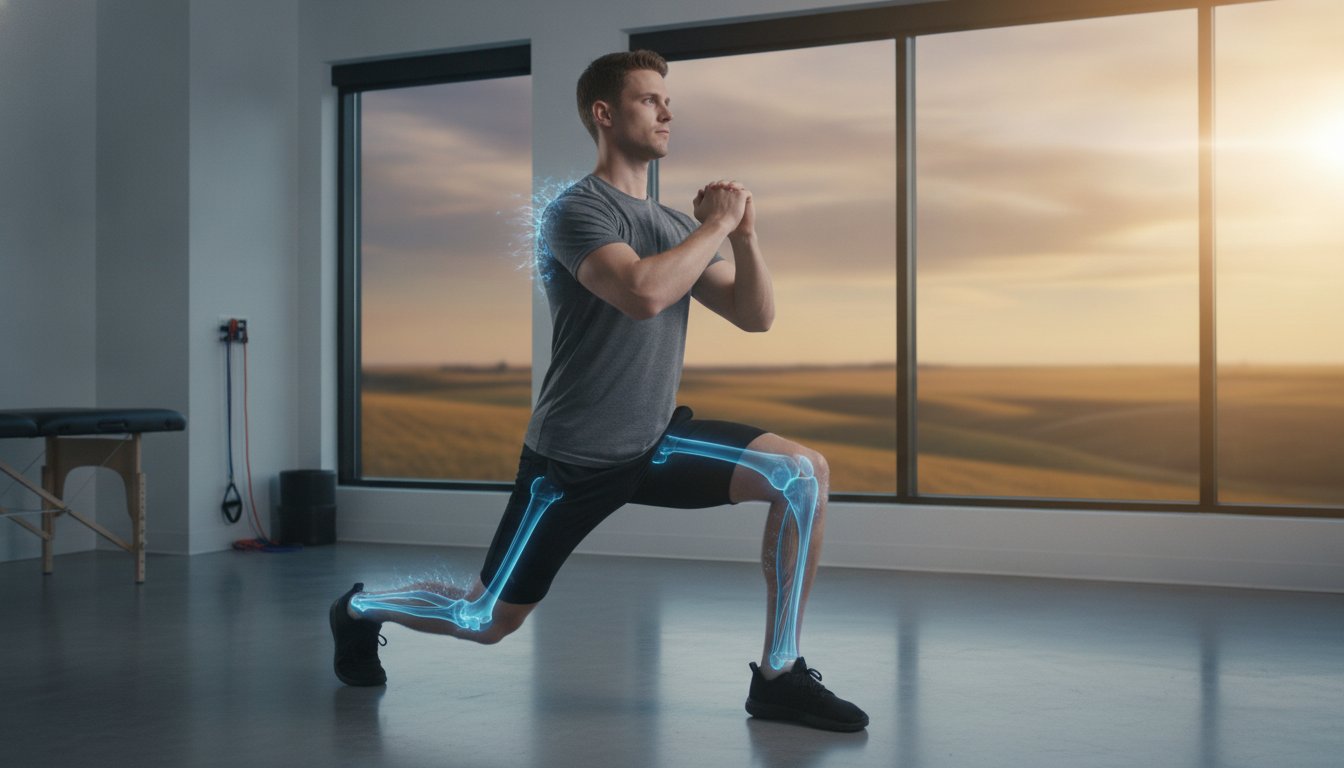
Your recurring sports injury isn't just a streak of bad luck. It's often a sign that your body's kinetic chain is out of sync. Many athletes fear that chronic joint pain means their playing days are over or that invasive surgery is the only path forward. It's frustrating to sit on the sidelines while your teammates progress. You want to move without hesitation, but the fear of re-injury keeps you stuck. Effective sports injury recovery chiropractic care addresses more than just the immediate pain. It looks at how your spine and extremities work together to keep you in the game.
We understand the urgency of getting back to the sport you love. You don't need to settle for temporary fixes or wait-and-see approaches. Specialized full-body chiropractic care accelerates your recovery and restores mobility without the need for surgery. By combining precise extremity adjusting with spinal rehab, we build long-term joint stability from the ground up. This article explores how a comprehensive approach to sports injury recovery chiropractic treatment identifies hidden compensations and provides a clear timeline for your return to peak performance. Discover how to stop the cycle of recurring injuries and regain your competitive edge.
Key Takeaways
- Stop relying on R.I.C.E. alone and address the compensated movement patterns that keep injuries recurring.
- Learn how spinal alignment optimizes your kinetic chain to accelerate healing through improved nervous system communication.
- Identify why extremity adjusting for shoulders, knees, and ankles is the missing link in traditional sports rehab.
- Follow a proven sports injury recovery chiropractic roadmap that prioritizes long-term joint stability over temporary pain relief.
- Access specialized athletic care in Bottineau to establish a clear recovery timeline and return to your sport with confidence.
Beyond R.I.C.E.: Why Traditional Sports Injury Recovery Often Fails
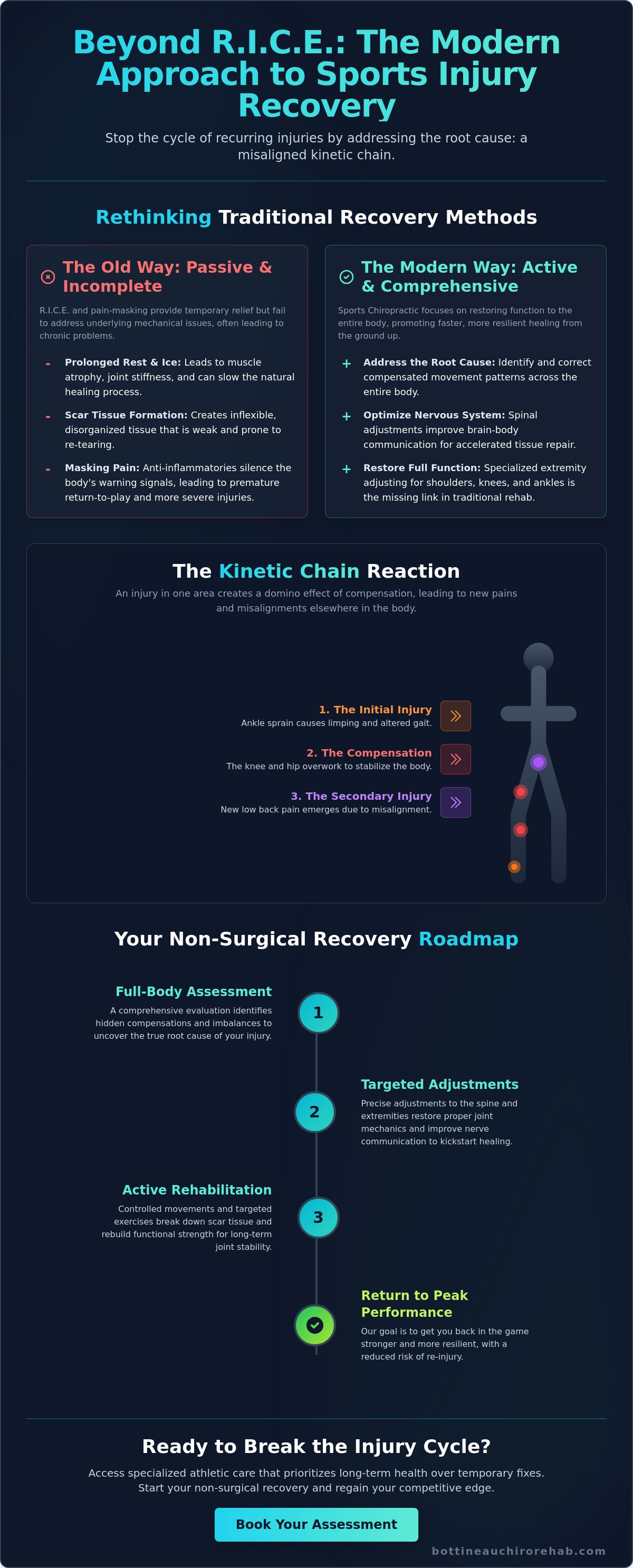
For decades, the R.I.C.E. method (Rest, Ice, Compression, Elevation) has been the gold standard for immediate injury care. It's effective as a first-aid measure in the first 24 to 48 hours. However, it's not a comprehensive recovery plan. Prolonged rest often leads to muscle atrophy and joint stiffness. Ice can actually slow down the natural inflammatory process required for tissue repair by restricting blood flow to the damaged area. If you're stuck in a cycle of icing and resting without seeing progress, your recovery has likely stalled. Modern sports injury recovery chiropractic protocols move beyond these passive treatments to restore actual performance and strength.
One of the biggest risks of traditional "wait-and-see" recovery is the development of scar tissue and adhesions. When your body repairs a ligament or muscle, it lays down collagen in a disorganized, "cross-hatched" pattern. This tissue is less flexible and more prone to re-tearing than original healthy tissue. Without active intervention to break down these adhesions, you lose long-term mobility. This is why modern sports medicine has shifted toward active recovery. You need controlled movement and targeted adjustments to ensure your body heals in a functional, aligned state rather than a stiff, protective one.
The Problem with Masking Pain
Many athletes reach for anti-inflammatories the moment they feel a twinge. While these medications reduce discomfort, they can delay the natural healing response by suppressing necessary biological triggers. There's a critical difference between feeling better and functioning correctly. Masking symptoms with pills often leads to chronic re-injury. You feel "fine," so you return to the field too early; then, the underlying mechanical weakness causes a more severe blowout. This is where sports injury recovery chiropractic care excels; it focuses on restoring mechanical integrity rather than just silencing the body's alarm bells.
Compensatory Injuries: The Chain Reaction
Your body functions as a single, integrated unit. When one part is injured, the rest of the system compensates to keep you moving. If you're limping from an ankle sprain, your hip and lower back must work twice as hard to stabilize your gait. This creates a chain reaction of misalignment. Your "new" lower back pain isn't a separate issue; it's a direct result of your "old" knee or ankle injury. A sports chiropractic overview highlights how practitioners evaluate these movement patterns to prevent secondary injuries. A full-body screening after any significant impact is the only way to ensure your entire kinetic chain is balanced and ready for action. Don't wait for a secondary injury to address the root cause of your first one.
The Kinetic Chain: How Full-Body Adjustments Accelerate Healing
Your body does not move in isolation. It functions as a series of connected segments where the movement of one joint directly influences the next. The kinetic chain is the interconnected system of muscles, joints, and nerves. When you suffer an injury, this chain breaks down. A restricted ankle doesn't just hurt; it changes how your knee absorbs force and how your hip stabilizes your weight. If your recovery plan only focuses on the ankle, you're leaving the rest of the chain vulnerable to failure. Effective sports injury recovery chiropractic care views the body as a whole to ensure every link in the chain is functioning at its peak.
Full-body adjustments are essential for restoring symmetrical weight distribution. Most athletes naturally favor their "good" side after an impact, which creates a dangerous imbalance. This lopsided movement pattern puts excessive stress on healthy tissues, often leading to a secondary injury. By aligning the spine and extremities simultaneously, we reset your center of gravity. Utilizing advanced chiropractic treatment methods allows us to restore this balance quickly. This ensures your body isn't fighting against its own mechanics while trying to repair damaged tissue.
Neurological Benefits of Chiropractic Care
Healing is a communication process. Your brain must send clear signals to the injured area to coordinate repair and manage inflammation. Spinal misalignments interfere with these neural pathways, essentially "muffling" the signal. Adjustments clear these pathways and improve proprioception, which is your brain’s awareness of your limb position. We also work to eliminate "protective guarding." This occurs when muscles stay chronically tight to protect a joint long after the initial threat has passed. Breaking this cycle is the only way to regain the fluid, explosive movement required for high-level athletics.
Spinal Rehab and Performance
Core stability is the foundation of all extremity power. You cannot generate maximum force in your arms or legs if your spine is unstable. For example, your shoulder mobility is directly linked to the health of your cervical spine; the nerves controlling your rotator cuff originate in your neck. Even if your injury is far from your back, your recovery depends on a foundation of spinal health. Strengthening this foundation is a key part of sports injury rehab. When your spine is aligned, your nervous system can focus on performance rather than compensation. This holistic approach ensures you don't just get back to the game, but you return stronger than before.
Restoring Extremity Function: Shoulders, Knees, and Ankle Rehabilitation
Most people associate chiropractic care exclusively with the spine. For an athlete, this is a dangerous misconception. While spinal health is the foundation, sports injuries frequently occur in the "extremities," like your knees, ankles, and shoulders. Extremity adjusting is often the missing link in standard recovery plans. If a joint in your foot or wrist is misaligned, a spinal adjustment alone won't fix the mechanical tracking issue. Specialized sports injury recovery chiropractic care involves specific, low-force movements applied directly to peripheral joints to restore their natural "glide." This mechanical correction is essential for long-term mobility.
High school and amateur athletes often face pressure to consider invasive surgery for common injuries. In many cases, non-surgical intervention is not only possible but preferable. Conditions like rotator cuff strains, tennis elbow, and runner's knee often stem from joint dysfunction rather than permanent structural damage. A comprehensive chiropractic care for athletes program addresses these issues by restoring proper joint mechanics. This allows the body to heal naturally and reduces the risk of chronic re-injury. You don't need to go under the knife to get back on the field.
Lower Extremity: Knees, Ankles, and Feet
Your feet are your foundation. When the 26 bones in your foot aren't moving correctly, the soft tissue takes the hit. This leads to painful conditions like plantar fasciitis and Achilles tendonitis. We adjust the small joints of the foot and ankle to restore the essential "spring" in your step. Knee issues are rarely just about the knee. Tracking problems are often solved by adjusting the ankle and hip to ensure the leg moves as a balanced unit. Proper alignment here is the key to absorbing impact during explosive movements.
Upper Extremity: Shoulders, Elbows, and Wrists
Repetitive motion injuries like "pitcher’s shoulder" or "golfer’s elbow" don't always require cortisone shots. Those injections often mask the pain while the underlying mechanical friction continues to degrade the tissue. We focus on scapular mechanics; if your shoulder blade isn't moving correctly, your rotator cuff is forced to overwork. We also address the wrists and hands. Grip-heavy sports require precise joint mobility in the forearm and wrist. Restoring this function restores your total arm strength and prevents the "dead arm" feeling many athletes struggle with during a long season.
Your Non-Surgical Recovery Roadmap: What to Expect During Rehab
Recovery isn't a guessing game. It requires a structured, objective process to move you from acute pain back to peak performance. Many athletes fail because they jump back into training the moment the sharp pain fades. This roadmap ensures your sports injury recovery chiropractic plan is thorough and sustainable. We follow a five-step process designed to identify the root cause and rebuild your body's resilience.
- Step 1: Evaluation. We perform a comprehensive physical and orthopedic evaluation. We don't just look at where it hurts; we find the mechanical failure that caused the injury.
- Step 2: Acute Care. This phase focuses on reducing inflammation and restoring basic range of motion. We stop the damage from spreading.
- Step 3: Stabilization. We use physical therapy and spinal rehab exercises to strengthen the supporting structures. This protects the joint from future stress.
- Step 4: Functional Testing. Before you return to play, we test the joint under athletic stress. We ensure your kinetic chain is balanced and ready.
- Step 5: Maintenance. Periodic check-ups keep your body aligned. This prevents minor imbalances from becoming major injuries.
Phase 1: The Relief Stage
The first goal is simple: stop the pain. We use full-body adjustments to take the immediate pressure off the injured area. This reset allows your nervous system to calm down. We also incorporate soft tissue techniques. These methods break up early-stage adhesions and scar tissue before they limit your mobility. By the end of this phase, you should have a clear baseline for pain-free movement. You'll feel the difference in how your body carries weight almost immediately.
Phase 2: The Rebuilding Stage
Once the pain is managed, the real work begins. We integrate physical therapy to strengthen the specific muscles that support your injured joint. We also focus on your posture. Many injuries are the result of poor habits developed over years of training. Correcting these habits ensures the injury doesn't return the moment you increase your intensity. This phase transforms your "healed" injury into a high-functioning asset. It's the most critical part of sports injury recovery chiropractic care because it prevents the relapse that sidelines so many athletes. Don't wait for the pain to become permanent. Schedule your sports injury rehab evaluation and get your recovery roadmap today.
Targeted Sports Rehab in Bottineau: Start Your Recovery for $47
Boundless Full Body Chiropractic & Rehab is the local leader in athletic recovery. We don't just treat the spine; we treat the athlete. Dr. Daniel Pozarnsky provides specialized expertise in both full-body and extremity adjusting. This comprehensive approach is why local athletes from Bottineau to Minot trust our non-surgical methods. We understand the urgency of your season. You need a clear path back to the field, not a vague recommendation to rest and wait. Our sports injury recovery chiropractic protocols are designed for speed, efficiency, and long-term stability.
Our $47 New Patient Special removes the guesswork from your recovery process. This introductory offer includes a comprehensive physical exam and a detailed consultation. We find the mechanical failure that others miss. We establish a clear path forward based on your specific athletic goals and injury history. It's a low-friction way to experience a higher level of care. You'll leave your first visit with a better understanding of your body and a concrete plan to fix it.
Serving the Bottineau Community
We provide convenient, expert care for athletes in Rugby, Rolla, and surrounding North Dakota towns. Our clinic supports local high school athletics and dedicated weekend warriors alike. We're committed to keeping our community active and pain-free. Whether you're a student athlete aiming for a scholarship or a competitive adult runner, your mobility is our priority. We live where you live. We want to see our local teams and individuals succeed without being sidelined by preventable pain. Our sports injury recovery chiropractic services are built on this commitment to local excellence.
Take the First Step Toward Recovery
Claiming your $47 introductory special is the most important move you'll make this season. Contact us today to schedule your initial evaluation. For your first visit, please bring any previous imaging, such as X-rays or MRIs, and a brief summary of your athletic history. This information helps us build the most accurate recovery roadmap possible. We value your time and your health equally. Stop letting a recurring injury dictate your performance and your future. Book your $47 New Patient Special at Boundless Full Body Chiropractic and start your journey back to peak performance today.
Take Control of Your Athletic Future Today
You don't have to accept chronic pain or recurring injuries as a permanent part of your life. We've shown that traditional rest and icing are often insufficient for long-term health. True healing requires a deep look at your entire kinetic chain and the specific mechanics of your joints. Dr. Daniel Pozarnsky utilizes specialized full-body expertise to identify the hidden compensations that keep you sidelined. This non-surgical approach focuses on restoring actual function so you can move with confidence again.
Our sports injury recovery chiropractic process provides the structure and clarity you've been missing. You'll move through a proven roadmap that prioritizes immediate relief and long-term joint stability. It's time to stop second-guessing your recovery and start making measurable progress toward your goals. Claim Your $47 New Patient Special & Start Your Recovery today. This introductory offer provides a comprehensive exam and a clear strategy for your comeback. Your best performance is still ahead of you; don't let an old injury hold you back any longer.
Frequently Asked Questions
Is chiropractic care safe for sports injuries?
Chiropractic care is extremely safe for sports injuries when performed by a licensed professional. We conduct a thorough orthopedic screening to rule out fractures or severe ligament tears before any treatment begins. This non-invasive approach avoids the risks associated with surgery or long-term medication use. Our adjustments are precise and tailored to your specific injury and body type to ensure maximum safety and comfort.
How soon after a sports injury should I see a chiropractor?
You should see a chiropractor within 24 to 48 hours of an injury. Early intervention is the best way to prevent the body from developing protective guarding or compensatory movement patterns. Addressing the mechanical issue immediately accelerates the sports injury recovery chiropractic process. Waiting too long allows scar tissue to set in, which can lengthen your total rehab time significantly.
Can chiropractic help with old sports injuries that never healed properly?
Yes, chiropractic care is highly effective for chronic injuries that never fully resolved. These old issues often involve persistent joint restrictions and layers of scar tissue that limit your mobility. We use targeted adjustments to reset these joints and break up long-standing adhesions. Restoring proper mechanics can often eliminate pain that you've lived with for years, even if other treatments failed.
Do I need a referral from a medical doctor for sports injury rehab?
No, you don't need a referral from a medical doctor to begin care. Chiropractors are primary care providers for musculoskeletal issues. You can schedule your initial evaluation directly with us to start your recovery immediately. We'll perform our own comprehensive assessment to determine the root cause of your pain and create a customized roadmap for your return to sport.
Will I need to stop playing my sport during chiropractic treatment?
You rarely need to stop all activity during your treatment. We advocate for active recovery, which means modifying your training rather than sitting on the sidelines. Total rest often leads to stiffness and muscle loss. We'll provide specific instructions on what movements are safe and how to maintain your conditioning while your injury heals. Our goal is to keep you moving safely throughout the process.
How many sessions does it typically take to recover from a sports injury?
The number of sessions depends on the severity and age of the injury. Acute strains may show significant improvement within four to six visits. Chronic conditions that involve long-term compensation may require a longer stabilization period to ensure the injury doesn't return. We provide a clear recovery timeline after your initial exam so you know exactly what to expect. Consistency is the key to achieving long-term joint stability.
What is the difference between physical therapy and chiropractic for athletes?
Chiropractic focuses on joint alignment and nervous system function, while physical therapy emphasizes muscle strengthening and flexibility. At our clinic, we integrate both approaches to provide a complete solution. We adjust the joint to restore its natural glide and then use physical therapy to stabilize the surrounding muscles. This combination ensures your sports injury recovery chiropractic plan is both fast and permanent.
Does sports injury chiropractic treatment hurt?
Most patients find sports injury adjustments to be a source of immediate relief. While you might feel some mild soreness as your body adapts to new alignment, the process itself is not painful. We use low-force techniques and precise movements to ensure your comfort. If a specific area is too inflamed for a direct adjustment, we utilize soft tissue methods to reduce sensitivity and inflammation first.


