

A headache after a car accident can begin days or weeks after the impact. A chiropractor after a car accident in Bottineau can assess whether whiplash or strained neck muscles may be contributing and whether chiropractic adjustments could help address the dysfunction. The right approach starts with understanding what’s driving your symptoms.
It’s frustrating when head pain appears after a crash, especially if you felt fine at first. Neck injuries can affect how muscles move and function, and irritation may contribute to headaches. Symptoms that appear later still deserve attention.
Learn how whiplash and neck muscle dysfunction may contribute to headaches, what an assessment and individualized chiropractic care can involve, and when medical evaluation may be more appropriate. You’ll get a clearer sense of possible next steps for addressing discomfort and movement.
Key Takeaways
- Headaches can emerge days or weeks after a collision. Notice when symptoms began and how they change, as that timeline can help guide an assessment.
- Whiplash may strain neck muscles and affect how they support head movement. Learn which signs can point to neck dysfunction as a contributor to head pain.
- A tailored care plan can account for your symptoms, movement, and recovery needs. See what factors shape the approach before treatment begins.
- Chiropractic adjustments may be considered as part of care for accident-related neck dysfunction. Understand what they aim to address and how progress can guide next steps.
What Causes Headaches after an Auto Accident Injury?
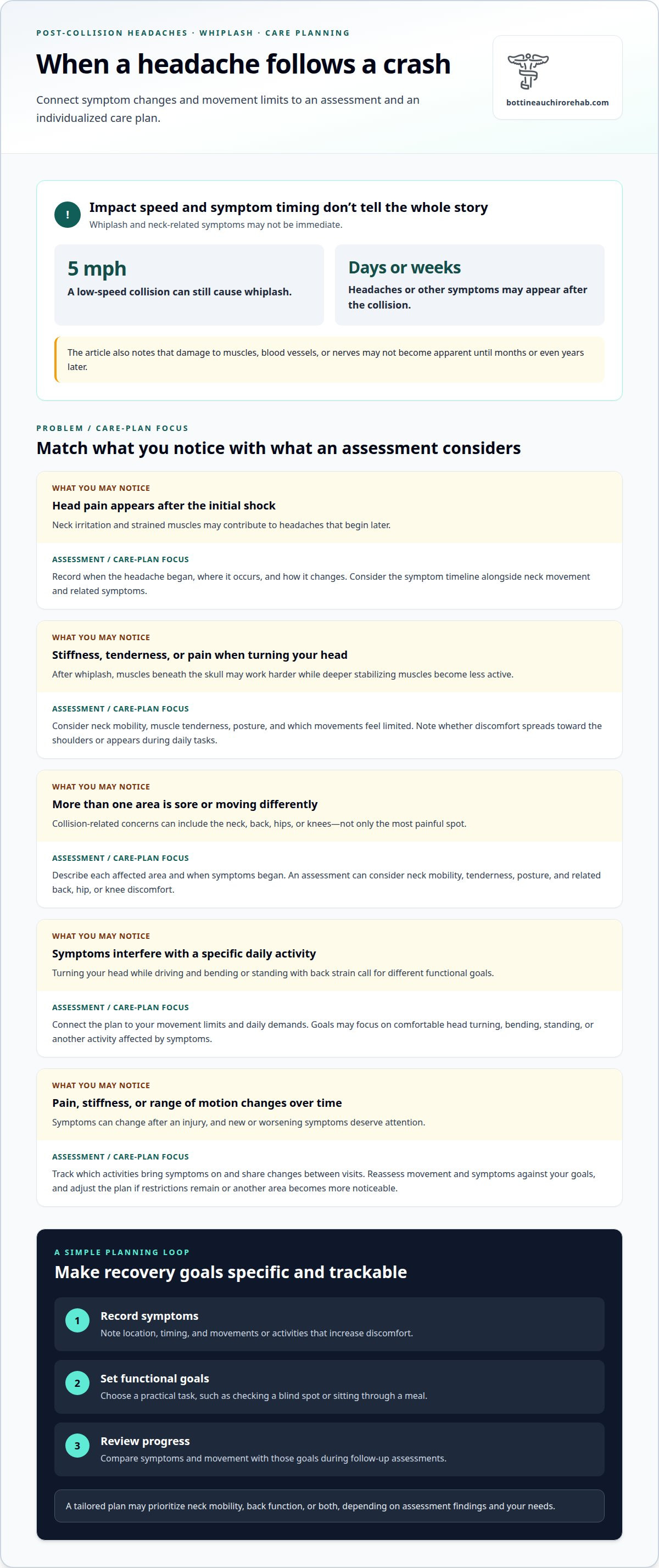
Headaches after a car accident can begin after the initial shock has passed. Neck irritation and strained muscles may contribute to head pain days or weeks after impact. Whiplash can strain muscles, tendons, and joints, while back pain may involve soft-tissue injuries. Other common concerns include soreness or reduced movement in the lower back, hips, and knees. Consider each affected area, especially when symptoms appear together or change over time.
Neck dysfunction can affect how muscles support and move the head. When some muscles tighten or work harder, nearby tissues may become irritated and movement may feel restricted. A chiropractor after a car accident in Bottineau can assess neck movement and related symptoms. Chiropractic care addresses musculoskeletal concerns, but headaches should be considered as part of the broader injury picture.
Residual injuries need a structured assessment, not just attention to the most painful spot. Start by recording when each symptom began, where it occurs, and what movements make it worse. An assessment can then consider neck mobility, muscle tenderness, posture, and related back, hip, or knee discomfort. These details help shape a treatment plan around function and the areas affected. Symptoms can emerge days or weeks after a collision, and damage to muscles, blood vessels, or nerves may not become apparent until months or even years later.
To compare Bottineau chiropractors, review credentials, experience evaluating collision-related injuries, appointment availability, and patterns in patient reviews. Look for clear explanations of the assessment and how the proposed care relates to your symptoms.
For a car accident in North Dakota, keep the clinical question separate from insurance paperwork. Coverage and documentation depend on your policy and how care is paid for. Review your policy information and discuss claim requirements with your insurer.
Which chiropractors in Bottineau treat patients after car accidents? Look for a local chiropractor who assesses post-collision neck and soft-tissue concerns, considers related back or joint symptoms, and explains the care plan in plain language.
Whiplash and neck muscle dysfunction
Whiplash can affect the neck even when a collision seems minor. The speed of impact alone does not show how the muscles and joints responded.
Whiplash After Collisions
A sudden forward-and-back movement can strain neck muscles, tendons, and joints. A car traveling at 5 mph can cause whiplash, so low-speed impact doesn’t rule out injury. Symptoms may appear days or weeks after a collision, rather than immediately. Similar rapid neck movement can also occur in falls or contact sports. Consider the direction of impact, when symptoms began, and which movements now feel limited.
Neck Pain and Muscle Dysfunction
After whiplash, muscles beneath the skull may work harder while deeper stabilizing muscles become less active. This imbalance may contribute to stiffness, tenderness, and pain when turning or holding the head in one position. Notice whether discomfort spreads toward the shoulders or worsens during tasks such as checking a blind spot. These examples help explain how your neck functions during daily activities.
Inflammation from neck trauma may develop in the days after impact. Track changes in pain, stiffness, and range of motion, noting the activity that brings each symptom on. Because symptoms can change after an injury, new or worsening symptoms deserve attention even after the initial soreness settles. A focused evaluation can consider the collision, symptom timeline, and neck movement together. For a better understanding of how neck injury care can address movement-related concerns, explore the available information and discuss your symptoms during an assessment.
Customized chiropractic treatment plans
A useful care plan connects your symptoms with specific movement limits and daily demands. Neck discomfort while driving, for example, calls for different functional goals than back strain that makes lifting difficult. Describe where symptoms occur, what triggers them, and which activities they interrupt. An assessment can then consider movement, tenderness, and the areas involved.
Individualized care should reflect the injury pattern rather than follow the same sequence for everyone. Depending on the findings, a plan may focus on neck mobility, back function, or both. If turning your head is limited but walking feels comfortable, the priorities differ from those in a case involving difficulty bending or standing. Clear goals connect each part of care to a practical activity.
- Record symptoms: Note the location, timing, and movements that increase discomfort.
- Set functional goals: Identify a task, such as checking a blind spot or sitting through a meal.
- Review progress: Compare movement and symptoms with those goals during follow-up assessments.
Recovery planning can account for work, family responsibilities, and usual activities. Someone who drives for work may want to regain comfortable head turning, while a person with lower-back strain may focus on bending and standing. These examples make goals concrete and give the practitioner a basis for adjusting care if movement remains restricted or another area becomes more noticeable.
Share changes between visits, including new symptoms and activities that feel easier or harder. Use those details to guide the next step rather than relying on memory alone. Keep a brief written record of daily activities and symptom responses. This gives reassessments a clear comparison point and helps keep care focused on your current function and needs.
Chiropractic adjustments
Chiropractic adjustments apply controlled force to a joint to address movement restrictions. After a collision, the area and technique should be chosen following an assessment, not based on the headache alone. A practitioner may consider neck movement, tenderness, and related back symptoms before deciding whether an adjustment fits the care plan. The approach should match the findings.
What are the risks after a car accident, especially with neck or back injuries? Applying force to an injury that has not been assessed may aggravate symptoms. A careful evaluation should consider the accident history, affected areas, pain, and movement before treatment. Share new or worsening symptoms and describe which positions make them worse. These details help determine whether an adjustment is appropriate or whether another step is needed.
Before care proceeds, the practitioner can explain the target area and intended purpose. Ask what movement an adjustment is meant to address, and speak up if a position increases discomfort. For example, limited head turning can be discussed alongside the movements used during assessment. This keeps care connected to a clear functional concern rather than an unexplained routine.
- Before: Describe headache patterns, neck or back pain, and movements that feel restricted.
- During: Make sure the target area and planned approach are explained in clear language.
- After: Track changes in symptoms and movement, then share them at reassessment.
Headaches after an accident can involve several factors, so an adjustment shouldn’t be treated as a guaranteed fix. Progress is better judged through practical changes, such as turning your head more comfortably or managing a daily task with less difficulty. Keep those goals specific. If you’re ready to discuss whether adjustments fit your symptoms, schedule a chiropractic assessment and bring a clear account of your injury and current concerns.
Boundless Full Body Chiropractic & Rehab: Extremity Adjusting
Boundless Full Body Chiropractic & Rehab offers Extremity Adjusting for care that includes joints beyond the spine. When clinically appropriate, this may be relevant after a collision if symptoms involve an arm or leg as well as neck or back concerns. Full-Body Adjustments can address multiple areas, depending on your symptoms and examination findings.
If your recovery involves returning to physical activity, Sports Injury Rehab may support that goal. Describe the activities that feel difficult and the symptoms that limit them. This helps connect care to practical movement goals.
Contact Boundless Full Body Chiropractic & Rehab to discuss your symptoms and next steps.
Take the Next Step Toward Comfortable Movement
Make your appointment more useful by arriving with a clear account of what has changed since the collision. Note which activities bring on discomfort, what movements feel restricted, and how symptoms affect your routine. Bring your questions, too. A focused conversation helps connect your concerns with practical goals for care.
Choosing a chiropractor after a car accident in Bottineau means finding a care path that addresses your needs and movement goals. Boundless Full Body Chiropractic & Rehab can help you discuss those concerns and determine whether its approach fits your situation. You don’t need to have every detail figured out before taking that step.
Contact Boundless Full Body Chiropractic & Rehab to start a conversation about your recovery. A clear next step can help you move forward with greater confidence.
Frequently Asked Questions
How Can a Chiropractor Help?
A chiropractor can assess musculoskeletal symptoms and determine whether chiropractic care fits your needs. For example, difficulty turning your head to check a blind spot can be considered alongside neck movement and tenderness. Findings help determine whether care should focus on the spine, an extremity, or another area. If concerns fall beyond chiropractic care, referral for medical evaluation is appropriate.
What Happens After an Injury?
After an injury, an assessment considers symptoms and movement to understand how daily activities are affected. Describe what happened, where discomfort occurs, and which tasks feel difficult, such as lifting groceries or sitting through a commute. The practitioner uses this information to discuss suitable next steps. Track changes between visits so new concerns can be included in the discussion.
What chiropractic services for car accident injuries are available in Bottineau?
In Bottineau, Boundless Full Body Chiropractic & Rehab offers Full-Body Adjustments, Extremity Adjusting, and Sports Injury Rehab. These services address different musculoskeletal needs, from spinal concerns to symptoms involving an arm or leg. The practice also provides physical therapy and spinal rehabilitation. The appropriate service depends on your symptoms and examination findings.
Do Bottineau chiropractors accept auto insurance or personal injury protection claims?
Coverage for auto insurance or personal injury protection claims depends on your policy and the applicable billing arrangements. Review your coverage documents and ask your insurer whether chiropractic care is eligible, what documentation is needed, and how claims are submitted. Keep accident details and claim information together. Do not assume coverage based only on the injury or treatment type.
How soon after a car accident should I see a chiropractor?
Arrange an assessment promptly if you notice pain, stiffness, or restricted movement after a collision. Symptoms can appear days or weeks after an accident, so feeling well immediately afterward doesn’t rule out later discomfort. Note when symptoms begin and what activities affect them. If an injury appears to need medical evaluation beyond chiropractic care, that evaluation should take priority.
What injuries and symptoms can a chiropractor assess after a car accident?
A chiropractor can assess musculoskeletal concerns such as neck or back pain, soft-tissue strain, reduced joint movement, and discomfort in the hips, knees, or other extremities. Mention headaches, tenderness, or difficulty with a specific task, such as reaching overhead. This helps connect symptoms with movement and function. An assessment can also identify findings that require medical evaluation beyond chiropractic care.


