

Stiff joints can make everyday movement feel like work, but targeted care may help improve mobility. A chiropractic adjustment for joint stiffness may ease symptoms, while soft-tissue techniques and guided exercises can support flexibility and strength. These approaches may help manage symptoms, but they do not cure arthritis or replace medical care.
If getting up, reaching, or walking feels harder than it should, the frustration is real. Stiffness can follow an injury or occur alongside arthritis. Understanding what is affecting the joint helps shape an appropriate approach. The goal is not simply to make a joint crack, but to support comfortable, practical movement.
Learn how adjustments and joint manipulation work, how soft-tissue techniques may fit into care, and what mobility changes may be possible. An evaluation matters, as does knowing when medical guidance is important. These details can help you make a more informed next move.
Key Takeaways
- Joint stiffness can have different causes, so understanding the symptoms and movement limits helps guide the next step.
- Adjustments, gentle mobilization, soft-tissue techniques, and movement guidance may support comfort and mobility.
- Learn what an assessment considers before treatment and why the approach should match the joint and your symptoms.
- Know when stiffness or other symptoms call for medical guidance alongside chiropractic care.
Can Chiropractic Care Ease Joint Pain?
Yes, chiropractic care may ease some joint symptoms and support mobility, especially when treatment addresses movement as well as discomfort. A chiropractic adjustment for joint stiffness may be paired with physical therapy, therapeutic exercises, or soft-tissue techniques. The right combination depends on what is causing the stiffness, which joint is affected, and how symptoms respond.
Arthritis encompasses more than 100 different types of joint diseases, according to the Centers for Disease Control and Prevention. About 54 million U.S. adults have arthritis, according to the Centers for Disease Control and Prevention. Osteoarthritis and rheumatoid arthritis affect joints differently, so the care approach matters. Adjustments may support movement, but they don’t cure arthritis or restore cartilage already lost.
Chiropractic care can complement medical treatment. For example, someone managing rheumatoid arthritis may continue prescribed medication while discussing manual therapy with their healthcare team. A chiropractor may use appropriate adjustments alongside active therapies, such as exercises to strengthen muscles around the affected joint. Physical therapy can also focus on flexibility, balance, and everyday tasks such as standing from a chair. Massage and other complementary therapies may be considered as additions to a care plan, depending on symptoms.
In the United States, insurance coverage depends on the policy, covered services, and network terms. Chiropractic costs depend on the case and are given after a quote request; factors include the affected joint, treatment approach, and whether care combines adjustments with physical therapy. Review how the plan treats each service, rather than assuming every part of a combined plan has the same coverage.
There is no standard visit count for joint stiffness. Care depends on its cause, severity, movement limits, and response. Progress can be assessed through practical changes, such as reaching more comfortably or walking with less stiffness. Ongoing symptoms, swelling, or difficulty moving may call for medical evaluation alongside chiropractic care.
Potential symptom relief and mobility improvement
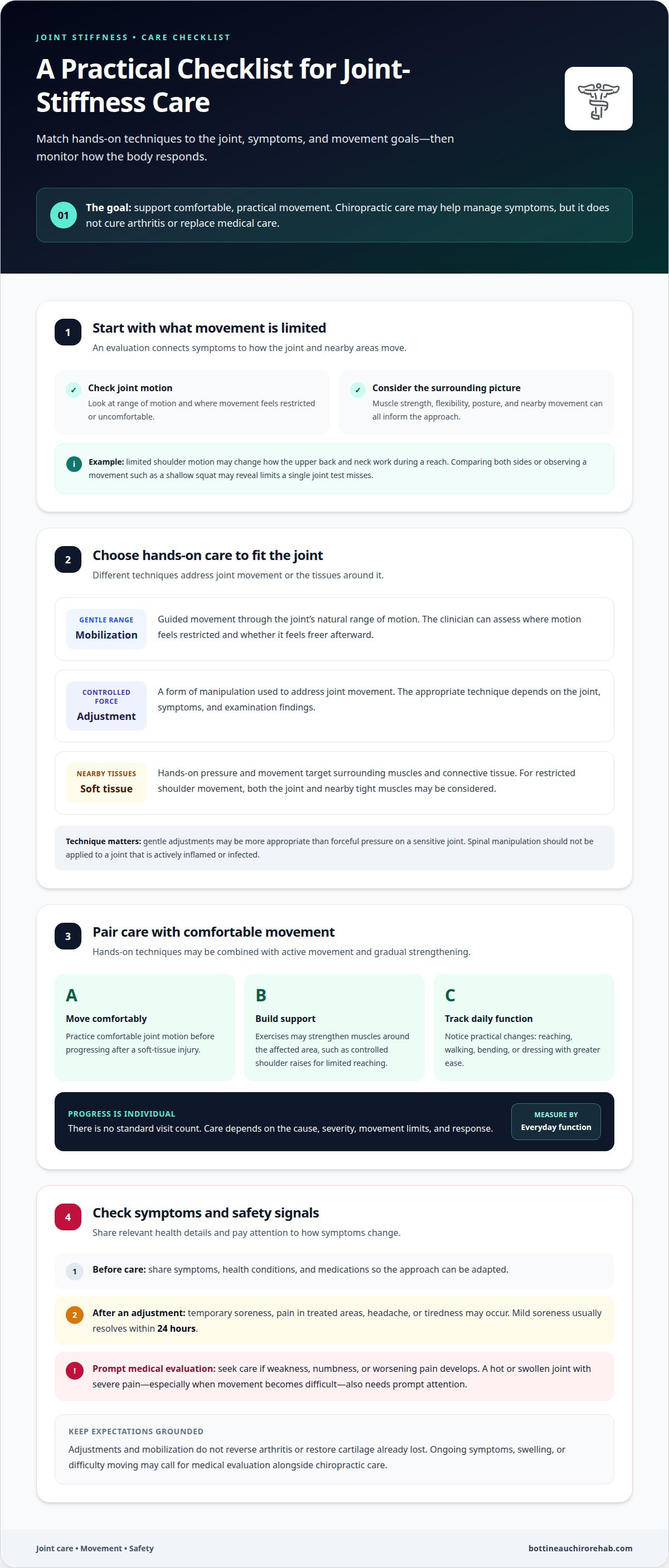
Joint stiffness can limit everyday movements, such as turning your neck to check traffic or raising an arm to reach a shelf. A chiropractic evaluation can look at the affected joint’s motion, muscle strength, flexibility, and posture. These details help show whether restricted movement is isolated or linked to how nearby areas move. For example, limited shoulder motion may change how the upper back and neck work during a reach.
Joint mobilization uses gentle, guided movement through a joint’s natural range of motion. The clinician can assess where motion feels restricted and whether it becomes freer afterward. An adjustment is another form of manipulation, using controlled force to address joint movement. The appropriate approach depends on the joint, symptoms, and examination findings. Neither approach reverses arthritis or guarantees lasting pain relief, but care may support function and mobility.
Spinal adjustments focus on joints in the spine, while other techniques can address movement elsewhere. A mobility assessment may compare both sides of the body, observe posture, and test a movement related to symptoms. For instance, a clinician might observe how the hips and back move during a shallow squat. This can reveal movement limits that a single joint test may miss.
Gentle techniques matter when stiffness occurs alongside sensitivity or a musculoskeletal condition. Treatment can be adjusted to the joint’s comfort and response, then paired with active movement to build strength. Exercises may target muscles that support the affected area, such as controlled shoulder raises for limited reaching. Progress is best judged by practical tasks, including walking, bending, or dressing with greater ease. A focused assessment can help connect mobility findings with a care plan, including spinal rehabilitation when appropriate.
Manual adjustments and soft-tissue manipulation
Manual care can address joint motion and the tissues that influence it. An adjustment applies controlled force to a joint, while soft-tissue techniques target surrounding muscles and other tissue. Restricted shoulder movement, for example, may involve both the joint and nearby tight muscles. Addressing both may support more comfortable movement and everyday function.
Soft-tissue therapy may be used after an injury when tenderness or swelling limits motion. Hands-on pressure and movement can target affected muscles and connective tissue while the clinician monitors comfort and range. For a sprained ankle, care may focus on the tissues around the joint rather than forcing painful movement. The aim is to support recovery and function, not promise a particular result.
The technique should fit the condition. With osteoarthritis, gentle adjustments may be more appropriate than forceful pressure on a sensitive joint. Chiropractic care cannot replace cartilage lost through joint wear. Spinal manipulation should not be applied to a joint that is actively inflamed or infected. Sharing symptoms, health conditions, and medications helps inform a safer approach.
Soft-tissue techniques and adjustments may be paired with movement guidance. After care for a soft-tissue injury, a patient might practice comfortable joint motion before progressing to strengthening exercises. Strengthening the muscles around an injured joint can help support movement during everyday tasks. The clinician can adapt the technique to the joint’s response and the patient’s symptoms.
Patients may notice temporary soreness, pain in treated areas, headache, or tiredness after an adjustment. Mild soreness usually resolves within 24 hours. Stop and seek prompt medical evaluation if weakness, numbness, or worsening pain develops. A hot or swollen joint with severe pain, especially when movement becomes difficult, also needs prompt attention.
Chiropractic adjustment and joint manipulation
Joint manipulation uses controlled force to influence movement in a joint. A spinal adjustment focuses on spinal joints, while other manual approaches can address joints elsewhere. Some adjustments use a high-velocity, low-amplitude technique, applying one or more quick, controlled thrusts that move a joint beyond its usual range. A popping sound may occur, but it does not show whether treatment is helping. More useful measures are changes in movement and daily function.
Joint mobilization differs because it moves the joint gently through its natural range. The choice depends on the affected area, symptoms, and physical assessment. For example, a stiff shoulder may call for a gentler approach than a joint that moves comfortably. Restricted motion in one area can also place extra stress on surrounding joints, so an assessment may consider how several areas move together.
Manipulation is not appropriate for every joint or person. It should not be used on an inflamed or infected joint. Osteoporosis, spinal instability, or a recent fracture may require modified techniques or make certain adjustments unsuitable. People with rheumatoid or psoriatic arthritis should avoid manipulation where the disease is active. Health history, current inflammation, and the location of joint pain are important to care planning.
For a strain, soft-tissue therapy may address tissues around the affected joint while movement guidance helps restore comfortable function. A plan can pair hands-on care with exercises that support the surrounding muscles. Chiropractic treatment complements medical care; it doesn’t replace prescribed medication or cure arthritis. Stop treatment and seek prompt evaluation for new weakness, numbness, or worsening pain. Choose an approach that respects your symptoms and supports your ability to move. Explore care for joint mobility and the options available for your movement goals.
Boundless Full Body Chiropractic & Rehab: Extremity Adjusting
Boundless Full Body Chiropractic & Rehab offers Extremity Adjusting for people whose stiffness affects joints beyond the spine, such as a shoulder, wrist, hip, or knee. This may be a relevant next step when restricted movement makes everyday tasks or sports activities harder. Care can also include Full-Body Adjustments, which address movement across more than one area, or Sports Injury Rehab when stiffness follows an athletic injury.
Share which movements feel limited and how symptoms affect your routine. That context helps connect the concern to an appropriate care option. If joint stiffness is disrupting daily movement, contact Boundless Full Body Chiropractic & Rehab or visit bottineauchirorehab.com.
Make Your Next Move With Confidence
Stiffness can change how you move before you realize it. Notice which activities feel restricted, what worsens discomfort, and how your movement changes over time. These details can help guide a focused conversation about your goals and next steps.
A chiropractic adjustment for joint stiffness may be one part of care when an assessment supports it. The priority is choosing an approach that respects your symptoms and helps you work toward daily activities that matter to you. If you’re ready to discuss your movement concerns, contact Boundless Full Body Chiropractic & Rehab to take the next step.
Progress starts with understanding what is getting in your way. Thoughtful guidance can help you work toward greater confidence in your everyday routine.
Frequently Asked Questions
Is Chiropractic Care Safe for Arthritis?
It depends on the type of arthritis, disease activity, bone health, and affected joint. Avoid manipulation at a site with active inflammation or infection. People with rheumatoid arthritis should discuss chiropractic care with their healthcare provider first, especially during a flare. Osteoporosis or a recent fracture can also affect which techniques are appropriate. Share your diagnosis and current symptoms before treatment.
Why Consider Chiropractic for Joint Stiffness?
Chiropractic care may be worth discussing when stiffness limits a specific movement, such as turning your head while driving or bending to garden. An evaluation can identify movement restrictions and whether hands-on care or exercise may suit your goals. Care can complement medical treatment, but it does not replace prescribed medication. If symptoms affect several joints or daily activities, describe those patterns during your healthcare appointments.
What is a chiropractic adjustment?
A chiropractic adjustment is a controlled manual force applied to a joint, often in the spine, to address restricted movement. The chiropractor positions the body and applies a specific push or thrust. A clicking or popping sound can occur, but the sound itself does not indicate success. The important questions are whether the technique suits your health and whether daily movement becomes easier.
Can chiropractic adjustments help relieve joint stiffness?
Adjustments may help some people manage stiffness and move more comfortably, depending on the cause and joint involved. Easier shoulder movement, for example, may make dressing less difficult. Chiropractic care cannot cure arthritis or restore cartilage already lost to osteoarthritis. Track meaningful changes, such as reaching, walking, or getting out of a chair, rather than judging progress by a sound during treatment.
What causes joint stiffness, and when should you see a doctor?
Stiffness may follow an injury, occur with arthritis, or relate to changes in tissues supporting a joint. Note when it starts, which movements trigger it, and whether swelling or aching accompanies it. Morning stiffness lasting more than 30 minutes after waking warrants closer evaluation. Seek prompt attention for a severely painful, hot, swollen joint, particularly if moving it becomes difficult.
How does a chiropractor assess and treat stiff joints?
An assessment usually begins with your health history, symptoms, and the movements affected. A physical examination may check joint motion, muscle strength, flexibility, and posture. Imaging or other tests may be considered as part of the evaluation. For example, difficulty raising an arm may prompt an examination of shoulder movement and surrounding areas. Findings guide whether care may involve adjustment, mobilization, or movement-based therapy.


