

Pain relief doesn’t follow a fixed timetable. With heel pain physical therapy in Mohall, the time to improve depends on the cause and severity of the pain. Some people notice relief after a few sessions, while others need longer treatment.
Heel pain physical therapy Mohall searches often start with a practical concern: heel pain when you take your first steps in the morning or stand for a while. Plantar fasciitis is a common cause, but other problems can also lead to heel pain, so care starts with understanding what may be driving your symptoms.
Learn what may cause heel pain, how plantar fasciitis is treated, and which stretches and strengthening exercises may support recovery. You’ll also see how physical therapy approaches such as manual techniques and heat or ice can help manage pain and inflammation, and what factors shape progress.
Key Takeaways
- Morning heel pain can point to plantar fasciitis, but pain location and triggers help distinguish it from other causes.
- Calf and foot stretches, strength work, and balance exercises can support mobility and reduce strain when matched to your needs.
- Physical therapy may combine hands-on care and pain-management techniques with gradual activity changes; progress depends on the cause and severity.
- Persistent pain, worsening symptoms, or trouble with daily activities are reasons to seek an evaluation and a plan tailored to your movement goals.
What is Plantar Fasciitis?
Plantar fasciitis is the number one cause of heel pain among adults. Home exercises, including calf and towel stretches, can support care; telehealth availability varies among providers.
Heel Pain Symptoms and Causes
Notice when the pain starts, where you feel it, and what activity came before it. Plantar fasciitis often causes sharp or stabbing soreness near the heel, sometimes extending into the arch. First steps after waking or standing after a long period of sitting may hurt most. Repetitive impact, prolonged standing, a quick increase in activity, high arches, flat feet, or walking barefoot can contribute. Symptoms may follow overuse, but they cannot confirm the underlying cause on their own.
Pain location offers a helpful clue. Plantar fascia pain often occurs beneath the heel or along the arch. Achilles tendon irritation more often affects the back of the heel, where the tendon connects the calf muscles to the heel. Tight calves can strain both the Achilles tendon and plantar fascia. Note whether walking, standing, or resting changes the pain. These details can help guide an evaluation and exercise plan.
Plantar Fascia Attachment to the Heel
The plantar fascia is a band of connective tissue that supports the foot’s arch. It attaches to the calcaneus, or heel bone, and runs under the foot toward the toes. Plantar fasciitis commonly develops where the fascia meets the heel or along the arch. Repeated strain in that area can make the first steps after rest painful and affect walking or standing.
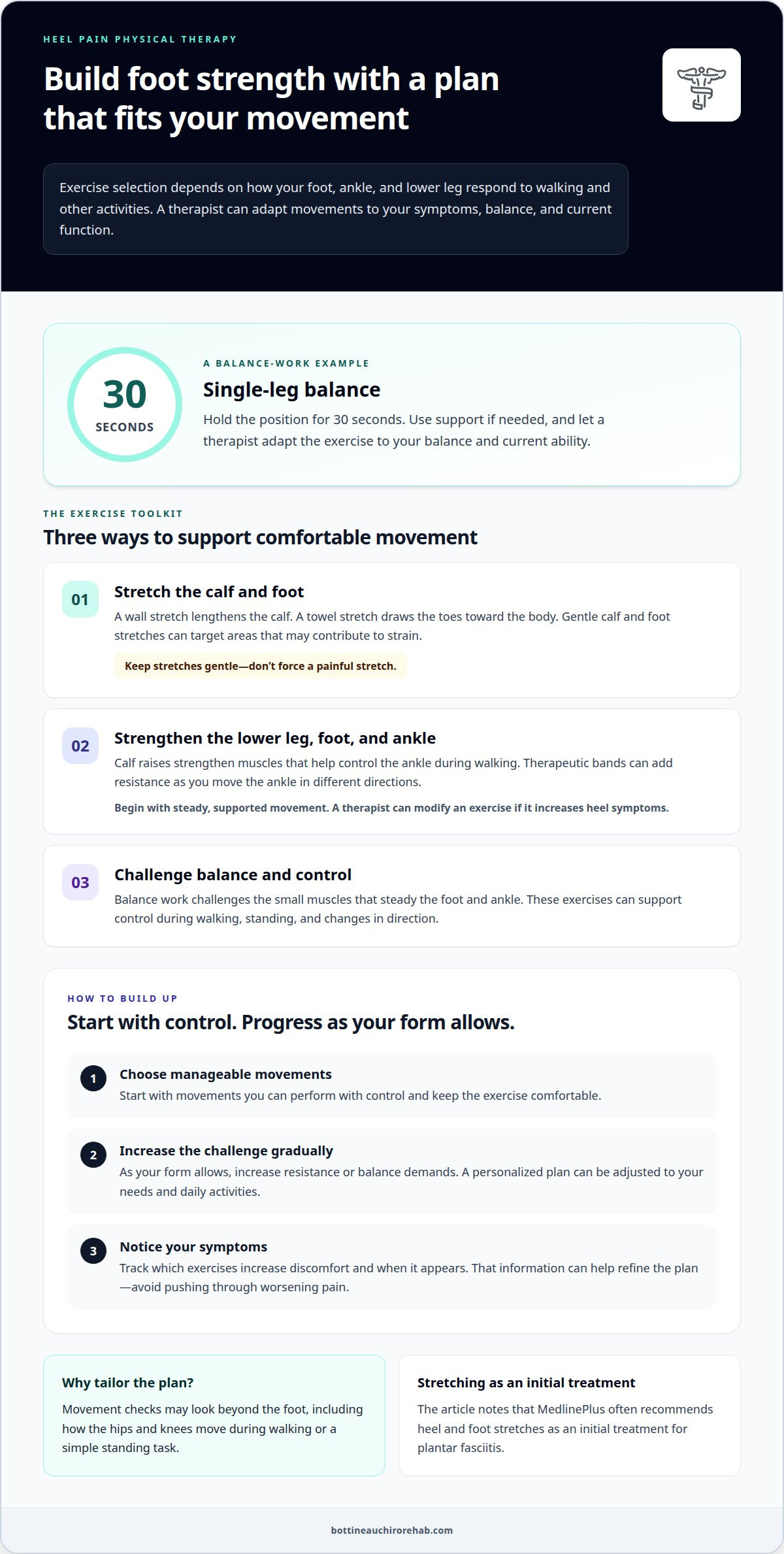
The Achilles tendon connects the calf muscles to the back of the heel, while the plantar fascia runs along the sole. Gentle calf and foot stretches target both areas: a wall stretch lengthens the calf, and a towel stretch draws the toes toward the body. Don’t force a painful stretch. MedlinePlus notes that providers often recommend heel and foot stretches as an initial treatment for plantar fasciitis. A physical therapy plan may also include strengthening and gradual activity changes.
Stretching and strengthening exercises
A personalized exercise plan can build flexibility and strength for daily movement. The right exercises depend on how your foot, ankle, and lower leg respond to walking and other activities.
Calf and Lower-Leg Strengthening
Calf raises strengthen muscles that help control the ankle during walking. Start with steady, supported movement and keep it comfortable. A physical therapist can modify the exercise if it increases heel symptoms. Calf stretches can also address lower-leg tightness. MedlinePlus, part of the National Library of Medicine, notes that heel and foot stretches are often recommended as an initial treatment for plantar fasciitis.
Foot and Ankle Strengthening
Therapeutic bands can add resistance as you move the ankle in different directions. Balance work challenges the small muscles that steady the foot and ankle. One option is a single-leg balance held for 30 seconds, using support if needed. A therapist can adapt the position to your balance and current function. These exercises support control during walking, standing, and changes in direction.
Strength checks can extend beyond the foot. An appointment may include observing how your hips and knees move while walking or performing a simple standing task. Weakness or limited control higher in the leg can affect how force travels through the lower body. Assessing these areas helps shape a plan that considers more than the heel alone.
Progress gradually. Start with movements you can perform with control, then increase resistance or balance demands as your form allows. Track which exercises increase discomfort and when it appears. This information can help refine the plan and support consistent practice without pushing through worsening pain.
For guided exercise selection and progressions, explore physical therapy care as a next step. A therapist can match stretching and strengthening to your movement goals and daily activities.
Common causes of foot pain
Heel pain can come from irritated tissue, tendon problems, joint conditions, or injury. Its location and response to activity can help distinguish possible causes.
Common Causes of Heel Pain
Compare the painful area and its triggers. Achilles tendinitis usually affects the back of the heel and may worsen with activity, while plantar fascia pain is typically under the heel. Bursitis, gout, muscle strain, arthritis, heel spurs, and fractures can also cause heel or foot symptoms. Pain location is a useful clue, but it cannot identify the cause by itself.
Notice how symptoms change during daily activities. Pain that builds during exercise may follow a different pattern from stiffness and pain after rest. An ankle sprain can happen when the ankle suddenly twists or rolls, stretching or tearing supporting ligaments. Foot injuries may also cause swelling, stiffness, numbness, tingling, or difficulty walking.
Causes and Risk Factors
Repeated impact, prolonged standing, and increasing training too quickly can increase strain on the foot. Other risk factors include altered movement patterns, previous plantar fasciitis, obesity, and immobilization after a lower-leg injury or surgery. High arches and flat feet can affect how pressure travels through the foot during walking and other activities.
Consider recent changes in workload, footwear, and movement. Tight calf muscles, unsupportive shoes, and a sudden increase in training intensity can contribute to Achilles tendon irritation. Limited flexibility may also change how the calf and tendon respond to repeated activity.
Foot pain isn’t limited to the heel. Metatarsalgia causes pain in the ball of the foot and may relate to overuse, high-impact activity, or poorly fitting shoes. Foot sprains affect ligaments around the joints, while arthritis can cause joint pain, stiffness, and limited movement. Stress fractures often affect the metatarsal bones between the toes and ankles.
The foot has 26 bones, more than 30 joints, and over 100 muscles, tendons, and ligaments. Several structures can contribute to pain, so track its location, swelling, and effect on walking, work, or exercise. Persistent pain lasting more than a few days, worsening heel or arch pain during activity, or symptoms that limit daily life are reasons to seek care.
Physical therapy modalities for pain and inflammation
Care may combine pain-management approaches with movement exercises. The plan depends on the evaluation, possible causes, and whether symptoms involve the plantar fascia, Achilles tendon, or another structure.
Modalities may include ice, heat, ultrasound, electrical stimulation, massage, or joint mobilization. Therapeutic tape can add support during movement. These methods serve different purposes: ice may ease pain and inflammation, while manual techniques address stiffness. They complement strengthening and activity changes rather than replacing them. For athletic foot pain, applying ice for 15-20 minutes several times a day may help reduce inflammation and numb discomfort.
Seek medical evaluation for severe foot pain during sports, pain that lasts more than a few days, or heel or arch pain that worsens with activity or limits daily life. A clinician can assess an injury and determine whether further evaluation is needed before treatment.
For heel pain treatment in Mohall, distinguish access to an evaluation from insurance coverage. Referral requirements and insurance authorization are separate considerations, and coverage depends on your plan. Ask about the applicable North Dakota referral process and your plan’s terms before scheduling.
The cost depends on the evaluation, treatment plan, and insurance benefits; pricing is provided after a quote request. Coverage for heel-pain physical therapy depends on your plan, including its network and referral or authorization terms.
At a first appointment, expect questions about symptoms and activities, an examination of foot movement, and an evaluation that may screen the lower quarter. The findings guide an exercise plan tailored to your needs. For a local option, choose a clinic that provides physical therapy for heel pain. Modalities are non-invasive approaches, not surgery.
Start physical therapy for heel pain with an evaluation focused on your symptoms and movement.
Boundless Full Body Chiropractic & Rehab: Extremity Adjusting
Boundless Full Body Chiropractic & Rehab provides Extremity Adjusting for concerns involving the arms or legs, alongside Full-Body Adjustments. Extremity evaluation and care are provided when clinically appropriate. If heel pain began during sports or limits your activity, Sports Injury Rehab may be a relevant next step. An evaluation can help determine whether these services fit your symptoms and movement needs.
Consider seeking care when discomfort makes walking, exercising, or daily tasks difficult. Share when the pain started, where it occurs, and which activities make it worse. This information can guide a conversation about care options and your recovery goals.
Contact Boundless Full Body Chiropractic & Rehab to discuss your heel pain and possible next steps.
Take the Next Step Toward Easier Movement
Your next step can be simple. Notice how heel discomfort affects your routine, from getting out of bed to walking through a workday. That context can help focus a conversation on what you’d like to do more comfortably.
If you’re searching for heel pain physical therapy in Mohall, keep your goal practical: move with less disruption and find care that fits your daily demands. Boundless Full Body Chiropractic & Rehab provides rehabilitation in Bottineau, North Dakota, and helps patients recover from injuries, avoid surgery, and get back to work, sports, and life. An evaluation can help guide appropriate next steps.
Boundless Full Body Chiropractic & Rehab can help you discuss a next step for your heel pain. Contact Boundless Full Body Chiropractic & Rehab to start the conversation. A thoughtful plan can help you move forward with greater confidence.
Frequently Asked Questions
How Long Does it Take to See Results?
Improvement may begin after a few therapy sessions, while some heel problems need longer care. The cause and severity influence the pace. With heel pain physical therapy in Mohall, track practical changes, such as standing through a usual task or resuming a comfortable walk. Share these changes at follow-up visits so your exercise plan and activity level can be adjusted to your progress.
What causes heel pain, including plantar fasciitis and Achilles tendinitis?
Plantar fasciitis affects the band of tissue under the foot, while Achilles tendinitis involves the tendon behind the heel. The location and trigger can help distinguish them: pain under the heel differs from soreness at the back of the ankle. Repeated impact, a sudden increase in activity, or prolonged standing can contribute. Other causes include bursitis, arthritis, and injury.
What heel pain treatments and exercises do physical therapists commonly recommend?
Care often combines guided stretching and strengthening with changes to activities that aggravate symptoms. In heel pain physical therapy in Mohall, a therapist may use manual techniques, therapeutic tape, or heat and ice as part of pain management. For example, a runner may temporarily reduce high-impact training, then build back with a gradual walk-run approach. Footwear guidance or arch support may also help manage pressure during daily movement.
How many physical therapy visits are typically needed for heel pain?
There isn’t one treatment schedule that fits every heel-pain case. The plan depends on the underlying cause, symptom severity, and how movement responds to care. Recommendations may change as walking, standing, or exercise becomes more comfortable. At follow-ups, discuss which activities still trigger pain and whether prescribed exercises feel manageable. These details can help guide next steps.
Are telehealth or home exercise options available for heel pain near Mohall?
Home exercises, including calf and towel stretches, can support care. Telehealth availability varies among providers.


