

Your usual sleep position may be keeping your neck irritated. For most people, sleeping on the back is the best starting point; side sleeping is the next-best option. Stomach sleeping can strain the neck because your head stays turned to one side. Learning how to sleep with neck pain starts with keeping your head and neck aligned in a position you can comfortably maintain.
Waking up stiff can make it tempting to blame your pillow alone. But your sleep position, mattress support and the way your pillow fills the space beneath your neck all affect how your body rests overnight.
This guide explains how to choose a sleep position, assess mattress firmness and arrange your pillow for back or side sleeping. You’ll also find a practical pre-sleep checklist, with simple ways to ease neck tension and reduce strain before bed. Start with an adjustment that feels manageable tonight, then notice how your neck feels when you wake.
Key Takeaways
- Start the night on your back or side, and adjust your position to keep your neck in a comfortable, neutral alignment.
- Choose a mattress that supports your body without letting your hips and shoulders sink too far or creating pressure points.
- Set your pillow height to fill the gap beneath your neck without tilting your head up or down.
- Build a simple pre-bed routine with gentle movement, heat if it feels soothing, and less time looking down at a device.
1. What is the best sleeping position for neck pain?
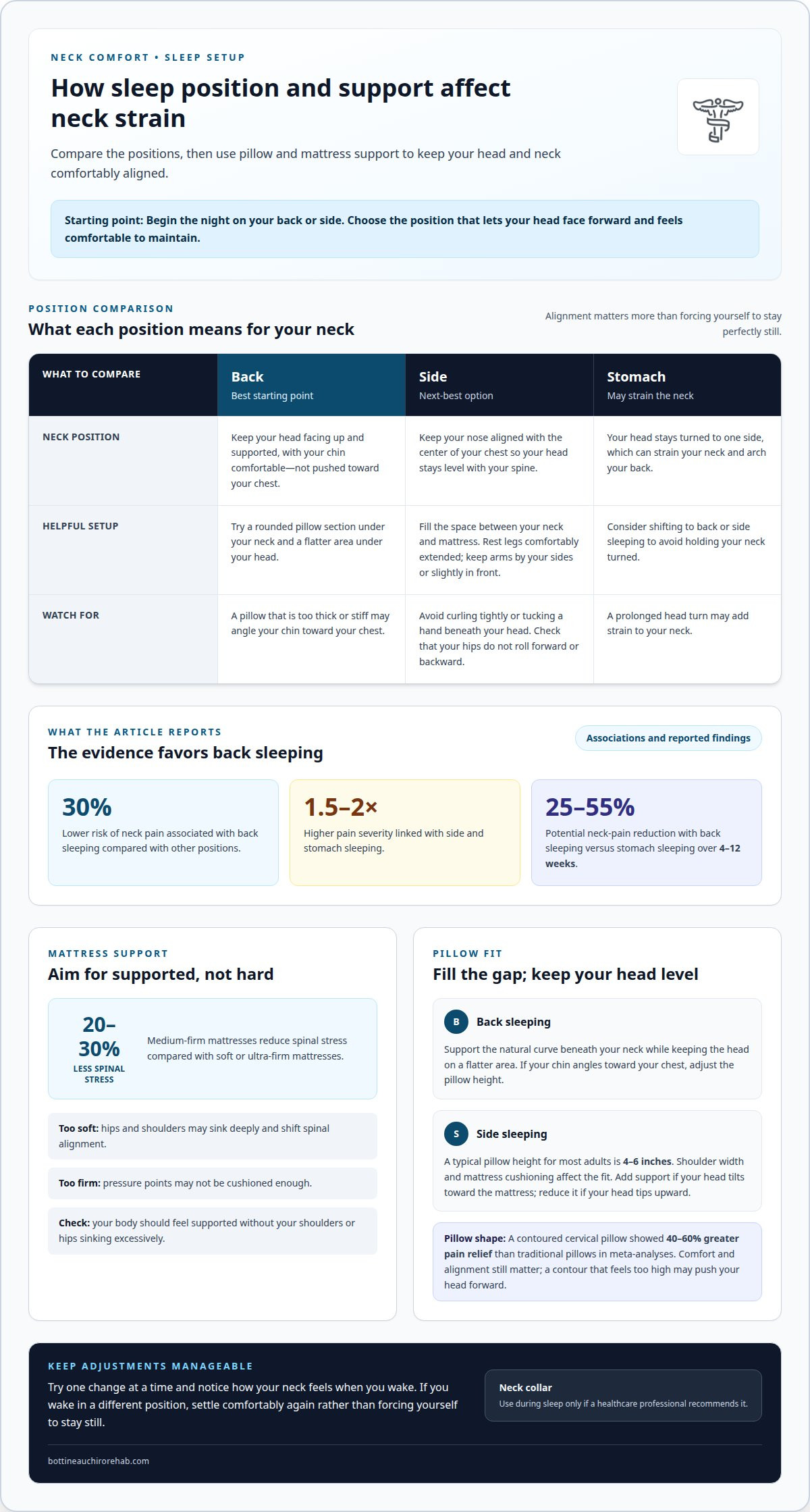
For many people, learning how to sleep with neck pain starts with back sleeping. Side sleeping is another option if it keeps your neck comfortable. Both positions make it easier to keep your head facing forward. Stomach sleeping can arch your back and hold your neck turned, which may strain your spine.
Position can affect how much strain your neck experiences overnight. Back sleeping is associated with a 30% lower risk of neck pain compared with other positions. Side and stomach sleeping are linked to 1.5-2 times higher pain severity. Back sleeping may reduce neck pain by 25-55% over 4-12 weeks compared with stomach sleeping.
If you sleep on your side, keep your legs comfortably extended rather than curled tightly into a fetal position. A relaxed leg position can help your spine stay aligned. Rest your arms by your sides or slightly in front of you. Avoid tucking a hand beneath your head, which can strain the muscles along your neck.
Changing a familiar sleep position can take practice. Begin the night on your back or side, with your head supported and facing forward. If you wake in another position, settle comfortably again rather than forcing yourself to stay still. For travel or reclining, a horseshoe-shaped pillow can support your neck and help keep your head from dropping sideways.
Is it safe to sleep with a neck brace or cervical collar? Don’t sleep in a collar unless a healthcare professional has recommended it for your situation. Follow their instructions about fit and use.
When should neck pain require medical attention? Seek prompt medical attention for severe or worsening pain, pain after an injury, or new symptoms such as weakness or numbness.
How long does neck pain usually last, and when should you see a doctor? A sleep-related neck strain may linger for days rather than hours. If pain lasts more than 4-6 weeks despite these strategies, consider a physical therapy evaluation.
What over-the-counter pain relief can help at night, and what are the risks? Over-the-counter pain relievers may ease discomfort, but side effects and interactions vary. Follow the label and consider your health conditions and other medicines before taking one.
2. Mattress firmness and spinal alignment
A comfortable medium-firm mattress is a practical starting point for supporting your neck and lower back. Medium-firm mattresses reduce spinal stress by 20-30% compared with soft or ultra-firm mattresses. The goal isn’t to make your mattress feel hard. It’s to keep your body supported while allowing your shoulders and hips to rest without excessive pressure.
A mattress that’s too soft may let your hips and shoulders sink deeply, shifting your spine and affecting your neck position. An overly firm surface may not cushion pressure points enough, which can also make it harder to rest in a comfortable alignment. Notice how your body settles, not just how the mattress feels when you first lie down.
When lying on your back, check whether your lower back arches away from the mattress. If it does, placing a small pillow beneath your knees may help you rest more comfortably. Keep your head supported without pushing your chin toward your chest. Aim for a relaxed, neutral position from your head through your back, rather than forcing a curve.
Side sleepers can place a pillow between their knees to help maintain a comfortable alignment. Check that your hips don’t roll forward or backward as you settle. Your mattress should cushion your shoulder and hip without letting either sink so far that your torso tilts. If you can’t change the mattress firmness, adjusting the support beneath your knees may help your body rest more evenly.
Try one adjustment at a time, such as adding knee support for several nights, then observe how your neck feels in the morning. If persistent discomfort makes alignment difficult, spinal rehab support may help address ongoing spinal concerns.
3. Pillow setup for different sleep positions
Position your pillow so your head stays level with your spine, not tilted toward your chest or back. For back sleeping, try a rounded section beneath your neck to support its natural curve, with a flatter area beneath your head. This can support your neck without lifting your head too high. If your chin angles toward your chest, the pillow may be too thick or stiff. Adjust its height until your face points upward comfortably.
Side sleepers need enough height to fill the space between the mattress and neck. A typical pillow height for most adults is 4-6 inches, though shoulder width and mattress cushioning affect the fit. Choose a pillow that keeps your nose aligned with the center of your chest. If your head tilts toward the mattress, add support; if it tips upward, reduce the height. A curved memory foam pillow can fill the gap beneath your neck.
How should you position your pillow to reduce neck pain? Place it beneath both your head and neck, and aim to keep your neck straight. Check your position while lying down: your head shouldn’t bend up, down or sideways. For side sleeping, a pillow that fills the space beneath your neck can help keep your spine straight.
Pillow shape matters, but comfort and alignment matter more than a specific label. A contoured cervical pillow has shown 40-60% greater pain relief than traditional pillows in meta-analyses. Still, a contour that feels too high can push your head forward. Avoid using a horseshoe-shaped pillow in bed if its bulk forces your head ahead; that shape is intended to support the neck while reclining or traveling. Test one change at a time, then notice whether your neck feels more comfortable upon waking.
4. A pre-sleep neck pain checklist
A short bedtime routine can help reduce avoidable strain and make it easier to settle into a supported position. Follow this checklist consistently for two weeks, then notice whether your morning neck discomfort changes. Keep adjustments simple: changing several habits at once makes it harder to tell what helps.
- Move gently for 5-10 minutes. Try slow neck turns and comfortable side bends. Hold each gentle stretch for 20-30 seconds, and stop before forcing the movement. Pre-bed neck stretches have been reported to reduce overnight tension by 25-40%.
- Apply warmth before bed. Use a warm compress on your neck for 15-20 minutes. Choose a comfortable temperature and position it so you can relax without pressing your neck into a hard surface.
- Change your screen setup. Put devices away 30 minutes before sleep, or prop them at eye level. For example, raise a phone instead of bending your neck down to read.
- Check your pillow. Feather pillows can collapse over time, so replace them about once a year. Before lying down, check that the pillow still supports your head and neck without pushing your chin forward.
- Set up your sleep position. Arrange your pillow and any knee support before getting comfortable. Start on your back or side, then make one small adjustment if your neck feels tilted.
Keep a brief morning note for those two weeks: record your waking stiffness, the position you started in, and which routine steps you tried. This can reveal patterns, such as discomfort after reading with your head bent or using a flattened pillow. If pain continues despite these changes, get support for ongoing neck pain.
Boundless Full Body Chiropractic & Rehab: Extremity Adjusting
Boundless Full Body Chiropractic & Rehab in Bottineau provides extremity care for concerns involving joints in the arms or legs, when clinically appropriate. If neck discomfort keeps returning despite changes to your sleep setup, the clinic’s whole-body adjustments, rehabilitation and spinal rehab may be relevant options for musculoskeletal concerns. For pain related to athletic activity, sports injury rehabilitation may also be appropriate.
Consider reaching out when ongoing discomfort affects movement or makes restful sleep difficult. Share when the pain occurs, which positions aggravate it and what adjustments you’ve tried. These details can help guide a discussion about an appropriate next step.
Contact Boundless Full Body Chiropractic & Rehab or visit bottineauchirorehab.com to learn more.
Build a routine that adapts with you
Let your sleep setup support a broader goal: waking ready to move through your day. Learning how to sleep with neck pain isn’t about achieving a perfect position every night. It’s about finding a routine you can maintain and adjust when your comfort or daily demands change.
Notice whether neck discomfort affects everyday tasks, such as turning to check traffic, working at a desk or enjoying exercise. This bigger picture can help you decide whether bedtime changes are enough or whether professional support may help. Bring clear examples of what feels difficult and how discomfort affects your movement. They can keep a conversation focused on your needs, not just your pillows.
If neck discomfort continues to disrupt your rest or daily activities, explore care options with Boundless Full Body Chiropractic & Rehab. Take the next step at a pace that feels manageable, and keep making room for better rest and easier movement.
Frequently Asked Questions
What is the best sleeping position for neck pain?
Back sleeping is a useful first position to try, while side sleeping may work if it keeps your neck comfortable. Notice how you feel after settling and again when you wake. If a position repeatedly leaves you stiffer, change one part of your setup rather than forcing yourself to stay in it. Comfort and a relaxed neck are practical signs to pay attention to.
What About Stomach Sleeping?
Stomach sleeping can keep your neck turned for a long time, so try changing positions if you wake with stiffness. Rather than forcing a complete change all at once, begin the night on your back or side and return to that position if you wake. A gradual approach can make a familiar habit easier to adjust without the added strain of trying to stay perfectly still.
What sleeping position is best for neck pain?
Back sleeping is a useful first position to try, but individual health needs can affect the choice. People with sleep apnea and pregnant people are advised to sleep on their sides. In either position, notice whether your head feels comfortably supported rather than pushed forward or tilted. Choose an arrangement that lets you settle without increasing discomfort.
What type of pillow is best for neck pain, and how do options compare?
The best pillow is one that supports your neck without creating pressure or forcing your head into an awkward angle. A contoured cervical pillow has a shaped area for the neck, while a traditional pillow offers more uniform support. Compare them by lying in your usual position and noticing whether your neck feels relaxed, rather than choosing based on the label alone.
How can you adjust your mattress or sleep setup for neck pain?
Check your whole body after settling, not just the support beneath your neck. If your shoulder feels compressed or your torso rolls, adjust the support beneath your body before changing several items at once. A mattress topper can change how a bed feels, but it won’t replace a pillow that keeps your head tilted. Make one adjustment, then notice the effect.
What should you do before bed to relieve neck pain?
Choose calming movements that feel comfortable, and don’t force your neck through a stretch. If a movement increases pain, stop and return to a relaxed position. Prepare your sleep space before lying down, so you don’t have to reach or twist to arrange pillows in bed. A steady wind-down routine also makes it easier to notice which habits leave your neck feeling more settled.


