

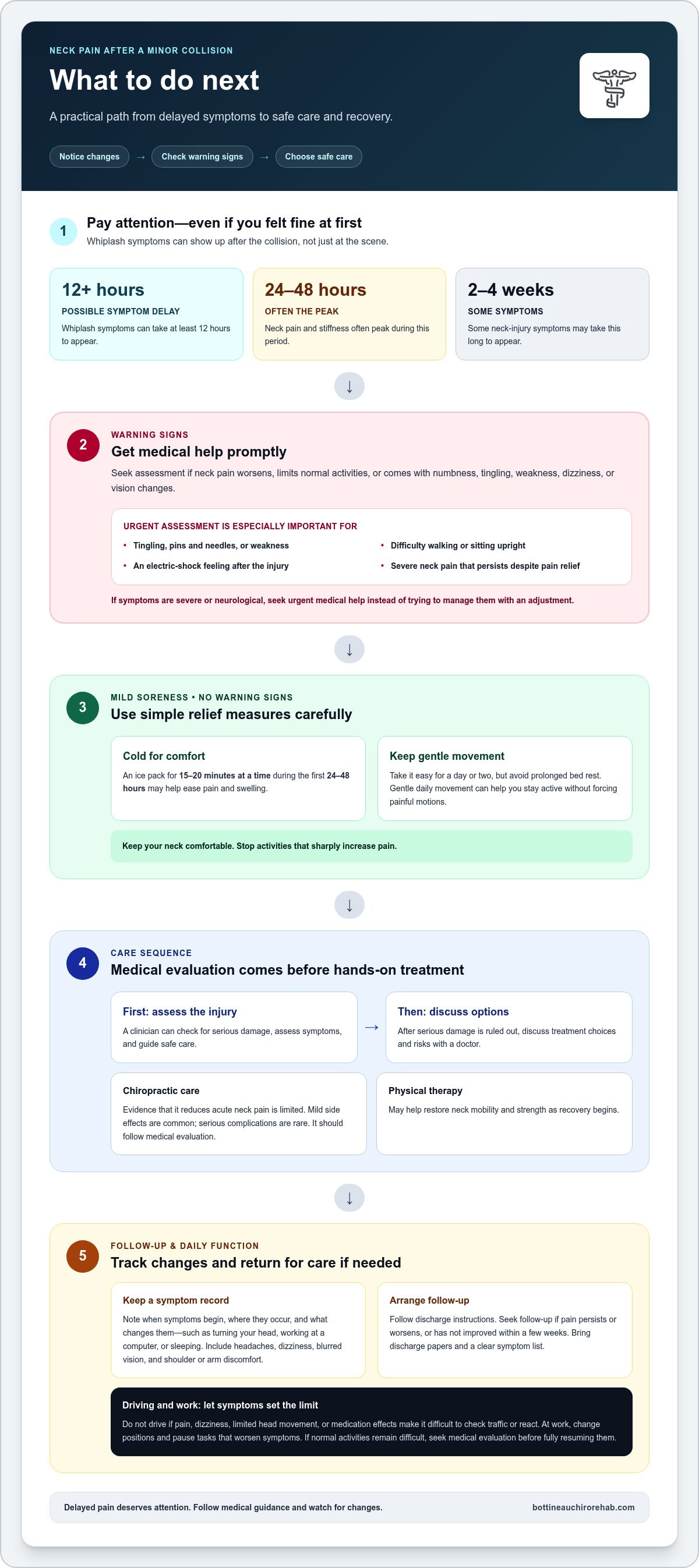
A minor crash can still strain your neck, and symptoms may take hours or days to appear. If you’re deciding what to do after a minor car accident for neck pain, seek medical care, especially if pain worsens or you notice tingling, weakness, dizziness, vision changes, or difficulty with normal activities. For mild soreness, an ice pack for 15 to 20 minutes at a time during the first 24 to 48 hours may help ease pain and swelling.
It’s understandable to hope the discomfort will fade on its own. But delayed pain deserves attention, and severe or worsening symptoms shouldn’t be brushed aside. A medical evaluation can help identify the cause and guide safe care.
This article explains when neck pain needs prompt medical attention, what simple relief measures may help, and how chiropractic care or physical therapy may fit after an evaluation. You’ll also learn why heat, cold, and gentle movement can matter as recovery begins.
Key Takeaways
- Seek medical care for worsening neck pain or symptoms such as tingling, weakness, dizziness, or vision changes.
- Neck symptoms can appear hours or days after a collision, so pay attention to changes even if you felt fine at first.
- Use cold or heat carefully for comfort, and avoid prolonged bed rest or unsupported neck braces.
- Chiropractic care should follow medical evaluation; physical therapy may help restore neck mobility and strength.
- If discomfort lingers or limits daily movement, arrange a follow-up evaluation and discuss a suitable recovery plan.
Should I See a Chiropractor for Neck Pain Following a Car Accident?
Get a medical evaluation before chiropractic treatment for neck pain after a collision. Seek prompt care if pain worsens or occurs with numbness, tingling, weakness, dizziness, vision changes, or difficulty with normal activities. These symptoms need assessment before hands-on care. If symptoms are severe or neurological, seek urgent medical help instead of trying to manage them with an adjustment.
When considering your timeline for care, it is essential to seek a professional evaluation promptly after a collision. Timely documentation supports your recovery and ensures that any hidden injuries are identified correctly by qualified practitioners.
After an evaluation rules out serious damage, a chiropractor at Boundless Full Body Chiropractic & Rehab may use spinal adjustments to address movement restrictions and pressure on nerves. But evidence that chiropractic care reduces acute neck pain is limited. Mild side effects are common, while serious complications are rare. That makes the order of care important: first identify the injury and its causes, then discuss treatment options and risks with a doctor.
Comprehensive care involves understanding which qualified providers can properly assess your condition and determine the full extent of your injuries. A thorough evaluation ensures you receive the appropriate level of care and documentation needed for your recovery process.
If an emergency-room evaluation finds no urgent injury, follow the discharge instructions and arrange follow-up if neck pain persists or worsens. Tell the clinician about new symptoms, such as arm tingling or reduced ability to turn your head. A follow-up evaluation may be appropriate when pain has not improved within a few weeks. Bring your discharge papers and a clear list of symptoms to that visit.
For minor soreness without warning signs, take it easy for a day or two. Avoid prolonged bed rest; gentle daily movement can help you stay active without forcing painful motions. Keep your neck comfortable and stop activities that sharply increase pain. If you’re deciding what to do after a minor car accident for neck pain, don’t use an adjustment in place of an initial medical assessment.
Driving and working depend on whether you can move safely and function without symptoms getting in the way. Don’t drive if pain, dizziness, limited head movement, or medication effects make it difficult to check traffic or react. At work, change positions and pause tasks that worsen symptoms. If normal activities remain difficult or pain worsens, seek medical evaluation before fully resuming them.
What Is the Most Common Neck Injury after an Auto Accident?
Whiplash is a common neck injury after a collision, caused by the head’s sudden movement. Symptoms can include pain, stiffness, headaches, and limited movement, but they may not start immediately.
Common Neck Pain and Stiffness Symptoms
Whiplash can strain neck muscles, tendons, ligaments, and joints when the head moves suddenly forward and backward. Neck pain, stiffness, headaches, dizziness, fatigue, blurred vision, and shoulder, upper-back, or arm pain can follow.
These symptoms matter because limited movement can interfere with everyday tasks, such as turning to check traffic. Pain may worsen as inflammation develops. Mayo Clinic notes that holding your head in one position for a long time, including while driving or working at a computer, can also worsen neck pain.
Symptoms vary. One person may notice a sore neck; another may have headaches and difficulty turning their head. Whiplash symptoms can take at least 12 hours to appear, and pain and stiffness often peak 24 to 48 hours after an accident. Some neck-injury symptoms may take two to four weeks to appear.
Whiplash Symptoms and Documentation
Whiplash describes a neck injury caused by sudden head movement, not a single symptom. Keeping a symptom diary can help you give a clinician a clear account of how your condition changes.
Record when each symptom begins, where it occurs, and what affects it. For example, note whether turning your head, working at a computer, or sleeping changes the pain. Include headaches, dizziness, blurred vision, and shoulder or arm discomfort, not just neck soreness.
At an appointment, describe the collision and explain how symptoms affect specific movements or daily tasks. Keep visit summaries and care instructions together so you can report what has changed at follow-up. Clear details help the clinician assess your symptoms and guide next steps.
Seek urgent medical help for tingling, pins and needles, weakness, difficulty walking or sitting upright, or an electric-shock feeling after a neck injury. These symptoms need prompt assessment, even if the collision seemed minor. Severe neck pain that persists despite pain relief also calls for urgent medical advice.
Arrange a medical evaluation if pain worsens, limits normal activities, or comes with numbness, weakness, dizziness, or vision changes. If symptoms appear later, note when they began and how they change rather than assuming they are unrelated. A clinician can assess the injury, check for serious damage, and give care instructions based on your symptoms.
Prompt medical evaluation for delayed neck or back pain
Feeling little pain after a collision doesn’t rule out an injury. Neck or back symptoms can begin hours or days later, and whiplash symptoms may take weeks to fully appear. Inflammation can build during the 24 to 72 hours following a crash, making soreness more noticeable after you leave the scene. A medical evaluation can assess symptoms, check for serious damage, and provide care instructions.
Delayed pain may come with stiffness, headaches, intermittent aching, or trouble turning your head. A sudden movement can strain soft tissue around the neck, and symptoms may change as inflammation develops. You might feel mild soreness at first, then notice more discomfort while working, sleeping, or sitting in one position. Track when symptoms appear and how they affect movement.
Arrange medical care as soon as symptoms develop, even if the crash seemed minor. Delayed symptoms involving the neck or back may still need assessment. Seek urgent medical help for tingling, pins and needles, weakness, difficulty walking or sitting upright, or an electric-shock feeling after an injury. Severe pain also needs prompt attention, especially if it worsens or disrupts normal activities.
- Note the time each symptom starts, such as neck pain the evening after the collision.
- Record where discomfort spreads, including the shoulders, arms, or upper back.
- Describe changes in movement, such as difficulty turning your head while driving.
- Tell the clinician about new symptoms, including dizziness or weakness.
These details help a healthcare provider assess a suspected whiplash injury and decide whether further evaluation is needed. Describe the collision, when pain began, and what makes it worse. The provider may examine your movement and symptoms, then explain next steps. If symptoms change after the visit, report the change rather than relying only on the initial assessment.
Keep follow-up on your calendar. See a GP if whiplash symptoms haven’t improved after one week. Neck pain lasting longer than two weeks without significant improvement also warrants medical evaluation. A follow-up may be appropriate sooner if stiffness limits daily movement, headaches begin at the base of the skull, or pain worsens during work or sleep. Ongoing symptoms can interfere with sleep and mobility, so don’t ignore a worsening pattern.
Until you’re assessed, avoid forcing painful movements or assuming delayed symptoms are just a minor strain. Note whether symptoms improve, stay the same, or worsen each day. If new nerve symptoms appear, such as tingling or weakness, seek urgent medical help. Prompt evaluation helps identify the injury and provides clear guidance for the next stage of care.
Should You Pursue Physical Therapy for Whiplash?
Whiplash is a neck injury caused by sudden head movement during a collision. The motion can strain muscles, tendons, ligaments, and joints, but other injuries can also cause neck pain. After serious damage has been assessed, physical therapy may help restore mobility and strengthen neck muscles.
Rear-end crashes commonly cause whiplash, but impact direction doesn’t define the full injury. A clinician evaluates symptoms, movement, and the collision history. Neck pain, headaches, shoulder discomfort, or reduced range of motion can accompany soft-tissue strain. Adults over 65 are more prone to muscle and bone injuries from whiplash because of age-related changes.
An examination helps guide decisions about imaging. X-rays can identify fractures, dislocations, and alignment problems, but they don’t show soft-tissue injuries. A healthcare professional may use X-rays, CT scans, or MRI scans to investigate injuries after a crash. MRI can provide detailed images of soft tissues, including discs, ligaments, and the spinal cord. Imaging choices depend on symptoms and examination findings.
Once a clinician has assessed the injury, physical therapy may support recovery by addressing mobility and strength. A therapist can tailor movement and strengthening exercises to your symptoms and function. Rehabilitation may also include stretching, hands-on therapy, and posture education. For example, restricted neck movement may call for gradual mobility work, while weakness may call for strengthening. The plan should match the injury, not just the type of crash.
Keep moving within comfortable limits rather than resting your neck for long periods. Everyday activity can help maintain function, while forcing painful movements can aggravate symptoms. Neck braces or collars aren’t routine support for whiplash. Ask a healthcare professional about using one, since extended reliance can weaken muscles. Keep appointments during the first month after a collision if physical therapy is part of your treatment plan.
Recovery varies with injury severity. Minor whiplash may improve within days or a few weeks; more severe injuries can take several weeks or months. Most whiplash cases resolve within six to twelve weeks with treatment. If headaches, pain, or restricted movement persist or worsen, arrange a follow-up evaluation. Depending on your needs, a GP may refer you for physiotherapy, pain care, or psychological support if symptoms do not improve.
Pain relief and cold or heat therapy
Cold packs can ease soreness and swelling after a neck strain. During the first 24 to 48 hours after a crash, apply an ice pack for 15 to 20 minutes at a time, every couple of hours. Keep each application brief, then give your skin a break. Stop if the cold increases discomfort or causes skin irritation.
After two days, a warm towel or heat pad may relax tight muscles and support circulation. Heat and cold can both help, but comfort varies with the injury. A healthcare provider may recommend either option for 15 minutes about every three hours. Follow that guidance, and don’t apply heat or cold for longer just because symptoms remain.
Acetaminophen or ibuprofen may improve comfort for some people. Follow the package directions and consider your health conditions, other medicines, and past reactions before taking an over-the-counter medication. Ask a medical professional or pharmacist if you’re unsure whether it’s suitable for you. Severe pain, numbness, tingling, or weakness calls for medical attention, not simply another dose.
Relief also depends on how you move through daily activities. Staying in one position for a long time, such as while driving or working at a computer, can aggravate neck pain. Change positions regularly and keep movements gentle. Avoid forcing a stretch that increases pain in your neck or shoulders. If ordinary tasks remain difficult or symptoms worsen, arrange a medical evaluation.
- Use a cold pack during the first 24 to 48 hours for soreness or swelling.
- Try gentle warmth after two days if tight muscles feel more comfortable with heat.
- Note which option eases symptoms and whether pain returns during daily activities.
- Seek care for severe pain or new numbness, tingling, or weakness.
Cold or heat may ease discomfort, but neither identifies the cause of neck pain. If symptoms linger or movement remains limited, a clinician can assess the injury and discuss appropriate care. Physical therapy may help address mobility and strength as recovery progresses. Don’t push through worsening symptoms just to keep working or exercising.
For guided support with movement and recovery, explore physical therapy as part of your next care step.
Boundless Full Body Chiropractic & Rehab: Extremity Adjusting
Boundless Full Body Chiropractic & Rehab provides Extremity Adjusting and Full-Body Adjustments as part of its chiropractic care in Bottineau, North Dakota. After medical evaluation has ruled out urgent injury, follow-up support may be appropriate if neck discomfort or restricted movement continues to affect daily activities. Spinal rehab may also support a plan focused on restoring function, while Sports Injury Rehab addresses recovery needs related to physical activity.
Bring your evaluation details and describe which movements remain difficult, such as turning your head or working comfortably. This helps guide a focused discussion about care. Chiropractic treatment is not a substitute for urgent medical assessment when symptoms are severe or include weakness, numbness, or dizziness.
For a next step, contact Boundless Full Body Chiropractic & Rehab or visit bottineauchirorehab.com.
Take the Next Step Toward Comfortable Movement
Recovery is easier to manage when your next step is clear. If you’re still deciding what to do after a minor car accident for neck pain, focus on what remains difficult and what support could help you move forward. Note the movements or daily activities that still feel limited, then use those details to guide a conversation about care.
In Bottineau, North Dakota, Boundless Full Body Chiropractic & Rehab provides Extremity Adjusting, Full-Body Adjustments, and Sports Injury Rehab. These services are options to discuss when considering ongoing support for movement and function. Choose care that fits your needs and follows any medical guidance you’ve received.
Take a proactive step at your own pace. Contact Boundless Full Body Chiropractic & Rehab to discuss your next step. Keep moving toward greater comfort and confidence in your daily routine.
Frequently Asked Questions
What Is Whiplash?
Whiplash is a neck injury caused by the head moving suddenly forward and backward, or side to side. That motion can strain muscles, tendons, ligaments, and joints. It often follows a traffic collision, but can also happen after a slip, fall, or sports injury. Symptoms can include neck pain, headaches, shoulder discomfort, and difficulty turning your head. The injury’s name describes the movement, not its severity.
Can Neck Pain Lead to Long-Term Issues?
Yes, neck pain after a collision can persist and affect sleep, mobility, and daily activities. Lingering soreness can also lead people to move differently to avoid discomfort, shifting strain to other areas. Whiplash that is not treated may be associated with persistent neck, shoulder, or back pain and reduced range of motion. If pain continues, worsens, or interferes with everyday tasks, arrange an evaluation rather than assuming it will resolve without care.
How Can You Keep Neck Pain From Getting Worse?
Keep movement gentle and avoid holding your head in one position for long periods. For example, take breaks from computer work and adjust your posture during a drive. Short periods of rest can help, but prolonged bed rest may slow healing. Avoid forcing stretches or using a neck brace for extended periods unless directed. Track which activities increase pain, then share those patterns with a healthcare professional.
How Long Does It Take for Neck Strain to Heal?
Healing time depends on the injury and its severity. Minor whiplash can improve within days or a few weeks, while more severe injuries can take several weeks or months. Most whiplash cases resolve within six to twelve weeks with treatment. These ranges describe different experiences, not a personal deadline. If pain or restricted movement is not improving, or symptoms worsen, arrange a follow-up evaluation.
How Is It Treated?
Treatment can include brief rest, cold or heat, medication, gentle movement, or physical therapy, depending on the injury. A healthcare professional assesses symptoms and movement, then recommends care suited to the findings. For example, a plan may focus on restoring mobility and strengthening neck muscles. Follow instructions for medications and supportive devices, and report new symptoms or worsening pain rather than simply increasing self-treatment.
How Long After the Accident Should I Be Seen?
Seek medical evaluation as soon as possible if you have neck or back symptoms after a collision. Pain can appear hours or days later, so feeling comfortable immediately afterward doesn’t rule out an injury. Seek urgent help for weakness, tingling, difficulty walking, or an electric-shock feeling. If whiplash symptoms haven’t improved after one week, see a GP; persistent pain beyond two weeks also warrants evaluation.
Should You Pursue Chiropractic Care After a Car Accident?
Discuss chiropractic treatment with a doctor after a car accident, particularly before hands-on care. An initial medical assessment helps identify injuries that need different attention. Chiropractic care may be considered as part of recovery, but evidence for reducing acute neck pain is limited. Mild side effects are common, while serious complications are rare. New neurological symptoms, such as weakness or numbness, call for medical evaluation rather than an adjustment.
What Should I Do Immediately After a Minor Car Accident if My Neck Hurts?
Prioritize safety, then arrange a medical evaluation for neck pain instead of judging the injury by how the crash looked. Note when discomfort began, where it is located, and which movements make it worse. For instance, record difficulty turning your head or pain spreading toward a shoulder. Seek urgent medical help for weakness, numbness, tingling, dizziness, or severe pain. Keep any assessment instructions available for follow-up care.


