

Jaw pain and neck pain can be connected, not merely coincidental. Jaw pain and neck alignment may influence each other because the temporomandibular joints, chewing muscles, and neck structures work together and share nerve pathways. This connection can help explain why discomfort may spread between the jaw, neck, and shoulders.
If your jaw clicks, feels tight, or hurts when you chew, it’s reasonable to wonder whether your neck is involved. The relationship can work in either direction: jaw strain may affect nearby muscles, while neck tension and posture can add strain around the jaw. Bite alignment may also play a role, but it doesn’t explain every case of pain.
Here, you’ll learn how the TMJ and cervical spine interact, how bite mechanics may contribute to muscle strain, and which symptoms deserve attention. You’ll also see how to consider the jaw and neck as connected parts of a movement system, without assuming that one issue always causes the other.
Key Takeaways
- Jaw, neck, and shoulder muscles work together, so discomfort in one area can affect how the others feel.
- Forward-head posture may add strain around the jaw and neck; notice how screen position and daily posture affect your symptoms.
- Bite mechanics can contribute to jaw muscle strain, but they aren’t the only possible factor behind discomfort.
- Pay attention to patterns such as painful clicking, restricted jaw movement, or tension that spreads into the neck. These clues can help guide a focused evaluation.
How does cervical spine dysfunction affect the TMJ?
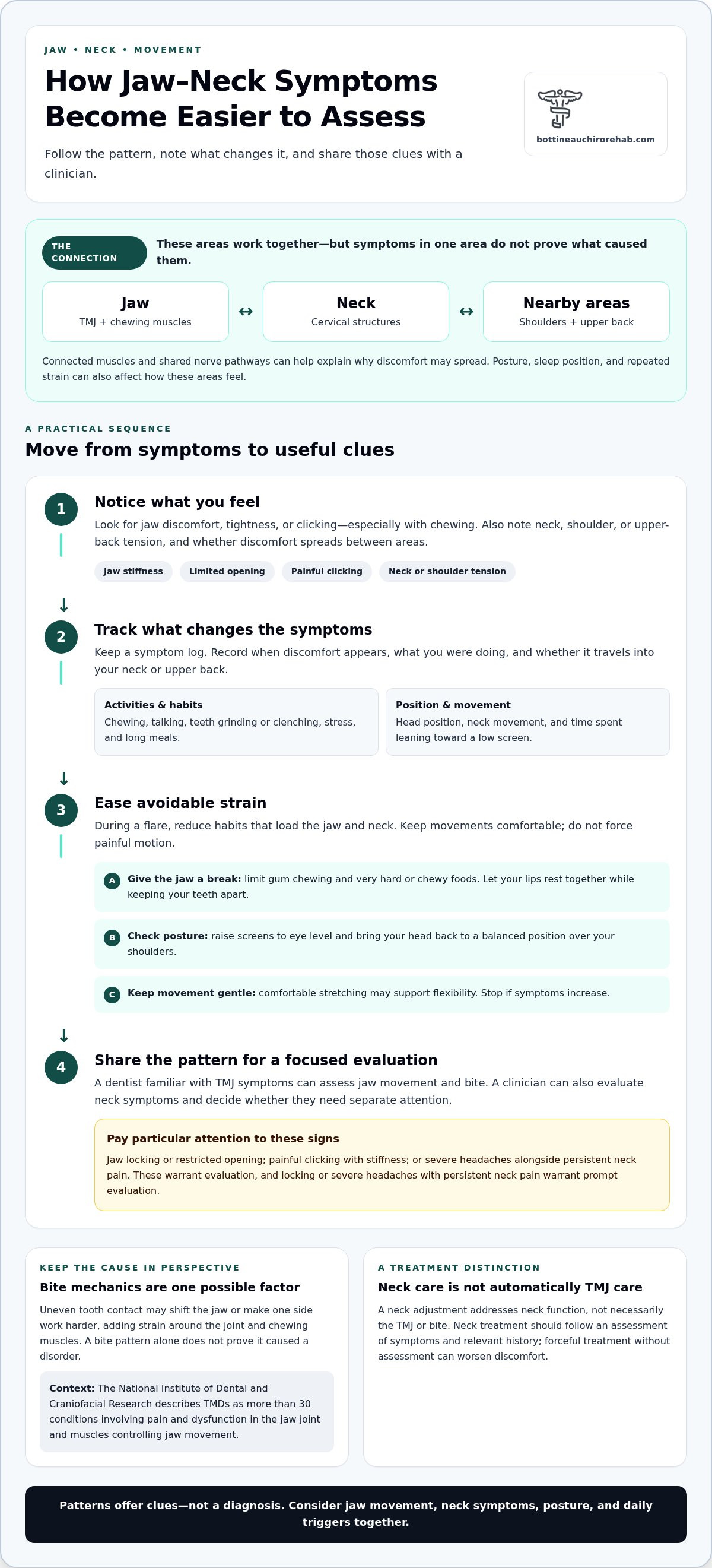
The cervical spine and TMJ share nerve pathways and connected muscles. Strain in one area can contribute to symptoms in the jaw, neck, shoulders, and upper back.
Neck, Shoulder, and Upper-Back Symptoms
TMJ-related symptoms can include jaw discomfort alongside tension or pain in nearby neck, shoulder, or upper-back muscles. For example, chewing may increase jaw pain that spreads toward the neck, while speaking may aggravate shoulder tightness. These patterns matter because the location of pain alone doesn’t reveal which structure caused it.
Jaw stiffness, limited opening, painful clicking, or locking are reasons to seek a TMJ evaluation, especially if neck pain persists. For jaw pain and neck alignment concerns, a dentist familiar with TMJ disorders can assess your bite and jaw movement. A clinician can also evaluate neck symptoms and determine whether they need separate attention.
Tracking Symptoms and Reducing Jaw Strain
A symptom log can show when discomfort appears and which movements or habits accompany it. Note whether pain follows chewing, talking, teeth grinding, stress, or a change in head position, and whether it spreads into your neck or upper back. This record can help a dentist or orthodontist connect daily triggers with jaw symptoms.
During a flare, limit gum chewing and very hard or chewy foods. Notice when your teeth press together, then relax your jaw muscles with your teeth apart. Details such as pain worsening after a long meal can help identify what increases strain.
Which doctor should you see? Start with a dentist who evaluates TMJ symptoms, particularly if jaw clicking comes with pain, stiffness, or restricted opening. Jaw locking or severe headaches alongside persistent neck pain also warrant prompt evaluation.
Can chiropractic neck adjustments help jaw pain, and what are the risks? A neck adjustment addresses neck function, not necessarily the TMJ or bite, so it shouldn’t replace an assessment of jaw symptoms. Neck treatment should be selected after evaluating your symptoms and relevant history; forceful treatment without an assessment can worsen discomfort.
TMJ and Neck Pain: What’s the Connection?
The temporomandibular joint and neck muscles coordinate head position and jaw movement. Posture, sleep position, and repeated strain can affect how those areas feel.
Forward-Head Posture and Jaw Strain
Forward-head posture occurs when your head sits in front of your shoulders rather than balanced above them. Holding this position while looking at a low screen can increase strain around the neck and jaw. As your head shifts, jaw muscles may work differently, adding pressure around the TMJ during chewing or speaking. Raising screens to eye level can reduce time spent leaning forward.
Conditions Linked to Jaw and Neck Pain
Jaw and neck pain can occur together with temporomandibular disorders, muscle tension, or an injury involving the jaw, head, or neck. Forward-head posture may also load nearby muscles and contribute to shoulder discomfort. The cause matters because similar symptoms can come from different structures. Note whether pain changes with chewing, head position, or neck movement so you can describe the pattern clearly.
Exercises for Jaw and Neck Tension
Gentle stretching and posture exercises can support flexibility without forcing painful movement. Try a comfortable neck stretch, then return your head to a balanced position over your shoulders. Keep the motion controlled and stop if symptoms increase. Deep neck flexor strengthening may also help reduce unnecessary load around the TMJ; exercise choices should reflect your movement and symptoms.
Physical therapy may use stretching, posture training, and hands-on work to support pain relief and mobility. A physical therapy approach can address neck movement alongside posture habits that affect jaw function.
Sleep position matters, too. Side or back sleeping with supportive pillows can help keep your head and neck aligned, while a contoured pillow may support neck positioning.
The cost of care in the United States depends on the type and duration of treatment, assessment needs, and location. The price is determined by the case and provided after a quote request.
Conditions affecting both areas include temporomandibular disorders, jaw or neck muscle strain, and injuries to the jaw, head, or neck. When assessing possible causes, a clinician considers symptom patterns, movement, and posture.
How bite misalignment may strain the jaw joint and connected muscles
Bite contact, jaw position, and muscle activity interact during everyday movement. This relationship can help explain discomfort, but a bite pattern alone doesn’t identify its cause.
Bite Misalignment and Jaw-Joint Strain
A misaligned bite means the upper and lower teeth meet unevenly. Uneven tooth contact may shift the jaw or make one side work harder, increasing strain around the joint and chewing muscles. It doesn’t prove that bite alignment caused a disorder. The National Institute of Dental and Craniofacial Research describes temporomandibular disorders (TMDs) as more than 30 conditions causing pain and dysfunction in the jaw joint and muscles controlling jaw movement.
Jaw Resting Position and Muscle Tension
The resting position is how your jaw sits when you aren’t speaking or chewing. Notice whether your teeth stay pressed together during desk work, driving, or stress; sustained clenching keeps jaw muscles active. Let your lips rest together while keeping your teeth apart. This can reduce unnecessary muscle effort, though persistent or chronic pain still deserves a dentist’s attention.
Connections Between Jaw, Head, and Neck Muscles
Jaw movement involves muscles that coordinate with structures supporting the head and neck. When chewing muscles become tense, discomfort can spread toward the temples, neck, shoulders, or upper back. A forward-head position may add strain by changing how the head is supported. Tracking where symptoms travel and which movements trigger them gives a dentist useful context.
How Jaw Joints and Muscles Work
The temporomandibular joints connect the lower jaw to the skull, one on each side. Together with muscles, they guide opening and closing for chewing, talking, and swallowing. Both sides need coordinated movement; altered contact or clenching can change how the work is shared. Pain, restricted opening, or painful clicking can signal a change in function and merit evaluation.
The relationship between jaw alignment and neck pain
Jaw alignment and neck pain can be connected through shared muscles and the way the head is held. Jaw discomfort may spread into the neck, shoulders, or face, while neck tension can add strain around the jaw. This overlap matters, but it doesn’t prove that bite alignment caused the pain. Consider symptom patterns, not just one sign.
For example, note whether neck tension increases during clenching, chewing, or long periods with your head forward. Painful clicking, limited jaw movement, and headaches around the temples can occur with temporomandibular disorders. Symptoms may also include facial pain or discomfort behind the eyes. These details help distinguish a jaw-related pattern from neck pain that occurs independently.
A change in how your teeth meet can be one clue, especially if it occurs alongside jaw stiffness or pain. But an uneven-looking bite doesn’t establish the cause of chronic discomfort. A dental evaluation can consider tooth contact, jaw movement, and symptom history together. This broader view helps avoid treating bite appearance as the only explanation.
Pay attention to what triggers symptoms and where they spread. Record whether clicking is painful, whether opening feels restricted, and whether headaches follow jaw use. Also note clenching during stress or neck tension after prolonged screen use. These details give a dentist or other clinician a clearer picture of how facial, jaw, and neck symptoms relate.
The practical takeaway: jaw and neck symptoms can overlap, yet each person’s pattern matters. Persistent discomfort, painful clicking, locking, or difficulty opening the mouth are reasons to seek an evaluation. If symptoms affect daily movement, explore care for musculoskeletal concerns as a next step.
Boundless Full Body Chiropractic & Rehab: Extremity Adjusting
Boundless Full Body Chiropractic & Rehab provides Extremity Adjusting and Full-Body Adjustments for musculoskeletal concerns that affect movement and daily function in Bottineau, North Dakota. If jaw, neck, or shoulder discomfort persists, an evaluation can help identify which areas need attention and whether chiropractic care fits your needs. This care addresses musculoskeletal function; it doesn’t replace a dental assessment when symptoms point to a TMJ or bite problem.
For pain connected to athletic activity, Sports Injury Rehab focuses on restoring function and mobility. Choose care that matches your symptoms, especially when discomfort limits movement or routine tasks. Clear information about when symptoms occur and what movements affect them can help guide the conversation.
If you’d like to discuss care for musculoskeletal discomfort, contact Boundless Full Body Chiropractic & Rehab.
Take the Next Step Toward Comfortable Movement
Use what you’ve noticed to make your next conversation more focused. Give clear examples of when discomfort appears, which movements affect it, and how it changes your daily activities. This context can guide a practical discussion about jaw pain and neck alignment without assuming one issue explains every symptom.
Boundless Full Body Chiropractic & Rehab provides Extremity Adjusting, Full-Body Adjustments, and Sports Injury Rehab for musculoskeletal concerns in Bottineau, North Dakota. The next step depends on your symptoms and the movements or activities they limit. An evaluation can help clarify which kind of support fits your needs.
You don’t have to keep guessing about what may be contributing to discomfort. Contact Boundless Full Body Chiropractic & Rehab to discuss your concerns and take a practical step toward moving with greater confidence.
Frequently Asked Questions
What Causes TMJ?
“TMJ” names the temporomandibular joint, while the exact cause of a TMJ disorder often isn’t clear. Possible contributors include jaw, head, or neck injury, teeth grinding, stress, and repeated overuse. Symptoms can start without an obvious trigger. A misaligned bite alone isn’t established as the cause of TMD, so don’t assume tooth position explains every episode of jaw pain.
How is TMD diagnosed?
TMD diagnosis typically combines symptom history with an examination of jaw movement and tooth contact. Describe when discomfort began, which activities affect it, and whether symptoms interfere with eating or speaking. Bring a list of medicines or relevant dental procedures, if applicable. If you’re seeking an evaluation in Bottineau, these details can help make the appointment more focused.
How is TMD treated?
Treatment depends on symptoms and examination findings. Care may start with conservative steps, such as reducing gum chewing, choosing softer foods during a flare, and noticing clenching habits. A clinician may also consider physical therapy or other approaches based on the problem being addressed. Discuss the purpose, limits, and possible effects of each option before starting treatment.
What are temporomandibular disorders (TMD)?
Temporomandibular disorders are conditions affecting the jaw joint and the muscles that control jaw movement. The National Institute of Dental and Craniofacial Research describes TMDs as more than 30 conditions. The term covers a group of problems, not one single diagnosis. That distinction matters: two people with jaw discomfort may have different symptoms and need different assessments.
What are the symptoms of TMD?
TMD symptoms may include pain in the jaw joint or chewing muscles, headaches, earaches, and limited mouth movement. Some people notice painful clicking or popping, stiffness, or jaw locking. Symptoms vary, so track changes that affect daily tasks, such as eating a sandwich or yawning. Painful clicking with restricted opening merits assessment rather than repeated attempts to force the jaw.
What is TMJ Dysfunction?
TMJ dysfunction is a common phrase for problems with the jaw joint or the muscles that guide its movement. It’s often used broadly, while TMD is the umbrella term for related disorders. The joint supports actions such as biting into food and speaking. If symptoms repeatedly interfere with these activities, record which movements bring them on and share that pattern during an evaluation.


