

A quiet first day after a crash doesn’t always mean you’re uninjured. Delayed pain after a car accident can emerge hours, days, or even weeks later as adrenaline’s effects fade and swelling or inflammation develops. Whiplash, muscle strains, and other injuries may take time to cause noticeable symptoms.
It can be unsettling to feel fine at first, then notice neck or back pain, headaches, stiffness, or changes in movement. New symptoms deserve attention, especially if they worsen or occur with confusion, dizziness, nausea, or shortness of breath.
This article explains why symptoms can appear later, which warning signs need prompt medical attention, and how tracking symptoms and following appropriate care can support recovery. You’ll also learn how delayed pain can affect daily movement, comfort, and emotional well-being, so you can take the next symptoms seriously without assuming the worst.
Key Takeaways
- Some crash-related injuries become noticeable later, so pay attention to new changes in pain, movement, or concentration.
- Worsening pain, abdominal discomfort, shortness of breath, or persistent nausea and vomiting call for prompt medical attention.
- Keep a symptom journal that notes when symptoms begin and how they affect daily activities.
- Stress hormones can temporarily mask pain, so feeling okay right after a collision doesn’t rule out an injury.
- When a clinician has assessed your symptoms, rehabilitation and physical therapy may support movement and recovery.
Why Do Some Injuries After a Car Accident Have a Delay in Symptoms?
After a collision, pain can begin hours, days, or even weeks later. Adrenaline, swelling, and evolving tissue irritation can delay symptoms, so feeling fine immediately doesn’t rule out injury.
Common Delayed Injuries
Whiplash, concussion, and soft-tissue injuries may cause noticeable symptoms after a crash. Whiplash occurs when the neck moves forcefully back and forth and may cause stiffness, headaches, or pain extending to the shoulders and arms. Concussion symptoms can include dizziness, confusion, memory problems, or trouble concentrating, even without loss of consciousness. Strains and sprains may become more painful as swelling develops. Recognizing these patterns can help you take new symptoms seriously.
Why Pain May Not Start Immediately
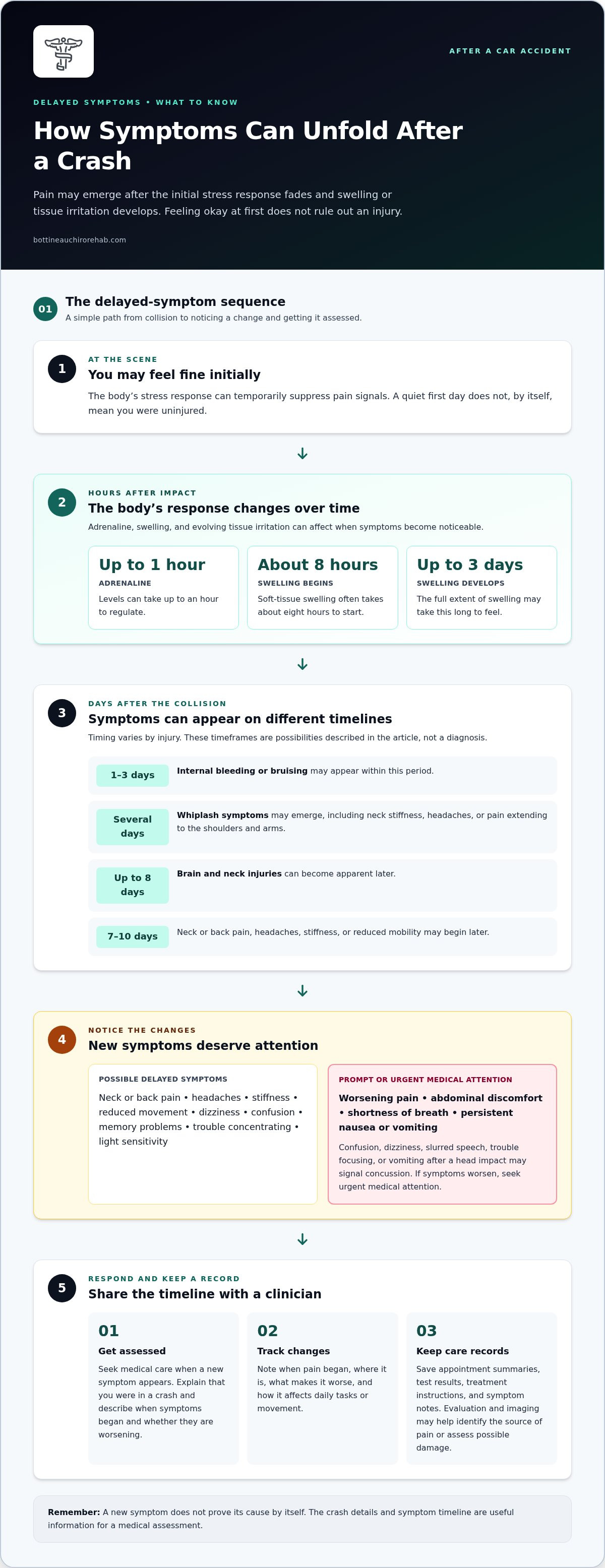
Collision injuries may not hurt right away because the body’s stress response can temporarily suppress pain signals. Adrenaline levels can take up to one hour to regulate, while soft-tissue swelling often takes about eight hours to start. You may not feel the full extent of swelling for up to three days. As swelling develops or muscles relax after spasming, an injury can become easier to notice.
Timing varies by injury. Whiplash symptoms may appear several days after a crash, and a person might feel fine for a few days before neck pain starts. Neck pain, back pain, headaches, stiffness, or reduced mobility may also begin seven to ten days later. Concussion symptoms can emerge gradually, including brain fog or light sensitivity. New pain doesn’t prove its cause by itself, but the crash and symptom timeline are important details for a medical assessment.
How soon should I report delayed injuries to my car insurance company? Tell your insurer promptly when symptoms appear, and record when they started and what care you sought. Insurers may question injuries reported days or weeks later, so keep a clear timeline and copies of medical records.
An attorney can help organize treatment records, crash documentation, and a symptom timeline if an insurer disputes a delayed injury claim. For example, notes showing when neck pain began, followed by a medical evaluation, can clarify the sequence of events. Police reports, crash-scene photographs, and witness statements may also document the collision. These materials support a clear account, but they don’t replace medical assessment or determine the cause of an injury.
Seek medical attention when new symptoms develop, especially after a head impact or possible soft-tissue injury. Describe the crash, when each symptom began, and whether it is worsening. Early documentation creates a useful record of your health and how symptoms change.
Delayed symptoms that need medical attention
New symptoms after a car crash deserve prompt medical attention, even when they begin later. The type, severity, and progression of symptoms help guide the next step.
Seeking Medical Attention
Seek medical care when a new symptom appears, and tell the clinician you were in a car crash. This detail helps put pain, dizziness, or nausea in context. Don’t wait for discomfort to interfere with everyday movement. An evaluation can also establish a health baseline to compare with later changes.
Some warning signs need urgent evaluation. Worsening pain, abdominal discomfort, or shortness of breath after a crash can point to internal injury. Persistent nausea and vomiting also warrant medical assessment. Internal bleeding or bruising may appear within 1-3 days, while brain and neck injuries can become apparent up to eight days after the collision. Don’t dismiss symptoms because they started after you left the scene.
Pay attention to changes in thinking and balance, too. Confusion, dizziness, slurred speech, trouble focusing, or vomiting after a head impact may signal a concussion. If symptoms worsen, seek urgent medical attention rather than waiting for a routine appointment. Symptoms that appear in the days after a crash still matter, even if you felt well at first.
Medical Evaluation and Diagnosis
A medical evaluation connects your symptoms with an examination and, when appropriate, imaging. Describe where the pain occurs, when it began, and whether movement makes it worse. Mention headaches, nausea, or difficulty concentrating, even if they seem unrelated. X-rays, MRI, or CT scans may help identify the source of pain or assess possible damage.
Clear documentation matters. Keep appointment summaries, test results, treatment instructions, and notes about symptoms over time. For example, record when abdominal discomfort began and whether it worsened. This timeline helps clinicians understand changes between visits and supports continuity of care. Update your healthcare provider when symptoms change, through a patient portal or at a follow-up visit.
Medical records can also show how an injury and its treatment developed over time. In a personal injury case, records documenting symptoms and care may help establish that an injury continued after the collision. Medical experts can explain how some injuries produce delayed symptoms. Their explanations and the documented timeline may help address questions about when symptoms began and how they relate to the crash.
Self-care and recovery after delayed symptoms
Symptoms can emerge hours or days after a collision, so monitor your health even if you felt well at the scene. Whiplash-related neck pain may take time to appear, and headaches or stiffness may change as inflammation develops. Treat each new symptom as useful information, not as a reason to diagnose yourself.
Keep a symptom journal from the first day you notice a change. Record when pain began, where you feel it, what makes it worse, and how it affects daily tasks. For example, note whether turning your head limits driving or a headache disrupts reading. Share the record with your doctor and update it as symptoms change.
- Write down the date and time each new symptom starts.
- Describe changes in pain, balance, concentration, or movement.
- Record which ordinary activities become difficult, such as walking or sleeping.
- Send significant updates to your healthcare provider through a patient portal or follow-up visit.
Concussion symptoms may not appear for hours or days. Brain fog, light sensitivity, trouble focusing, irritability, dizziness, and headaches can develop gradually. Monitor these changes and tell your doctor about any head impact. A serious concussion involving bleeding in the brain can be fatal if untreated, so suspected concussion symptoms need medical assessment, not self-care alone.
Don’t ignore symptoms that worsen or spread. Problems after a crash can deteriorate, so seek prompt medical attention for new or escalating symptoms and follow the clinician’s guidance about activity and follow-up. If abdominal pain, shortness of breath, persistent vomiting, or confusion develops, treat it as urgent.
Recovery care should match the injury and its effect on function. Physical therapy can improve joint function, strengthen supporting muscles, and help injuries heal. A clinician can use your symptoms and examination to determine whether rehabilitation fits your needs. Limited neck motion or difficulty using an injured limb, for example, may be relevant when planning care.
Neck pain can begin hours or days after a crash and may last for days, months, or years. Ongoing communication matters: report persistent pain, new limitations, or changing headaches at follow-up. A dated journal can show whether movement is improving or symptoms are interfering more with daily life.
Adrenaline and endorphins masking pain
After a collision, adrenaline and endorphins can temporarily mask pain. This response can make injuries harder to recognize before the body settles.
Adrenaline and Pain Masking
Adrenaline is part of the stress response and can suppress pain messages after a crash. You may focus on immediate tasks, such as checking for damage or speaking with responders, without noticing neck stiffness. Adrenaline levels can take up to one hour to regulate. This helps explain why a lack of pain at first doesn’t reliably mean there was no injury.
Once the immediate stress response eases, soreness may become more noticeable. Someone may leave the scene feeling capable, then find that turning their head or lifting an arm causes discomfort later. This change doesn’t establish what caused the pain, but it makes the timeline important. Note when symptoms begin, which area is affected, and what movement brings them on.
Endorphins released after a car accident can also temporarily reduce the experience of pain. You might notice a bruise or strained muscle only after urgent events have passed. Pain responses vary between people and injuries. Don’t use a quiet first hour as a reason to ignore a new headache, stiffness, or difficulty moving.
Endorphins and Shock
Endorphins are natural chemicals that can temporarily blunt pain, while the body’s stress response can reduce awareness of injury. People may call this feeling “shock,” but that word doesn’t identify a specific injury. The practical point is simple: after a frightening collision, feeling calm or numb doesn’t rule out harm.
As stress eases, notice how your body responds to ordinary movement. Pay attention to whether walking, reaching, or turning your neck brings on pain that wasn’t apparent at the scene. Don’t force a movement to test yourself. If a new symptom appears, tell a healthcare professional you were in a collision and describe when it began.
Use the same approach for symptoms that affect concentration or balance. Difficulty focusing or dizziness after a head impact needs medical attention, even if pain seemed absent at first. Concussion symptoms can develop over time, and loss of consciousness isn’t necessary for a concussion to occur.
Track changes rather than judging recovery by one moment. Record new pain, stiffness, or reduced movement and share those details during follow-up care. If symptoms worsen, seek prompt medical attention. Knowing that adrenaline and endorphins can affect pain may help you respond to later symptoms instead of assuming the crash caused no injury.
Physical and emotional effects of delayed pain
Pain that develops after an auto accident can disrupt routines as well as physical comfort. A spinal injury may make walking, standing, or lying down difficult. Back pain can last for months or even years, affecting work, household tasks, and time with family. The effect is personal, but changes to everyday function are worth tracking and discussing with a healthcare professional.
Movement limits can create a difficult cycle. Neck stiffness may make driving uncomfortable, while back pain may make it harder to sit through a workday. Reduced activity can also affect sleep and social plans. Notice which tasks have changed, such as carrying groceries or getting dressed, and share those examples during follow-up care.
Emotional strain deserves attention, too. After a traumatic collision, ongoing pain or uncertainty about recovery can affect your mood and sense of safety on the road. Sleep disturbances may also occur with more serious whiplash. If poor sleep or irritability develops alongside physical symptoms, mention both when describing your condition to a healthcare professional.
Symptoms can change over time, so compare how you feel across ordinary activities rather than judging recovery by one good day. Chronic widespread pain is normally detected quickly, but pain may worsen or spread through the first year. A simple record of pain locations, movement limits, and sleep changes can make those shifts clearer. Share worsening symptoms with your healthcare provider.
Focus recovery on function, not just pain intensity. Note whether you can turn your head more comfortably, stand for routine tasks, or return to a usual activity. Physical therapy can improve joint function, strengthen supporting muscles, and help injuries heal. A clinician can use your symptoms and examination to guide care, especially when spinal pain interferes with movement.
When spinal discomfort continues to limit daily movement, explore spinal rehabilitation care as part of your recovery. Pair professional guidance with clear notes about the activities that remain difficult. That gives follow-up visits a practical focus: what hurts, what has changed, and which movements you’re working to regain.
Boundless Full Body Chiropractic & Rehab: Extremity Adjusting
Boundless Full Body Chiropractic & Rehab provides Extremity Adjusting for musculoskeletal concerns after a collision, when clinically appropriate. After urgent or serious injuries have been medically assessed, this care may be a next step for lingering discomfort or movement limitations affecting an arm or leg. Full-Body Adjustments and Sports Injury Rehab can also support recovery when broader movement or function is affected.
Share your symptoms, medical findings, and which activities remain difficult. This context can guide a conversation about whether chiropractic care fits your recovery needs. For urgent warning signs or a possible concussion, seek medical attention first.
For support with movement and musculoskeletal recovery, contact Boundless Full Body Chiropractic & Rehab or visit bottineauchirorehab.com.
Take the Next Step Toward Comfortable Movement
Recovery can also mean rebuilding confidence in everyday movements you’ve started avoiding. Choose a practical goal, such as sitting through a meal comfortably or returning to a regular walk, and discuss it during your next care conversation. A clear goal keeps attention on what matters in your daily life.
If delayed pain after a car accident is still affecting how you move, share what has changed and what you hope to regain. Boundless Full Body Chiropractic & Rehab in Bottineau can discuss whether Extremity Adjusting, Full-Body Adjustments, or Sports Injury Rehab fits your musculoskeletal recovery needs. For urgent or worsening symptoms, seek appropriate medical attention first.
Contact Boundless Full Body Chiropractic & Rehab to discuss a next step that supports your movement goals. Take recovery one informed step at a time.
Frequently Asked Questions
Can I See My Regular Doctor for Delayed Symptoms, or Do I Need a Specialist?
Your regular doctor can assess new symptoms and help determine what evaluation or care is appropriate. Explain that you were in a collision, when each symptom began, and how it affects you. For example, mention if neck pain limits turning your head or headaches interfere with reading. Worsening abdominal pain, shortness of breath, or persistent vomiting needs prompt medical attention.
Can You Seek Compensation for Injuries That Appear Later?
Later-appearing injuries may be included in a claim, but an insurer may question whether they were caused by the crash. Keep a clear record of when symptoms began, medical visits, and how your condition changes. An attorney can help organize records and explain how the timeline relates to your claim. Delayed symptoms alone don’t determine whether compensation is available.
What Happens If Symptoms Don’t Appear Immediately After an Accident?
You may feel well at the scene and notice symptoms later. Pay attention to new pain, headaches, dizziness, or changes in concentration, then tell a healthcare professional about the collision and when symptoms began. If soreness starts the following morning, for example, record what hurts and whether it affects ordinary movement. Delayed onset alone doesn’t establish the cause of an injury, so medical assessment matters.
What Is a Trauma Response After a Car Accident?
A trauma response is the body’s reaction to a frightening or stressful event, such as a collision. Stress hormones can trigger a fight-or-flight response and temporarily suppress pain messages. You might focus on immediate tasks and notice discomfort only later. Feeling shaken or having trouble settling afterward may also be worth discussing with a healthcare professional, particularly if it disrupts sleep or daily activities.
What Should I Do if I Experience Delayed Pain After a Car Accident?
If you develop delayed pain after a car accident, contact a healthcare professional and explain when it began. Describe where it hurts, what makes it worse, and whether it limits an activity such as lifting an arm or walking. Keep notes for follow-up and seek prompt attention if symptoms worsen or include abdominal discomfort, shortness of breath, persistent vomiting, or confusion.
What Should You Expect Physically and Mentally After Being in an Auto Accident?
There isn’t one fixed response after a car accident. Physical effects may include pain, stiffness, or reduced movement, while stress can affect sleep, concentration, or your sense of ease. Notice how these changes affect routines such as driving, working, or resting. Share physical and emotional changes with a healthcare professional, especially if they persist, worsen, or interfere with daily life.
Why Do Some Car Accident Injuries Show up Later?
Some injuries take time to become noticeable because swelling and inflammation can develop after impact, and muscles may initially spasm. A concussion can also cause symptoms that emerge gradually, such as difficulty concentrating or dizziness. The timing and type of symptoms vary. You may feel normal at the scene and notice a change later, so report new symptoms and their timing during a medical evaluation.
Why Can Pain Start Hours or Days After a Car Accident?
Pain can start later as the body’s immediate stress response fades and injured tissues become more inflamed. Soft-tissue swelling often takes about eight hours to start, and its full extent may not be felt for up to three days. A strain might become clearer when you resume ordinary movement, such as reaching or turning. New or worsening pain warrants medical attention.


