

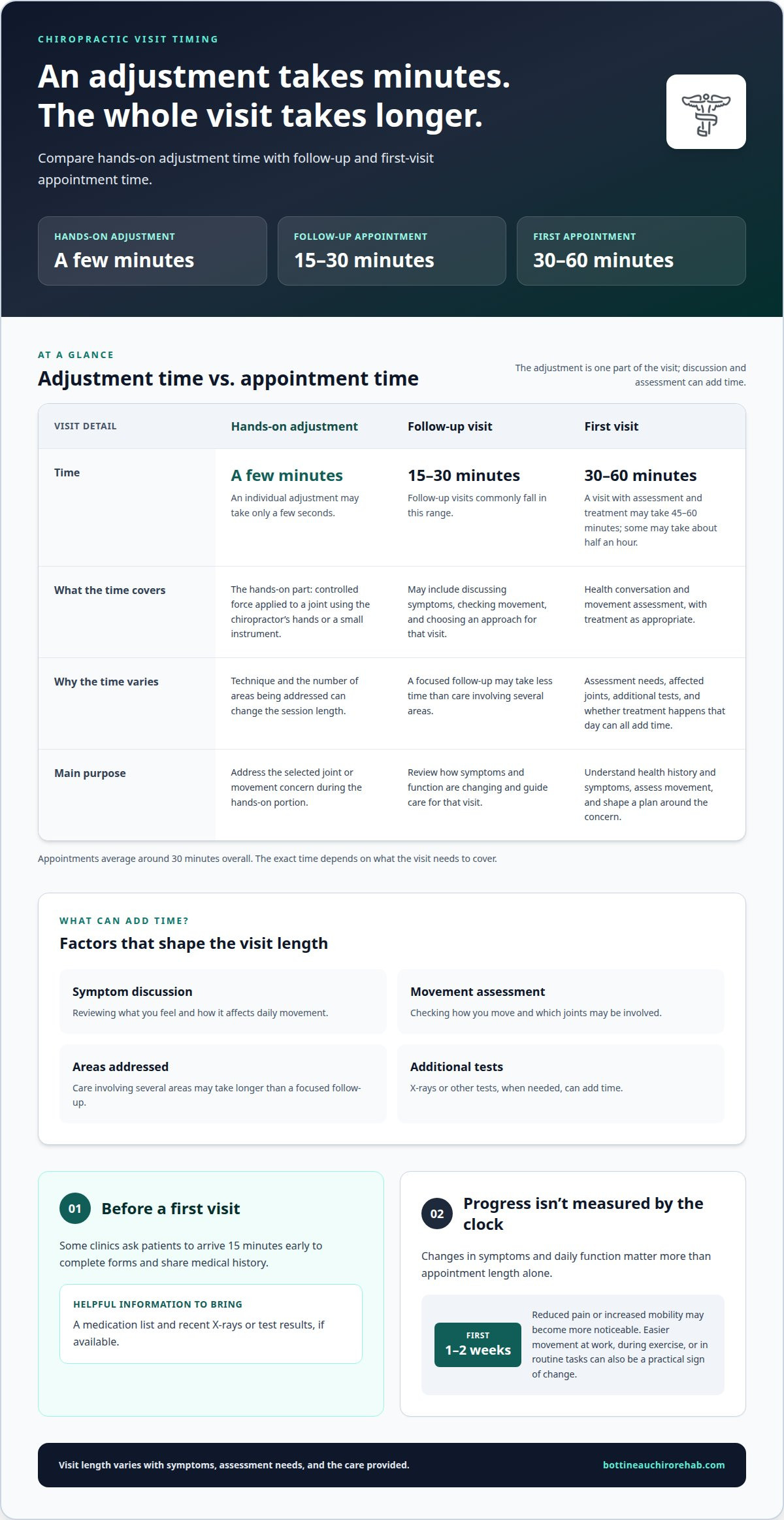
The adjustment itself usually takes only a few minutes, while a typical chiropractic appointment averages around 30 minutes. The answer to how long a chiropractic adjustment takes can vary by visit: a first appointment may last 30 to 60 minutes because it can include an initial assessment as well as treatment.
It makes sense to want a clear idea of the time commitment, especially when you’re balancing discomfort with work and daily responsibilities. The adjustment is only one part of a visit. Your first appointment may also include a conversation about your health and an assessment of what is affecting your movement.
Here, you’ll learn what happens during an adjustment, how a first visit differs from a follow-up, and what can affect appointment length. You’ll also get an overview of how long chiropractic care may continue, since the timeline depends on your symptoms and goals.
Key Takeaways
- Separate the time spent receiving an adjustment from the full appointment, which may include an assessment and conversation about your symptoms.
- Your care timeline depends on the condition being addressed, how symptoms change, and whether the goal is recovery or ongoing maintenance.
- Learn what controlled joint movement may involve and what temporary soreness or tiredness can feel like afterward.
- See how full-body and extremity adjustments, along with sports injury rehab, may fit different movement and recovery needs.
How Long Does Chiropractic Treatment Last?
Relief can begin at different times after an adjustment. Some people notice changes within a few hours, while others feel little difference right away. Initial relief may last several hours or a few days, and sometimes longer, though symptoms can return sooner. The cause and duration of discomfort, along with daily demands, all affect recovery. A single visit cannot predict how long relief will last.
Care may move through acute, stabilization, and maintenance phases. During an acute episode, visits may occur during the initial few weeks as symptoms are addressed. Stabilization can span a few weeks to months, depending on the condition. Progress can vary, and daily tasks may become easier as symptoms and movement improve. After 8-12 weeks or more of regular care, some patients experience a significant drop in pain. These are stages, not a fixed timetable for every condition.
Longer-term relief depends on the problem being treated and how symptoms change. Low back pain may require several adjustment sessions, depending on its cause. A condition present for ten years will not correct in two weeks. During maintenance, visits may be scheduled once within a month or two, or every 2-4 weeks. Some families continue monthly or every few weeks. The schedule reflects whether care targets active symptoms or ongoing maintenance.
After treatment, temporary tiredness, mild headaches, or soreness can occur. Mild soreness usually peaks within 24-48 hours, and minor side effects may last a few days. That short-term response is different from the duration of relief. For example, someone may feel sore the next day while still noticing improved movement. Track changes in pain and daily function across visits. If symptoms do not improve after a few weeks of chiropractic treatment, adjustments might not be the best treatment.
How Long Does an Adjustment Take at a Chiropractor?
The hands-on adjustment usually takes only a few minutes. The full chiropractic session may take longer: follow-up visits commonly last 15 to 30 minutes, and appointments average around 30 minutes. Time can include discussing symptoms, assessing movement, and selecting an approach for that visit.
Do different chiropractic techniques take different amounts of time? Yes. A chiropractor may use their hands or a small instrument to apply controlled force to a joint. The technique, areas being addressed, and need for assessment can all affect session length. A focused follow-up may take less time than care involving several areas.
People seek chiropractic care for concerns such as back pain, restricted movement, posture-related strain, or sports injuries. An assessment may consider how you move and whether joints beyond the spine are involved. For example, restricted shoulder movement may call for a different focus than back discomfort.
Progress is tracked through changes in symptoms and function, not appointment length alone. During the first 1-2 weeks, reduced pain or increased mobility may become more noticeable. Easier movement during a workday, exercise, or routine task can also offer a practical sign of change. If progress stalls, the care approach may need reassessment.
Neurologically focused chiropractic care emphasizes the relationship between the nervous system, movement, and symptoms. It does not mean every symptom has the same cause. An assessment helps identify the concern and determine whether chiropractic care is appropriate.
How much does a chiropractic adjustment cost in the United States? The price depends on the case and is provided after a quote request; factors include the type of visit, care plan, and insurance coverage. Insurance benefits vary by plan and service, so coverage can affect out-of-pocket costs. For movement concerns involving several areas, full-body adjustments may be relevant.
First-visit assessment and appointment length
A first chiropractic visit includes time to discuss your health and assess your movement. The findings help shape a treatment plan around your symptoms and the joints involved.
The Initial Assessment and Visit
The initial assessment reviews your health history, symptoms, and movement before treatment begins. It matters because the findings help guide which joints need attention and what the visit should address. Some clinics ask patients to arrive 15 minutes early to complete forms and share medical history. Bring a medication list and recent X-rays or test results, if available.
During the assessment, describe how your symptoms affect daily movement, such as pain when sitting or reaching. A chiropractor may order X-rays or other tests when needed, which can add time. These details help connect your concerns with the physical assessment and guide a practical treatment plan.
Adjustment Time and Total Visit Length
The adjustment is the hands-on portion of a visit, while the full appointment also includes assessment and discussion. An individual adjustment can take a few seconds, but the first chiropractic appointment may last 30 to 60 minutes. A visit combining the initial assessment and treatment can take 45 minutes to an hour. Allow time for the whole appointment, not only the adjustment.
A first visit that includes assessment and an adjustment may take about half an hour. Follow-up appointments can differ because they may focus on care without repeating the full first-visit process. Your first visit therefore has a broader purpose than the adjustment alone.
Factors Affecting Visit Length
Appointment length depends on the time needed to review symptoms, assess movement, and address the affected joints. Additional tests, including X-rays when necessary, can make a visit longer. The number of areas examined and whether treatment takes place during that visit also matter. If symptoms change over the first few weeks, sharing that information can help refine the treatment plan.
Between visits, keep moving as comfortable rather than resting until soreness passes, and drink water after treatment. Avoid heavy lifting, intense exercise, and sitting in one position for too long after an adjustment. These practical steps can help you stay mindful of movement while care continues.
What happens during a chiropractic adjustment
A chiropractic adjustment uses controlled force to move a joint. Depending on the area and approach, the chiropractor may use their hands or a small instrument. The goal is to address joint or spinal movement as part of chiropractic care. An adjustment is a focused procedure, not the entire visit. Your position helps the chiropractor access the joint being treated.
Before the adjustment, the chiropractor identifies the area being addressed and explains the planned movement. You may lie or sit in a position that gives access to the joint. The chiropractor then applies a brief, controlled movement. An adjustment typically causes little to no pain, and severe pain is not expected. Tell the chiropractor if a movement causes discomfort so the approach can be adjusted.
Some visits involve more than one manipulation. The chiropractor may pause briefly between movements, then continue based on the area and treatment approach. That is why the hands-on portion may feel brief even when the full visit takes longer. The number of areas treated and whether the visit includes other care can also affect the total time.
Some patients notice changes within a few hours, but immediate relief is not the only way to assess a response. Temporary tiredness, soreness, or a mild headache can follow treatment and may last a few days. Chronic symptoms and recent injuries can have different recovery patterns. Notice whether your movement or daily tasks change between sessions, and share those observations at follow-up.
The practical takeaway: an adjustment is a short, targeted joint movement within a broader care process. Knowing what to expect can make the procedure feel more understandable and help you describe your response clearly. If discomfort is limiting your movement, take the next step toward chiropractic care.
Boundless Full Body Chiropractic & Rehab: Full-Body Adjustments
Boundless Full Body Chiropractic & Rehab provides Full-Body Adjustments for people seeking care that addresses multiple areas. If discomfort affects movement beyond one joint, a full-body approach may be relevant. The practice also provides Extremity Adjusting for concerns involving areas outside the spine.
For active people managing sports-related injuries, Sports Injury Rehab focuses on recovery and restoring function. The right option depends on the concern you want addressed and how it affects your daily movement. A new patient special is also available.
Contact Boundless Full Body Chiropractic & Rehab to discuss your care needs and next steps.
Take the Next Step Toward Easier Movement
If you’re still wondering how long a chiropractic adjustment takes, consider more than the clock. Think about the movement or daily activity you want to address. Describing when discomfort appears, what makes it better or worse, and how it affects your routine can make a conversation about care more useful.
Boundless Full Body Chiropractic & Rehab provides Full-Body Adjustments and Extremity Adjusting, along with Sports Injury Rehab. These services address different needs, from concerns involving multiple areas to sports-related recovery. Share what is limiting your movement and what you hope to work toward. That gives the conversation a practical starting point without assuming everyone needs the same approach.
Take the next step at your pace. Contact Boundless Full Body Chiropractic & Rehab to discuss your needs and possible care options. A clear starting point can help you move toward care with greater confidence.
Frequently Asked Questions
How Long Are Chiropractor Appointments?
Appointments can range from about 15 to 60 minutes, depending on the visit. A first appointment may include an assessment, while a follow-up may focus on treatment. For example, someone attending an initial visit in Bottineau should allow more time for discussion and evaluation than for a focused return appointment. The adjustment itself is only one part of the scheduled time.
How Long Is A Chiropractic Session?
A chiropractic session often takes around 10 minutes when considering the adjustment portion, though a complete appointment can take longer. The session may include a brief discussion about changes since the prior visit or an assessment of movement. For example, describing which daily activity still feels difficult can help focus the visit. The number of areas addressed also affects the time needed.
Why are chiropractic visits so short?
Follow-up visits can be brief when they focus on symptoms or movement concerns discussed during an earlier assessment. A targeted adjustment may take only a few minutes, while a new concern or additional evaluation can extend the visit. A short appointment alone does not determine whether care is appropriate. The purpose and content of the session matter more than time by itself.
Can One Session Make A Difference?
One session can make a noticeable difference for some patients, including changes in comfort or movement. For example, someone may find it easier to turn their head after addressing neck stiffness. Others may notice little change right away or experience temporary soreness. A single visit provides an initial point of comparison; changes in symptoms and everyday activities over subsequent visits offer a broader picture.
How long does a typical chiropractic adjustment appointment take?
A typical chiropractic appointment averages around 30 minutes, but the adjustment itself is usually only a few minutes. The total time depends on whether the visit includes an assessment, discussion, or attention to more than one area. For example, an appointment focused on a previously assessed concern may differ from one addressing new symptoms. Leave time for the whole visit, not just hands-on care.
How long should you expect follow-up chiropractic appointments to take?
Follow-up appointments commonly last 15 to 30 minutes. A focused visit may involve reviewing how symptoms have changed, checking movement, and addressing the planned area. A longer discussion or additional assessment can affect the appointment’s length. For example, tell the chiropractor if a familiar activity still causes discomfort, so the visit can account for that change rather than focusing only on the adjustment.


