

Age alone doesn’t rule out chiropractic care, but it does affect what a safe approach should look like. Whether chiropractic is safe for seniors depends on health history, symptoms, bone health, and the techniques used. A careful assessment and treatment tailored to the individual are essential.
It’s reasonable to be cautious, especially if you have osteoporosis, past injuries, or other health conditions. This article explains potential benefits and safety considerations, how chiropractic care relates to balance and flexibility, and what to tell a chiropractor before care begins. You’ll get a clearer idea of which factors matter and when symptoms call for medical attention first.
Key Takeaways
- Age alone doesn’t determine whether chiropractic care is appropriate; health history, symptoms, and bone health shape the approach.
- Understand the potential benefits alongside possible short-term soreness and other safety considerations.
- See how mobility and balance work may support daily movement, while keeping fall prevention in perspective.
- Share your diagnoses, medications, past injuries, surgeries, and current symptoms so care can be tailored to you.
Is Chiropractic Care Safe and Effective for Older Adults?
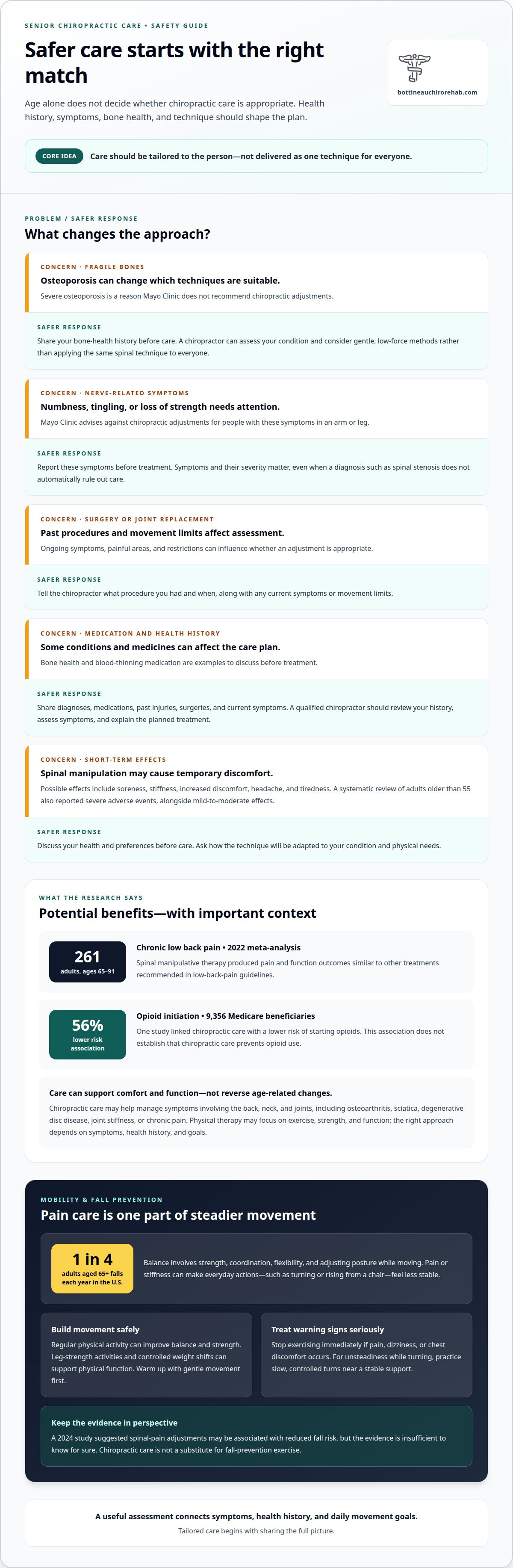
Chiropractic care may help older adults manage musculoskeletal pain and move more comfortably, but treatment should reflect their health and physical condition. A 2022 meta-analysis included 261 adults aged 65 to 91 with chronic low back pain. Spinal manipulative therapy produced pain and function outcomes similar to other treatments recommended in low-back-pain guidelines.
For senior back or neck pain, spinal manipulation and physical therapy can serve different purposes. Research on chronic low back pain found similar outcomes with spinal manipulation and other recommended treatments. Physical therapy can focus on exercise, strength, and function. The right approach depends on symptoms, health history, and goals.
Medication deserves attention, too. One study linked chiropractic care with a 56 percent lower risk of starting opioids among 9,356 Medicare beneficiaries. That association doesn’t establish that chiropractic care prevents opioid use, but it highlights why older adults may discuss pain-management options with their medical team. For back pain, the American College of Physicians guideline includes spinal manipulative therapy and exercise. Resistance training can help preserve muscle and physical function. Before starting a new exercise program, older adults should consult a healthcare provider.
Medicare and other insurance plans may cover chiropractic care for seniors, but coverage and out-of-pocket costs depend on the plan and care involved. There isn’t one cost that applies to every person or visit, so review your plan’s coverage details before budgeting.
Safety depends on matching care to the person, not applying one technique to everyone. The National Center for Complementary and Integrative Health lists temporary soreness, stiffness, increased discomfort, headache, and tiredness as possible effects of spinal manipulation. A systematic review of adults older than 55 also reported severe adverse events, alongside mild-to-moderate effects. Share health conditions and medications before treatment, especially if bone health or blood-thinning medication could affect the approach. Chiropractic care may help manage pain and function, while exercise supports strength and daily movement.
Benefits and safety of chiropractic care for seniors
Chiropractic treatment may address pain and restricted movement, but the approach must account for each person’s health. A focused assessment helps guide decisions about joints, spinal techniques, and everyday function.
Potential Benefits and Treated Conditions
Chiropractic care can help manage musculoskeletal symptoms involving the back, neck, and joints. Older adults may seek care for osteoarthritis, sciatica, degenerative disc disease, joint stiffness, or chronic pain. The aim is to support mobility and comfort, not reverse age-related changes. For example, care for arthritis-related stiffness should reflect which movements trigger symptoms and how they affect daily activities.
Safety and Chiropractic Techniques
Safer care starts by adapting techniques to a person’s condition, bone health, and preferences. Chiropractors can use gentle, low-force methods rather than applying the same spinal manipulation to everyone. A qualified chiropractor should review your health history, assess your symptoms, and explain the planned treatment. Look for a licensed, experienced provider who can describe how care will be tailored to your needs.
Spinal stenosis does not automatically rule out chiropractic care. A study of older adults, including people with spinal stenosis, found care safe in the setting studied. Symptoms and severity still matter: Mayo Clinic advises against chiropractic adjustments for people with numbness, tingling, or loss of strength in an arm or leg. Report these symptoms before treatment.
After surgery or joint replacement, tell the chiropractor what procedure you had and when, along with any ongoing symptoms or movement limits. This information helps guide the examination and determine whether an adjustment is appropriate. It also helps ensure your surgical history and any painful areas are taken into account.
Osteoporosis needs particular care because fragile bones can change which techniques are suitable. Severe osteoporosis is a reason Mayo Clinic does not recommend chiropractic adjustments. For an individualized approach to spinal symptoms, spinal rehab can be a relevant care option.
Balance, flexibility, and fall prevention
Falls can disrupt mobility and confidence, so prevention matters alongside pain relief. In the United States, one in four adults aged 65 or older falls each year, according to the Centers for Disease Control and Prevention. For a patient with chronic back pain, a stiff hip or guarded turn can make daily movement feel less stable.
Balance depends on strength, coordination, flexibility, and the ability to adjust posture while moving. The National Institute on Aging states that regular physical activity can improve balance and strength while supporting cognitive health. Activities that build leg strength and practice controlled weight shifts can help older adults maintain physical function. Gentle movement can also help you notice which motions feel difficult.
Make balance practice relevant to daily tasks. For example, if you feel unsteady while turning, practice slow, controlled turns near a stable support. Warm up with gentle movements first. Stop exercising immediately if pain, dizziness, or chest discomfort occurs. These steps keep exercise focused on safe mobility rather than pushing through a warning sign.
Chiropractic care may address spinal pain or joint stiffness that limits comfortable movement, but it isn’t a substitute for fall-prevention exercise. A 2024 study suggested that older adults receiving spinal-pain adjustments may have a reduced risk of falls, but the evidence is insufficient to know for sure. Treat that finding as an early signal, not proof that adjustments prevent falls.
For a senior with balance concerns, a useful conversation connects pain and flexibility with the movements that feel unstable. Describe a specific example, such as difficulty rising from a chair or turning toward a countertop. A care plan can then account for mobility and strength needs. Regular physical activity remains important: the National Institute on Aging notes that active older adults are less likely to experience falls, fractures, or long-term care needs.
Information seniors should share with a chiropractor
A clear health history helps the chiropractor tailor the examination, manual techniques, and adjustments to your needs. Mention symptoms that affect everyday function, not just where you feel pain.
Health Information to Share
Tell the chiropractor about osteoporosis, spinal stenosis, arthritis, previous fractures, surgeries, and any recent significant injury. List prescription and over-the-counter medicines, especially anticoagulants, and describe any known bleeding disorders. Explain where pain or stiffness occurs, which movements worsen it, and whether you have numbness, tingling, or reduced strength. These details can affect which techniques are appropriate and whether further medical assessment is needed.
Medical Clearance Before Care
There isn’t one answer for every senior: an examination should come first, particularly with osteoporosis, previous fractures, surgery, or other health conditions. Involve your doctor if these factors may affect manual treatment, and share relevant diagnoses and medication changes with the chiropractor. New or rapidly worsening weakness, numbness, or tingling also needs medical attention before routine adjustments.
Make the first conversation specific. Instead of saying, “My back feels stiff,” explain whether stiffness makes it hard to stand, turn, or get dressed. Note when symptoms began and whether a recent fall or injury came before them. If a previous treatment increased your discomfort, describe the technique and your response. This helps the chiropractor consider your range of motion, strength, and daily-function goals.
- Bring a current medication list, including blood thinners.
- Name past spinal or joint surgery and any ongoing restrictions.
- Describe balance changes, pain patterns, and nerve symptoms.
- State whether you prefer gentle techniques or have concerns about manual adjustments.
Share these details before treatment planning, not after an adjustment. Discuss your health history and care needs so your chiropractic treatment can start with the right information.
Boundless Full Body Chiropractic & Rehab
Boundless Full Body Chiropractic & Rehab in Bottineau, North Dakota, helps seniors discuss musculoskeletal discomfort, movement limits, and questions about chiropractic care. Full-Body Adjustments and Extremity Adjusting address different areas of the body, while spinal rehabilitation may support concerns involving spinal function. Care starts with sharing your medical history, symptoms, medications, and previous injuries so the approach can reflect your needs.
If pain or stiffness is affecting your daily movement, bring your questions and health details to the conversation. For urgent symptoms such as sudden weakness or signs of a stroke, seek emergency medical care instead of routine chiropractic treatment.
Contact Boundless Full Body Chiropractic & Rehab to discuss your care needs.
Take the Next Step With a Clear Plan
The question “Is chiropractic safe for seniors?” is best considered alongside your health history, current symptoms, and movement goals. Describe what you want to do more comfortably, such as walking, reaching, or turning. Share any concerns about treatment pressure or past experiences, too. A clear discussion helps you understand the proposed approach before care begins.
Bring questions about how adjustments may be adapted to your needs and how progress will be assessed. Boundless Full Body Chiropractic & Rehab in Bottineau offers Extremity Adjusting, Full-Body Adjustments, and Sports Injury Rehab. These services address different care needs, so explain what limits your movement and what you hope to improve.
A thoughtful first conversation can help you take a practical next step at your own pace. Contact Boundless Full Body Chiropractic & Rehab to discuss your care needs and move forward with confidence.
Frequently Asked Questions
Should You See a Chiropractor?
A chiropractor may be appropriate for some musculoskeletal concerns, but certain symptoms need medical evaluation first. Seek prompt care for sudden weakness, signs of stroke, suspected fracture, or severe, rapidly worsening neurological symptoms. For a non-urgent concern, consider how pain affects daily activities and discuss your health history, medications, and treatment goals during the initial assessment.
Is Chiropractic Safe for Seniors?
Senior safety depends on health history, symptoms, and the approach to care, not simply where you live. For care at Boundless Full Body Chiropractic & Rehab in Bottineau, North Dakota, an older adult with a recent injury, previous surgery, osteoporosis, or new nerve symptoms should share those details during the assessment. The chiropractor can then consider whether chiropractic treatment is appropriate and which approach may suit the person.
Is Chiropractic Safe for Elderly Patients?
Chiropractic care may be suitable for some older patients when treatment is adapted to their needs. Age alone doesn’t settle the question. For example, a person with fragile bones or taking blood-thinning medication may need a different approach from someone without those concerns. Ask what the proposed technique involves, what alternatives are available, and which symptoms should prompt medical attention.
Is the “Cracking” Sound Dangerous?
The sound alone can’t show whether an adjustment is appropriate or safe for you. Tell the chiropractor if you’re uneasy about audible adjustments or prefer a gentler approach. Techniques can be adapted to your preferences. According to the National Center for Complementary and Integrative Health, possible side effects of spinal manipulation include temporary soreness, stiffness, headache, or tiredness.
What About Arthritis?
Osteoarthritis may cause pain and reduced joint mobility, and chiropractic care may help manage these symptoms. Treatment should reflect which joints are affected and how symptoms limit activities such as dressing or reaching. Describe any flare-ups, tender areas, and movements that worsen discomfort. This helps the chiropractor consider an appropriate approach rather than treating every painful joint alike.
What About Osteoporosis?
Osteoporosis changes the safety considerations because fragile bones can be more vulnerable to force. Gentle, low-force techniques may be considered for some people, but Mayo Clinic does not recommend chiropractic adjustments for severe osteoporosis. Share any osteoporosis diagnosis, fracture history, and recent bone-related changes before treatment planning. These details help determine whether chiropractic care is suitable.


