

There’s no single schedule that fits everyone. If you’re wondering how often you should get a full body adjustment, the answer depends on why you’re seeking care, your symptoms, and how you respond. For acute or subacute lower back pain, recommendations commonly call for 2 to 3 sessions per week for 2 to 4 weeks, but that isn’t a universal plan for every person or condition.
It makes sense to want a clear timeline, especially when discomfort affects your movement or routine. How often you should get a full body adjustment depends on your needs and how you respond to care, not a fixed schedule without reassessment.
This article explains how chiropractors determine adjustment frequency, what “full body” can mean, and what to expect during treatment. You’ll also learn how an adjustment may feel, why techniques can vary, and how care may shift from addressing an active problem to supporting ongoing function.
Key Takeaways
- Use your symptoms, exam findings, activity level, and response to care to understand why an adjustment plan may change over time.
- A “full-body” approach doesn’t automatically mean every joint needs an adjustment; treatment should be based on an assessment.
- Learn what adjustment techniques may feel like and why an audible pop isn’t necessary for an adjustment to be useful.
- Consider how research on visit frequency can inform expectations without assuming that more appointments always mean better results.
How often should someone get a chiropractic adjustment?
There’s no universal schedule for chiropractic care. For acute or subacute lower back pain, recommendations commonly call for 2 to 3 sessions per week for 2 to 4 weeks.
Individualized Adjustment Frequency
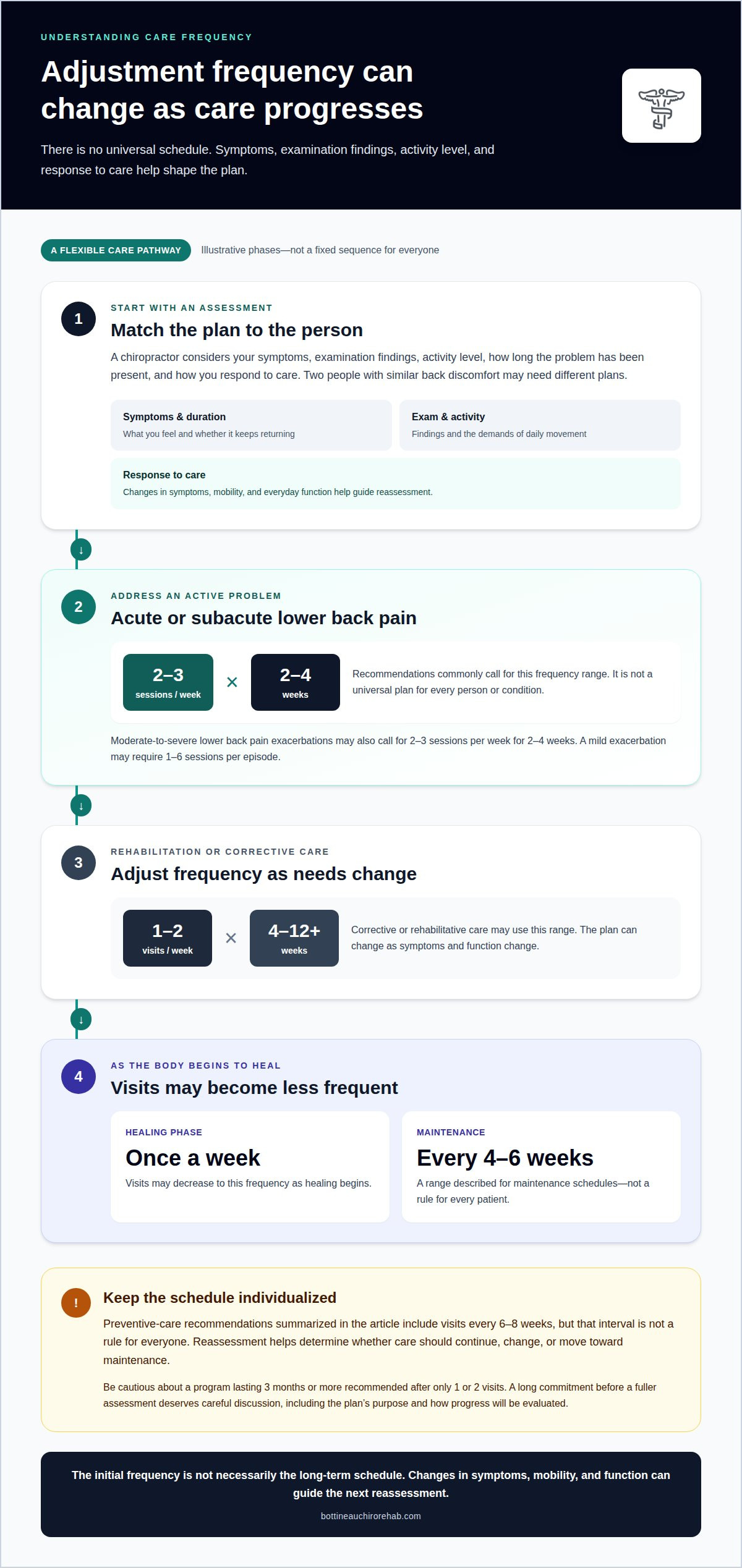
Individualized frequency means matching chiropractic treatment to your symptoms, examination findings, activity level, and response to care. These factors matter because two people with back discomfort may need different plans, even when their symptoms sound similar. A chiropractor also considers how long the problem has been present and whether symptoms keep returning. The goal is a treatment plan that responds to your needs, not a fixed schedule for every patient.
Frequency Across Treatment Phases
Adjustment frequency can shift as care moves from addressing an active problem toward rehabilitation and maintenance. For acute and subacute lower back pain, recommendations commonly call for 2 to 3 sessions per week over 2 to 4 weeks. Corrective or rehabilitative care may involve 1 to 2 visits per week for 4 to 12 weeks or longer. As the body begins to heal, visits may decrease to once a week; maintenance schedules may range from every 4 to 6 weeks.
Moderate-to-severe exacerbations of lower back pain may also call for 2 to 3 sessions per week for 2 to 4 weeks. A mild exacerbation may require 1 to 6 sessions per episode. These ranges show why frequency depends on the condition and its course, rather than the number of joints involved in an adjustment.
Visits Needed for a Treatment Plan
There isn’t one typical visit count for every treatment plan. The chiropractor considers your reason for care, how long symptoms have lasted, examination findings, activity level, and how your body responds. For example, a minor issue may need a single adjustment, while acute or subacute lower back pain may follow the 2-to-3-session weekly schedule described above. The plan can change over time as symptoms and function change, so the initial frequency isn’t necessarily the long-term schedule.
Does “Full Body” Mean Every Joint Gets Adjusted?
No. A “full body” adjustment doesn’t mean every joint needs to be adjusted. A chiropractor should review your history and examine you to determine which areas are appropriate to address.
An assessment connects your symptoms and musculoskeletal concerns with a suitable care plan. For example, if discomfort affects movement, the chiropractor may assess the relevant areas rather than adjust every joint. Posture and activity can help provide context, but they don’t determine treatment on their own.
Long-term care should respond to changes in your symptoms, mobility, and relief. Preventive schedules vary; the recommendations summarized for this topic include visits every 6 to 8 weeks for preventative care. That interval isn’t a rule for every patient. A focused reassessment helps determine whether the plan should continue, change, or move toward maintenance.
Consider changes in daily function as well as discomfort when judging whether care is helping. Notice, for example, whether a movement that felt limited becomes easier. If symptoms persist or change, discuss this during a visit so the chiropractor can review your plan. Your assessment and response should guide any changes to technique or frequency.
Be cautious if a chiropractor recommends a program lasting 3 months or more after only 1 or 2 visits. A long commitment presented before a fuller assessment deserves careful discussion. The treatment plan should explain its purpose and how progress will be evaluated.
There isn’t one average cost that applies to every chiropractic adjustment. The amount depends on the care provided and your insurance plan’s coverage terms, so review your benefits before estimating out-of-pocket costs.
For a more tailored view of full-body adjustments, consider how the examination connects your symptoms with the areas selected for care.
Adjustment techniques and patient experience
A chiropractic adjustment uses controlled force to address movement in the spine or other joints. The pressure and movements vary, so there isn’t one sensation everyone should expect. Some adjustments involve a brief, controlled movement; others use a gentler approach. The technique depends on the area being treated and your needs. In short, adjustment styles differ, even when the aim is to address movement or function.
During treatment, describe what you feel, including pressure, discomfort, or changes in movement. Your feedback helps the chiropractor understand your experience and adapt the approach. If a position feels uncomfortable, say so before continuing. This gives the chiropractor useful information without asking you to assess the technique yourself. Clear communication is especially important when care involves a sensitive area or injury.
An audible pop may happen during spinal manipulation, but it isn’t necessary for an adjustment to be useful. The sound alone doesn’t show whether treatment is appropriate or effective. Instead, focus on the purpose of the movement and how your function changes over time. For example, notice whether a previously limited movement feels different after your visit rather than using a sound to measure progress.
The adjustment itself may take only a few minutes, but assessment and discussion are also part of the appointment. Ask which area the chiropractor plans to address and share relevant symptoms before treatment begins. If you’re recovering from a sports injury, this conversation can connect the selected movement with the function you want to regain. Understanding the plan can help you describe what you feel during care.
What does research say about the effectiveness of frequent chiropractic adjustments?
Visit frequency alone doesn’t show whether chiropractic care is working. A 2021 observational study examined chronic spinal pain outcomes over 3 months. It found significant improvement in chronic lower back pain among people receiving chiropractic treatment more than once per week. Because the study was observational, its finding shows an association, not proof that more frequent adjustments caused improvement.
That distinction matters. The results don’t show that every patient needs more than one visit a week or that more frequent visits will produce better results. A different condition, symptom history, or response to care may call for a different plan. A schedule used during an active lower back pain episode, for example, shouldn’t automatically become a long-term routine.
Research summarized for this topic hasn’t shown added benefit from more than 2 to 3 chiropractic adjustments per week in most cases. That offers a practical limit to keep in mind when discussing frequency. More appointments aren’t automatically more effective. A treatment plan should connect each visit to a clear purpose, such as addressing symptoms or reviewing progress, rather than relying on visit volume alone.
Track concrete changes between visits. Note whether symptoms return, movement feels easier, or daily activities remain difficult. Share these observations at follow-up appointments so the chiropractor can consider your response alongside examination findings. If your progress changes, your visit frequency can be reviewed. This keeps decisions tied to your experience rather than a calendar or an average pattern.
For care focused on your needs and response, discuss a tailored adjustment plan.
Boundless Full Body Chiropractic & Rehab: Full-Body Adjustments
Boundless Full Body Chiropractic & Rehab provides full-body adjustments in Bottineau, North Dakota, for musculoskeletal concerns. A full-body approach doesn’t mean every joint automatically needs adjustment; care should reflect the areas and needs identified during assessment.
If discomfort involves an arm or leg, extremity care may be appropriate following evaluation. For activity-related injuries, Sports Injury Rehab focuses on recovery and function. These services address different needs, so the right starting point depends on what affects your movement and daily routine.
If you’re unsure how adjustment frequency fits your symptoms or goals, contact Boundless Full Body Chiropractic & Rehab to discuss your care.
Make Your Next Care Decision With Confidence
Deciding how often you should get a full body adjustment starts with identifying what you want care to help you do. Is your priority moving more comfortably, returning to a favorite activity, or managing symptoms that interrupt your routine? Naming that goal gives your conversation with the chiropractor a useful focus.
Think beyond the adjustment itself. Consider which movements or daily tasks matter most, then describe how they feel before and after care. That context makes progress easier to discuss and keeps future decisions connected to your priorities. You don’t need a perfect description; a straightforward example from daily life is a good place to begin.
Take the next step when you’re ready. Contact Boundless Full Body Chiropractic & Rehab to talk about your chiropractic care and what you hope to achieve. A clear goal can help you move forward with greater confidence.
Frequently Asked Questions
How often should a person see a chiropractor?
People asking, “how often should you get a full body adjustment?” should know there’s no single schedule for everyone. For acute or subacute lower back pain, recommendations commonly use 2 to 3 sessions weekly for 2 to 4 weeks. A minor issue can require only one adjustment. To track progress, note changes in daily activities, such as walking, lifting, or sitting comfortably.
How Often Should I Visit a Chiropractor?
Your visit schedule should reflect the condition being treated and the purpose of care. For example, someone managing moderate discomfort may visit once every two weeks or monthly, while a person starting care for a new problem may need appointments multiple times a week. Note symptom changes between visits. These observations give your chiropractor useful context when reviewing your treatment plan.
How often should a patient visit?
For maintenance, some patients find one visit per month sufficient, while other schedules leave more time between appointments. The right interval should support your goals rather than follow a calendar automatically. If discomfort returns before a planned visit, note what activity preceded it and how it affects movement. That information can help make the next conversation about your care more specific.
Is going to the chiropractor 3 times a week too much?
Three visits a week can fit a short-term plan for acute or subacute lower back pain, including moderate-to-severe exacerbations. Recommendations commonly describe that frequency for 2 to 4 weeks in those situations. It isn’t a default schedule for every condition. Research summarized for this topic hasn’t shown added benefit from more than 2 to 3 adjustments weekly in most cases.
How often should you get a full-body chiropractic adjustment?
The question “how often should you get a full body adjustment?” has no one-size-fits-all answer. “Full body” doesn’t mean every joint needs treatment at every visit. Frequency depends on the reason for care, examination findings, and your response to treatment. An injury and recurring discomfort, for example, may call for different approaches. Consider which movements or activities you want care to help you address.
What factors determine how frequently chiropractic adjustments are needed?
Frequency can depend on why you’re seeking care, how long the problem has lasted, examination findings, activity level, response to treatment, and whether discomfort returns. A recent flare-up may call for a different plan from longstanding symptoms. At Boundless Full Body Chiropractic & Rehab in Bottineau, North Dakota, an assessment helps shape care around your condition and needs.


