

You don’t have to agree to a neck adjustment to seek help for neck discomfort. If fear of chiropractic neck adjustment is holding you back, discuss your health history, ask about the technique and its risks, and give informed consent before treatment begins. You can pause or decline if you feel uncomfortable.
That concern deserves a clear answer, not pressure. Neck adjustments can cause short-term soreness or tenderness, and a practitioner should consider your health and reason for treatment before proceeding. Ask about alternatives and choose an approach that feels acceptable to you.
This guide explains what safety depends on, which mild effects may follow an adjustment, and when neck manipulation may not be appropriate. You’ll also learn what informed consent should cover and how to discuss alternatives, so you can make a decision with clearer expectations and less uncertainty.
Key Takeaways
- Discuss your symptoms and health history before treatment so the chiropractor can assess whether neck manipulation is appropriate.
- Ask about gentle, non-manipulative options if you’d rather avoid a traditional neck adjustment.
- Know that temporary soreness or tenderness can occur, and learn which changes should prompt medical attention.
- Give informed consent only after you understand the proposed technique, its risks, and the alternatives.
Are there alternatives to traditional neck adjustments?
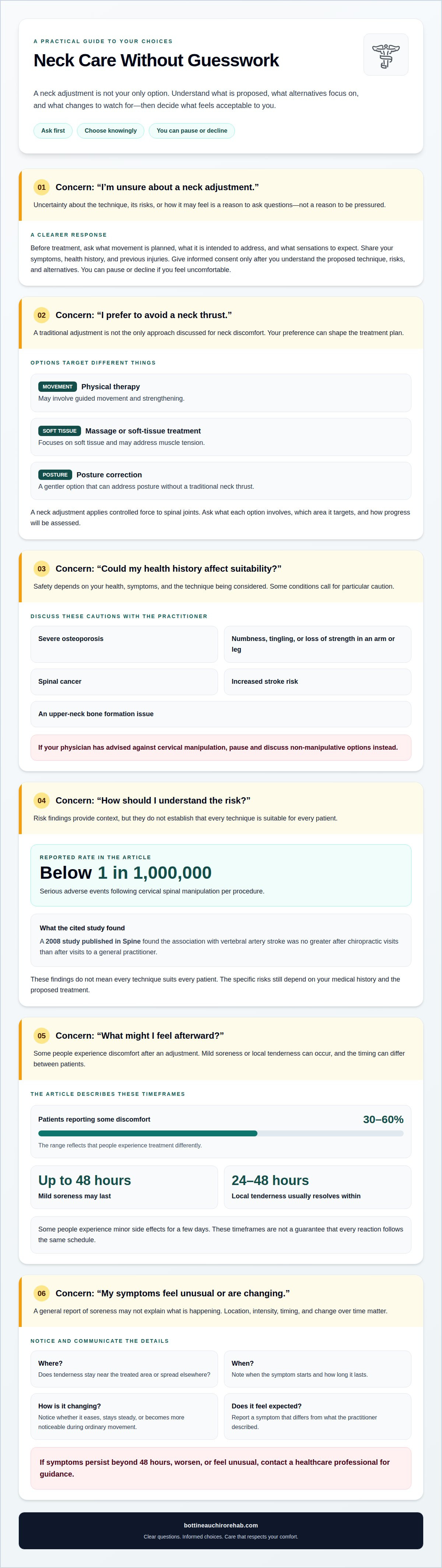
Physical therapy and massage differ from cervical manipulation. Physical therapy may involve guided movement and strengthening, while massage focuses on soft tissue. A neck adjustment applies controlled force to spinal joints. For neck pain, the right approach depends on your symptoms, health history, and goals, not simply on which method sounds most familiar.
Gentler options can address movement or muscle tension without a traditional neck thrust. These may include physical therapy, soft-tissue treatment, and posture correction. Ask the practitioner to explain what each method involves, which area it targets, and how progress will be assessed. If you prefer no neck manipulation, say so clearly before treatment; your preference should shape the plan.
Stroke risk deserves a careful, balanced discussion. Serious adverse events following cervical spinal manipulation occur at a rate below 1 in 1,000,000 procedures. A 2008 study published in Spine found that the association with vertebral artery stroke was no greater after chiropractic visits than after visits to a general practitioner. These findings do not establish that every technique suits every patient. The specific risks still depend on medical history and the proposed treatment.
Mayo Clinic advises against chiropractic adjustment for people with severe osteoporosis, numbness, tingling, or loss of strength in an arm or leg. Its cautions also include spinal cancer, increased stroke risk, and an upper-neck bone formation issue. Tell the practitioner about these conditions and any concerns raised by your physician before discussing neck treatment. If your physician has advised against cervical manipulation, pause and discuss non-manipulative options instead.
Use a clear decision process: explain your symptoms and relevant diagnoses, ask whether neck manipulation is proposed, then discuss alternatives and their purpose. You can request a plan centered on physical therapy or soft-tissue care rather than cervical manipulation. The distinction is practical: manipulation acts on spinal joints, while those alternatives focus on movement, muscle tissue, or posture. Choose only after you understand the proposed approach and feel comfortable consenting to it.
Are Chiropractic Neck Adjustments Safe?
Safety isn’t a simple yes or no. It depends on your health, symptoms, and the technique. A neck adjustment uses controlled movement, sometimes beyond a joint’s usual range. A popping sound may occur as joints move, but that sound alone doesn’t show whether treatment is helping. The practitioner should explain the planned movement before starting.
People experience treatment differently. Neck adjustments are described as gentle and typically painless, but some people feel pressure or discomfort. Some degree of discomfort follows an adjustment for 30% to 60% of patients. Tell the practitioner if the force feels painful, unexpected, or too intense. They can stop, adjust the approach, or discuss another option. You can also ask what sensations to expect before treatment begins.
Potential benefits include relief from neck pain, stiffness, and tension. Adjustments may also help improve neck flexibility and range of motion. Research supports spinal manipulation for certain types of lower back pain. Some studies suggest it may also help with headaches and other spine-related conditions, including neck pain. These findings don’t mean every headache or stiff neck has the same cause. A careful assessment helps connect the proposed treatment with your symptoms.
Before consenting, ask what the adjustment is intended to address and how the technique will work. Share relevant health conditions, previous injuries, and any symptoms affecting your arms or legs. The practitioner should consider your health and the specific issue being treated. Ask about alternatives if you’re uneasy with neck manipulation. A clear plan makes it easier to decide whether the possible benefits and discomforts feel acceptable to you.
If you’re considering care for more than one area, explore how full-body adjustments may fit into a broader treatment discussion.
Common short-term side effects
After a neck adjustment, patients may notice mild soreness or local tenderness. These effects can feel like sensitivity around the treated area. Mild soreness may last up to 48 hours. Local tenderness usually resolves within 24-48 hours. Some people experience minor side effects for a few days. The timing and sensation can differ between patients.
Pay attention to when a symptom starts and how it changes. For example, note whether tenderness stays in the treated area or spreads elsewhere. Record whether it eases, remains steady, or becomes more noticeable during ordinary movement. These details give a trained practitioner a clearer picture than a general report of soreness. They also help distinguish a temporary response from a symptom that needs further discussion.
Use the first 48 hours as a practical observation window, not as a guarantee that every reaction follows one schedule. Mild soreness may resolve sooner, while minor effects can last a few days. Avoid assuming that a specific sensation has the same meaning for every patient. The location, intensity, timing, and change over time all matter. A symptom that differs from what the practitioner described is worth reporting.
Before treatment, ask which short-term effects are possible and how long they commonly last. Afterward, compare your experience with that explanation. If you develop tenderness, describe its exact location and when you first noticed it. If symptoms persist beyond 48 hours, worsen, or feel unusual, contact a healthcare professional for guidance. Clear communication helps the practitioner understand your response and discuss what happens next. A written note can help you recall details at a follow-up, especially if symptoms change over several days.
Informed consent and choosing a chiropractor
At your first chiropractic visit, expect questions about your health history and a physical exam focused especially on your spine. Share previous neck injuries, diagnosed conditions, current symptoms, and any physician advice about manipulation. These details help the chiropractor consider your spinal health and underlying conditions before proposing treatment. An X-ray or another exam may be part of the evaluation when appropriate.
Before agreeing to neck treatment, ask for a plain explanation of the proposed technique, its purpose, possible risks, and available alternatives. Informed consent means understanding what the practitioner plans to do and agreeing before treatment proceeds. Ask whether the plan involves a neck adjustment or another approach. You can also decline or pause if you don’t understand the explanation or feel uncomfortable.
Choosing a chiropractor involves more than credentials alone. Look for a licensed chiropractor with experience treating your specific concern, such as neck pain or restricted movement. During the discussion, notice whether the practitioner listens to your concerns and explains how your health history affects the plan. A clear explanation of why a technique fits your symptoms helps you make an informed choice.
If your medical doctor has advised against chiropractic care, share that guidance before treatment. The clinic is willing to discuss your case with your medical doctor when they advise against care. This conversation can clarify the concern and help determine whether a different approach is more suitable. Don’t proceed with neck manipulation while that concern remains unresolved.
Use these practical steps to guide the conversation: describe your symptoms and relevant diagnoses; ask what examination or tests are planned; request an explanation of the proposed neck technique; then discuss alternatives and give consent only if you’re comfortable. A fear of neck adjustment can be easier to address when your questions receive direct answers. Discuss your chiropractic care concerns and make an informed plan.
Boundless Full Body Chiropractic & Rehab: Full-Body Adjustments
Boundless Full Body Chiropractic & Rehab provides full-body chiropractic care for musculoskeletal concerns in Bottineau, North Dakota. If you’re uneasy about neck manipulation, explain your concern and treatment goals before care begins. A clear conversation can help you understand the approach and decide whether it fits your needs.
Care may also address other concerns. Extremity Adjusting focuses on areas beyond the spine, while Sports Injury Rehab supports recovery from sports-related injuries. Discuss the symptoms or injury affecting you, and share any preference to avoid a particular technique. The treatment plan should reflect the concern being addressed and your consent.
Contact Boundless Full Body Chiropractic & Rehab to discuss your concerns and next steps.
Choose a Next Step That Feels Right
If fear of chiropractic neck adjustment has made you hesitate, let that concern guide the conversation rather than end it. Your next step can be a discussion about what you want help with, what you’re comfortable receiving, and what you’d prefer to avoid. You don’t need to decide on a technique before sharing your concerns. A thoughtful care plan starts with your priorities and clear communication.
Consider what would help you feel prepared: a plain explanation, time to ask questions, or a treatment approach that respects your boundaries. Bring those preferences into your next conversation. You’re allowed to take an active role in decisions about your care, and a clear discussion can help you move forward with greater confidence.
For a personal conversation about your needs, contact Boundless Full Body Chiropractic & Rehab. Take the next step at your pace, with your questions at the center.
Frequently Asked Questions
How can I ensure chiropractic care is safe for me?
Make care safer by sharing your health history and agreeing only to a plan you understand. Mention previous neck injuries, diagnosed conditions, current symptoms, and any medical advice you’ve received. Ask what the proposed technique targets and what alternatives are available. For example, if you prefer no neck thrust, say so before treatment begins and discuss an approach that fits your preference.
Why would my MD advise against neck adjustments?
A medical doctor may advise against neck manipulation because of a health condition or concern about its risks. Mayo Clinic advises against chiropractic adjustment for people with severe osteoporosis, numbness, tingling, or loss of strength in an arm or leg, spinal cancer, increased stroke risk, or an upper-neck bone formation issue. Share the doctor’s specific concern before any neck treatment is considered.
What Are the Most Common Side Effects of Neck Adjustments?
The most common short-term effects include soreness or tenderness near the treated area. Notice where the sensation occurs and whether it changes with ordinary movement. A brief record can help you describe your response clearly at follow-up. Tell the practitioner if discomfort feels different from what you expected or becomes more noticeable, so you can discuss what you’re experiencing and the appropriate next step.
What Are the Serious Risks of Cervical Manipulation?
Serious adverse events following cervical spinal manipulation occur at a rate below 1 in 1,000,000 procedures. Vertebral artery stroke is one concern often raised in discussions of neck manipulation. A 2008 study published in Spine found its association was no greater after chiropractic visits than after GP visits. Personal health factors still matter, so discuss relevant conditions before deciding on treatment.
What is a chiropractic neck adjustment and what does it involve?
A chiropractic neck adjustment is a hands-on technique intended to improve neck mobility, reduce pain, and restore function. Chiropractors use different methods that apply controlled movement to spinal joints. The movement may take a joint beyond its usual range, and a popping or cracking sound can occur. Ask which technique is proposed and what it is intended to address before consenting.
Is fear of neck manipulation common, and why are people afraid of it?
There isn’t a figure here that establishes how common this fear is. Fear of a chiropractic neck adjustment can reflect concern about the neck’s sensitivity, the force involved, or the possibility of discomfort. A cracking sound or unfamiliar movement may also feel unsettling. Tell the practitioner what worries you most, such as a sudden movement, and discuss whether another approach feels more acceptable.


