

Your chair may be part of the problem. Lower back problems from sitting can develop when long periods in one position and slouching increase strain on the lower back. Getting up to walk at least every 30 minutes can help reduce the risk of future bouts of pain.
It makes sense to blame the chair when discomfort sets in after desk work, but posture and limited movement can also affect how your back feels. Learn how sitting can put pressure on spinal discs, how to adjust your workstation, and which gentle stretches and strengthening exercises may help. You’ll also find signs that back pain needs professional attention, so you can take a practical next step instead of simply pushing through discomfort.
Key Takeaways
- Back discomfort after desk work can have several contributors, including staying in one position and limited movement. Learn what may be driving yours.
- Sitting posture can affect pressure on spinal discs. Small changes in how you sit may help reduce strain.
- Gentle strengthening and flexibility exercises can support back function. Learn a few movements and how to approach them.
- Adjusting your workstation may make sitting more comfortable. Find out when ongoing pain or other symptoms call for professional attention.
1. What causes back pain after sitting?
Lower back problems from sitting can involve more than one cause. Staying in one position may leave lumbar muscles stiff, while slouching can strain the back. Prolonged sitting was associated with a 42% higher risk of developing lower back pain. Discomfort may also relate to muscle strain, osteoarthritis, or a disc problem. The pattern matters: pain that appears after a long desk session may ease when you move, while pain that persists needs attention.
What causes lower back pain from sitting for long periods? Inactivity and poor posture can keep back muscles working under strain or leave them stiff. Leaning toward a computer, twisting to reach items, or sitting without lower-back support can add stress. As a practical change, stand, walk, or stretch every 30-60 minutes. A brief movement break interrupts prolonged sitting; it doesn’t mean you need to stop all activity.
Does a standing desk help with lower back problems from sitting? It can make it easier to change positions, which may ease discomfort from prolonged sitting. But a sit-stand desk is not a reason to stand still all day. Alternate between sitting and standing, and take movement breaks. Try standing for part of a task, then take a short walk before returning to your chair. Changing your activity and posture together may help more than relying on a desk alone.
When should I see a doctor for lower back pain from sitting? Seek medical advice if the pain affects everyday activities, lasts longer than two weeks, or does not improve after you modify your activity for a few weeks. What symptoms require urgent medical care? Seek prompt medical attention for tingling or numbness in your back or legs, fever, unusual weakness, loss of bladder or bowel function, or unexplained weight loss. These symptoms need assessment, not more stretching or waiting to see whether a desk adjustment helps.
2. Herniated discs and pressure on spinal discs
Sitting places more pressure on the lower back than standing or lying down. Depending on how you sit, pressure on the lowest lumbar discs can double or even triple compared with standing. That added load may help explain discomfort during a long, uninterrupted work session. Pressure alone, however, does not show that a disc is damaged. Prolonged sitting can also strain the back, neck, arms, and legs, including the muscles that support your posture.
Slouching can add strain. When you slump toward a screen, spinal ligaments may overstretch and discs can experience extra stress. Leaning forward to read your phone or reaching across a desk can keep your back in an awkward position. Notice whether pain starts or increases during a particular seated task. Changing position and easing out of a slouch can reduce the time you spend loading the same area.
A bulging or herniated disc is one possible source of spinal discomfort, but pain while sitting does not identify the cause by itself. Over time, pressure on lower discs from sitting may contribute to a disc herniating or slipping out of place. Muscle strain is another possible cause. Spinal stenosis may also underlie back pain, but posture alone cannot diagnose it. Persistent symptoms need an assessment that considers your pain pattern and physical function.
Use movement as a practical way to change the load on your spine. Stand, walk, or stretch every 30-60 minutes, and avoid holding a forward-leaning posture through an entire task. If pain continues or limits daily activities, physical therapy and spinal rehab can address movement and back function. A guided plan can focus on how you sit, which movements aggravate symptoms, and how to return to comfortable activity. Don’t assume every episode of pain from sitting means a herniated disc.
3. Exercises to strengthen and stretch the back
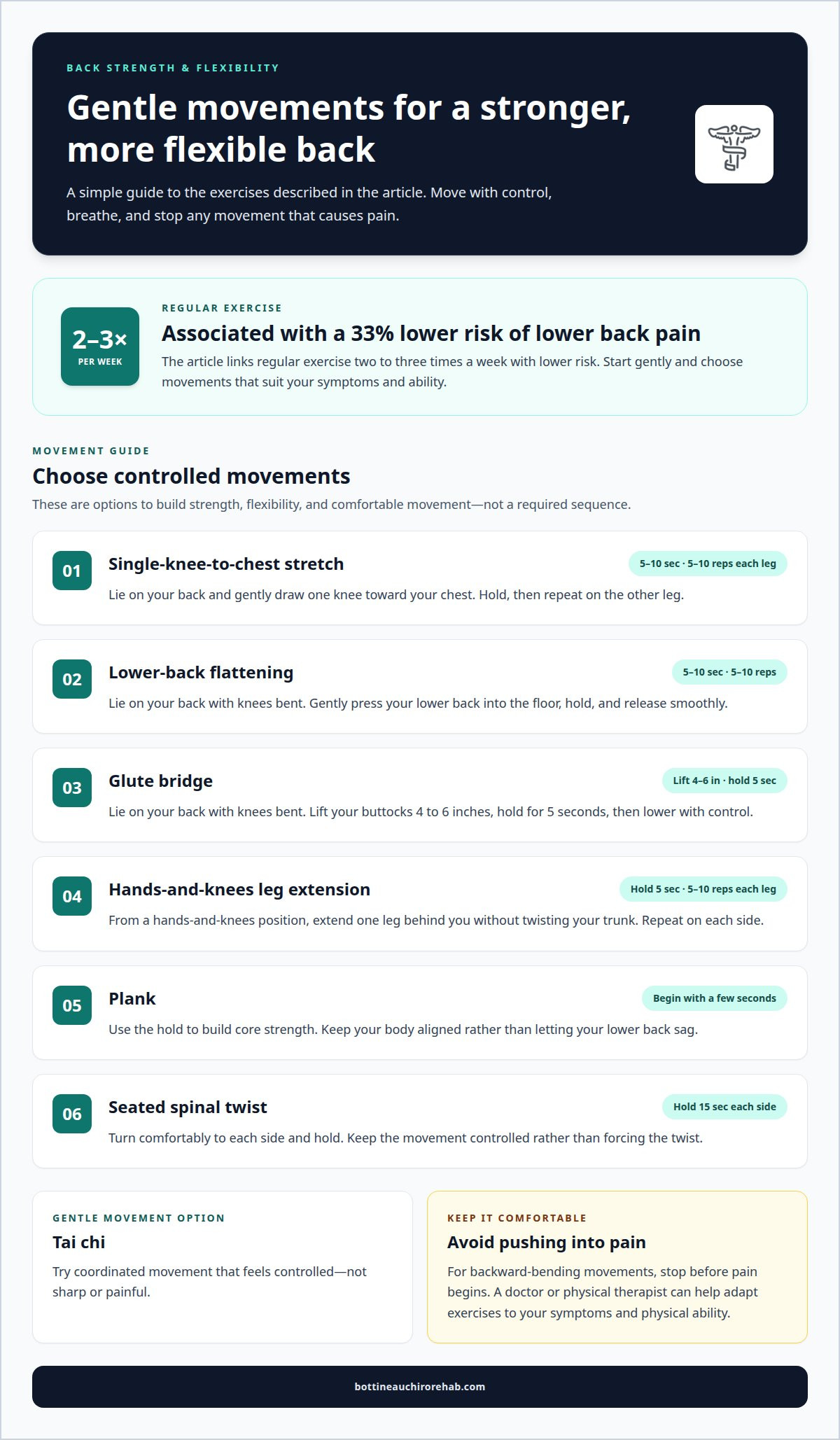
Build strength and flexibility with controlled movement, not forceful stretching. Regular exercise two to three times a week was associated with a 33% lower risk of lower back pain. Focus on abdominal strength, which helps support the trunk during daily movement. Begin gently, keep breathing, and stop any movement that causes pain. A doctor or physical therapist can help adapt exercises to your symptoms and physical ability.
Try these floor exercises on a comfortable surface. For a single-knee-to-chest stretch, lie on your back and draw one knee toward your chest. Hold for 5 to 10 seconds, then repeat 5 to 10 times on each leg. For lower-back flattening, lie with knees bent and gently press your lower back into the floor. Hold for 5 to 10 seconds and repeat 5 to 10 times. Keep the movement smooth.
For a glute bridge, lie on your back with knees bent, lift your buttocks 4 to 6 inches, and hold for 5 seconds. In a hands-and-knees position, extend one leg behind you without twisting your trunk. Hold for 5 seconds and repeat 5 to 10 times on each leg. A plank can build core strength too. Start with a hold for a few seconds, keeping your body aligned rather than letting your lower back sag.
Flexibility work can improve function and reduce stiffness. Try a seated spinal twist, turning comfortably and holding for 15 seconds on each side. Tai chi is another option for gentle, coordinated movement; choose movements that feel controlled rather than sharp or painful. Backward-bending movements may help preserve that motion, but stop before pain begins. Physical therapy can help match stretches and strengthening exercises to your movement needs, including how your sitting posture affects comfort throughout the day.
4. Poor posture and prolonged sitting
Posture can affect how your back feels during desk work. Slouching may create tension throughout the spine, while leaning toward a phone or computer adds pressure. A forward head, rounded shoulders, and unsupported lower back can turn a short task into prolonged strain. A herniated disc is one possible cause of pain, but poor posture alone cannot establish that diagnosis.
Set up your chair and screen to reduce avoidable strain. Keep your feet flat on the floor or a footrest, with your knees near a right angle. Position your elbows at about 90 degrees and place the computer screen at eye level. A chair cushion or rolled towel at the base of your spine can support a slight arch and help prevent slumping. Adjust the screen so you can read without leaning forward.
Build movement into your work periods instead of holding one posture. Stand, stretch, or walk for a minute or two at a time during desk work, as UCLA Health recommends. A sit-stand desk can make it easier to change positions, but standing still for prolonged periods is not the goal. Alternate between sitting and standing, and take short movement breaks. If you have arthritis, staying active can help limit stiffness associated with sitting too long.
Try a lumbar cushion before replacing your chair, and adjust the screen before changing your sitting position. Kneeling chairs and exercise balls may suit some people, but anyone with an injured back or other health problems should talk with a doctor before using them as chairs. Seek professional guidance if posture adjustments don’t ease discomfort or pain disrupts everyday activities. Appropriate treatments depend on what’s causing the symptoms, not just how you sit. For tailored help with posture-related back discomfort, take the next step toward relief.
Boundless Full Body Chiropractic & Rehab
Boundless Full Body Chiropractic & Rehab offers spinal rehabilitation and physical therapy in Bottineau for people whose back discomfort continues despite movement and workstation changes. If pain limits everyday activities or keeps returning during desk work, professional guidance can help assess what is affecting your movement and what care may be appropriate. Rehabilitation and physical therapy can support a plan focused on function and comfortable activity. Persistent pain, worsening symptoms, or difficulty returning to normal routines are reasons to seek an assessment rather than relying on posture adjustments alone. Contact Boundless Full Body Chiropractic & Rehab to discuss your back concerns and take a considered next step.
Take the Next Step Toward Comfortable Movement
Discomfort from sitting can affect how you work, rest, and move, but persistent symptoms deserve attention beyond another chair adjustment. If lower back problems from sitting keep returning, focus on restoring comfortable function and identifying which movements or daily demands aggravate them. A thoughtful next step considers your symptoms and activity goals rather than treating every sore back the same.
Boundless Full Body Chiropractic & Rehab provides full-body adjustments and extremity care in Bottineau. For people returning to active routines after an injury, sports injury rehabilitation may also be appropriate. These services can be considered when discomfort affects movement or interferes with work or recreation.
Choose a next step based on what your back is keeping you from doing, not just where it hurts. Contact Boundless Full Body Chiropractic & Rehab to discuss your concerns and available care. Progress can begin with a clearer understanding of your symptoms and a plan focused on moving comfortably again.
Frequently Asked Questions
What causes back pain after sitting?
Back pain after sitting can stem from muscle strain, joint stiffness, or pressure on spinal structures. The cause may vary with your activities, health, and how symptoms change throughout the day. For example, note whether discomfort starts during a particular task, eases after changing position, or continues during other activities. This pattern can help a healthcare professional assess what may be contributing.
What Can I do About My Lower Back Pain Since I Sit Often?
Make movement part of your work routine, then observe how your back responds. Set a reminder to change tasks or take a short walk, and avoid staying in one position through meetings or long calls. Keep track of activities that trigger or ease discomfort. If pain persists, affects daily tasks, or worsens, arrange a professional assessment rather than relying only on self-directed changes.
Is it normal if my lower back hurts when sitting but not standing?
Pain that occurs while sitting but eases when standing can happen, but that pattern alone does not identify its cause. Sitting and standing place different demands on the body, and symptoms can vary with posture, movement, or an underlying condition. Notice whether pain also appears while driving, eating, or doing other seated activities. Seek medical advice if it continues, worsens, or limits your routine.
Why Does My Lower Back Hurt When I Sit?
Your lower back may hurt while sitting because the position increases stress on some spinal structures or keeps muscles under sustained load. Your chair may contribute, but it is not the only possible factor. Consider whether discomfort changes when you sit upright, lean forward, or use back support. A healthcare professional can assess persistent pain and consider your symptoms, movement, and health history.
Why Does Your Back Ache From Sitting Too Long?
Holding the same seated position can leave back muscles stiff or strained, especially if you are focused on a screen and rarely move. A long drive, extended meal, or work session may make the ache more noticeable. Duration is only part of the picture; posture, activity, and existing joint or disc conditions can also matter. Changing position can help you notice how movement affects your symptoms.
How long is it safe to sit before taking a movement break?
For desk work, get up and walk around at least every 30 minutes to help prevent future bouts of back pain. Use the break to move rather than simply switching from sitting to standing without changing position. A brief walk to refill water or deliver a message can fit naturally into the workday. If symptoms persist despite regular breaks, seek professional advice.


