

Up to 60% of runners experience an injury severe enough to keep them from running for several weeks or months. If you’re looking for a running injury clinic near Rolla, ND, injury care can help identify what’s causing pain and guide a safe return to running. Achilles tendon pain, shin splints, and knee discomfort are common concerns that may need more than rest alone.
It’s frustrating when a run you enjoy becomes a source of pain. The right next steps depend on the injury, your symptoms, and how running affects your movement. A running injury clinic near Rolla, ND can evaluate your concern and help you understand appropriate care. This guide covers common running injuries, what to note before an assessment, and how rehabilitation can support a gradual return to activity.
Key Takeaways
- Build prevention into your running routine by paying attention to training load, footwear, and strength and mobility work.
- If pain continues beyond 10 to 14 days, contact a doctor or physical therapist to assess what may be causing it.
- Individualized exercises can target the strength and movement needs behind your symptoms, rather than relying on a one-size-fits-all routine.
- Runner’s knee, shin pain, stress fractures, and Achilles symptoms can need different approaches, so identifying the source of pain matters.
- Learn how sports injury rehab and extremity adjusting may fit into a recovery plan for running-related discomfort.
Running injury prevention and treatment
Running injury care starts by identifying the painful area and what triggers symptoms. A running injury clinic near Rolla, ND can assess movement and help shape a gradual recovery plan.
Personalized Running Injury Treatment
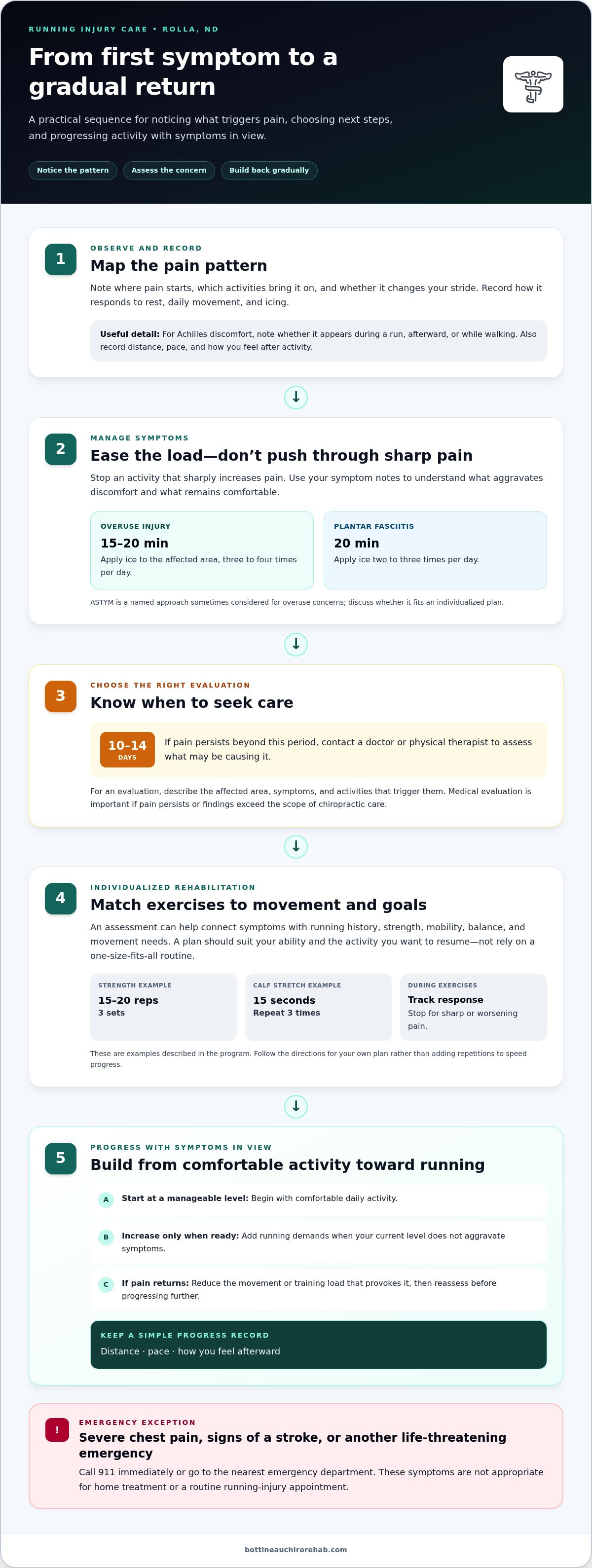
Track where pain starts, which activities bring it on, and whether it changes your stride. Those details help guide an assessment and clarify whether symptoms follow a repeated training demand or a particular movement. For example, note whether Achilles tendon discomfort appears during a run, afterward, or while walking.
For an overuse injury, apply ice to the affected area for 15 to 20 minutes, three to four times per day. If pain persists beyond 10 to 14 days, contact a doctor or physical therapist. ASTYM is a named treatment approach sometimes considered for overuse concerns; discuss its role within an individualized plan rather than assuming it suits every injury.
Pain-Relieving Treatment Modalities
Pain relief should support recovery without hiding symptoms that matter. Record how the discomfort responds to rest, daily movement, and icing, then share those observations during an assessment. For plantar fasciitis, apply ice for 20 minutes two to three times per day. Stop an activity that sharply increases pain instead of pushing through it.
Care depends on the painful area, the movements that provoke symptoms, and your current function. Ask how each recommended approach relates to your goals, such as improving comfortable movement or rebuilding activity. If pain persists or findings exceed the scope of chiropractic care, medical evaluation is important.
Return-to-Running Plans
A return plan should move gradually from comfortable daily activity toward running, with symptoms informing each step. Identify a manageable activity level, then increase running demands only when your current level does not aggravate symptoms. Record distance, pace, and how you feel afterward to spot patterns and adjust training.
Ask how the plan accounts for your injury, running history, strength, mobility, and goals. Individualized rehabilitation can guide your progress. If pain returns as you increase activity, reduce the movement or training load that provokes it and reassess before progressing further.
Urgent Injury Evaluation
Severe chest pain, signs of a stroke, or another life-threatening emergency require an immediate call to 911 or a visit to the nearest emergency department. These symptoms are not appropriate for home treatment or a routine running-injury appointment. For other pain, contact a doctor or physical therapist if it persists beyond 10 to 14 days.
Clinics set their own walk-in and referral procedures. For non-emergency running pain, arrange an evaluation and describe the symptoms, affected area, and activities that trigger them. To book an appointment, contact the clinic and provide those details so the visit can focus on your running concern.
Rolla runners seeking care can consider Boundless Full Body Chiropractic & Rehab in Bottineau, North Dakota. The clinic provides Sports Injury Rehab, Physical Therapy, and chiropractic care focused on movement. Bring a clear symptom history, including whether pain changes your stride or limits everyday activity.
Individualized exercise programs
An individualized exercise program connects your symptoms with the movements and training demands that matter to running. Rather than copying a generic routine, use exercises selected for your ability, pain pattern, and goals. A movement assessment can help identify patterns to consider alongside your symptoms and running history.
Start by recording what changes your discomfort. Note whether it appears during a particular part of your stride, on hills, or after a longer run. Share which movements feel limited and what activities remain comfortable. These details help shape care around your needs, rather than assumptions based only on where you feel pain.
A useful rehabilitation plan may address mobility, strength, balance, and running-related movement. The approach depends on the assessment and the activities you want to resume. For example, a runner who has difficulty controlling a single-leg movement may work on stable, controlled movement before progressing to more demanding tasks. Follow the exercise guidance and keep movements deliberate.
- Choose a clear purpose: Connect each exercise to a movement goal, such as improving control or building strength.
- Use manageable form: Stop an exercise if it causes sharp or worsening pain, and note what triggered it.
- Track the response: Record symptoms during and after exercise to guide the next adjustment.
For the strengthening exercise described in the program, the recommendation is 15 to 20 repetitions and three sets. The appropriate effort depends on the movement and your ability to maintain good form. A calf stretch offers another example of a defined instruction: hold it for 15 seconds and repeat it three times. Follow the directions for your own plan rather than adding repetitions to speed progress.
Progression should reflect how your body responds, not just a calendar. When a movement stays comfortable and controlled, the program can build toward more demanding tasks. If symptoms rise, review the exercise, range of motion, and training load. These adjustments help keep exercises relevant as your function changes.
Bring your exercise notes and running goals to a physical therapy visit. Ask how each movement supports recovery and how progress will be evaluated. For guided support with movement and recovery, explore physical therapy and rehabilitation as part of your care options.
What physical therapy clinics near Rolla, ND treat running injuries?
Rehabilitation can address running-related movement problems through assessment, guided exercise, and progressive activity. Boundless Full Body Chiropractic & Rehab provides care in Bottineau, North Dakota, for runners from Rolla and nearby communities. The assessment should reflect your symptoms and what brings them on: ankle pain during push-off, for instance, differs from knee pain on downhill runs.
Running concerns can include Achilles tendon pain, shin splints, plantar fasciitis, and runner’s knee. Care starts with your symptom history and physical function, rather than relying only on an injury label. Boundless Full Body Chiropractic & Rehab offers Physical Therapy and Sports Injury Rehab tailored to the assessment, your movement limits, and your activity goals.
Some running pain needs assessment beyond routine rehabilitation. Persistent, localized pain that worsens with impact, for example, may need medical evaluation before you resume training. If findings exceed the scope of chiropractic care, seek appropriate medical assessment; rehabilitation may then address function and strength as part of the care plan.
Choose care based on the help you need. Physical Therapy and Sports Injury Rehab focus on movement and rehabilitation, while symptoms requiring medical diagnostic assessment may call for medical care. The important distinction is the concern being addressed, not whether a clinic uses the word “sports” in its name.
- Describe the trigger: Note whether pain begins during a run, afterward, or during everyday movement.
- Identify the location: Record whether discomfort affects the heel, Achilles tendon, shin, knee, or another area.
- Share your running demands: Explain what terrain, pace, or training activity brings on symptoms.
- State your goal: Give a clear example, such as returning to easy runs or managing stairs comfortably.
For Rolla runners, Bottineau is a nearby community to consider for rehabilitation and chiropractic care. The right fit depends on your symptoms and whether rehabilitation or medical assessment is the priority. Choose care that matches the question you need answered, such as how to rebuild strength and movement after an injury.
Before an appointment, write down your symptoms and recent changes in running. Bring a list of movements that worsen or ease discomfort, plus any exercises you have tried. That record gives a physical therapist practical details for planning assessment and care. If pain has persisted beyond 10 to 14 days, contact a doctor or physical therapist for evaluation.
If you need rehabilitation for a running-related movement problem, Boundless Full Body Chiropractic & Rehab in Bottineau offers assessment, Physical Therapy, and Sports Injury Rehab. When symptoms require medical diagnostic assessment, seek appropriate medical care.
Rise Physical Therapy identifies hip strength and mobility as important for running form, health, and injury prevention. Runners considering rehabilitation can raise these topics when discussing their running concerns and goals. Hip strength and mobility can be considered alongside the specific symptoms described above, with attention to their relationship to running form, health, and injury prevention. Keeping these points in view can help frame a discussion about care that addresses running-related needs.
Which nearby clinics specialize in runner's knee, shin splints, stress fractures, or Achilles injuries?
For runner’s knee or shin splints, look for physical therapy or sports injury rehabilitation focused on movement, strength, and a return to activity. Patellofemoral pain syndrome accounts for 20% of running injuries, while shin splints account for 15%. These figures show why clinics commonly address both concerns, but your symptoms still need an individual assessment.
Achilles tendon pain calls for attention to where discomfort occurs, which movements provoke it, and how symptoms affect walking or running. Describe whether pain appears during a run, after activity, or during ordinary movement. That context helps a clinician assess the concern and determine whether rehabilitation is appropriate.
A suspected stress fracture needs medical assessment rather than a self-directed return to impact. Explain where the pain is, what activity brings it on, and whether it persists outside running. If pain continues beyond 10 to 14 days, contact a doctor or physical therapist. Severe chest pain, signs of stroke, or a life-threatening emergency require calling 911 or going to the nearest emergency department.
Rolla runners can consider care in nearby Bottineau when looking for rehabilitation and chiropractic services. Focus on the evaluation and care that match your concern, rather than a clinic label alone. Physical Therapy and Sports Injury Rehab may address rehabilitation needs, while symptoms requiring medical assessment should be evaluated by an appropriate medical professional.
- For knee pain: Describe where it hurts and which running movements trigger it.
- For shin pain: Explain whether discomfort is associated with running or also affects daily activity.
- For Achilles symptoms: Note when tendon pain appears and how it changes movement.
- For suspected stress injury: Pause impact activity and seek medical assessment before planning a running return.
Bring a short symptom record to your appointment. Include the affected area, activities that increase discomfort, and any changes in your running routine. For example, describe whether knee pain appears during downhill running or Achilles discomfort affects push-off. Specific details keep the discussion focused on your injury and goals.
Choose care that addresses your condition and next step. Physical Therapy or Sports Injury Rehab may support exercise-based recovery when rehabilitation fits the assessment. For a suspected stress fracture or persistent symptoms, seek medical evaluation before resuming running. Match the care to the question you need answered, and explain your symptoms clearly.
For runner’s knee, shin splints, or Achilles injuries, consider physical therapy or sports injury rehabilitation focused on movement, strength, and returning to activity. For a suspected stress fracture or symptoms needing diagnostic assessment, orthopedic or sports medicine care may be more appropriate; runners may consider services in Rugby or Minot.
How far are running injury clinics from Rolla, ND, and what are their hours?
Distance from Rolla depends on the clinic’s exact address and the route you take. A clinic in Rugby or Minot represents a different trip than care within Rolla, so compare the clinic location with your starting point before planning an appointment. Town names alone don’t show the full travel distance.
Hours also vary by clinic. Separate the listed office hours from the appointment time you need, especially if you’re planning travel around work, school, or training. For example, a morning visit may involve a different schedule than an afternoon appointment. Use the clinic’s booking process to arrange a time that fits your care needs.
Plan the trip around your injury, not just the drive. If walking, standing, or getting in and out of a vehicle aggravates symptoms, mention that when arranging care. For Achilles pain, for example, note whether walking to the appointment is uncomfortable. That context helps the clinic understand your immediate needs.
For Rolla runners considering Rugby or Minot, compare these practical details:
- Starting point: Use your actual location in or near Rolla, not only the town center.
- Clinic address: Check the exact destination because clinics in the same community can be in different places.
- Route: Choose a route that suits your travel needs and current symptoms.
- Appointment time: Schedule around the clinic’s hours and the time needed to reach the visit.
- Follow-up needs: Consider how repeat visits may fit your schedule during rehabilitation.
Travel planning matters when a recovery plan includes follow-up. Consider how the trip affects your ability to attend appointments and follow the plan between visits. When arranging care, explain any travel or scheduling limits that may affect your routine. A practical schedule can make it easier to stay engaged with rehabilitation.
Before booking, write down your symptoms, the activity that triggers them, and any travel concerns. This helps keep the appointment focused on your running injury rather than logistics alone. If persistent pain affects walking or daily movement, contact a doctor or physical therapist to discuss evaluation. For severe chest pain, stroke signs, or a life-threatening emergency, call 911.
Need structured help with a running-related injury? Arrange sports injury rehabilitation and discuss how care can fit your recovery needs and travel plans.
Travel distance depends on the clinic’s exact address and the route from your starting point in or near Rolla. Clinic hours vary, so check the specific location and arrange an appointment through its booking process.
Working one-on-one with a licensed physical therapist can support recovery from running injuries, while discussing symptoms and travel constraints can help make care manageable. Running shoes lose 30% to 50% of their shock absorption ability after about 250 miles, so shoe condition is another point to consider alongside a treatment plan.
A testimonial writer reports that after 10 appointments, their back pain was significantly reduced or almost gone. That account describes one person’s experience, not a guaranteed outcome; discuss personal goals and progress with the therapist.
Boundless Full Body Chiropractic & Rehab: Extremity Adjusting
Boundless Full Body Chiropractic & Rehab offers Extremity Adjusting for runners with concerns affecting a limb or joint, when clinically appropriate. Sports Injury Rehab can support a recovery plan focused on restoring function. Full-Body Adjustments are also available when broader musculoskeletal concerns affect activity.
Consider reaching out when an injury interferes with training or everyday movement and you want guidance on next steps. Share where the pain occurs, what activities trigger it, and how it affects your running. That information helps make the conversation specific to your needs.
Contact Boundless Full Body Chiropractic & Rehab to discuss care for a running injury.
Take the Next Step Toward Comfortable Movement
Make your next move a clear one: describe what hurts, what makes it worse, and which activities you want to return to. That gives your care conversation a practical starting point. If you’re comparing options for a running injury clinic near Rolla, ND, focus on care that fits your injury and movement goals.
Boundless Full Body Chiropractic & Rehab offers Sports Injury Rehab, Extremity Adjusting, and Full-Body Adjustments in Bottineau. These services provide a way to discuss running-related discomfort and care focused on movement. Share your symptoms and running goals to explore an appropriate next step.
Contact Boundless Full Body Chiropractic & Rehab to discuss your injury care. A thoughtful plan can help you move forward with greater clarity and confidence.
Frequently Asked Questions
Are there sports medicine or running injury clinics near Rolla, ND?
Yes. Rolla runners can consider injury care in nearby Bottineau, where Boundless Full Body Chiropractic & Rehab provides Sports Injury Rehab and Physical Therapy. Care addresses musculoskeletal concerns that affect movement and activity. For example, describe how an ankle or knee problem changes your running stride. If findings exceed the scope of chiropractic care, seek medical evaluation before returning to running.
Do clinics near Rolla accept walk-ins or require a referral?
Clinics set their own walk-in and referral procedures. Contact the clinic to arrange an evaluation.


