

Could spinal rehabilitation be a sensible next step without committing to surgery? If ongoing back discomfort is making everyday movement harder, it’s understandable to want clear answers before choosing care. For people exploring spinal rehab Bottineau ND, start by understanding what “non-surgical spinal decompression” means and whether it fits the concerns they want to address.
The term describes a broad category of non-operative care intended to address spinal symptoms or function. It doesn’t mean an operation, and it isn’t automatically right for every back problem. Your symptoms, movement, health history, and assessment all matter. A useful treatment discussion should explain how a recommendation relates to your situation, not rely on a promising-sounding label.
This article explains what non-surgical decompression generally refers to, what may shape an individualized spinal rehabilitation plan, and how physical therapy or chiropractic care may fit into a broader discussion. Boundless Full Body Chiropractic & Rehab provides spinal rehabilitation and physical therapy in Bottineau. An assessment and a practical conversation about your goals can help clarify possible next steps without promising a particular outcome.
Key Takeaways
- “Non-surgical spinal decompression” can refer to different approaches, so understand what a recommendation means before deciding whether it fits.
- Spinal rehabilitation focuses on movement and function, with an assessment helping shape care around your needs.
- A non-surgical option isn’t automatically right for everyone; individual symptoms and circumstances matter when considering care pathways.
- Before discussing spinal rehab Bottineau ND, note your symptom patterns, activity limits, and relevant health history.
- Boundless provides spinal rehabilitation and physical therapy in Bottineau, with care discussions guided by your needs and assessment.
What Does Non-Surgical Spinal Decompression Mean in Bottineau?
Persistent back discomfort can make ordinary tasks feel less predictable. Sitting through a meal, getting dressed, or moving comfortably at work may take more effort than usual. If you’re looking into spinal rehab Bottineau ND, understanding what treatment terms do and don’t tell you can help you ask more useful questions.
Non-surgical spinal decompression is a broad term for non-operative care intended to address spinal symptoms or function. The specific approach described by the term can vary. The phrase alone doesn’t identify a particular treatment, machine, or expected result. For general background on how the term can include different approaches, see Spinal decompression.
How Is Non-Surgical Spinal Decompression Different From Surgery?
The phrase refers to care that doesn’t involve an operation. Surgery is a separate pathway involving a surgical procedure. Non-surgical rehabilitation may include a discussion of physical therapy or chiropractic care, depending on the person’s needs and assessment. Don’t assume that every rehabilitation plan uses a specific device or technique, or that a non-operative approach is suitable for everyone.
Fit depends on the full picture: symptoms, health history, daily function, and assessment findings. A useful recommendation should explain its purpose and how it relates to your concerns, rather than relying on the label “decompression” alone. Ask what the proposed care involves and what everyday activity or movement goal it is intended to address.
What Symptoms Lead People to Explore Spinal Rehabilitation?
People may seek information when back discomfort persists, returns, or interferes with activities such as walking, lifting, sleeping, or working. These experiences can be worth discussing, but they don’t identify a cause by themselves. Back symptoms alone can’t confirm a disc problem or show which treatment is appropriate.
Notice what changes your symptoms, what feels limited, and whether the pattern is changing. New, severe, rapidly worsening, or otherwise concerning symptoms call for prompt medical evaluation. Don’t delay seeking help because you’re considering rehabilitation.
A first conversation about spinal rehabilitation should focus on what you’re experiencing and what you want to do more comfortably. It can help to describe when symptoms began, how they affect routine movement, and what you’ve already tried. Share relevant health history and mention major changes, even if you’re unsure they matter.
In Bottineau, spinal rehabilitation can be part of a broader care discussion that keeps movement and function in view. Boundless Full Body Chiropractic & Rehab provides spinal rehabilitation and physical therapy, alongside chiropractic care. Rather than assuming a particular procedure is right for you, discuss your symptoms and goals and use an assessment to guide whether a conservative approach fits your situation.
How Spinal Rehabilitation Can Address Movement and Function
Spinal rehabilitation is a care process, not a single procedure or standard set of exercises. It considers how symptoms affect movement and daily function, then addresses which conservative approaches may suit the individual. A practical goal might be making it easier to stand from a chair, walk comfortably, or manage tasks at work. The right approach and progress differ from person to person.
An individualized assessment connects a person’s symptoms, health history, and movement goals to a rehabilitation plan tailored to their needs. A treatment label alone can’t tell you what care involves or whether it fits your situation. For people exploring spinal rehab Bottineau ND, the assessment is where a general concern becomes a more specific conversation about function and possible next steps.
What Happens During an Individualized Spinal Rehab Assessment?
The conversation starts with your experience. Be ready to describe where you feel discomfort, when it began, what seems to affect it, and which activities have become difficult. Share relevant health history and any care you’ve already tried. Everyday details help clarify what you want to work toward, whether that’s moving more comfortably at home or getting through a workday with fewer interruptions.
Assessment findings guide care recommendations. The process may consider movement limitations and how symptoms relate to daily activities, but no single test, imaging study, or protocol is necessary for every person. Ask how a suggested approach connects to your specific goals. A clear explanation helps you understand the purpose of the plan and what the next step may involve.
How Can Physical Therapy and Chiropractic Care Fit In?
Boundless Full Body Chiropractic & Rehab provides both physical therapy and chiropractic care. They are distinct services, and one or both may be considered depending on a person’s needs and assessment. Physical therapy may address movement and functional goals, while chiropractic care may include adjustments as appropriate. Neither approach is a universal fit or automatically part of every plan. Learn more about physical therapy in Bottineau.
Rehabilitation needs can also vary with the underlying condition. The National Institute of Neurological Disorders and Stroke provides background on the distinct concerns involved in Spinal Cord Injury Information. That resource focuses on spinal cord injury, not every kind of back discomfort. The important point is to match care to the person, rather than assume one rehabilitation plan applies to all.
If you’re ready to discuss how movement challenges affect your routine, explore spinal rehabilitation in Bottineau.
Non-Surgical Care or Surgery: How to Think Through the Options
Choosing between conservative care and surgery isn’t a simple matter of deciding which sounds less intensive. A non-surgical option isn’t automatically appropriate, and surgery isn’t determined by a treatment label or one symptom. The decision depends on the person’s health, clinical findings, goals, and evaluation by qualified healthcare professionals. This article can explain broad differences, but it can’t determine whether you need surgery.
Think about each pathway by its purpose and the type of evaluation involved. Conservative spinal care may include rehabilitation approaches selected to support movement and daily function. Surgical care involves an operation considered and performed by surgical professionals. Sometimes further medical evaluation is the next step before choosing a path.
| Consideration | Conservative spinal care | Surgical care |
|---|---|---|
| General purpose | Explore non-operative care that may support function and address individual concerns. | Evaluate whether an operation is appropriate for a specific medical situation. |
| Who guides it | Healthcare professionals assess symptoms and discuss suitable rehabilitation options. | A qualified surgical professional evaluates the person and discusses surgical considerations. |
| What shapes suitability | Symptoms, health history, examination findings, and functional goals. | Diagnosis, overall health, clinical findings, and the risks and potential benefits discussed with the surgical team. |
When Might Conservative Spinal Care Be Considered?
A clinician may consider conservative care after reviewing what you’re experiencing, your health history, and how symptoms affect everyday activities. The purpose is to decide whether an appropriate non-operative approach fits your situation and goals. A symptom or activity limitation on its own isn’t a diagnosis or an eligibility test. Recommendations should follow an individual evaluation, not assumptions based on the phrase “spinal decompression.”
When Should Someone Seek Medical Evaluation Promptly?
Seek prompt medical evaluation for symptoms that are severe, rapidly worsening, or otherwise concerning. Don’t rely on a rehabilitation appointment to assess an urgent problem. A qualified medical professional can help determine what evaluation is needed and whether a particular care pathway is appropriate. Spinal rehab Bottineau ND is a topic to discuss for non-emergency rehabilitation needs, not a substitute for urgent medical assessment.
For broader information about resources and advocacy related to spinal cord injury and disorders, the United Spinal Association offers educational context. Its resources don’t replace an individual clinical evaluation or determine whether surgery or conservative care is right for you.
If you’re weighing non-surgical rehabilitation for ongoing concerns, a conversation about your symptoms and goals can help clarify a sensible next step. Boundless Full Body Chiropractic & Rehab provides spinal rehabilitation in Bottineau. Explore spinal rehabilitation in Bottineau to begin that discussion.
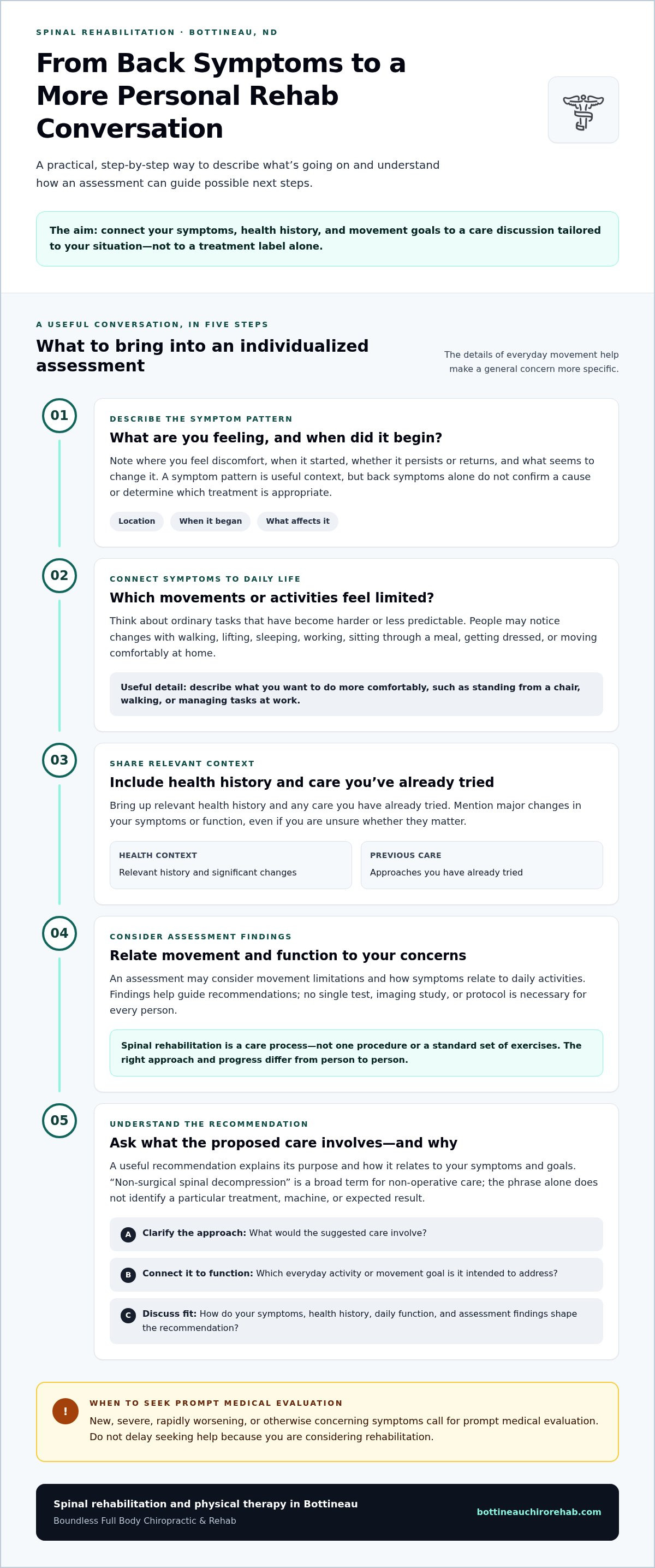
How to Prepare for a Spinal Rehab Conversation in Bottineau
A little preparation can make a conversation about back symptoms clearer and more useful. You don’t need to arrive with a diagnosis or know which treatment you want. Bring a practical picture of what’s been happening and what you’d like to do more comfortably. That gives the care team helpful context for discussing whether spinal rehabilitation may fit your needs.
What Information Is Useful to Bring to the Discussion?
Before your appointment, jot down a few details. Notes can help you remember the pattern, especially if symptoms change from day to day. Include relevant health information, but don’t worry about organizing it perfectly.
- When the symptoms began and whether they’ve changed over time.
- Which activities seem to affect them, and what movements or tasks feel limited.
- Previous care, relevant diagnoses, medications, and other health concerns.
- Questions about your goals, possible care options, and how follow-up will be discussed.
Be specific about daily impact. “I have trouble standing through meal preparation” gives more context than “my back bothers me.” You can also note whether the issue affects work, sleep, household tasks, or recreation. These details don’t diagnose the cause. They help make the discussion more focused.
If you’re also learning about chiropractic care, the full-body chiropractic adjustment guidance can provide background on that topic. Use it as general information, not as a substitute for a conversation about your own symptoms and health history.
How Can Bottineau Patients Set Practical Care Goals?
Set goals around activities that matter to you. Consider what you want to manage more comfortably, such as getting through a work shift, walking for errands, or completing a household task. These are useful starting points because they describe function, not just a number on a pain scale.
Keep goals flexible. Recommendations and progress vary with the individual, and an initial discussion may help clarify which goals are realistic to focus on first. Ask how the proposed approach relates to the activity you named, what signs will guide follow-up, and when the plan might be reviewed. There’s no need to expect a fixed visit count or recovery timeline.
For people considering spinal rehab Bottineau ND, Boundless Full Body Chiropractic & Rehab provides spinal rehabilitation and physical therapy in Bottineau. Bring your notes and questions to start a practical discussion about your needs and movement goals. Explore spinal rehabilitation in Bottineau to take a clear next step.
Explore Spinal Rehabilitation at Boundless in Bottineau
Ongoing back symptoms can leave you unsure which kind of care makes sense. Boundless Full Body Chiropractic & Rehab provides spinal rehabilitation and physical therapy in Bottineau, along with chiropractic care. A care discussion focuses on your individual needs, not a promise that one procedure will work for everyone.
“Spinal decompression” can mean different things in different settings. A conversation about spinal rehabilitation is a chance to explain what you’re experiencing, describe what you hope to do more comfortably, and understand which options may be appropriate after an assessment. You don’t need to arrive with a treatment decision already made.
What to Expect From a Local Care Discussion
Be ready to talk about your symptoms, relevant health history, and the activities they affect. For example, you might explain that standing to prepare a meal feels difficult, or that a certain movement has become less comfortable. You can also mention previous care and what you hope to get back to doing. These details give the care team useful context.
Recommendations depend on the individual and the assessment. Physical therapy and chiropractic care are distinct services that may be considered according to your needs. A discussion can help clarify how a suggested approach relates to your movement goals, what it involves, and what follow-up may look like. It shouldn’t assume a specific decompression device, protocol, result, or timeline.
It’s reasonable to ask direct questions, such as:
- How does this recommendation relate to my symptoms and daily activities?
- What options are being considered, and what is the purpose of each?
- How will we discuss whether the plan remains appropriate as my needs change?
Clear answers help you take part in decisions about your care. If something feels unclear, ask for an explanation in everyday language.
Take the Next Step Toward Spinal Rehab in Bottineau
Starting a conversation doesn’t require certainty about the cause of your discomfort or which service you may need. Bring your questions and describe the activities you want to manage more comfortably. Your concerns and assessment can guide a discussion about next steps that reflect your situation, rather than a one-size-fits-all plan.
For spinal rehab Bottineau ND, Boundless provides spinal rehabilitation and physical therapy as local care options. Its chiropractic services are part of a broader approach to musculoskeletal care, with recommendations shaped around the person. No particular result or recovery schedule can be assumed in advance.
Ready to explore your options? Explore care at Boundless Full Body Chiropractic & Rehab and request an appointment to discuss your spinal rehabilitation needs.
Start With a Conversation About Your Next Step
You don’t need to have every answer before exploring care. A clear account of what’s limiting your movement and what you’d like to do more comfortably can give the discussion a useful starting point. From there, you can consider options with your individual needs in focus, without assuming a particular treatment or outcome.
For spinal rehab Bottineau ND, Boundless Full Body Chiropractic & Rehab provides spinal rehabilitation and physical therapy, with chiropractic care and full-body adjustments as part of its broader services. Begin by discussing what matters to you and what care may fit.
Explore spinal rehabilitation at Boundless and take a practical first step toward understanding your options.
Frequently Asked Questions
What is non-surgical spinal decompression?
Non-surgical spinal decompression is a general term for non-operative care intended to address spinal symptoms or function. The phrase can describe different approaches, so it doesn’t identify a specific treatment by itself. If you see it in a recommendation, ask what the term means in that context and how the proposed care relates to your individual concerns. The label alone can’t tell you whether an approach is suitable.
Is non-surgical spinal decompression the same as physical therapy?
No. Physical therapy is a distinct service that may focus on movement and everyday function, while “non-surgical spinal decompression” is a broad term whose meaning can vary. They shouldn’t be treated as interchangeable labels. If both come up in a care discussion, ask what each option involves, what goal it is meant to address, and how the recommendation reflects your assessment and personal needs.
Can spinal rehabilitation help with a herniated disc?
Spinal rehabilitation may be considered as part of care for some people with a diagnosed herniated disc, but it can’t be assumed to be appropriate or effective for everyone. Back discomfort alone doesn’t confirm a disc diagnosis. A healthcare professional needs to consider your symptoms, health history, and clinical findings before discussing suitable options. Share any existing diagnosis or test results, and ask how they affect the care discussion.
How long does non-surgical spinal rehabilitation take?
There isn’t one timeline that applies to everyone. The length and frequency of care depend on individual needs, assessment findings, goals, and how the plan is reviewed over time. Rather than relying on a general estimate, ask how progress will be discussed and what changes in daily function may help guide follow-up. For example, you could track whether a routine task becomes easier to manage, without expecting a guaranteed result.
Is non-surgical spinal decompression a substitute for surgery?
No. Non-surgical care isn’t automatically a substitute for surgery, and this article can’t determine which pathway is right for you. The decision depends on an individual medical evaluation and discussion with appropriate healthcare professionals. If surgery has been raised as an option, ask the clinician involved to explain the reasons, potential alternatives, and how your overall health and goals inform that recommendation. Don’t delay a recommended medical evaluation to try rehabilitation first.
What should I bring to a spinal rehab appointment in Bottineau?
Bring a current medication list, relevant health records, and any test reports you already have. Imaging isn’t something to arrange just for the appointment unless a clinician advises it. Note your main questions, too. Whether you’re in Bottineau or traveling from Rugby, Rolla, Rollette, Dunseith, St. John, Sherwood, Mohall, Willow City, Lake Metigoshi, Belcourt, Kenmare, Minot, or Velva, these details can help make your spinal rehab Bottineau ND discussion more focused.
Does spinal decompression always involve a machine?
No. The term doesn’t always refer to a machine, and it shouldn’t be taken as the name of one standard technique. Its meaning depends on how it’s being used in a particular care discussion. If a recommendation mentions decompression, ask what the approach involves, what its intended purpose is, and whether it fits your assessment. That can help you understand the plan without making assumptions from the terminology alone.


