

What if the bulge on your scan isn’t the whole story? If you’re researching bulging disc treatment without surgery ND, it helps to know that imaging findings don’t always explain pain, tingling, or weakness on their own. Your symptoms, movement, and clinical assessment matter too.
It’s understandable to feel concerned when pain travels into an arm or leg, disrupts sleep, or makes work and everyday movement harder. But a scan label alone doesn’t determine which care is right for you, or whether surgery is needed. Conservative care may be a starting point, with options selected to fit your symptoms and goals.
This guide explains how providers connect imaging with symptoms, what to ask about physical therapy, spinal rehabilitation, or chiropractic care, and how to take a practical next step in North Dakota. It also covers warning signs that need urgent medical attention, including new loss of bladder or bowel control, numbness around the groin, or worsening weakness.
Key Takeaways
- Bulging disc treatment without surgery ND may involve clinician-guided conservative care, but the right options depend on your symptoms and assessment.
- Ask how activity guidance, progressive exercise, or physical rehabilitation could support your specific goals and how progress will be reviewed.
- Bring your imaging report, medication list, and a brief timeline of your symptoms to help make your evaluation more useful.
- Compare conservative care with a surgical consultation based on your symptoms, treatment goals, and follow-up plan, not the scan label alone.
- Boundless in Bottineau offers chiropractic care, physical therapy, and spinal rehabilitation. Contact the practice to ask whether its services may fit your situation.
Bulging Disc Treatment Without Surgery in North Dakota: What the Diagnosis Means
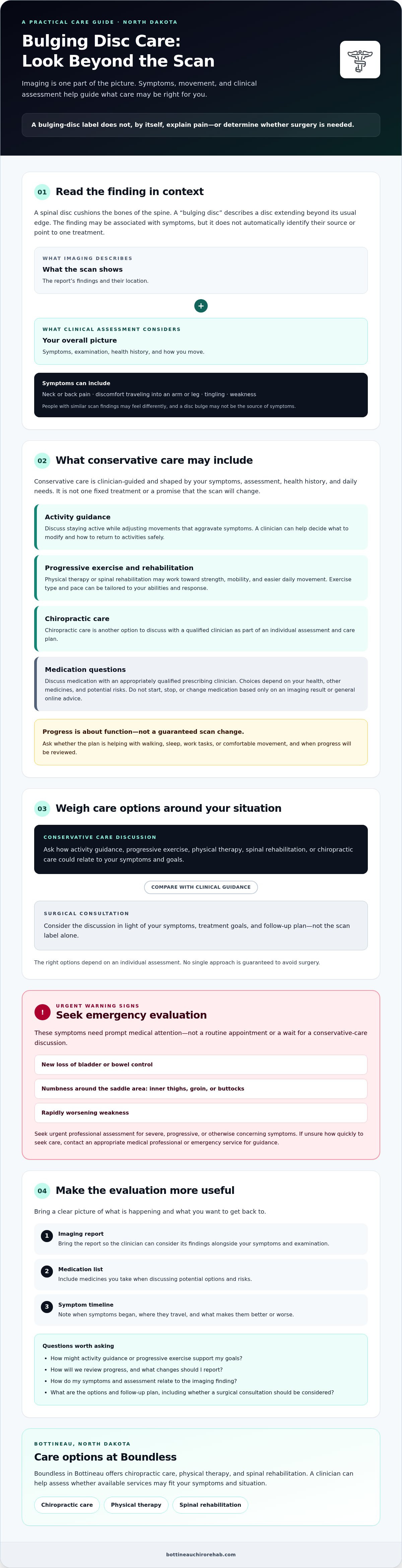
Pain that limits work, sleep, or everyday movement can be unsettling. An imaging report mentioning a bulging disc may make you worry that the problem is serious or that surgery is inevitable. It doesn’t answer those questions by itself. This section explains what the finding means and how clinicians weigh it, without promising that any one treatment will avoid surgery.
A spinal disc is a cushion between the bones of the spine. A bulging disc describes a disc extending beyond its usual edge. The terms used for disc problems can overlap, and the finding doesn’t automatically explain pain or show which treatment is right. For a broader overview of terminology and disc conditions, see Spinal disc herniation.
An imaging finding describes what a scan shows; your overall clinical picture includes your symptoms, examination, health history, and how you move. A clinician considers these details together. They may also review the scan’s location and findings alongside your reported symptoms. A search for “bulging disc treatment without surgery ND” can help you explore options, but care decisions should be based on an individual assessment.
Can a bulging disc cause pain or nerve symptoms?
It can be associated with neck or back pain, discomfort that travels into an arm or leg, tingling, or weakness. But people with similar scan findings may feel different, and a disc bulge may not be the source of a person’s symptoms. A clinician assesses the pattern and severity of symptoms, examines function, and considers other possible causes before connecting a scan finding to a problem.
Share when symptoms began, where they travel, and what makes them better or worse. Don’t assume the scan tells the whole story or use it to diagnose yourself.
When does a bulging disc need urgent medical attention?
Seek emergency evaluation for new problems controlling your bladder or bowels, numbness around the saddle area (inner thighs, groin, or buttocks), or rapidly worsening weakness. These warning signs need prompt medical attention, not a routine appointment.
Get urgent professional assessment for severe, progressive, or otherwise concerning symptoms. If you’re unsure how quickly to seek care, contact an appropriate medical professional or emergency service for guidance. A conservative-care discussion can wait until urgent symptoms have been assessed.
Non-Surgical Bulging Disc Treatment Options: What Care May Include
Conservative care isn’t one fixed treatment or a promise that a disc will change on a scan. It’s a clinician-guided approach shaped by your symptoms, examination, health history, and daily needs. For someone exploring bulging disc treatment without surgery ND, the first step is to discuss suitable options with a qualified clinician and agree on how progress will be assessed.
A plan may include guidance on staying active while adjusting movements that aggravate symptoms. Prolonged rest may not be the right answer for everyone. A clinician can help you decide what activities to modify and how to return to them safely. Exercise may also be introduced gradually, with the type and pace matched to your abilities and response.
Medication is another topic to raise with an appropriately qualified prescribing clinician. The right choice depends on your health, other medicines, and potential risks. Don’t start, stop, or change medication based only on an imaging result or general online advice. NYU Langone Health outlines options in its overview of nonsurgical treatments for a herniated disc.
Conservative care aims to improve symptoms and everyday function, not guarantee that a disc will move, shrink, or look different on imaging. Measures of progress might include changes in walking, sleep, work tasks, or comfortable movement. Ask what the plan is meant to help you do and when it should be reviewed.
How physical therapy and spinal rehabilitation may support function
Physical therapy or spinal rehabilitation may focus on goals such as building strength, improving mobility, and making daily movements easier. There isn’t one universal exercise routine for every person with a disc finding. A qualified clinician can tailor movement and progression to your symptoms, then adjust the plan if an activity causes a concerning response. Learn more about physical therapy in Bottineau.
Where chiropractic care may fit in a non-surgical plan
Chiropractic care may be an option to discuss after an appropriate assessment. Ask what an approach involves, why it may fit your situation, and what alternatives are available. Adjustments shouldn’t be presented as a way to put a bulging disc back into place or cure it. Worsening, unusual, or neurological symptoms may call for medical assessment or referral before care proceeds.
Boundless Full Body Chiropractic & Rehab offers chiropractic care, physical therapy, and spinal rehabilitation in Bottineau. To ask whether its services may fit your situation, contact the Bottineau practice.
Non-Surgical Care or Surgery? How to Weigh Bulging Disc Treatment
Considering bulging disc treatment without surgery ND doesn’t mean ruling out surgery for everyone. Conservative care may not be appropriate for every person or every symptom. The decision should reflect your condition, goals, and clinical findings, not pressure to choose one path before you understand the options.
A scan alone isn’t an automatic reason for surgery. A clinician considers whether the imaging matches your symptoms and examination. Conservative care generally focuses on symptom management and improving function, with follow-up to see how you respond. A surgical consultation can clarify whether a procedure may be worth discussing, along with its potential benefits, risks, and alternatives. Mayo Clinic’s overview of non-surgical treatment for a bulging disc describes options that may be considered as part of care.
| Consideration | Conservative care | Surgical consultation |
|---|---|---|
| Main discussion | Ways to manage symptoms and support daily function. | Whether a procedure fits the person’s symptoms and clinical picture. |
| Clinician involvement | Care is guided and adjusted based on assessment and response. | A specialist reviews findings, options, possible risks, and expected goals. |
| Follow-up | Track symptoms and function, then review whether the plan needs adjustment. | Discuss next steps and whether surgery, continued non-surgical care, or further evaluation is appropriate. |
What factors can influence a clinician’s recommendation?
There’s no single scan phrase or fixed timeline that determines the right choice for everyone. A clinician may consider:
- How severe symptoms are, how long they’ve lasted, and how they affect work, sleep, and movement.
- Examination findings and whether there are new or changing neurological symptoms, such as weakness or altered sensation.
- What care you’ve already tried, how you responded, and relevant health history.
Ask how each factor applies to you and what would prompt a change in the plan. Avoid relying on general thresholds unless a qualified clinician confirms they fit your situation.
When should you ask for a specialist opinion?
Discuss persistent or worsening symptoms with an appropriate medical professional. Progressive neurological symptoms call for prompt assessment. A specialist opinion is a chance to understand options, not a commitment to surgery. Ask what the scan explains, what it doesn’t, and how the choices align with your symptoms and priorities.
How to Choose Bulging Disc Care in North Dakota
Choosing care starts with finding a provider who can explain how your symptoms, examination, and goals shape the options. If you’re comparing bulging disc treatment without surgery ND, use this checklist to prepare for a clear, practical discussion.
- 1. Write down your symptoms. Note when they began, where you feel them, what affects them, and how they change your sleep, work, or movement.
- 2. Bring useful records. Take imaging reports if you have them, a list of medications and supplements, and a concise symptom timeline. The scan is context for the discussion, not the whole assessment.
- 3. Clarify the proposed care. Ask how the provider evaluates your symptoms, why the suggested approach may be appropriate, and what goal it’s intended to support.
- 4. Agree on how progress will be checked. Ask what changes to track, when your plan will be reviewed, and what worsening or new symptoms should prompt reassessment.
- 5. Discuss coordination and follow-up. Ask how the provider works with a physician or specialist if another opinion or medical evaluation is needed, and how follow-up will be arranged.
A sound care discussion should clarify why an option fits your situation, what progress means, and when the plan should change or involve another clinician. You should have room to ask questions and understand alternatives before beginning care.
Questions to ask before starting treatment
Keep your questions direct: “How will you assess whether this care is appropriate for me?” “How will we measure progress?” “What should I do if symptoms worsen?” “If I need a medical or specialist opinion, how will that be coordinated?” The answers can help you understand both the proposed approach and its limits.
Planning local care around Bottineau and nearby communities
If you live in Bottineau or a nearby North Dakota community, confirm appointment availability, travel needs, and follow-up arrangements directly with the provider. Boundless Full Body Chiropractic & Rehab is based in Bottineau and offers chiropractic care, physical therapy, and spinal rehabilitation. You can read background on chiropractic care and full-body adjustments, then ask the practice whether its services may fit your situation.
For a local conversation about your care options, contact the Bottineau practice.
Explore Non-Surgical Bulging Disc Care with a Bottineau Provider
A clear next step doesn’t require deciding that surgery is inevitable, or assuming that one type of care is right for you. Start by describing your symptoms, seek an appropriate assessment, compare options, and track changes in function. If you’re researching bulging disc treatment without surgery ND, focus on whether a proposed plan fits your individual needs and how your progress will be reviewed.
Boundless Full Body Chiropractic & Rehab is based in Bottineau and serves nearby North Dakota communities. Its services include chiropractic care, physical therapy, and spinal rehabilitation. These are service categories, not a guarantee of a particular result or confirmation that a specific bulging-disc concern is currently evaluated or treated at the practice. Contact the clinic to ask whether its services may fit your situation.
What to expect when asking about care at Boundless
Make the conversation specific. Describe where you feel symptoms, how long they’ve been present, what activities are limited, and whether anything has changed or worsened. If you have imaging reports or a medication list, ask whether those details would be useful to share.
Before arranging care, ask whether the practice currently evaluates people with your specific concern, what its assessment process involves, and whether it recommends medical evaluation or coordination with another clinician when needed. Confirm these details directly. Don’t assume the clinic provides imaging, makes a disc diagnosis, or follows a particular bulging-disc treatment protocol.
Take the next step without assuming surgery is inevitable
Care decisions are individual. Depending on your symptoms and clinical picture, a plan may involve more than one provider. Ask how any recommended care relates to your goals, what changes to monitor, and who to contact if symptoms worsen or new concerns appear. A useful discussion should leave you with a clearer understanding of your options and the appropriate next step, not pressure to commit to a treatment path.
For local care questions, Contact Boundless Full Body Chiropractic & Rehab to ask whether its services may be appropriate for your situation and what to do next.
Take Your Next Step Toward Clearer Care
A bulging disc finding can raise questions, but it doesn’t decide your treatment on its own. Your symptoms, examination, health history, and everyday function help shape the discussion. Conservative care may be an option, but it isn’t right for everyone, and no approach can guarantee a particular outcome. A useful next step is to ask what care is intended to help with, how progress will be assessed, and whether another clinician should be involved.
If you’re considering bulging disc treatment without surgery ND, Boundless Full Body Chiropractic & Rehab is based in Bottineau and serves nearby North Dakota communities. The practice offers chiropractic care, physical therapy, and spinal rehabilitation. Ask directly whether these services may fit your specific concern and what assessment or coordination may be appropriate.
You don’t have to make the decision alone. Get answers, understand your options, and choose a next step based on your clinical needs. Contact Boundless to discuss your next step and keep moving toward informed, function-focused care.
Frequently Asked Questions
Can a bulging disc heal without surgery?
Some people improve with non-surgical care, but results and timelines vary. A bulging-disc finding alone doesn’t determine treatment. A qualified clinician considers your symptoms, examination, health history, and daily function when discussing options and monitoring progress. If you’re researching “bulging disc treatment without surgery ND,” remember that care should be tailored to your situation. Seek emergency evaluation for new bladder or bowel control problems, saddle-area numbness, or rapidly worsening weakness.
What is the best treatment for a bulging disc without surgery?
There’s no single best treatment for everyone. Depending on your symptoms and examination, a clinician may discuss activity guidance, physical rehabilitation, or other conservative options. Ask what each option is intended to help you do and how progress will be reviewed. Don’t rely on the scan description alone to choose care, and avoid starting exercises that worsen symptoms without professional guidance. A plan should fit your needs and be adjusted if your condition changes.
Can chiropractic care help a bulging disc?
Chiropractic care may be an option to discuss, but its suitability depends on your symptoms and clinical assessment. Don’t assume an adjustment can reposition or cure a disc. Before starting, ask why the provider recommends the approach, what goals it supports, how progress and risks will be reviewed, and what symptoms would prompt medical evaluation or referral. If your symptoms are worsening, unusual, or neurological, seek appropriate medical advice before proceeding with routine care.
How long does non-surgical bulging disc treatment take?
The timeline varies based on symptom severity and duration, overall health, and response to care. No responsible estimate can promise a fixed recovery period for everyone. Ask your clinician how progress will be measured, when the plan will be reviewed, and what changes should prompt reassessment. Track practical changes, such as whether walking, sleeping, or work tasks become easier. Worsening symptoms or new neurological changes need timely professional attention.
When is surgery considered for a bulging disc?
Surgery isn’t decided from an imaging label alone. A medical specialist may discuss it when your symptoms, examination findings, functional impact, and response to other care support that conversation. The decision depends on your individual clinical picture. Ask what non-surgical alternatives may be reasonable, what benefits and risks apply to each option, and whether another opinion could help. A specialist consultation is a way to understand choices, not a commitment to have surgery.
When should I seek urgent care for a bulging disc?
Seek emergency medical evaluation for new loss of bladder or bowel control, numbness around the saddle area, or rapidly worsening weakness. Severe or quickly changing symptoms also deserve prompt professional assessment. Don’t wait for a routine chiropractic or rehabilitation appointment if warning signs appear. Urgent evaluation can help determine what’s causing the symptoms and what care is appropriate. If you’re unsure whether a change is urgent, contact an appropriate medical professional for guidance.
Can I get non-surgical bulging disc care near Bottineau, ND?
Boundless Full Body Chiropractic & Rehab is based in Bottineau and offers chiropractic care, physical therapy, and spinal rehabilitation. The practice serves nearby communities, including Rugby, Rolla, Rollette, Dunseith, St. John, Sherwood, Mohall, Willow City, Lake Metigoshi, Belcourt, Kenmare, Minot, and Velva. Whether these services fit a specific bulging-disc concern depends on the practice’s current scope and your needs. Contact the clinic to ask about evaluation, coordination, and referral options.


