

If you’re searching for “spinal stenosis exercises physical therapy,” you may be trying to find movements that help without making symptoms worse. With spinal stenosis, walking or standing can bring on back or leg discomfort, and generic exercise advice may not fit your situation. A physical therapist can help identify movements that support function without asking you to push through worsening symptoms.
If you’re unsure whether discomfort means you should stop, that’s a reasonable concern. Exercise may help manage symptoms and improve mobility, but it doesn’t reverse the narrowing itself, and no single routine suits everyone. A physical therapist can assess how you move, adapt exercises to your symptoms and abilities, and help you progress activity at a safe pace.
This guide explains exercise approaches that may help, how physical therapy can tailor a plan, and what to watch for as you move. You’ll also learn when to pause and seek medical guidance, including for progressive weakness or changes in bowel or bladder control. The goal is practical: move with more confidence and know when symptoms call for a closer look.
Key Takeaways
- Learn why a spinal stenosis diagnosis doesn’t predict everyone’s symptoms or outlook, and which changes in your back or legs may matter.
- See how spinal stenosis exercises and physical therapy can be adapted through assessment, symptom checks, and gradual progression.
- Compare guided physical therapy, self-directed activity, and prolonged rest to understand what each approach can offer.
- Use practical safeguards during movement and recognize when persistent or worsening symptoms call for medical guidance.
- Find questions to ask a local provider, including Boundless Full Body Chiropractic & Rehab in Bottineau, about physical therapy and spinal rehabilitation.
What spinal stenosis means: why exercise advice must fit your symptoms
Lumbar spinal stenosis is a narrowing of spaces in the lower spine that can put pressure on nearby nerves. The diagnosis describes a physical change, not a complete forecast of how you’ll feel or what activities you’ll be able to do. For an overview of the condition and its forms, see What spinal stenosis means.
Symptoms can include lower-back discomfort, pain that travels into the buttocks or legs, tingling, numbness, or weakness. Some people have noticeable changes on imaging but few symptoms; others find that symptoms interfere with walking or daily tasks. Imaging is one part of the picture. It doesn’t, by itself, show how much pain or difficulty a person experiences.
How lumbar spinal stenosis can affect walking and daily movement
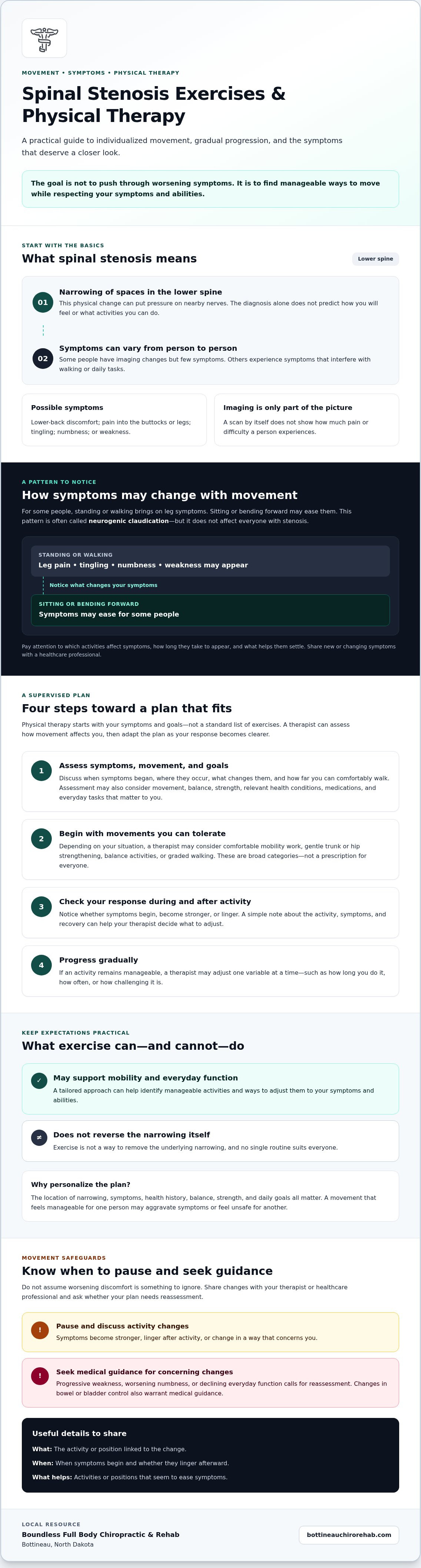
For some people, standing or walking brings on leg pain, tingling, numbness, or weakness. These symptoms may ease after sitting or bending forward. This pattern is often called neurogenic claudication, meaning symptoms linked to pressure or irritation of spinal nerves during standing or walking. It doesn’t affect everyone with stenosis, and symptoms can vary in location and intensity.
Notice which activities change your symptoms, how long they take to appear, and what helps them settle. This information can help a clinician understand your movement limits. Don’t assume every back or leg symptom comes from stenosis; a healthcare professional can help assess what may be contributing.
Why there is no single best spinal stenosis exercise
The most suitable movement depends on more than the diagnosis. The location of the narrowing, your symptoms, health history, balance, strength, and daily goals all matter. A movement that feels manageable for one person may aggravate symptoms or feel unsafe for another. That’s why exercises for spinal stenosis in physical therapy should be adapted to the individual rather than copied from a generic routine.
General information can help you ask better questions, but it can’t replace an individualized medical or physical therapy assessment. A physical therapist can consider how you move and what you want to do, then help determine appropriate starting activities and ways to adjust them. Share any new or changing symptoms, including what makes them better or worse.
Set realistic expectations. Exercise may support mobility and everyday function, but it doesn’t remove the underlying narrowing. The aim is to find manageable ways to move while respecting your symptoms and abilities.
Spinal stenosis exercises physical therapy: how a supervised plan progresses
A useful plan starts with your symptoms and goals, not a standard list of exercises. A physical therapist can assess how movement affects you, then choose activities and adjust them as your response becomes clearer. The aim is to build a practical approach to movement, not to push through symptoms or follow a fixed routine.
Step 1: Assess symptoms, movement, and goals
The assessment may cover when symptoms began, where they occur, what activities change them, and how far you can comfortably walk. A therapist may also check movement, balance, strength, and tasks that matter to you, such as standing to prepare a meal. Relevant health conditions and medications can inform exercise choices. Imaging and referral decisions depend on the overall clinical picture, not a scan alone.
Step 2: Start with movements you can tolerate
Based on the assessment, a therapist may introduce comfortable mobility work or gentle trunk and hip strengthening. Balance activities may be appropriate if steadiness is a concern. If walking is a goal, graded walking can begin at a manageable level. These are broad exercise categories, not a prescription. The best starting point depends on your symptoms, abilities, and clinician’s guidance.
Step 3: Check your response
Notice what happens during activity and afterward. Does a movement bring on symptoms, make them stronger, or leave them lingering? Share those details with your therapist rather than assuming discomfort is something to ignore. A simple note about the activity, symptoms, and recovery can help guide the next adjustment. Stop and seek reassessment if weakness, numbness, or everyday function is worsening.
Step 4: Progress gradually
If an activity remains manageable, your therapist may adjust one variable at a time, such as how long you do it, how often, or how challenging it feels. Changing one element helps make your response easier to interpret. If symptoms flare or recovery takes longer than expected, the plan can be modified instead of forcing the next step. There’s no universal pace for progression.
This is the value of physical therapy for spinal stenosis exercises: choices can be shaped around your movement response and functional goals. Boundless Full Body Chiropractic & Rehab offers physical therapy and spinal rehabilitation in Bottineau. If you’re seeking local guidance, ask about physical therapy and spinal rehabilitation and whether the practice can address your specific needs.
Exercise, physical therapy, or rest: comparing options when stenosis symptoms flare
A symptom flare can make every movement feel risky. But appropriately selected activity isn’t automatically harmful, and complete avoidance isn’t always the answer. Let your symptoms guide the next step. If symptoms persist, change, or make everyday movement harder, contact a clinician rather than trying to diagnose the cause yourself.
| Option | What it can offer | What to keep in mind |
|---|---|---|
| Guided physical therapy | An individualized assessment and help adapting movement to your symptoms, abilities, and goals. | A clinician can monitor function and adjust the plan. It doesn’t guarantee a specific result or replace medical evaluation when needed. |
| Self-directed activity | A way to maintain movement through activities you already know feel manageable. | Without an assessment, it can be hard to tell whether an exercise suits your symptoms. Avoid forcing painful movements or relying on a generic routine. |
| Prolonged rest | A short break or position change may help you manage a temporary flare. | Extended avoidance doesn’t address how to resume activity. Ask a clinician for guidance if symptoms keep limiting movement. |
When guided physical therapy may be worth considering
Consider asking about an assessment if walking is becoming difficult, symptoms keep returning, or you’re unsure how to move safely. A physical therapist can evaluate how you respond to activity, adapt exercises, and track changes in function over time. Physical therapy for spinal stenosis may be one part of care, but the right approach depends on your individual situation. Physical therapy isn’t right for every diagnosis and shouldn’t replace medical evaluation when symptoms call for it.
Why prolonged inactivity is not a complete plan
Rest can be reasonable during a flare, and mobility limitations deserve respect. You don’t need to push through pain to prove you’re making progress. The distinction is between temporarily changing an activity to settle symptoms and avoiding movement indefinitely without a plan. What’s appropriate depends on your symptoms, safety, and clinician’s advice.
If symptoms aren’t settling, are getting worse, or are changing in a way that concerns you, arrange a clinical review. New or worsening weakness, numbness, or reduced function deserves reassessment, not a harder workout. Share what you were doing, what changed, and how long symptoms lasted. That context can help guide the next decision.
How to exercise safely with spinal stenosis and recognize warning signs
A safe plan respects your symptoms. Follow the guidance of your healthcare professional or physical therapist, use a stable surface or support if balance is a concern, and don’t force a movement into a painful range. With physical therapy and spinal stenosis exercises, the goal is to work within an appropriate level of activity, not to push through clearly worsening symptoms.
Some mild, brief discomfort may not mean you need to stop all movement, but pay attention to changes. If symptoms persist after activity or are getting worse, pause the exercise and contact a qualified clinician for advice. Don’t use a general exercise guide to decide what a new or changing symptom means.
What symptoms mean you should pause and ask for guidance
Stop the activity and seek individualized advice if you notice new or increasing pain, numbness, weakness, or reduced ability to walk. Make a brief record of what you were doing, when the change began, which symptoms appeared, and how long they lasted. This can help a clinician decide what follow-up is appropriate. Don’t restart or intensify the movement just to test whether symptoms return.
When spinal symptoms need urgent medical attention
Some changes need urgent attention, not a routine exercise adjustment. Seek emergency medical care for new loss of bowel or bladder control, difficulty urinating, or numbness around the groin, inner thighs, or saddle area. Sudden or severe weakness, rapidly worsening numbness, or another major neurological change also warrants urgent assessment.
- New bowel or bladder control problems: seek emergency medical care.
- Numbness in the saddle area: seek emergency medical care.
- Sudden or severe weakness or rapidly worsening neurological symptoms: seek urgent medical assessment.
Don’t wait for a physical therapy or chiropractic appointment to address these warning signs. Contact emergency services or go to an emergency department. For non-emergency questions about adapting movement, ask a qualified clinician. If you’re in Bottineau and want to discuss physical therapy or spinal rehabilitation, contact Boundless Full Body Chiropractic & Rehab to ask about your needs.
Finding spinal stenosis physical therapy near Bottineau, North Dakota
Local guidance can help you make exercise decisions based on your symptoms and daily needs. Boundless Full Body Chiropractic & Rehab offers physical therapy and spinal rehabilitation in Bottineau. Ask the practice directly whether it currently evaluates spinal stenosis before arranging care. You can also review this Bottineau physical therapy and spinal rehabilitation overview.
People in Bottineau, Rugby, Rolla, Rollette, Dunseith, St. John, Sherwood, Mohall, Willow City, Lake Metigoshi, Belcourt, Kenmare, Minot, and Velva can contact the practice to ask about its physical therapy and spinal rehabilitation services.
Questions to ask before starting a physical therapy plan
A useful first conversation should clarify how the clinician will understand your symptoms and tailor care. Ask questions such as:
- How will the evaluation consider my symptoms, daily activities, and medical history?
- How might exercises change if pain, numbness, or my walking ability changes?
- How will we track function and decide whether the plan needs reassessment?
- How will you coordinate with my other healthcare providers, if needed?
These questions help you understand the process without assuming every provider uses the same approach. Look for clear explanations of how your feedback will inform exercise choices and next steps.
A practical next step for readers near Bottineau
Before contacting a local clinic, make a brief record of where symptoms occur, what activities bring them on, and what helps. Bring relevant diagnosis details and imaging reports if you have them. You don’t need to interpret a scan yourself. Sharing the information with a qualified clinician can help put it in context with your symptoms and movement.
Ask the clinic whether it currently evaluates people with spinal stenosis, what the initial assessment involves, and what appointment options are available. Confirm that the provider can address your concerns and adapt activity if symptoms change. A plan for physical therapy exercises for spinal stenosis should reflect your needs rather than promise a particular outcome.
The right questions make it easier to decide whether a provider is a good fit. If you’re considering Boundless Full Body Chiropractic & Rehab, contact the practice to confirm its current services and whether it can assess your situation. If your symptoms are changing or worsening, speak with a qualified healthcare professional about appropriate next steps.
Take your next step toward safer, more confident movement
The most useful exercise plan is one that reflects your symptoms, daily goals, and how your body responds. Physical therapy exercises for spinal stenosis can be adjusted over time, with a clinician helping you choose appropriate movements and track changes in function. Rest may help during a flare, but persistent or changing symptoms deserve professional guidance rather than guesswork.
Keep safety in view. Pause and ask a clinician about symptoms that persist or worsen. Seek urgent medical care for new bowel or bladder control problems, saddle-area numbness, or sudden severe weakness.
For people in Bottineau and nearby North Dakota communities, Boundless Full Body Chiropractic & Rehab offers physical therapy and spinal rehabilitation. Contact the practice to ask whether it can assess your needs and what appointment options are available. Ask about physical therapy in Bottineau.
With the right guidance, you can make informed movement choices one step at a time.
Frequently Asked Questions
Can exercise help spinal stenosis?
Exercise may help some people maintain mobility, strength, balance, or activity tolerance, but results vary. A physical therapy plan for spinal stenosis exercises doesn’t widen the spinal canal or guarantee symptom relief. A clinician can consider your symptoms, health history, and daily function when discussing activity. Stop and seek guidance if exercise causes persistent worsening, new weakness, or a noticeable change in your ability to walk.
What are the best exercises for spinal stenosis?
There’s no single best exercise for everyone with spinal stenosis. Depending on your symptoms and abilities, a clinician may consider mobility work, strengthening, balance activities, or graded walking. Don’t treat an online routine as a personal prescription. Your starting point should reflect how different movements affect you and whether other health conditions influence what’s appropriate. Ask a qualified clinician to help choose and adapt activities to your needs.
Should I stop exercising if spinal stenosis pain gets worse?
Pause the activity if symptoms clearly worsen, don’t settle, or interfere more with walking or daily tasks. Note what you were doing, what changed, and how long the symptoms lasted, then contact a qualified clinician for advice. Don’t push through worsening symptoms just to finish a routine. New or increasing weakness, numbness, or a major change in function needs prompt medical assessment rather than an attempt to adjust exercise on your own.
Can physical therapy make spinal stenosis worse?
Physical therapy is intended to be adapted to the individual, but no exercise approach is guaranteed to suit everyone. Tell your therapist if an activity increases pain or numbness, causes weakness, or makes walking more difficult. The plan may need reassessment. A diagnosis alone can’t determine which movements are right for you. Seek medical review for new or significantly worsening symptoms instead of continuing the same exercises unchanged.
Is walking good for lumbar spinal stenosis?
Walking may be useful for some people, while others find standing or walking aggravates their symptoms. Tolerance can depend on posture, pace, distance, and individual health factors. If symptoms are significant, ask a clinician what activity is appropriate before increasing your walking. Track how you feel during and afterward. If walking is restricted or your symptoms are changing, a healthcare professional can help you consider suitable modifications.
What should I avoid doing with spinal stenosis?
Avoid forcing movements that cause persistent or worsening symptoms, and don’t rely on a generic exercise list as your personal treatment plan. There isn’t one universal list of prohibited movements for everyone with stenosis. Ask a clinician to assess your symptoms and suggest appropriate modifications. Seek urgent medical care for new bowel or bladder control problems or numbness around the groin, inner thighs, or saddle area.
When should I see a physical therapist for spinal stenosis?
Consider asking about physical therapy if symptoms limit walking or daily activities, keep returning, or leave you unsure how to move safely. A physical therapist may assess function and discuss exercise options based on your needs. If you’re in Bottineau, Rugby, Rolla, Rollette, Dunseith, or nearby communities, contact the clinic to ask whether it evaluates spinal stenosis and what appointment options are available.


