

Pressure rarely builds trust. Convincing a spouse to see a chiropractor starts with listening, explaining why you’re considering care, and accepting an honest no. Your spouse may have questions about treatment, feel uneasy about hands-on care, or prefer another approach. A calm conversation can address those concerns without turning a health decision into an argument.
It’s reasonable to want relief or support a family member, while also making sure your spouse feels respected. This guide explains how to talk about chiropractic care, consider whether it fits your household’s needs, and explore options together. You’ll also find practical ways to respond if your spouse remains skeptical after a consultation, keeping the conversation open without pressuring them to agree.
Key Takeaways
- Connect care to everyday needs in your household, while recognizing that each person’s goals and preferences may differ.
- Choose a specialist together by discussing your concerns, care priorities, and what would help both of you feel comfortable.
- Use calm, specific language to explain why you’re considering chiropractic care, then give your spouse space to respond.
- If your spouse remains skeptical, listen for the concern behind the hesitation and keep the decision pressure-free.
1. Benefits for household members
Chiropractors assess musculoskeletal concerns, including back and neck discomfort. Depending on the person’s needs, care may involve spinal adjustments, movement guidance, or other approaches. Benefits depend on the condition: some people may find care helpful for certain musculoskeletal symptoms, but chiropractic care isn’t a cure-all. It does not replace medical evaluation when symptoms call for broader assessment.
Household benefits are practical, and they vary from person to person. A spouse with back discomfort may want to sit more comfortably at a desk, while a partner recovering from a sports strain may want to return to training. A family member with stiffness might prioritize moving more easily during chores. Different goals can provide a useful starting point for discussing care.
Shared planning can also make everyday routines easier to discuss. For example, partners can identify activities that feel difficult, such as carrying groceries, gardening, or sitting through a long drive. This helps each person describe their own experience instead of assuming one treatment plan fits everyone. A parent can explain care to a child in simple terms and invite the child to share any concerns.
Keep expectations individual. One person’s experience doesn’t predict another’s, even when both have similar discomfort. A chiropractor’s assessment should consider each person’s symptoms, health history, and goals. Ask what the proposed approach is meant to address, what alternatives may fit, and how progress will be discussed. Those questions help families make informed decisions without treating care as a household rule.
Try a simple family conversation: name one activity each person wants to do more comfortably, then listen without offering an immediate solution. Your spouse might say, “I want to lift the laundry basket without worrying about my back.” You might share a different goal, such as returning to weekend walks. Then discuss whether learning about chiropractic care feels relevant to each person. Start with clear goals and individual choice, not pressure to agree.
2. Choosing a specialist together
Ask about the chiropractor’s approach before booking. Useful questions include, “How would you assess my concern?” and “What options might you recommend?” You can also ask how the chiropractor explains possible benefits, risks, and alternatives. Clear answers help both spouses understand what an appointment involves.
Make the choice together by identifying what matters to each person. One spouse may value a careful explanation before treatment; the other may prioritize experience with a sports-related concern. Compare those priorities with the chiropractor’s approach. If either spouse feels rushed or dismissed, pause and discuss what would make the next step more comfortable.
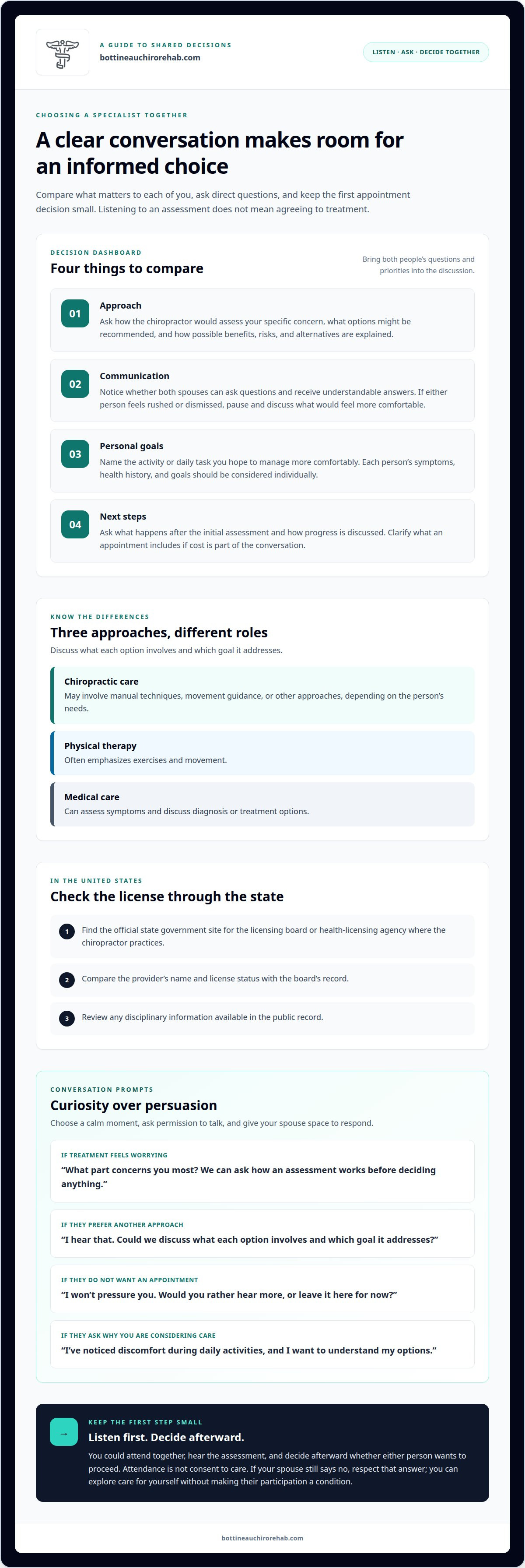
In the United States, check a chiropractor’s license through the official licensing board or health-licensing agency for the state where they practice. Find the state government site, compare the provider’s name and license status with the board’s record, and review any disciplinary information available in the public record.
- Approach: Ask how the chiropractor evaluates your specific concern and explains care options.
- Communication: Notice whether both spouses can ask questions and receive understandable answers.
- Goals: Explain the activity or daily task you hope to manage more comfortably.
- Next steps: Ask what happens after the initial assessment and how progress is discussed.
Keep the first appointment decision small. You might agree to attend together, listen to the assessment, and decide afterward whether either person wants to proceed. That gives a skeptical spouse the chance to hear the explanation directly without treating attendance as consent to care.
If cost is part of the discussion, clarify what the appointment includes before booking. The new patient special may help you understand one available introductory option. Choose only when both partners feel informed enough to make the decision.
3. Conversation scripts for discussing care
Choose a calm moment, not the middle of an argument or a difficult day. If convincing a spouse to see a chiropractor is your goal, start by asking permission to talk. Try: “I’ve been thinking about care for my back. Would you be open to discussing what concerns you?” Then listen without interrupting.
Use a specific example instead of making broad claims. Say, “I want to learn whether care could help me sit through work more comfortably,” rather than promising results. If convincing a spouse to see a chiropractor feels like a struggle, shift from persuasion to curiosity. Ask what concerns them, whether it’s hands-on treatment, cost, or uncertainty about the approach.
- If they worry about treatment: “What part concerns you most? We can ask how an assessment works before deciding anything.”
- If they prefer another approach: “I hear that. Could we discuss what each option involves and which goal it addresses?”
- If they don’t want an appointment: “I won’t pressure you. Would you rather hear more, or leave it here for now?”
- If they ask why you’re considering it: “I’ve noticed discomfort during daily activities, and I want to understand my options.”
Chiropractic care, physical therapy, and medical treatment are different approaches. Physical therapy often emphasizes exercises and movement; chiropractic care may involve manual techniques, while medical care can assess symptoms and discuss diagnosis or treatment options.
Keep the next step small and mutual. You could discuss questions together, then decide whether an appointment feels worthwhile. Attending a conversation doesn’t commit either person to treatment. Afterward, ask, “What stood out to you?” and listen before responding. If your spouse still says no, respect that answer. You can explore care for yourself without making their participation a condition. A calm exchange leaves room to revisit the subject later, if they choose.
4. Reasons spouses may be skeptical of chiropractic care
A spouse may hesitate because adjustments sound unfamiliar, feel too hands-on, or seem unnecessary for their concern. A past experience, a preference for exercise-based care, or uncertainty about evidence may also shape their view. Ask what specifically troubles them before trying to change their mind.
Possible side effects and risks depend on the person, symptoms, and technique being considered. Before an adjustment, ask the chiropractor to explain relevant risks, possible effects, and alternatives in light of your spouse’s health history. Your spouse can pause or decline if the explanation doesn’t address their concerns.
Some skepticism is really about control. A spouse may fear being pressured into repeated visits or treatment they don’t understand. Clarify that attending a conversation doesn’t mean agreeing to care. They could listen to an assessment, ask questions, and then decide whether to proceed.
- Fear of discomfort: Ask which part sounds uncomfortable, then request a plain explanation of the proposed approach.
- Doubts about evidence: Discuss the specific concern and ask what the care aims to address, without promising results.
- Preference for another option: Recognize that physical therapy or medical evaluation may better match their goals.
- Past disappointment: Ask what happened and what would need to feel different before considering another conversation.
Seek medical evaluation rather than focusing on an adjustment when symptoms are severe, worsening, unexplained, or raise concerns beyond movement-related discomfort. Describe these changes clearly during an assessment. Symptoms and health history help guide appropriate next steps, including referral for medical evaluation when concerns exceed the scope of chiropractic care.
Respond to a “no” with curiosity, not debate: “I hear you. Would you tell me what concerns you most?” If your spouse doesn’t want to continue, respect that answer. You can discuss your own care separately, without making their participation a condition. If hands-on care is the concern, ask about a full-body adjustment and its approach before deciding whether an appointment makes sense.
Boundless Full Body Chiropractic & Rehab
In Bottineau, North Dakota, Boundless Full Body Chiropractic & Rehab offers whole-body chiropractic care, extremity care, and rehabilitation, including sports injury care. The clinic helps patients recover from injuries, avoid surgery, and get back to work, sports, and life. Share your goals and concerns during an assessment, whether you’re considering care for yourself or hoping to understand options together.
If your spouse is hesitant, an initial conversation can focus on their questions rather than asking for an immediate commitment. You can also discuss the available new patient special as one introductory option. Each person can decide whether to take a next step based on their own needs and comfort.
For a conversation about your care options, contact Boundless Full Body Chiropractic & Rehab.
Keep the Conversation Open
Let the next step be a decision made with care, not a deadline you impose. Your spouse may need time to think, ask more questions, or choose another approach. Respecting that choice protects trust and leaves room for another conversation later.
The goal of convincing a spouse to see a chiropractor shouldn’t outweigh their comfort or autonomy. You can make your own care decision while staying open about what you learn and how it fits your needs. Keep the focus on clear information, personal goals, and honest discussion.
If you’re ready to talk through your own chiropractic care, contact Boundless Full Body Chiropractic & Rehab. A thoughtful conversation is a practical first step, whether or not your spouse joins you.
Move forward at a pace that feels respectful to both of you.
Frequently Asked Questions
What happens if my spouse still says no after the consultation?
Respect their decision, and don’t turn the consultation into an ongoing argument. You can continue considering care for yourself, then let your spouse decide whether to revisit the topic. If they bring it up later, ask what has changed or what questions remain. Their answer may still be no, and that choice deserves respect.
How can I talk to my spouse about trying chiropractic care without pressuring them?
Ask permission to share why you’re considering care, then make one specific, low-pressure request. For example: “Would you be open to hearing what I learn? It’s completely fine if you’d rather not.” Avoid repeated reminders, promises about results, or making their decision a test of support. Give them room to respond in their own time.


