

What if lower back pain from sitting relief starts with changing positions, rather than finding one perfect posture? If your back aches or stiffens during work, driving, or daily tasks, it’s understandable to wonder whether your chair, posture, or lack of movement is contributing. Generic stretches can be hard to trust when you’re not sure they fit your symptoms.
Relief can start with small, manageable changes. This guide explains how sitting habits and movement may affect your back, with practical steps to try during the workday. You’ll also find simple exercise options, ways to judge whether an activity feels manageable, and guidance on when persistent or concerning symptoms call for professional attention. The goal isn’t to push through pain or chase perfect posture. It’s to find a useful next step that helps you move through your day.
Key Takeaways
- For lower back pain from sitting relief, try changing position and adding brief movement before returning to comfortable activity.
- Fit movement breaks around your workday instead of relying on one rigid schedule.
- Compare posture changes, gentle activity, and workstation adjustments based on your symptoms and health history.
- Increase activity gradually, especially after a period of limited movement.
- Consider individualized care if discomfort persists, returns, worsens, or interferes with daily activities. Boundless Full Body Chiropractic & Rehab provides chiropractic care, physical therapy, and spinal rehabilitation in Bottineau.
Why Lower Back Pain From Sitting Happens, and What Relief Can Realistically Do
Back discomfort can make a workday drag, turn a drive into a struggle, or get in the way of relaxing at home. If sitting brings on an ache or stiffness, that pattern is worth noticing, but it doesn’t identify a single cause. Sitting-related lower back pain describes symptoms that appear or worsen while sitting or afterward. It isn’t a diagnosis of a particular spinal condition.
The lumbar spine, the lower part of your back, works with surrounding muscles and other tissues as you sit and move. Staying still for a long stretch, sitting in a position that feels uncomfortable, or having a low level of regular activity may contribute to symptoms for some people. Health history and other individual factors can matter too. Sitting may be a trigger, but that alone doesn’t confirm an injury or structural problem.
Why prolonged sitting may aggravate lower back discomfort
Holding one position can leave your back and nearby muscles feeling stiff or uncomfortable, especially when you haven’t had a chance to move. A brief walk or position change may ease that feeling for some people, though responses vary. For a broader overview of low back pain, including possible causes and symptoms, see the linked reference. A sitting pattern can help you notice when symptoms occur, but it can’t explain them on its own.
Relief should be practical, not a promise of an instant fix. What may help depends on your symptoms, how they affect daily activities, and your health history. Notice when discomfort starts, whether it changes when you stand or walk, and whether it travels beyond your back. These details can help you decide what to try and whether individualized care is appropriate. Lower back pain from sitting relief may begin with simple changes, but persistent or changing symptoms deserve attention.
When sitting-related pain needs prompt attention
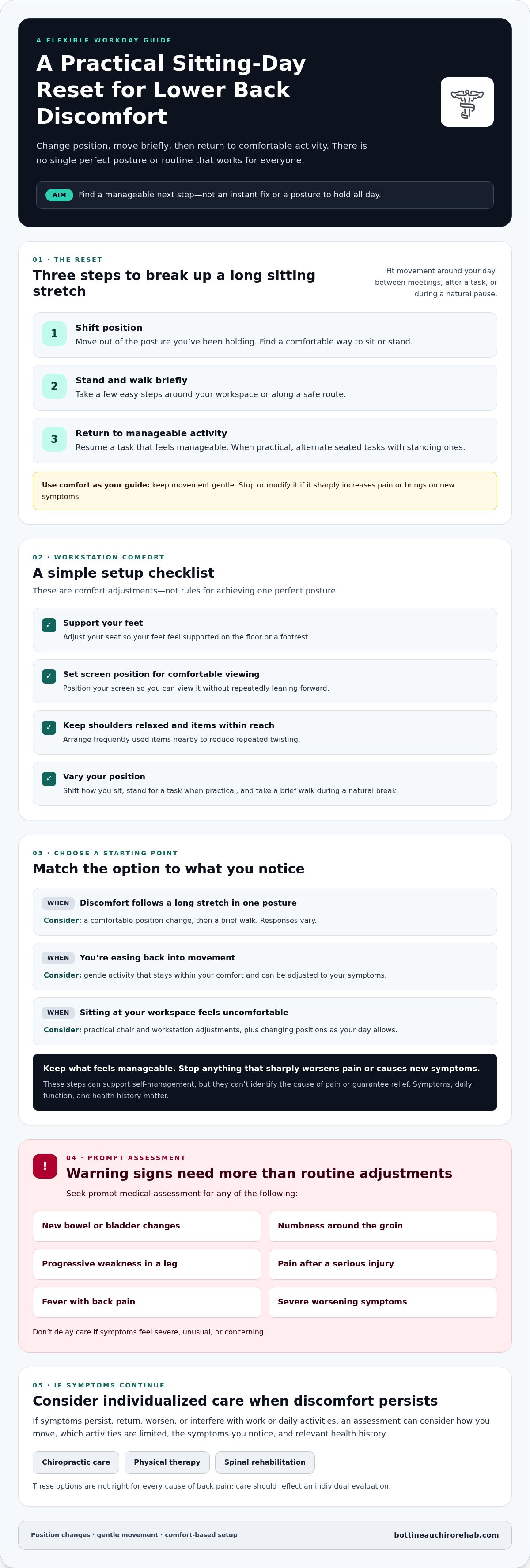
Seek prompt medical assessment for new bowel or bladder changes or numbness around the groin. Progressive weakness in a leg, pain after a serious injury, fever with back pain, or severe worsening symptoms also need urgent assessment. Don’t delay care if symptoms feel severe, unusual, or concerning. These signs need more than routine sitting adjustments or a stretch.
How to Get Lower Back Pain Relief During a Sitting Workday
A useful workday reset can be simple: change position, take a short walk, then return to a comfortable activity. Repeat when your schedule allows, such as between meetings, after finishing a task, or during a natural pause. Regular movement is more practical than following a rigid break interval that doesn’t fit your day. Brief movement is a sensible starting point, not a guaranteed treatment.
A simple position-change and movement-break routine
- Shift position. Move out of the posture you’ve been holding. Find a comfortable way to sit or stand.
- Stand and walk briefly. Take a few easy steps around your workspace or along a safe route.
- Return to ordinary activity. Resume a task that feels manageable. If practical, alternate seated tasks with standing ones.
Keep movement gentle and within your comfort. Stop or modify it if it sharply increases pain or brings on new symptoms. For more ideas on reducing long stretches of sitting and adding activity, see Harvard Health on Moving More for Back Pain.
Set up your chair and workstation for comfort
Adjust your seat so your feet feel supported on the floor or a footrest and your shoulders can relax. Position your screen so you can view it without repeatedly leaning forward. Keep frequently used items within easy reach to reduce repeated twisting. Think of these as comfort adjustments, not rules for achieving one perfect posture.
You don’t need to hold a single position all day, even if it feels well supported at first. Let comfort guide you. Shift how you sit, stand for a task when practical, and take a brief walk during a natural break. These options make it easier to vary your position without disrupting your whole workday.
For lower back pain from sitting relief, use this reset as a flexible tool. Notice what feels manageable, then adjust the routine to your symptoms and schedule. If sitting discomfort keeps interfering with work or daily activities, individualized care can help you consider next steps. In Bottineau, Boundless Full Body Chiropractic & Rehab provides chiropractic care and rehabilitation.
Which Relief Options May Help, and How to Choose Safely
There isn’t one approach that works best for everyone. A position change may help when discomfort follows a long stretch in one posture. Gentle activity can help you ease back into movement, while workstation adjustments may make sitting more comfortable. Each has limits: none can identify the cause of pain or guarantee relief. Choose a starting point based on your symptoms, daily function, and health history.
Self-care strategies versus professional assessment
For mild symptoms without concerning warning signs, it may be reasonable to begin with comfortable position changes, light movement, and practical workspace adjustments. Keep what feels manageable and stop anything that sharply worsens pain or causes new symptoms. These steps support self-management, but they aren’t a substitute for an assessment if symptoms persist or interfere with your routine.
An individualized assessment can consider how you move, which activities are limited, what symptoms you notice, and relevant health history. Depending on your needs, chiropractic care, physical therapy, or spinal rehabilitation may be part of a care plan. These options aren’t right for every cause of back pain, so the choice should reflect an individual evaluation rather than a one-size-fits-all rule.
How symptoms can guide your next step
Keep a brief record to make patterns easier to explain. Note when discomfort starts, what seems to ease or aggravate it, and whether it travels into a leg. Track whether it affects sleep, walking, work, or other daily activities too. You don’t need to interpret every detail. This information provides useful context for a professional assessment, but it isn’t a way to diagnose yourself.
Consider individualized care if pain keeps returning, gets worse, or limits activities despite reasonable self-care. For medication questions, speak with a qualified clinician or pharmacist. They can help you consider whether an option is appropriate in light of your health history and other medicines. Don’t assume a product is suitable just because it’s available without a prescription.
Choosing lower back pain from sitting relief means weighing what each step can do: movement and position changes help you vary activity, workstation adjustments can improve comfort, and professional evaluation can help clarify next steps when symptoms persist or affect function. Use your symptoms as a guide, not a diagnosis. If you notice new or severe symptoms, seek prompt medical attention rather than relying on routine self-care.
A Practical Plan for Preventing Sitting-Related Back Pain From Taking Over
A repeatable plan can make movement easier to fit into a busy day. It doesn’t need to be rigid or time-consuming. Choose comfortable ways to change position, build activity gradually, and notice how your back responds. These habits may support comfort, but they can’t guarantee prevention or address every possible cause of pain.
Build movement into work, driving, and home routines
Use a reminder, a completed task, or a natural pause as a cue to move. For example, stand after a meeting, walk briefly after finishing a work task, or alternate seated and standing activities when practical. Keep the plan flexible. A routine that fits your responsibilities is easier to repeat than one that disrupts them.
For a longer drive, plan a safe place to stop when practical. Get out, move gently, and continue when you feel comfortable. Don’t stretch or reach in a way that feels forced. At home, connect movement with existing habits, such as getting up between periods of sitting or walking around during a phone call.
If you’ve been inactive, avoid trying to make up for it with sudden, intense exercise. Start with manageable movement and increase your activity gradually as it feels comfortable. If an activity sharply worsens symptoms or brings on something new, stop or modify it.
Track progress without turning symptoms into a diagnosis
A short note can help you spot patterns without overanalyzing every sensation. Record how long you were sitting, what activity you did, when symptoms appeared, and what seemed to bring comfortable relief. Include whether pain traveled into a leg and how it affected sleep, walking, work, or everyday tasks.
Look for changes in function as well as changes in discomfort. Are you able to finish a task, walk more comfortably, or manage a usual part of your day? A pain score alone may not capture those differences. Your notes can help you explain what’s happening to a healthcare professional, but they can’t confirm a diagnosis or prove what caused the symptoms.
Use lower back pain from sitting relief strategies to support comfortable movement, not as a promise that pain won’t return. If symptoms persist, recur, worsen, or limit daily activities, an individualized assessment can help guide your next step. For support with back discomfort and movement, explore chiropractic care and rehabilitation in Bottineau.
When to Seek Lower Back Pain Care in Bottineau
Consider an evaluation if discomfort persists despite reasonable self-care, keeps returning, gets worse, or makes everyday activities harder. That might mean sitting through work is increasingly difficult, driving feels uncomfortable, or symptoms interfere with walking, sleep, or tasks at home. You don’t need to wait until pain becomes severe to seek individualized guidance.
For people in Bottineau and nearby communities, Boundless Full Body Chiropractic & Rehab provides chiropractic care, physical therapy, and spinal rehabilitation. These services support an individualized approach to musculoskeletal concerns. The appropriate next step depends on your symptoms, health history, and goals. No single care plan or combination of services is right for everyone, and an evaluation can help determine what may be suitable.
What an individualized rehabilitation conversation can address
Be ready to describe when your discomfort began, what tends to change it, and how it affects your day. Share which activities you want to manage more comfortably, such as working at a desk, driving, walking, or returning to regular exercise. Relevant health history can provide context too. These details help guide a conversation about whether chiropractic care, physical therapy, spinal rehabilitation, or another next step may fit your needs.
An individualized approach matters because similar symptoms can affect people differently. The aim is to consider your movement, daily demands, and concerns rather than assume sitting is the only factor or prescribe the same plan to everyone. Care can support progress toward daily function, but no specific result or recovery timeline can be promised.
Take the next step with Boundless in Bottineau
If lower back pain from sitting relief has been difficult to find on your own, a professional conversation can help you consider a suitable path forward. Bring notes about what you’ve noticed, including activities that feel easier or harder. Learn more about physical therapy and spinal rehabilitation in Bottineau at Boundless Full Body Chiropractic & Rehab.
When symptoms keep affecting your routine, take the next step and explore individualized care to help you work toward managing daily activities with greater confidence.
Make Your Next Move Toward Back Comfort
Lower back pain from sitting relief often starts with practical changes: vary your position, add manageable movement to your day, and adjust your workspace for comfort. Pay attention to what eases or aggravates symptoms, but don’t treat a pattern as a diagnosis. If discomfort persists, returns, worsens, or limits daily activities, an individualized assessment can help you understand possible next steps.
Boundless Full Body Chiropractic & Rehab provides chiropractic care, physical therapy, and spinal rehabilitation in Bottineau, North Dakota, serving nearby communities. Care is guided by your symptoms, health history, and goals. You don’t have to keep guessing if sitting-related discomfort is getting in the way.
Explore care options at Boundless Full Body Chiropractic & Rehab and take a considered next step toward moving through your day with greater confidence. New patients can start with the $47 introductory special.
Frequently Asked Questions
Why does my lower back hurt after sitting for a long time?
Staying in one position for a long time may leave your lower back feeling stiff or uncomfortable. Your sitting position, how often you move, activity levels, and individual health factors may all play a role. Pain that follows sitting is a symptom pattern, not a diagnosis. Notice what changes your discomfort, but don’t assume sitting alone proves there’s an injury or identifies its cause.
How can I get lower back pain relief while sitting at a desk?
Change position, stand or walk briefly, then return to an activity that feels comfortable. Adjust your chair so your feet feel supported and your shoulders can relax. Keep frequently used items within easy reach to reduce repeated twisting. Take movement breaks during natural pauses in your schedule rather than forcing a rigid routine. Stop or modify any movement that sharply worsens pain or causes new symptoms.
Can sitting too much cause lower back pain?
Long periods of sitting may contribute to discomfort for some people, especially when they stay still in one position. But sitting isn’t always the sole cause, and pain after sitting doesn’t confirm a specific spinal problem. Activity levels, sitting habits, and personal health history can also matter. Varying positions and adding manageable movement may help you notice whether your symptoms change.
What is the best sitting position for lower back pain?
There isn’t one perfect sitting position for everyone. Aim for a comfortable setup where your feet feel supported, your shoulders can relax, and your screen is easy to view without leaning forward. Then vary your position instead of trying to hold a single posture all day. If a position increases discomfort, adjust it. Comfort and regular movement are more useful goals than rigid posture rules.
Should I stretch when my lower back hurts from sitting?
Gentle movement or stretching may feel comfortable for some people, but it isn’t right for every symptom or health history. Begin gently and don’t force a position or movement. Stop or modify it if pain sharply worsens or new symptoms appear. You can also try standing or walking briefly instead. If you’re unsure what movements are suitable, individualized guidance can help you choose safely.
When should I see a healthcare professional for lower back pain?
Consider an assessment if pain persists, keeps returning, worsens, or limits work, walking, sleep, or other daily activities. Seek prompt medical assessment for new bowel or bladder changes or numbness around the groin. Progressive leg weakness, pain after a serious injury, fever, or severe worsening symptoms also need urgent attention. Don’t delay care when symptoms feel severe, unusual, or concerning.
Can chiropractic care or physical therapy help lower back pain from sitting?
Chiropractic care or physical therapy may be considered as part of individualized support, depending on symptoms, function, and health history. Neither is appropriate for every cause, and no specific outcome or recovery timeline can be promised. Boundless Full Body Chiropractic & Rehab provides chiropractic care, physical therapy, and spinal rehabilitation in Bottineau, serving nearby communities including Rugby, Rolla, Rollette, Dunseith, St. John, Sherwood, Mohall, Willow City, Lake Metigoshi, Belcourt, Kenmare, Minot, and Velva.


