

What if improving your posture isn’t about holding yourself perfectly still? If reminders to sit up straight haven’t stuck, you’re not alone. Posture is shaped by how you move, build strength, and spend your day. Improving posture with physical therapy offers a practical way to work on movement habits instead of repeatedly correcting your position.
It’s understandable to wonder whether posture contributes to discomfort, but posture isn’t the only possible cause of pain. One position doesn’t tell the whole story. A physical therapist can consider how you move, what feels difficult, and which daily activities matter to you, then guide exercises and strategies suited to your needs.
This guide explains what a posture-focused assessment and plan may involve, how strength and movement habits fit in, and how to make changes at a desk, at home, and throughout your day. Boundless Full Body Chiropractic & Rehab provides physical therapy and spinal rehabilitation in Bottineau, with individualized guidance toward functional goals.
Key Takeaways
- Improving posture with physical therapy starts by understanding how your body moves, not by forcing one “perfect” position.
- A physical therapist may explore your goals, symptoms, daily activities, and challenging movements to shape a relevant plan.
- Exercise, movement practice, education, and hands-on care can each support different functional goals.
- Choose one everyday task to practise a strategy, then review whether it helps and adjust as needed.
- Track progress through comfort, confidence, and the activities you can do, rather than appearance alone.
How Improving Posture With Physical Therapy Starts With Understanding Your Movement
Posture isn’t one position you need to hold all day. It describes how your body is positioned and controlled while still and as you move. Sitting at a desk, standing to cook, and reaching for a shelf all involve different positions. A useful plan starts by looking at how those positions feel and function for you.
Spinal posture varies between people and across activities. Understanding spinal posture can offer helpful background, but an assessment should focus on your body and needs, not compare you with one supposedly perfect shape. Discomfort can have several influences, so posture alone doesn’t explain every symptom.
What does posture mean during everyday movement?
Static posture is how you hold yourself while sitting or standing. Dynamic posture is how you control your body as you bend, turn, or reach. Both matter, but neither requires rigidly pinning your shoulders back. The goal is to move comfortably and manage the demands of your day.
Start with an activity you want to do more easily. That might be sitting through a work task, lifting groceries, or reaching overhead. Comfort, movement options, and confidence during those activities are more useful measures than matching a fixed visual ideal.
Can physical therapy help improve posture?
Physical therapy can help you understand how your movement patterns relate to your goals and symptoms. A therapist may consider your movement, strength, mobility, and the daily tasks that feel difficult. These details help guide an individualized plan instead of a generic list of posture corrections.
Posture improvement means building comfortable, adaptable movement for everyday activities. Improving posture with physical therapy is a process of exploring what works for you, practising relevant strategies, and reviewing how they fit your life. Treatment choices depend on the person and the clinical assessment. Your plan can change as your needs, comfort, or abilities change.
How a Physical Therapist Assesses Posture, Movement, and Daily Habits
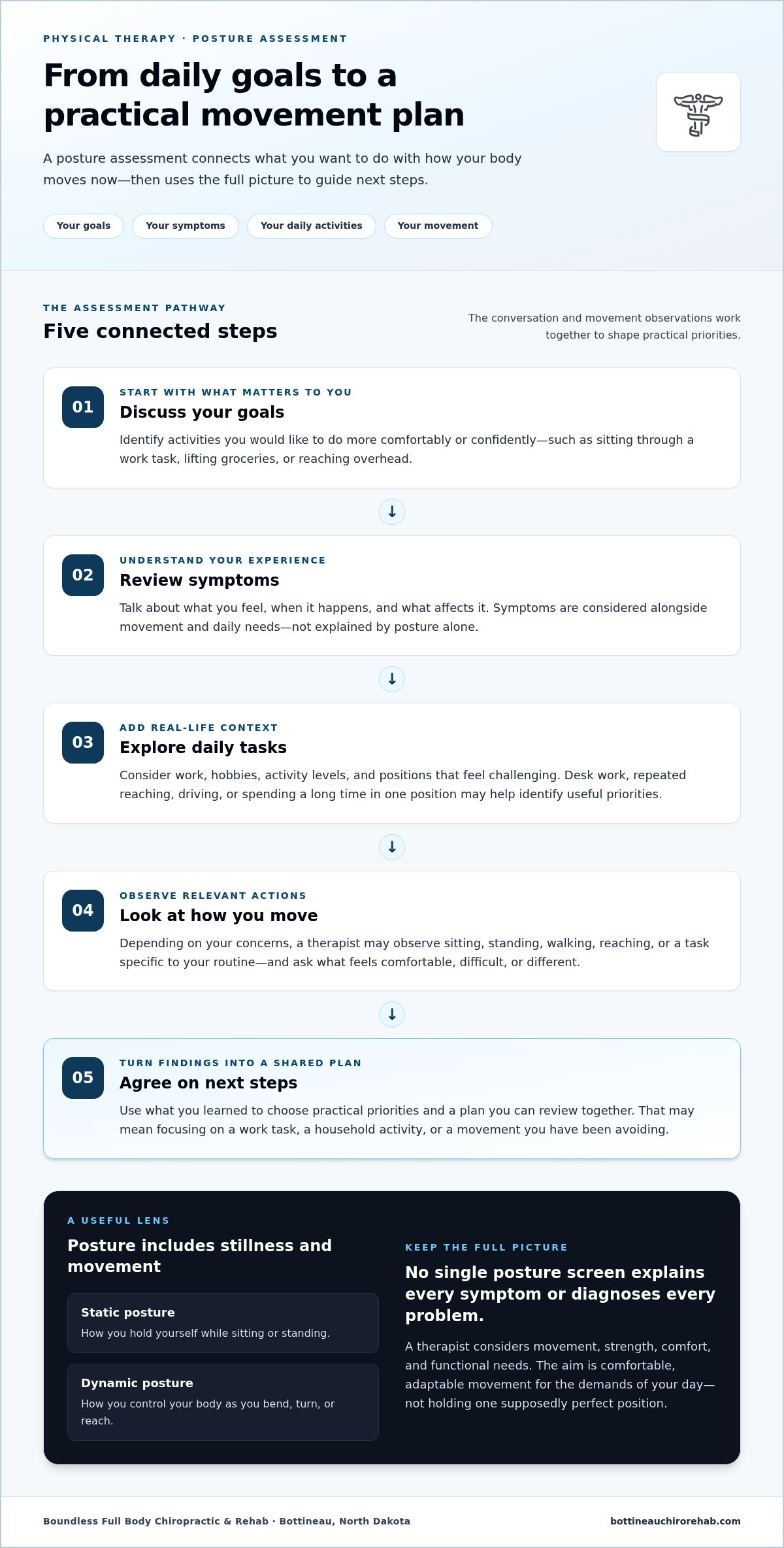
A posture assessment is more than a quick look at how you stand. It connects what you want to do with how your body moves now. The questions and observations depend on your symptoms, routine, and goals. Your therapist may:
- Discuss your goals: Identify activities you’d like to do more comfortably or confidently.
- Review symptoms: Talk about what you feel, when it occurs, and what affects it.
- Explore daily tasks: Consider work, hobbies, activity levels, and positions that feel challenging.
- Observe movement: Look at relevant actions, such as sitting, standing, walking, reaching, or a task specific to your routine.
- Agree on next steps: Use the findings to choose practical priorities and a plan you can review together.
These observations provide useful information, but no single posture screen can explain every symptom or diagnose every problem. A physical therapist considers the full picture, including your movement, strength, comfort, and functional needs.
What happens during a posture and movement assessment?
Expect a conversation as well as movement. Your therapist may ask what brings you in, what you’ve tried, and which activities matter most. They may observe movements related to your concerns, then ask what feels comfortable, difficult, or different. The Guide to Good Posture offers general background; an assessment focuses on your individual experience.
How do daily activities shape the therapy plan?
Your routine gives the assessment practical context. Desk work, repeated reaching, driving, or spending long periods in one position may shape which movements you practise and what adjustments could help. Notice when a task feels harder, but don’t treat discomfort as a personal failure. Improving posture with physical therapy means finding useful options for the demands you actually face.
A therapist connects your goals, movement findings, and daily demands to guide practical next steps. That could mean prioritizing a work task, a household activity, or a movement you’ve been avoiding. Boundless Full Body Chiropractic & Rehab provides physical therapy in Bottineau, North Dakota, with individualized guidance for movement, strength, and functional goals. Explore physical therapy in Bottineau as a local starting point for supervised care.
Posture Exercises, Hands-On Care, or Both: What Physical Therapy Can Include
A posture plan isn’t limited to exercises, and it doesn’t have to rely on hands-on treatment alone. Physical therapy may combine active practice, movement coaching, education, and hands-on care according to your needs. Each approach has a different role. Your therapist can explain why a method fits your goals and review whether it’s helping.
Active practice gives you a role in building movement skills. Exercises can develop strength, coordination, or confidence for activities you want to manage more comfortably. Coaching can help you apply those skills to tasks such as reaching, lifting, or working at a desk. Hands-on techniques may complement that practice when appropriate, but they aren’t required in every plan.
How can therapeutic exercises support posture goals?
Exercises should relate to the person, not a generic posture checklist. A therapist may select movements based on assessment findings and the tasks you want to do. One person might practise control while reaching; another may work on capacity for a work or household activity. The choice depends on individual goals, not an assumption that everyone needs the same muscles strengthened.
Your therapist can adjust exercises as you respond and your abilities change. That might mean refining a movement, changing its challenge, or choosing a different activity. There’s no universal number of repetitions or routine that fits everyone. Ask how each exercise connects to your daily goals so its purpose stays clear.
When might education or hands-on care be included?
Education can help you understand movement options and apply them in daily situations, rather than relying on a constant reminder to “sit up straight.” Harvard Health Publishing describes how a physical therapist can help assess posture and teach alignment. Your plan may also include practical coaching for movements that matter to you.
Hands-on care may be included when it fits the clinical assessment and your goals. It can complement active movement practice, rather than replace it by default. Improving posture with physical therapy is an individualized process: your therapist relates each approach to your functional priorities, observes how you respond, and adjusts the plan as needed. The aim is to use suitable tools for your situation, whether that involves exercise, hands-on care, or both.
A Practical Physical Therapy Plan for Posture Between Sessions
Changes are easier to carry into daily life when they fit your routine. Rather than trying to correct everything at once, work with your therapist to choose one task, agree on a strategy, practise it, and review whether it helps. This keeps improving posture with physical therapy focused on useful movement, not constant self-monitoring.
Notice tasks that keep you in one position, involve repeated reaching, or offer little movement variety. If practical, change positions during the day or take a movement break when you finish a task. You don’t need a rigid schedule or one perfect posture. The aim is to find comfortable options that suit the activity.
How can you practise posture strategies at work and home?
Pick one manageable adjustment and observe what changes. You might bring frequently used items within easier reach, vary how you sit during a desk task, or practise a therapist-recommended movement before a regular activity. Notice whether the adjustment affects comfort or makes the task easier. A strategy that works at home may need adapting at work, so make it specific to the setting.
For local guidance, explore physical therapy in Bottineau and how supervised care can relate to your everyday movement goals.
How should you use a home exercise plan?
Follow the exercise technique and frequency your treating therapist gives you. Generic online routines may not match your assessment or goals, so don’t substitute them for your selected plan. If an exercise is unclear or hard to fit into your routine, discuss it at your next visit.
Keep brief notes on what you practised and any relevant change in comfort, movement, or ability to complete the task. These details can help guide a follow-up conversation. If an activity causes concerning or worsening symptoms, pause it and seek clinical guidance rather than pushing through.
Boundless Full Body Chiropractic & Rehab provides physical therapy in Bottineau, North Dakota, with individualized guidance for movement, strength, and functional goals. Explore Boundless physical therapy in Bottineau as a practical next step toward supervised care.
How to Track Posture Progress and Find Physical Therapy in Bottineau
Progress isn’t limited to how you look in a mirror. A posture plan is meant to support movement and daily function, so pay attention to changes in activities that matter to you. You may find it easier to sit through a work task, reach for something on a shelf, or stay comfortable during a familiar activity.
What are useful signs that your posture plan is helping?
Choose a few personal measures to revisit with your therapist. Consider whether a task feels more manageable, whether you have more comfortable ways to move, or whether you feel more confident doing an activity. Appearance alone can’t show the whole picture of function or determine whether a plan is useful.
Keep simple notes instead of checking your posture in the mirror throughout the day. Record the activity, what felt different, and any difficulty you noticed. Progress varies from person to person. Review your observations with your treating clinician, who can interpret them in context and adjust your plan if needed.
When should you seek an individualized physical therapy plan?
If posture concerns affect your comfort, movement, or participation in daily activities, an assessment can help clarify what may be useful to address. Improving posture with physical therapy isn’t about chasing a fixed shape. It’s about setting meaningful goals, reviewing your progress, and adapting exercises or strategies to your needs.
At a plan review, share what’s changed and what still feels difficult. A strategy that was useful at first may need adjustment as your routine or abilities change. Discuss how your exercises relate to your goals and any barriers that make them hard to follow. This keeps the plan practical and focused on your life.
Boundless Full Body Chiropractic & Rehab provides physical therapy and spinal rehabilitation in Bottineau, North Dakota. If posture concerns affect your everyday activities, explore Boundless for individualized guidance toward movement, strength, and functional goals. Readers interested in how care approaches may fit together can also look for a guide to combining chiropractic and physical therapy.
Build Posture Habits That Work for Your Life
Posture isn’t about holding one perfect position. It’s about finding comfortable, adaptable ways to move through the tasks that matter to you. Improving posture with physical therapy can start with an assessment of your movement, symptoms, and daily demands, then become a plan shaped around your functional goals.
Exercises, movement coaching, and hands-on care may each play a role, depending on your needs. Between sessions, practise the strategies selected with your therapist and notice whether everyday activities feel more manageable. Track comfort, confidence, and function, not appearance alone. Progress varies, so keep reviewing your experience with your clinician.
Boundless Full Body Chiropractic & Rehab offers physical therapy and spinal rehabilitation in Bottineau, North Dakota, alongside full-body and extremity chiropractic services. Take a practical next step and explore physical therapy and rehabilitation at Boundless. Individualized guidance can help you work toward movement habits that fit your daily life.
Frequently Asked Questions
Can physical therapy improve posture?
Yes. Physical therapy can help you work toward posture and movement goals through an assessment and an individualized plan. A therapist may consider your symptoms, strength, movement patterns, and daily activities, then recommend relevant exercises or strategies. The aim isn’t to force one ideal position. Improving posture with physical therapy focuses on building comfortable movement options for tasks that matter to you, with progress reviewed according to your needs.
How long does it take to improve posture with physical therapy?
There’s no set timeline for posture improvement. It depends on your starting point, goals, symptoms, daily demands, and how your plan is adjusted as you respond. Some strategies may feel useful during practice, while building lasting habits can take continued effort. Your physical therapist can review changes with you and discuss next steps. Measure progress through meaningful activities, comfort, and confidence, not a promised date.
What exercises do physical therapists use to improve posture?
Exercises depend on your assessment and goals, so there isn’t one posture routine for everyone. A therapist may select strengthening, mobility, coordination, or task-specific movement practice. For example, you might practise controlling a reach or build capacity for an activity that feels difficult. Your therapist can guide technique and adjust the challenge based on your response. Follow your plan rather than copying a generic online routine.
Can physical therapy help posture-related back or neck discomfort?
Physical therapy may help address movement and functional factors related to back or neck discomfort, but posture isn’t the only possible cause of pain. A therapist can review your symptoms, daily activities, and movement to help determine which strategies may be appropriate. Share when discomfort occurs and what affects it. If pain persists, worsens, or limits your daily activities, seek clinical guidance rather than assuming posture is the explanation.
Is hands-on treatment necessary for posture improvement?
No. Hands-on treatment isn’t necessary for everyone. A physical therapy plan may include exercise, movement practice, education, hands-on care, or a combination, depending on your assessment and goals. Active practice can help you develop skills for everyday tasks, while hands-on techniques may complement the plan when appropriate. Discuss how each approach relates to your goals and whether it remains useful as your needs change.
How can I maintain posture changes between physical therapy visits?
Practise the exercises and strategies your therapist selected, following their guidance on technique and frequency. Choose a daily task to apply a movement strategy, and change positions or take a movement break when practical. Keep brief notes about comfort or how easily you complete the activity. Share those observations at follow-up. If an exercise causes concerning or worsening symptoms, pause it and seek clinical guidance instead of pushing through.
When should I see a physical therapist about my posture?
Consider an assessment if posture concerns affect your comfort, movement, or participation in everyday activities. Boundless Full Body Chiropractic & Rehab provides physical therapy and spinal rehabilitation in Bottineau, North Dakota, serving the local communities of Bottineau, Rugby, Rolla, Rollette, Dunseith, St. John, Sherwood, Mohall, Willow City, Lake Metigoshi, Belcourt, Kenmare, Minot, and Velva. A therapist can help connect your concerns with practical movement goals.


