

Could a rotator cuff injury improve without surgery? For some people, rehabilitation can reduce pain and help restore shoulder function, but the right approach depends on the injury and your symptoms. If you’re searching “rotator cuff injury rehab without surgery Minot,” start with an assessment, not a generic exercise list. Reaching, lifting, sleeping, or working through shoulder pain is hard enough without worrying that the wrong movement could make it worse.
Non-surgical care may help, but it can’t repair every tear or guarantee surgery won’t be needed. A symptom-guided plan builds movement and strength at a pace suited to your shoulder. In this article, you’ll learn what rehabilitation may involve, when conservative care could be appropriate, and which symptoms need prompt medical evaluation. You’ll also learn how physical therapy and sports injury rehabilitation at Boundless Full Body Chiropractic & Rehab can support appropriate shoulder concerns for people in Minot. The goal is a clear, practical next step toward better function, with care that respects your limits.
Key Takeaways
- Shoulder pain and weakness can have different causes, so an assessment helps clarify what may be behind your symptoms.
- Rotator cuff rehabilitation aims to improve useful movement and strength, but it can’t guarantee tendon healing or rule out surgery.
- Learn which injury and personal factors help guide the choice between conservative care and other treatment options.
- Explore how a flexible, symptom-guided plan can progress from comfortable movement toward daily tasks.
- See how rotator cuff injury rehab without surgery Minot may connect with individualized physical therapy and sports injury rehabilitation at Boundless.
Rotator Cuff Injury Rehab Without Surgery in Minot: Start With the Right Diagnosis
Shoulder pain that wakes you at night or makes lifting a grocery bag difficult can disrupt everyday routines. But pain alone doesn’t confirm a rotator cuff tear or show how serious an injury may be. If you’re considering rotator cuff injury rehab without surgery in Minot, first get a clearer picture of what’s causing your symptoms. Start with an assessment, not a guessed diagnosis or a one-size-fits-all exercise.
The rotator cuff is a group of four muscles and their tendons that helps move and stabilize the shoulder. A rotator cuff tear is damage to one or more of those tendons. A partial tear damages some of a tendon’s thickness; a full-thickness tear extends through the tendon. Symptoms can’t reliably reveal the tear’s size, and shoulder pain can also come from other conditions.
What symptoms can suggest a rotator cuff injury?
Pain with overhead reaching, lifting, or lying on the affected shoulder may point to a rotator cuff problem. You might also notice weakness when raising your arm, difficulty reaching behind your back, or less shoulder movement than usual. These signs are clues, not a diagnosis. Other shoulder conditions can cause similar pain and movement limits, so choosing exercises based on symptoms alone may not address the cause.
How is a rotator cuff tear assessed?
An initial assessment typically starts with your health and injury history, including when symptoms began and which movements make them worse. A clinician may examine your shoulder’s movement, strength, and tenderness to help identify what needs attention. Imaging may be recommended when clinically appropriate to clarify the suspected injury. Assessment helps guide the next step, including whether rehabilitation is a reasonable option for your needs.
Seek prompt medical evaluation after sudden, severe shoulder pain, major weakness, or an injury that leaves you unable to use your arm normally. Don’t push through movements that sharply worsen pain or test your strength with heavy lifting. A clear assessment can help determine whether the issue is a rotator cuff injury or another shoulder problem, and whether a tailored rehabilitation plan makes sense.
How Non-Surgical Rotator Cuff Rehabilitation Supports Shoulder Function
Conservative rehabilitation focuses on easing symptoms and helping the shoulder regain useful movement and strength. It may support better function even when a tendon remains damaged, but it can’t guarantee that a tear will heal or that surgery will never be needed. The aim is practical progress: reaching, dressing, working, or lifting everyday items with greater comfort and control.
A plan should match how irritable the shoulder is, which movements it currently tolerates, and what you need it to do. Someone who has pain just raising an arm may need a different starting point from someone who moves comfortably but struggles with heavier tasks. Exercise selection and progression should be guided by an individual assessment of symptoms, movement, strength, and daily demands.
What can a non-surgical rehabilitation plan include?
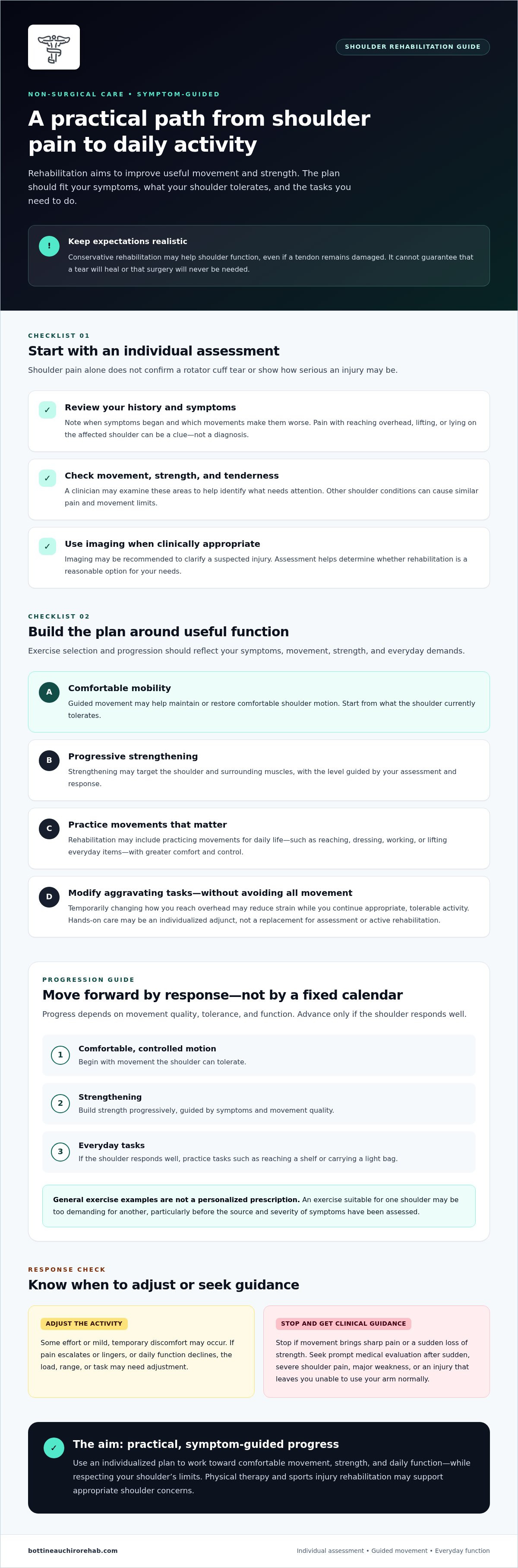
Depending on the assessment, care may include guided mobility to maintain or restore comfortable movement, progressive strengthening for the shoulder and surrounding muscles, and practice of movements relevant to daily life. Activity modification can help manage aggravating tasks without avoiding all movement. For example, temporarily changing how you reach overhead may reduce strain while you continue appropriate, tolerable activity. Hands-on care may be used as an individualized adjunct, not as a replacement for assessment or active rehabilitation.
The American Academy of Orthopaedic Surgeons provides a rotator cuff conditioning program with exercise examples. Use it as general information, not a personalized prescription. An exercise that suits one shoulder may be too demanding for another, particularly when the source and severity of symptoms haven’t been assessed.
Why does gradual exercise progression matter?
Some effort or mild, temporary discomfort may occur during movement, but exercise shouldn’t repeatedly leave your shoulder feeling worse or make daily function decline. Notice how symptoms respond during activity and afterward. If pain escalates or lingers, the load, range, or task may need adjustment. Stop and seek clinical guidance if movement brings sharp pain or a sudden loss of strength.
Progress isn’t measured by a fixed calendar. It’s guided by movement quality, tolerance, and function. A plan might advance from comfortable, controlled motion to strengthening, then to tasks such as reaching a shelf or carrying a light bag, if the shoulder responds well. This symptom-guided approach is central to rotator cuff injury rehab without surgery in Minot. Boundless Full Body Chiropractic & Rehab provides physical therapy and sports injury rehabilitation for appropriate shoulder concerns. Explore shoulder rehabilitation support for people in Minot and nearby North Dakota communities.
Can You Avoid Rotator Cuff Surgery? What Minot Patients Should Weigh
Shoulder function can sometimes improve with non-surgical care. But rehabilitation isn’t the right answer for every injury, and it can’t guarantee that surgery will be avoided. The decision depends on the whole picture, not a single scan result or symptom. A clinician can help weigh the likely benefits and limits of conservative care against your injury, health, and goals.
A tear’s characteristics matter, but tear size alone doesn’t determine the next step. A smaller injury can still cause serious difficulty, while imaging findings may not fully explain someone’s symptoms. Treatment decisions should connect examination findings with how the shoulder works in real life, including whether you can dress, reach, sleep, work, or take part in activities that matter to you.
Which factors influence non-surgical treatment decisions?
Expect the discussion to cover how the problem began, how intense or persistent your symptoms are, and which movements or tasks are limited. A sudden injury with marked weakness may raise different concerns than gradual symptoms that leave most daily movement intact. Health, activity demands, and personal preferences also help shape the options. If imaging is clinically indicated, its findings are considered alongside your history and examination, not used alone to make the decision.
These are conversation points, not a self-diagnosis checklist. Ask what a rehabilitation trial is intended to improve, how progress will be measured, and what changes would prompt reassessment. For people exploring rotator cuff injury rehab without surgery in Minot, a clear plan should include realistic goals and room to adjust if symptoms or function change.
When should you seek further medical evaluation?
Arrange prompt evaluation after a significant injury that causes sudden weakness or loss of normal arm function. Don’t assume severe symptoms will settle with exercises alone. Further assessment may be needed to clarify the injury and discuss appropriate options.
Seek reassessment if pain or function fails to improve with the agreed plan, or if symptoms progressively worsen. New or increasing weakness, growing difficulty with everyday tasks, or reduced movement are reasons to raise concerns rather than simply push harder. Rehabilitation should stay within the provider’s scope. If findings suggest a problem that needs additional medical evaluation, seek appropriate assessment. The aim is informed care, not steering you toward or away from a particular procedure.
A Practical Rotator Cuff Rehab Plan: Progress Safely From Pain to Daily Activity
Shoulder rehabilitation isn’t a fixed sequence with a guaranteed finish date. It’s a flexible framework shaped by your symptoms, movement, and goals. One person may first need to regain comfortable arm motion; another may be ready to build strength but need help returning to overhead work. With rotator cuff injury rehab without surgery in Minot, the goal is steady, appropriate progress, not pushing through pain to keep up with a routine.
What are the broad stages of shoulder rehabilitation?
Progress often moves through broad stages, adjusted to your needs:
- Comfortable movement: Keep the shoulder moving within a tolerable range. Adjust tasks that sharply aggravate it rather than avoiding all movement.
- Strength and coordination: As symptoms and capacity allow, build controlled shoulder strength and coordination. Match the resistance and range to how well you tolerate the work.
- Everyday demands: Gradually practice movements that matter to you, such as reaching for work items, carrying groceries, or returning to recreation or sport.
These stages aren’t tied to specific weeks. A clinician can adjust the plan based on how your shoulder responds and which activities you need to resume.
How do you know when to modify or pause an exercise?
A manageable effort that settles may be different from sharp pain, escalating symptoms, or discomfort that continues to worsen after activity. Don’t force a movement just to complete a set or meet a timeline. If an exercise causes a marked flare, stop and discuss how to adjust the range, resistance, or task with your clinician.
New weakness, worsening pain, or loss of movement deserves attention. Tell your clinician rather than increasing the workload on your own. Progress should be based on response and function, not on how much discomfort you can tolerate.
Before progressing, check:
- Are symptoms stable or settling during and after the activity?
- Can you perform the movement with control, without compensating or sharply increasing pain?
- Do you feel more confident doing a relevant daily task, such as reaching or carrying?
If one answer is no, that doesn’t mean you’ve failed. It may be a signal to adjust the task or get guidance before progressing. Boundless Full Body Chiropractic & Rehab provides physical therapy and sports injury rehabilitation for appropriate shoulder concerns. Explore individualized shoulder rehabilitation support for people in Minot and nearby North Dakota communities, and take a practical next step toward daily activity.
Rotator Cuff Injury Rehab Near Minot: Getting Local Support From Boundless
Shoulder symptoms can make familiar tasks feel uncertain. You may hesitate before reaching overhead, lifting at work, or returning to an activity you enjoy. An individualized approach can connect your symptoms and movement with practical rehabilitation goals, without assuming every shoulder problem is the same.
Rehabilitation can focus on which movements are limited, how your shoulder responds to daily demands, and what you want to regain. The goal is a relevant path forward, not a promise that every tear can be managed without surgery. For broader context on how rehabilitation fits into injury recovery, explore this sports injury rehabilitation guide.
What can shoulder-focused rehabilitation work toward?
Goals may include reaching more comfortably, lifting with better control, or gradually returning to valued work, recreation, or sports tasks. The plan should reflect your symptoms, examination findings, and priorities. A movement that matters for your job may deserve attention before a recreational activity. Learn more about the practice’s approach to physical therapy in Bottineau.
Progress is assessed in everyday terms. Can you perform a useful movement with better control? Does the shoulder tolerate the task without a lasting flare? These details help guide adjustments to mobility work, strengthening, and functional practice. For rotator cuff injury rehab without surgery Minot residents can explore, the focus is individualized support, with goals adjusted as symptoms and capacity change.
What is a sensible next step for Minot residents?
If shoulder symptoms persist or limit daily function, an assessment can help clarify the next step. Be ready to describe when the problem began, which movements are difficult, and what activities you hope to resume. The discussion can include your movement, symptoms, goals, and whether rehabilitation is appropriate or further evaluation is needed.
You don’t need to solve the diagnosis on your own or choose exercises by guesswork. Start with a clear conversation about your shoulder and the activities you want to return to. Explore rehabilitation care with Boundless and take a practical, low-pressure step toward support.
Take a Clear, Supported Next Step for Your Shoulder
Shoulder pain can make reaching, lifting, and resting harder, but symptoms alone can’t confirm a rotator cuff tear or determine the right treatment. An assessment helps connect your symptoms, movement, and daily goals with an appropriate plan. For some people, rehabilitation can improve shoulder function, but it can’t guarantee tendon healing or rule out surgery.
Progress should be guided by how your shoulder responds, not by a fixed exercise list or timeline. If you have sudden major weakness after an injury, worsening symptoms, or ongoing limits in daily function, seek medical evaluation rather than pushing through.
Boundless Full Body Chiropractic & Rehab provides physical therapy and sports injury rehabilitation for appropriate shoulder concerns, serving Minot, Bottineau, Rugby, Rolla, Rollette, Dunseith, St. John, Sherwood, Mohall, Willow City, Lake Metigoshi, Belcourt, Kenmare, and Velva. If you’re considering rotator cuff injury rehab without surgery Minot, take a practical next step: explore rehabilitation care with Boundless. New patients can also begin with the $47 introductory special.
Frequently Asked Questions
Can a rotator cuff tear heal without surgery?
Some people improve in pain and shoulder function with non-surgical care, but that doesn’t mean the torn tendon has healed. Rehabilitation may help other shoulder muscles support movement and stability. Whether conservative care is appropriate depends on the injury, symptoms, examination findings, and personal goals. A clinician can help explain what treatment may realistically achieve and when further evaluation should be considered.
What is the best exercise for a rotator cuff injury?
There isn’t one best exercise for every rotator cuff injury. The right movement depends on what’s causing your symptoms, your current range of motion and strength, and how your shoulder responds to activity. An exercise that feels manageable for one person may aggravate another person’s shoulder. Get guidance before adding resistance or pushing into painful movement, and adjust exercises if symptoms sharply worsen or linger afterward.
How long does non-surgical rotator cuff rehabilitation take?
Rehabilitation doesn’t follow one fixed timeline. The duration depends on factors such as the injury, symptom irritability, starting strength and movement, daily demands, and progress over time. A clinician can review your response and adjust the plan as you work toward comfortable motion, strength, and useful activities. Focus on steady improvements in function rather than expecting a specific recovery date or advancing exercises according to a set calendar.
When should I see a doctor for a rotator cuff injury?
Seek prompt medical evaluation after a significant injury that causes sudden weakness, severe pain, or loss of normal arm function. Arrange an assessment if shoulder pain continues to limit daily activities, worsens, or doesn’t improve with an appropriate plan. Pain and weakness can have several causes, so an examination helps guide next steps. Don’t push through major symptoms or rely on exercises alone when your function is declining.
Can physical therapy help a full-thickness rotator cuff tear?
Physical therapy may help some people with a full-thickness tear improve shoulder movement, strength, and everyday function, but it can’t guarantee tendon healing or make surgery unnecessary for everyone. The best approach depends on how the injury occurred, symptoms, examination findings, imaging when appropriate, overall health, and activity goals. A clinician can help weigh a rehabilitation trial against other options and recommend further evaluation when needed.
What happens if a rotator cuff injury is left untreated?
Leaving ongoing shoulder symptoms unassessed may allow pain, weakness, or movement limits to continue affecting sleep, work, and daily tasks. The outcome varies, and not every rotator cuff problem worsens. But persistent or increasing symptoms deserve attention so the cause and suitable next steps can be clarified. If reaching or lifting becomes harder, or you notice new weakness, arrange an evaluation instead of waiting for function to decline further.
Can I keep exercising with rotator cuff pain?
You may be able to stay active, but choose movements your shoulder tolerates and modify activities that sharply increase pain. Mild, temporary effort differs from sharp pain, escalating symptoms, or discomfort that remains aggravated afterward. Avoid forcing painful overhead lifts or increasing resistance to meet a routine. Stop and seek clinical guidance if exercise brings new weakness, worsening pain, or reduced movement. Boundless provides physical therapy and sports injury rehabilitation for appropriate shoulder concerns in Minot and communities across North Dakota, including Bottineau, Rugby, Rolla, Rollette, Dunseith, St. John, Sherwood, Mohall, Willow City, Lake Metigoshi, Belcourt, Kenmare, and Velva.


