

A crash can leave you feeling fine at first, then bring on stiffness or pain hours or days later. If you’re searching “car accident chiropractor Bottineau ND,” you may also be wondering whether to seek care now and how insurance fits in. Don’t ignore new or worsening symptoms. Get urgent medical attention for severe or alarming symptoms, and arrange an assessment to discuss what care may be appropriate.
Recovery and documentation often need to move forward together. After an assessment, chiropractic care, physical therapy, or spinal rehabilitation may be part of an individualized plan to support movement and function. North Dakota’s no-fault system includes at least $30,000 in personal injury protection coverage per person, but your policy terms and claim requirements still matter.
This guide covers immediate steps after a collision, symptoms that call for prompt medical evaluation, and how chiropractic and rehabilitation care may fit recovery. You’ll also learn what to review about no-fault benefits, what records to keep, and which questions to bring to an insurance conversation or care appointment.
Key Takeaways
- Learn which post-crash symptoms call for urgent medical evaluation and what to do if pain or stiffness develops.
- A car accident chiropractor Bottineau ND may assess musculoskeletal concerns and discuss an individualized recovery plan.
- Understand how clinical decisions, policy terms, and insurance claim decisions are separate parts of the recovery process.
- Prepare a concise symptom timeline and gather relevant collision and medical records before care or insurance conversations.
- Explore how Boundless chiropractic care, physical therapy, and spinal rehabilitation may support your personal recovery goals.
Bottineau Car Accident Chiropractor: Post-Collision Steps
A collision can leave you shaken, sore, and unsure what to do next. Pain or stiffness may appear later, so feeling okay immediately after the crash doesn’t rule out the need for an assessment. Use the steps below to distinguish emergencies from symptoms that need timely, non-emergency attention. Symptoms alone can’t identify an injury or determine which care is right for you.
Which post-crash symptoms need urgent medical attention?
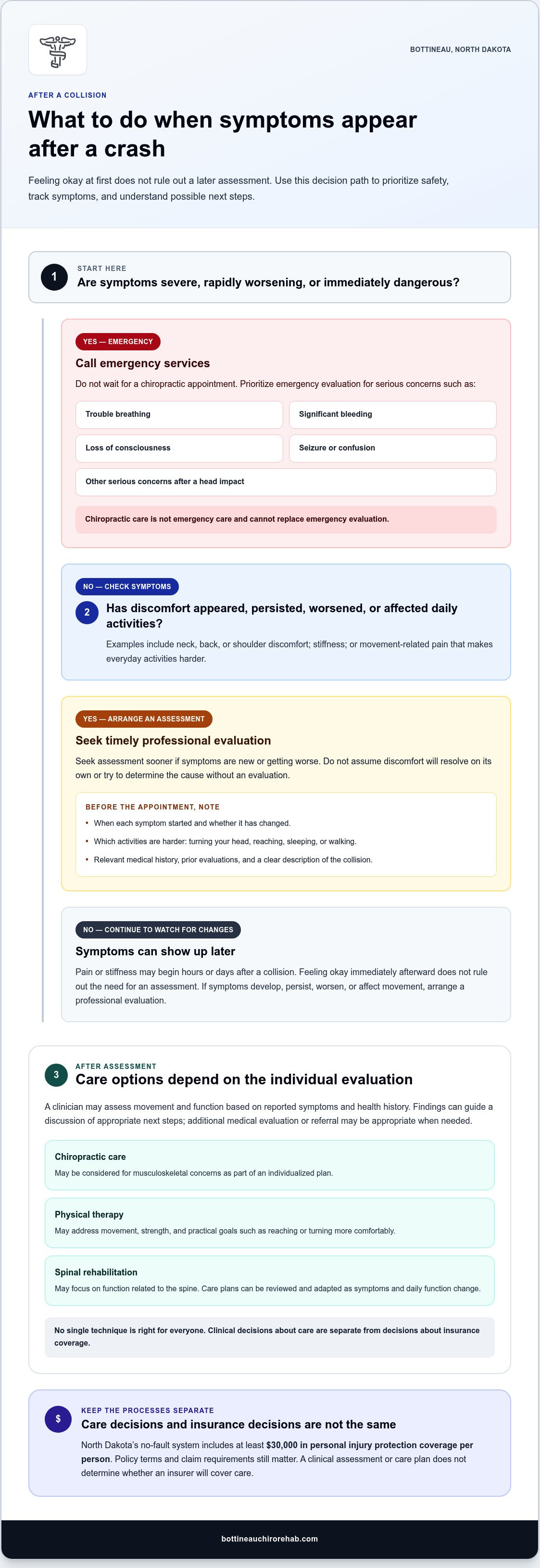
Call emergency services for severe or rapidly worsening symptoms. Don’t wait for a chiropractic appointment if you or someone else has trouble breathing, significant bleeding, loss of consciousness, a seizure, confusion, or other serious concerns after a head impact. Prioritize emergency evaluation if something feels immediately dangerous. Chiropractic care is not emergency care and can’t replace emergency evaluation.
For less urgent concerns, note what you’re experiencing and when it began. Neck soreness after a sudden impact can raise questions about whiplash, but it shouldn’t be self-diagnosed. This neutral overview of understanding whiplash injuries describes the term and related symptoms. A qualified clinician can assess your individual situation.
When should you arrange a non-emergency assessment?
Arrange a timely professional assessment if neck, back, or shoulder discomfort persists, stiffness develops, or movement-related pain interferes with daily activities. Seek assessment sooner if symptoms are new or getting worse. Discomfort can develop after a collision, but don’t assume it will resolve on its own or conclude what caused it without an evaluation.
Write down when each symptom started, whether it has changed, and which activities are harder, such as turning your head, reaching, sleeping, or walking. Share relevant medical history and explain the collision as clearly as you can. This information helps a clinician evaluate your symptoms and discuss appropriate next steps.
A car accident chiropractor Bottineau ND may assess musculoskeletal concerns as part of an individualized care plan. At Boundless Full Body Chiropractic & Rehab, chiropractic care, physical therapy, and spinal rehabilitation are part of the services provided. Following an assessment, these services can be considered to support function and mobility. They don’t replace emergency evaluation, and a clinical plan doesn’t determine insurance coverage.
Boundless also has an auto-injury physical therapy article for Rolla. Wherever you’re coming from, follow the same priorities: address emergencies first, track changing symptoms, and seek an appropriate professional assessment.
How a Bottineau Chiropractor May Support Post-Accident Recovery
After a collision, chiropractic care may be one option for musculoskeletal concerns, but the right next step depends on an individual assessment. A car accident chiropractor in Bottineau can discuss whether chiropractic or rehabilitation care fits your symptoms, function, and health history. No single technique is right for every person or every collision-related concern.
What may happen during an initial assessment?
Be prepared to describe how the collision happened, when discomfort began, how it has changed, and which daily activities are harder now. Share relevant medical history and any care or evaluations you’ve already received. These details help the clinician understand your concerns and determine what assessment may be appropriate.
An examination may include observing movement and function, guided by your reported symptoms and health history. The findings inform a discussion of possible next steps, but an assessment doesn’t guarantee a particular diagnosis. If symptoms or findings suggest that additional medical evaluation is needed, referral may be appropriate.
How can rehabilitation fit into a recovery plan?
When appropriate, physical therapy may address movement, strength, and practical goals, such as improving comfort with reaching or turning. Spinal rehabilitation can focus on function related to the spine. Full-body adjustments or extremity care may also be considered if they fit the assessment. These options aren’t a substitute for emergency care or other medical evaluation when needed, and they can’t be assumed to address every injury.
Care should respond to the person, not just the crash. Progress reviews give the clinician an opportunity to discuss changes in symptoms and daily function, then adapt the plan when needed. Share what feels easier, what remains difficult, and whether new concerns have appeared. Chiropractic and rehabilitation planning is a clinical decision; it doesn’t determine whether an insurer will cover care.
For current information about auto insurance requirements, consult the North Dakota no-fault insurance laws from the North Dakota Insurance Department. Keep policy and claim questions separate from clinical discussions so each can be addressed through the appropriate process.
Boundless Full Body Chiropractic & Rehab provides chiropractic care, physical therapy, and spinal rehabilitation in Bottineau. Explore Boundless chiropractic and rehabilitation care as you consider next steps that align with your assessment and recovery goals.
North Dakota No-Fault Insurance and Chiropractic Care: What to Check
Insurance questions can add stress after a crash. In North Dakota, no-fault insurance generally means your own policy may provide initial benefits for covered injury-related expenses, regardless of who caused the collision. The state requires a minimum of $30,000 per person in personal injury protection (PIP) coverage, according to the North Dakota Insurance Department’s auto insurance guidance.
That state minimum doesn’t tell you exactly what your policy will pay or whether a specific service will be reimbursed. Coverage, limits, exclusions, and claim procedures depend on current law and the terms of your policy. An insurer makes claim decisions; a clinician makes care decisions. Neither decision guarantees the other. This is general information, not legal advice about an individual claim.
What does no-fault insurance mean for an injury claim?
No-fault coverage is intended to provide certain benefits through your own insurance without first resolving fault. PIP may apply to eligible expenses, but don’t assume every appointment or treatment is automatically covered. A care plan from a car accident chiropractor in Bottineau, ND, reflects an assessment of your health needs. It doesn’t establish insurance eligibility or guarantee claim approval.
Which insurance and treatment details should you document?
Review your policy and ask your insurer which benefits and claim steps may apply. Keep a clear record of the collision date, when symptoms began, how they change, appointments, and relevant communications with the insurer. Save copies of submitted forms and records, and note whom you spoke with and when. Clinical records can document symptoms, assessment, and care, but they don’t guarantee reimbursement or acceptance of a claim.
| Keep the details separate | What to check or record |
|---|---|
| With your insurer | Ask which policy benefits may apply, what claim process to follow, and what documentation is requested. Record the answers and any deadlines provided. |
| For the clinic | Share the collision date, symptom timeline, relevant health history, and how discomfort affects daily activities. Ask what the assessment and proposed care involve. |
| In your own records | Keep policy and claim correspondence, appointment details, submitted documents, and notes about symptom changes in one place. |
Keep clinical planning and insurance questions moving in parallel. Clear records make it easier to explain what changed after the crash, while your insurer can clarify how your specific policy handles benefits and claims.
A Practical Bottineau Checklist for Care and Insurance After a Crash
After a collision, handle safety first, then organize care and insurance details. Keeping those tracks separate helps you share useful information without treating a clinical recommendation as a promise of coverage. Use this checklist to prepare for a care appointment and insurer conversation in Bottineau.
- 1. Address immediate danger. If anyone has severe or rapidly worsening symptoms, trouble breathing, significant bleeding, or loss of consciousness, call emergency services. Don’t delay urgent evaluation to gather paperwork or arrange a routine appointment.
- 2. Write a short symptom timeline. Note when each symptom began, which areas are affected, whether it has changed, and what movements or daily tasks are difficult. Add relevant prior conditions and current concerns.
- 3. Gather available records. Bring collision details, relevant medical information, and insurance or claim correspondence to a non-emergency appointment. If something isn’t available, don’t postpone urgent care to find it.
- 4. Keep clinical and coverage questions distinct. Ask the clinician about assessment, possible care options, goals, and how progress will be reviewed. Ask your insurer about policy benefits, claim steps, and required documentation.
- 5. Save and update your records. Keep copies of communications and submitted documents. Add appointment dates and changes in symptoms so your notes stay clear and current.
What information should you bring to an appointment?
Be ready to explain what happened and how you’ve felt since. Include symptom onset, affected areas, movement limits, relevant medical history, and the activities that are harder now. Ask what the assessment involves, what goals the proposed care is meant to address, and how the plan may be reviewed if your symptoms or function change. A car accident chiropractor Bottineau ND can assess musculoskeletal concerns and discuss care based on your individual needs.
What should you ask about your no-fault claim?
Ask your insurer which policy terms and benefits may apply, what claim procedures to follow, and which records it needs. Write down the answers, keep copies of messages and documents, and use the insurer’s stated submission process. The clinic’s records can document assessment and care, but they don’t decide coverage or guarantee reimbursement.
Boundless Full Body Chiropractic & Rehab provides chiropractic care, physical therapy, and spinal rehabilitation in Bottineau. For an assessment-led discussion of your recovery needs, connect with Boundless about post-crash care.
Start Your Bottineau Car Accident Recovery Plan with Boundless
After a crash, it can be hard to know which type of care fits your symptoms. Boundless Full Body Chiropractic & Rehab provides chiropractic care, physical therapy, and spinal rehabilitation in Bottineau. An assessment helps connect your concerns and everyday goals with appropriate next steps. Care is individualized. An appointment can address clinical questions, but it can’t determine insurance coverage or guarantee a particular result.
What care options can Boundless discuss after assessment?
Depending on your needs and assessment, the conversation may include full-body adjustments or extremity care. These are chiropractic services, not automatic recommendations for every person after a collision. Physical therapy or spinal rehabilitation may also be considered when appropriate to support movement, function, and goals such as returning to comfortable daily activities.
The aim is to make a plan that reflects your symptoms, health history, and priorities. Share which movements or tasks are difficult and what you hope to work toward. The clinician can explain the options being considered and how progress may be reviewed. For broader context on the practice’s chiropractic approach, explore its full-body chiropractic adjustment guide.
How can you take the next step in Bottineau?
If you have ongoing discomfort and want it assessed, a non-emergency appointment can help you discuss your symptoms and possible care options. Bring your symptom timeline and relevant health information. Keep insurance questions separate: your care plan is based on clinical assessment, while coverage decisions depend on your policy and insurer.
Urgent symptoms come first. If you’re experiencing severe or rapidly worsening symptoms, difficulty breathing, significant bleeding, or loss of consciousness, seek emergency evaluation and call emergency services. Chiropractic care is not emergency care and does not replace it.
If you’re ready to discuss your symptoms and recovery goals with a car accident chiropractor Bottineau ND, schedule a visit with Boundless.
Take the Next Step Toward Recovery
After a collision, put safety first and seek emergency evaluation for urgent symptoms. For ongoing pain or stiffness, a professional assessment can help clarify what care may fit your needs. Chiropractic care, physical therapy, and spinal rehabilitation may support an individualized recovery plan, while insurance coverage depends on your policy and insurer’s decisions.
If you’re looking for a car accident chiropractor Bottineau ND, Boundless Full Body Chiropractic & Rehab provides chiropractic care, physical therapy, and spinal rehabilitation in Bottineau. Boundless serves patients from Bottineau and nearby communities, including Rugby, Rolla, Rollette, Dunseith, St. John, Sherwood, Mohall, Willow City, Lake Metigoshi, Belcourt, Kenmare, Minot, and Velva. Bring your symptom notes and questions to help make your care discussion focused and useful.
Schedule a visit with Boundless to discuss your symptoms and goals. One clear next step can help you move forward with confidence.
Frequently Asked Questions
Is North Dakota a no-fault state for car accident injuries?
Yes. North Dakota is a no-fault state, so your own auto insurance generally provides initial benefits for eligible injury expenses, regardless of who caused the crash. The state requires at least $30,000 per person in personal injury protection (PIP) coverage. That minimum doesn’t explain every policy’s limits, exclusions, or claim steps, so review your policy and ask your insurer how its terms apply to your situation.
Can I see a chiropractor after a car accident in Bottineau?
Yes. You can arrange a non-emergency assessment for musculoskeletal symptoms after a crash. Boundless Full Body Chiropractic & Rehab provides chiropractic care, physical therapy, and spinal rehabilitation in Bottineau. Its local service area includes Rugby, Rolla, Rollette, Dunseith, St. John, Sherwood, Mohall, Willow City, Lake Metigoshi, Belcourt, Kenmare, Minot, and Velva. Seek emergency evaluation first for severe or urgent symptoms.
Does no-fault insurance cover chiropractic care in North Dakota?
It may, depending on your policy, the care involved, and your insurer’s claim decision. North Dakota requires minimum PIP coverage, but that doesn’t mean every chiropractic service is automatically covered or that a claim will be approved. Ask your insurer which benefits may apply, what documentation it needs, and how to submit it. A clinician’s care plan addresses clinical needs, not insurance eligibility.
How soon should I see a chiropractor after a car accident?
Arrange a professional assessment promptly if new or worsening pain, stiffness, or movement difficulty develops after a crash. There isn’t one timeframe that fits everyone. If symptoms are severe or urgent, call emergency services or seek emergency evaluation rather than waiting for a chiropractic appointment. For non-emergency concerns, note when symptoms began and how they affect daily activities, then share that information during an assessment.
What should I bring to a car accident chiropractor appointment?
Bring a concise timeline of your symptoms, including when they began, which areas are affected, and what movements or daily tasks feel difficult. Share relevant medical history and any information about previous evaluations or care. Collision details and available insurance or claim records can also help provide context. Don’t delay urgent medical attention to gather paperwork, and remember that clinical records don’t determine insurance coverage.
Can neck or back pain start days after a car accident?
Yes. Neck or back discomfort and stiffness may not be noticeable immediately after a collision and can develop later. New or worsening symptoms deserve timely professional assessment; symptoms alone can’t identify the cause or diagnose an injury. Keep track of when discomfort appears and how it changes. Seek emergency evaluation for severe symptoms, breathing difficulty, significant bleeding, or loss of consciousness.
Will seeing a chiropractor guarantee my car accident claim is approved?
No. Seeing a chiropractor doesn’t guarantee claim approval or reimbursement. A clinician evaluates your symptoms and discusses care based on your health needs. Your insurer separately reviews coverage and claim documentation under your policy and applicable rules. Keep copies of appointment information, clinical records, and insurer communications, and follow the insurer’s stated submission process. Ask the insurer about benefits and documentation requirements for your claim.


