

What if the first step toward a stiff, painful shoulder isn’t pushing it harder, but finding out what’s limiting it? If dressing, reaching, or sleeping has become difficult, you may be wondering whether it’s frozen shoulder and whether movement will make things worse. Frozen shoulder physical therapy Bottineau patients consider should begin with a careful assessment, not guesswork.
Frozen shoulder often involves gradually increasing pain and a loss of shoulder movement. Other shoulder problems can cause similar symptoms, so an assessment matters. A useful plan takes your discomfort seriously and matches movement to what you can tolerate.
This article explains what frozen shoulder is, how a physical therapist may assess your movement and daily needs, and what an individualized plan may involve. That can include exercises and mobility work adjusted to your symptoms and functional goals. At Boundless Full Body Chiropractic & Rehab in Bottineau, physical therapy offers a practical local next step for shoulder mobility concerns, with care guided by assessment rather than a one-size-fits-all routine. Recovery can vary, but understanding the process can help you make informed decisions.
Key Takeaways
- Shoulder stiffness can disrupt everyday routines, but stiffness alone doesn’t confirm frozen shoulder.
- An assessment can help distinguish adhesive capsulitis from other causes of shoulder pain and limited movement.
- Physical therapy should adapt movement to your symptoms and response, rather than rely on forceful exercises.
- Prepare to discuss your daily limitations, questions, relevant medical information, and current medications.
- Frozen shoulder physical therapy Bottineau patients can explore at Boundless Full Body Chiropractic & Rehab starts with functional goals and an individualized assessment.
Frozen Shoulder in Bottineau: Recognize the Stiffness and Understand the Problem
Shoulder stiffness can make ordinary tasks feel like a daily test. Reaching to a high shelf, pulling on a shirt, fastening clothing behind your back, or finding a comfortable sleeping position may all become harder. If pain and limited movement are disrupting your routine, it’s reasonable to seek answers and consider whether frozen shoulder physical therapy Bottineau may be a useful next step.
Frozen shoulder, or adhesive capsulitis, is a condition involving pain and stiffness that restrict shoulder movement. It affects the capsule surrounding the glenohumeral joint, the ball-and-socket joint where the upper arm meets the shoulder blade. This description explains the condition, but it doesn’t mean every stiff or painful shoulder is frozen shoulder. A plain-language overview of adhesive capsulitis can offer background; an assessment is needed to understand your symptoms.
What does frozen shoulder feel like?
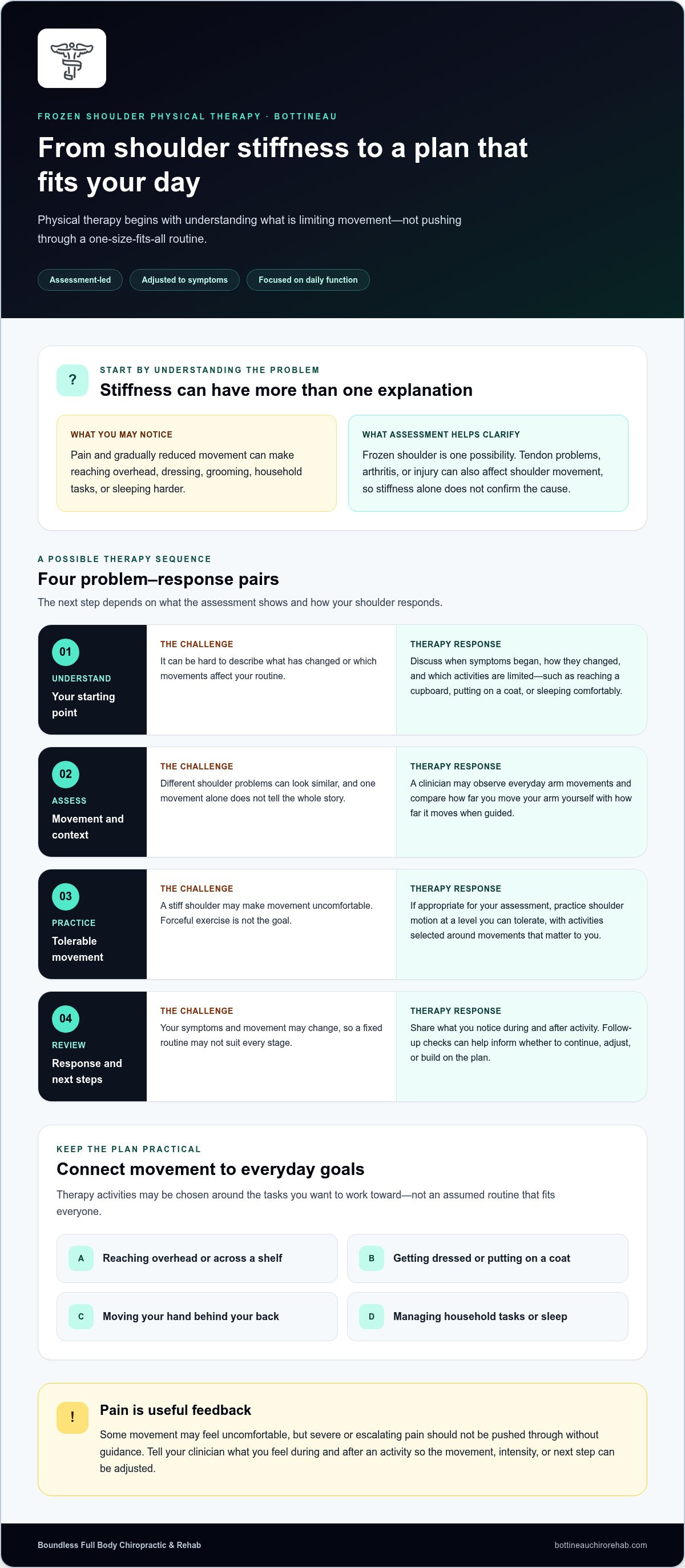
People commonly describe shoulder pain alongside a gradual loss of movement. You might find it harder to lift your arm overhead, reach across a shelf, or move your hand behind your back. The restriction can interfere with dressing, grooming, household tasks, and sleep. Symptoms vary, and these examples aren’t enough to confirm a diagnosis. Note which movements have changed and how those changes affect your day.
Why can shoulder stiffness have more than one explanation?
The shoulder can become painful or restricted for different reasons, including problems involving tendons, arthritis, or an injury. These conditions can affect movement in similar ways, so identifying the cause matters before settling on a plan. A clinician may compare how far you can move your arm yourself with how far it moves when guided. That distinction can inform an assessment, but it’s only one part of the picture.
Arrange a professional assessment if pain or stiffness persists, worsens, or limits daily activity. Bring clear examples: “I can’t reach the top shelf” gives useful context, along with when symptoms began and which movements are difficult. For people considering frozen shoulder physical therapy Bottineau, an assessment can help clarify the problem and guide an individualized approach to shoulder mobility.
How Physical Therapy for Frozen Shoulder Builds Mobility Step by Step
Physical therapy starts by understanding what your shoulder can do now, which movements are difficult, and what you want to get back to doing. The assessment informs the next steps. It doesn’t lock you into a fixed routine or promise a particular pace of recovery.
What may happen during an initial physical therapy assessment?
Your clinician may ask when symptoms began, how they’ve changed, and which activities are limited. Share practical details, such as difficulty reaching a cupboard, putting on a coat, or sleeping comfortably, as well as relevant health information. The clinician may observe how you move your arm and shoulder during everyday motions, then use those findings to discuss appropriate next steps.
The clinician may also consider the broader symptom picture. For general medical background, Mayo Clinic explains the symptoms and causes of frozen shoulder. A reference article can help you prepare questions, but it can’t determine what’s causing your individual symptoms. An assessment connects what you report with what can be observed.
How can a therapy plan address movement and function?
If guided movement or exercise suits your assessment, your plan may focus on practicing shoulder motion at a tolerable level. The aim is practical: work toward movements that matter in your routine, such as reaching, getting dressed, or handling tasks at home. Your clinician can adapt activities based on your symptoms and how your shoulder responds, rather than assuming one exercise or pace fits everyone.
Therapy should progress according to your tolerance and the daily movements you need to regain. A care plan may include a starting set of activities, guidance on how to perform them, and follow-up checks to see how your pain, movement, or function has changed. Reassessment helps inform whether to continue, adjust, or build on the plan. This is a possible sequence, not a guaranteed result or timeline.
Ask questions if a movement feels unclear or difficult to manage. Explain what you notice during and after activity; that feedback helps guide decisions about the next step. If you’re exploring frozen shoulder physical therapy Bottineau, learn about physical therapy in Bottineau as a local place to discuss shoulder mobility and functional goals.
Frozen Shoulder Therapy vs. Waiting: Address Pain, Pace, and Expectations
Concerned that therapy means forcing a stiff shoulder through painful stretches? It shouldn’t. Physical therapy should be guided by your symptoms, movement, and goals. The American Academy of Orthopaedic Surgeons discusses physical therapy among the treatment approaches for frozen shoulder, but the right plan and pace depend on the individual.
Does physical therapy for frozen shoulder have to be painful?
Some movement may feel uncomfortable, especially when the shoulder is stiff, but severe or escalating pain isn’t something to push through without guidance. Tell your clinician what you feel during and after an activity. That feedback can help them adjust the movement, intensity, or next step. If an exercise causes a sharp increase in symptoms, speak up rather than forcing repetitions.
Can frozen shoulder improve without physical therapy?
Symptoms and recovery experiences vary, so no single timeline or approach fits everyone. Some people may choose to monitor symptoms; others may seek an assessment to better understand their limitations and discuss options. An assessment can help guide an appropriate next step, but general information can’t determine what’s best for your shoulder. Consider clinical attention if symptoms worsen or substantially interfere with daily activities.
Think of the decision as a conversation about goals and uncertainties, not a choice with one guaranteed answer:
| Option | Possible focus | Useful discussion |
|---|---|---|
| Seek assessment | Understand movement limits and daily impact | What activities are difficult, and what movements feel tolerable? |
| Wait and monitor | Notice how symptoms change over time | What changes would prompt an assessment? |
| Discuss physical therapy | Consider guided movement suited to your needs | How can the plan be adjusted if symptoms increase? |
Neither waiting nor therapy guarantees a specific outcome. Assessment gives you a clearer basis for deciding what to do next, especially if dressing, reaching, or sleep are increasingly affected. If you’re considering frozen shoulder physical therapy Bottineau, share your concerns about pain and your everyday goals so they can inform the discussion and pace of care.
Preparing for Frozen Shoulder Physical Therapy in Bottineau
A little preparation can make your first physical therapy conversation more useful. You don’t need to diagnose the problem yourself or arrive with a perfect record. Bring a clear picture of what has changed, what feels difficult, and what you hope to do more comfortably. Recommendations and goals will depend on your individual assessment.
What should you note before your appointment?
Jot down a few details before you come in. A short list is enough:
- Symptom history: When did the pain or stiffness begin? Has it changed over time?
- Movement limits: Which motions or tasks are difficult, such as reaching overhead, putting on a coat, or moving your arm behind your back?
- Relevant health information: Note any shoulder injuries, diagnoses, or previous shoulder care that may help explain your history.
- Questions and goals: Ask about pain during movement, exercises, and activities you’d like to return to or manage more easily.
Bring relevant medical information and an up-to-date medication list when applicable. These details provide useful context for the conversation. You can also note what seems to aggravate or ease your symptoms, without repeatedly testing your shoulder.
How can you make the first conversation more useful?
Describe an ordinary day. Tell the clinician which tasks take longer, which movements you avoid, and how your shoulder affects work, home routines, or rest. Be direct about your concerns. If you’re worried that exercise may hurt, say so; discussing that concern can help shape guidance around your symptoms and function.
Avoid starting aggressive stretches based only on online advice. An exercise that’s appropriate for one person may not suit another, and pushing through strong or worsening discomfort can make it harder to judge your response. Let an assessment guide which movements make sense for you.
For broader context on local care, read this physical therapy guide for Bottineau. If shoulder stiffness is limiting your routine, connect with Boundless about physical therapy and bring your notes and questions to start a focused discussion.
Frozen Shoulder Therapy at Boundless in Bottineau
Shoulder stiffness can make daily tasks harder, and the next step should be based on what’s actually limiting your movement. Boundless Full Body Chiropractic & Rehab offers physical therapy and rehabilitation in Bottineau as part of its broader musculoskeletal care. For people considering frozen shoulder physical therapy Bottineau, care can begin with discussing symptoms, movement limits, and the activities that matter most to you.
How does local physical therapy fit into your next step?
A clinician can consider your shoulder symptoms alongside their effect on your routine, then use an individual assessment to guide recommendations. You might describe difficulty reaching into a cupboard, getting dressed, or moving your arm comfortably during work or home activities. These details connect the assessment to functional goals, rather than focusing only on the shoulder in isolation.
Boundless also provides chiropractic care and spinal rehabilitation. These services reflect a broader focus on musculoskeletal concerns, but your shoulder care should be guided by your individual needs and assessment. There isn’t a single plan that suits everyone. Recommendations and progression depend on your symptoms, movement, and response to care.
For related educational context, read about extremity adjusting and care beyond the spine. This can help explain how musculoskeletal care may address areas beyond the back, while an assessment remains the starting point for decisions about your shoulder.
What should a realistic care decision be based on?
Consider how your shoulder is affecting everyday function and whether your symptoms are changing. Are more tasks becoming difficult? Is movement limited in ways that affect sleep, work, or self-care? Share these observations with a clinician. Together, you can discuss suitable options and how any recommended movement should progress. No article can determine the right approach for your specific symptoms or promise a particular result or timeline.
Physical therapy in Bottineau offers a practical way to discuss shoulder mobility concerns and functional goals with a clinician. Bring your questions and describe what you want to manage more comfortably. Explore physical therapy at Boundless in Bottineau and take a clear next step toward understanding your options.
Take a Practical Next Step Toward Easier Movement
Shoulder stiffness can have more than one cause, so a careful assessment is an important starting point. A physical therapy plan may include guided movement shaped around your symptoms, daily activities, and response to care. Progress can vary. The goal is to make informed decisions about movement and function, not to force a particular pace.
If you’re considering frozen shoulder physical therapy Bottineau, Boundless Full Body Chiropractic & Rehab offers physical therapy and spinal rehabilitation in Bottineau, alongside chiropractic care and extremity adjustments. Share which movements are difficult and what you’d like to manage more comfortably. Those details can guide a discussion about appropriate next steps.
Boundless serves people in Bottineau and nearby communities, including Rugby, Rolla, Rollette, Dunseith, St. John, Sherwood, Mohall, Willow City, Lake Metigoshi, Belcourt, Kenmare, Minot, and Velva. New patients can begin with the $47 introductory special. Explore physical therapy and rehabilitation at Boundless and take a clear first step toward understanding your shoulder mobility concerns.
Frequently Asked Questions
What is frozen shoulder?
Frozen shoulder, also called adhesive capsulitis, involves shoulder pain and restricted movement. It may make reaching, dressing, or sleeping more difficult. These symptoms can also have other causes, so they don’t confirm frozen shoulder on their own. A clinician can review your health history and assess your shoulder to help guide next steps. Seek professional guidance if stiffness persists or interferes with everyday activities.
Can physical therapy help frozen shoulder?
Physical therapy may help address shoulder movement and daily function, but the right approach depends on an individual assessment. A clinician can discuss suitable movement or exercises and adjust guidance based on your symptoms and response. For frozen shoulder physical therapy Bottineau patients, goals may relate to specific tasks that have become difficult. Results and recovery timelines vary, so share changes in pain or function with your clinician.
Is physical therapy for frozen shoulder painful?
Some movement may feel uncomfortable, but therapy should be guided by your symptoms and clinical assessment. Don’t force your shoulder through severe or escalating pain. Tell your clinician what you feel during activity and how your shoulder responds afterward. This feedback can help inform appropriate guidance. The aim is to work toward function with an individualized approach, not to promise a pain-free session or instant improvement.
How long does physical therapy for frozen shoulder take?
There’s no single timeline that applies to everyone. Symptoms, health history, shoulder movement, daily demands, and response to care can all affect progress. An assessment can help establish relevant goals and a plan to review over time. Be cautious of guaranteed recovery dates. Ask your clinician how progress will be assessed and what changes in your symptoms or function might lead to an adjustment.
Should I keep moving my shoulder if it hurts?
Don’t assume you should push through every painful movement. Suitable activity depends on your symptoms and assessment. Avoid aggressive stretches based only on online advice, especially if pain is worsening or your function is declining. A clinician can discuss movement that fits your situation. Seek prompt medical attention for severe, sudden, or concerning symptoms rather than trying to manage them with exercises alone.
Where can I get frozen shoulder physical therapy in Bottineau?
Boundless Full Body Chiropractic & Rehab offers physical therapy and rehabilitation in Bottineau, North Dakota. Care can start with a discussion of your shoulder symptoms, movement limits, and everyday goals. An assessment helps guide appropriate next steps without assuming a particular diagnosis or recovery timeline. Visit the Boundless website to explore physical therapy and local care.
Can frozen shoulder symptoms be caused by something else?
Yes. Conditions other than frozen shoulder can cause shoulder pain and reduced movement, so symptoms alone don’t establish a diagnosis. A clinician can review your history and assess your shoulder movement to help clarify what may be contributing. This matters because suitable care depends on the underlying issue and your needs. Seek an evaluation if symptoms persist, worsen, or restrict daily activities.


