

A crash can leave more questions than visible damage. If you’re considering a car accident chiropractor in Dunseith, chiropractic care may be one option for assessing discomfort and changes in movement after a collision. The right next step depends on your symptoms and the care you need.
It’s understandable to want clear answers when soreness or stiffness interferes with daily activities. A professional evaluation can help determine whether chiropractic care is appropriate and which areas may need attention. Care should be based on your situation, not a one-size-fits-all plan.
Learn what a chiropractor may assess after a crash, what to consider when deciding on care, and how adjustments and rehabilitation may support recovery. You’ll also find guidance on when medical evaluation is the more appropriate next step.
Key Takeaways
- A chiropractor can assess how a crash may affect your back, joints, and movement, then consider whether chiropractic care fits your needs.
- Back-related concerns are a common reason people seek chiropractic care, according to the National Center for Biotechnology Information.
- Understanding the areas affected and how your symptoms limit daily activities can help guide the care plan.
- Learn how chiropractic adjustments and rehabilitation may support recovery, and when another medical assessment may be more appropriate.
Car accident chiropractor Dunseith
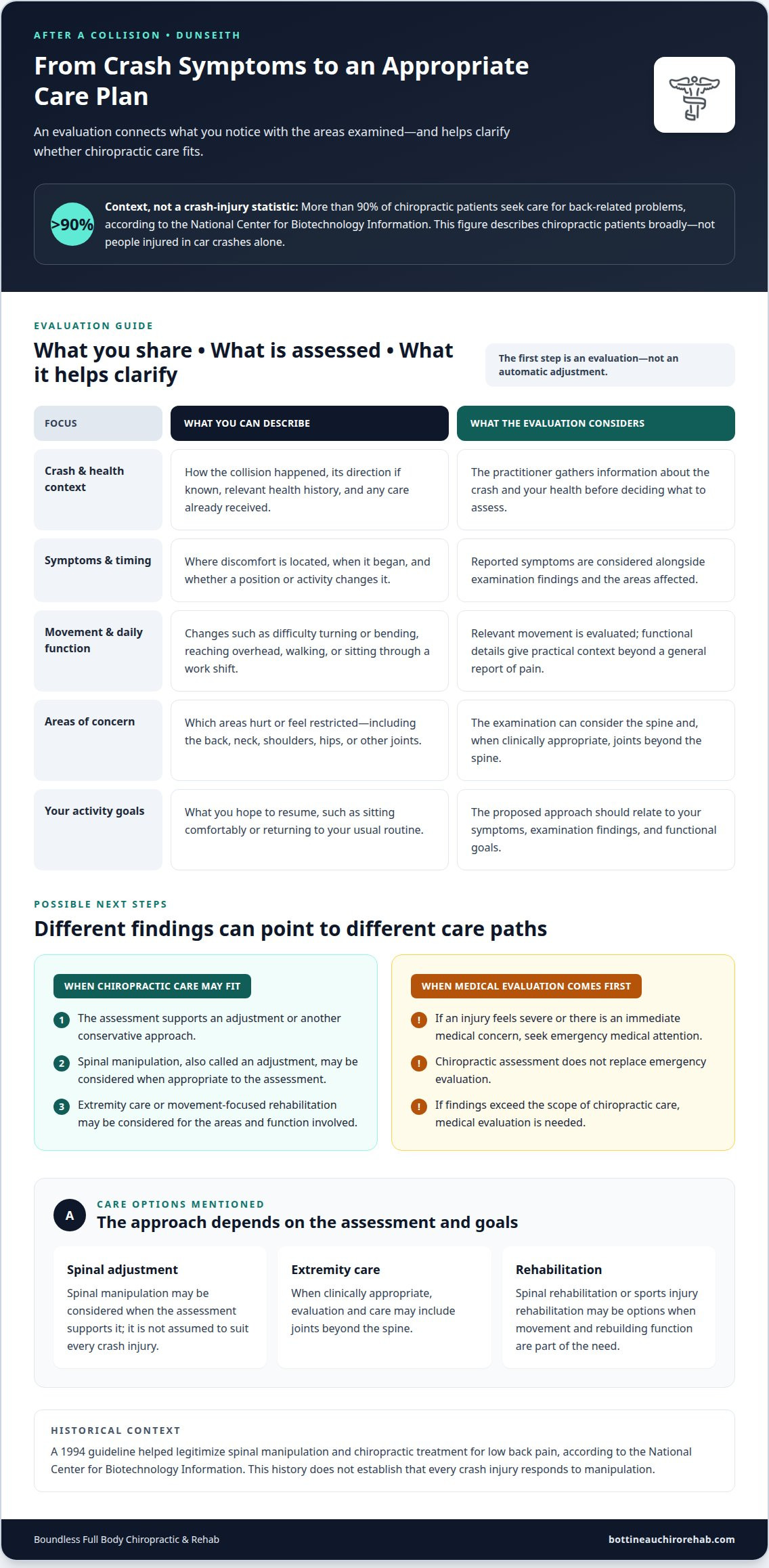
After a collision near Dunseith, a chiropractor can assess back discomfort, stiffness, and changes in movement. The first step is an evaluation, not an automatic adjustment. The practitioner asks how the crash happened, where symptoms are located, and which activities feel different. For example, someone may report neck or back soreness after a rear-end impact, while another person may have difficulty turning or bending. These details help guide the next step.
Back concerns are common among people seeking chiropractic care. More than 90% of chiropractic patients seek care for back-related problems, according to the National Center for Biotechnology Information. That figure describes chiropractic patients broadly, not people injured in car crashes alone. After an accident, a practitioner considers the specific complaint, its effect on movement, and whether chiropractic care appears appropriate. The assessment should connect the person’s reported symptoms with the areas examined.
A useful first appointment follows a clear sequence. The practitioner gathers information about the crash and your health, discusses symptoms, and evaluates relevant movement. They may ask when the discomfort began and whether a position or activity changes it. Trouble sitting through a work shift, for example, offers practical context beyond a general report of back pain. The discussion and examination help determine whether an adjustment or another approach is suitable.
Chiropractic treatment may include spinal manipulation, also called an adjustment, when the assessment supports it. A 1994 guideline helped legitimize spinal manipulation and chiropractic treatment for low back pain, according to the National Center for Biotechnology Information. That historical context does not establish that every crash injury responds to manipulation. The practitioner’s decision should reflect the person’s symptoms, examination findings, and goals, such as moving more comfortably during ordinary tasks.
Assessment should account for areas beyond the spine. A crash may affect movement in the shoulders, hips, or other joints. Explain which activities have changed, such as reaching overhead, walking, or turning to check a blind spot. When clinically appropriate, extremity evaluation can help clarify the issue and whether chiropractic care fits. A care plan should address your concerns rather than assume every collision causes the same symptoms.
Know when chiropractic care is not the first step. If an injury feels severe or there is an immediate medical concern, seek emergency medical attention rather than waiting for a chiropractic appointment. Chiropractic assessment does not replace emergency evaluation. If findings exceed the scope of chiropractic care, medical evaluation is needed. For non-emergency discomfort, a professional can assess whether an adjustment or another conservative approach is appropriate.
During the visit, describe the collision and your symptoms as clearly as you can. Explain the direction of impact if you know it, which areas hurt, and which movements feel restricted. Mention relevant health history and any care you have already received. These details help the practitioner make an informed assessment. You can also describe what you hope to resume, such as sitting comfortably or returning to your usual routine.
For someone traveling from Dunseith, the practical question is whether symptoms and examination findings point toward chiropractic care or a different medical need. Ask how the proposed approach relates to the areas assessed and how progress will be reviewed. Treatment should be explained in terms you understand. An evaluation provides a starting point, while the care plan should stay connected to your symptoms and functional goals.
Boundless Full Body Chiropractic & Rehab
Boundless Full Body Chiropractic & Rehab provides care in Bottineau, North Dakota, for discomfort or restricted movement after a crash. An evaluation can help determine whether full-body adjustments or spinal rehabilitation fit your symptoms and goals. When clinically appropriate, Extremity Care can address concerns involving joints beyond the spine. Care should match the affected areas and the activities you want to resume.
For movement-focused recovery, Sports Injury Rehab offers another option when rebuilding function is part of your needs. Share what feels difficult, such as turning, reaching, or getting through daily activities, so the discussion can focus on your concerns. If you’re ready to talk through your next step, contact Boundless Full Body Chiropractic & Rehab.
Take the Next Step Toward Clearer Care
Make your next step about function, not just discomfort. Consider which movements or daily activities you want to discuss, then bring those priorities to an evaluation. A car accident chiropractor in Dunseith can use your concerns to focus an assessment and explain how care may relate to your needs. Ask what the proposed approach is intended to address and how progress will be reviewed. Clear expectations help you take part in decisions about your care.
Boundless Full Body Chiropractic & Rehab offers Full-Body Adjustments, Extremity Adjusting, and Sports Injury Rehab. These options address different care needs, so the appropriate approach depends on your assessment and goals. Take the next step when you’re ready to discuss care after a crash. Contact Boundless Full Body Chiropractic & Rehab to start the conversation and move forward with greater clarity.


