

You may not need to give up a hobby to protect your back. A safer way to approach getting back to hobbies without pain is to scale the activity to what feels tolerable, take breaks, and stop when discomfort becomes too strong. For active hobbies, try a 30-minute session at a time and use a timer to help pace yourself.
Back pain can make getting back to hobbies without pain feel uncertain, especially when sitting, lifting, or repeated movement brings on symptoms. This guide explains practical ways to adjust your posture and activity, restart gentle movement gradually, and choose hobbies that suit your comfort level. It also covers warning signs that need emergency care: sudden, severe back pain with numbness, leg weakness, or loss of bladder or bowel control. Use these steps to ease back into activities you enjoy without pushing through pain.
Key Takeaways
- For seated hobbies, change position regularly, keep your screen at or just below eye level, and consider a rolled towel for lower-back support.
- Choose comfortable adjustments for the activity, such as supportive grips for art tools or kneeling to garden rather than bending from your back.
- Restart movement gradually with low-impact options, and ask a doctor which exercises suit your back and current activity level.
- Get emergency care for sudden, severe back pain accompanied by numbness, leg weakness, or loss of bladder or bowel control.
1. Stretching, breaks, and posture adjustments
Long stretches of sitting while gaming, playing guitar, sewing, or knitting can contribute to discomfort. Break up a hobby session by standing, walking, or changing position. During video games, take regular breaks to rest your back and wrists. When sewing or knitting, pause to stretch your hands and relax your shoulders. These small adjustments reduce sustained strain instead of asking your body to tolerate one fixed posture.
Adjust your setup before you settle in. Keep your computer screen at or just below eye level, with the keyboard and monitor close enough to avoid leaning forward. A rolled towel behind your lower back can provide support while sitting. When reading, change positions instead of holding the same posture for a long time. For art, stretch your hands beforehand; supportive handles or grips may help if your hands or wrists hurt.
How can you adapt equipment, posture, or technique to reduce strain? Support your spine, keep tools within easy reach, and change position before discomfort builds. For physical hobbies such as golf or tennis, warm up and use proper form, since technique affects the strain on your back. Stop if a stretch or movement increases pain rather than forcing it.
How long should you rest between hobby sessions? There isn’t one interval that fits everyone. For an active hobby, try a 30-minute session with a timer, then stop if pain becomes too strong; resume when symptoms have settled and adjust the next session to how your body responds. If driving to a hobby, adjust the seat to support your spine’s natural curve, avoid slumping, and get out to walk around every hour on a long drive.
2. Managing Hobby-Related Back Pain and Emergencies
Returning to a hobby after a break can challenge muscles and joints that aren’t used to its movements. Long periods of sitting, repeated reaching, or lifting supplies can add strain, especially as posture or technique changes with fatigue. Weight lifting with a rounded back can stress the tissues around the spine. Notice which activity brings on symptoms, then reduce its duration or effort instead of pushing through strong pain.
How can you distinguish ordinary soreness from an injury? Soreness alone doesn’t reveal the cause, so notice whether pain gets stronger, limits movement, or returns during the same hobby. Stop when pain becomes too strong, and seek medical advice if symptoms persist or interfere with normal activity. Chronic back pain may need different care depending on its cause and severity.
Organize supplies to reduce repeated bending, twisting, and carrying. Keep frequently used art materials or tools within easy reach, and split heavy loads into smaller trips. For gardening, bring only the tools you need for the task at hand. If getting up from the floor is difficult, use a stable chair or work surface and discuss the problem with a healthcare professional.
Treatment depends on what triggers the pain and how it affects daily movement. Physical therapy can be a useful option for chronic back pain, depending on its cause and severity. An appointment with a healthcare professional can help assess persistent symptoms and guide appropriate care. Seek emergency care for sudden, severe back pain with numbness, leg weakness, or loss of bladder or bowel control. For hobby-related symptoms that disrupt activity, activity-focused recovery support can help you work toward returning at a manageable pace.
3. Gradually restarting low-impact exercise
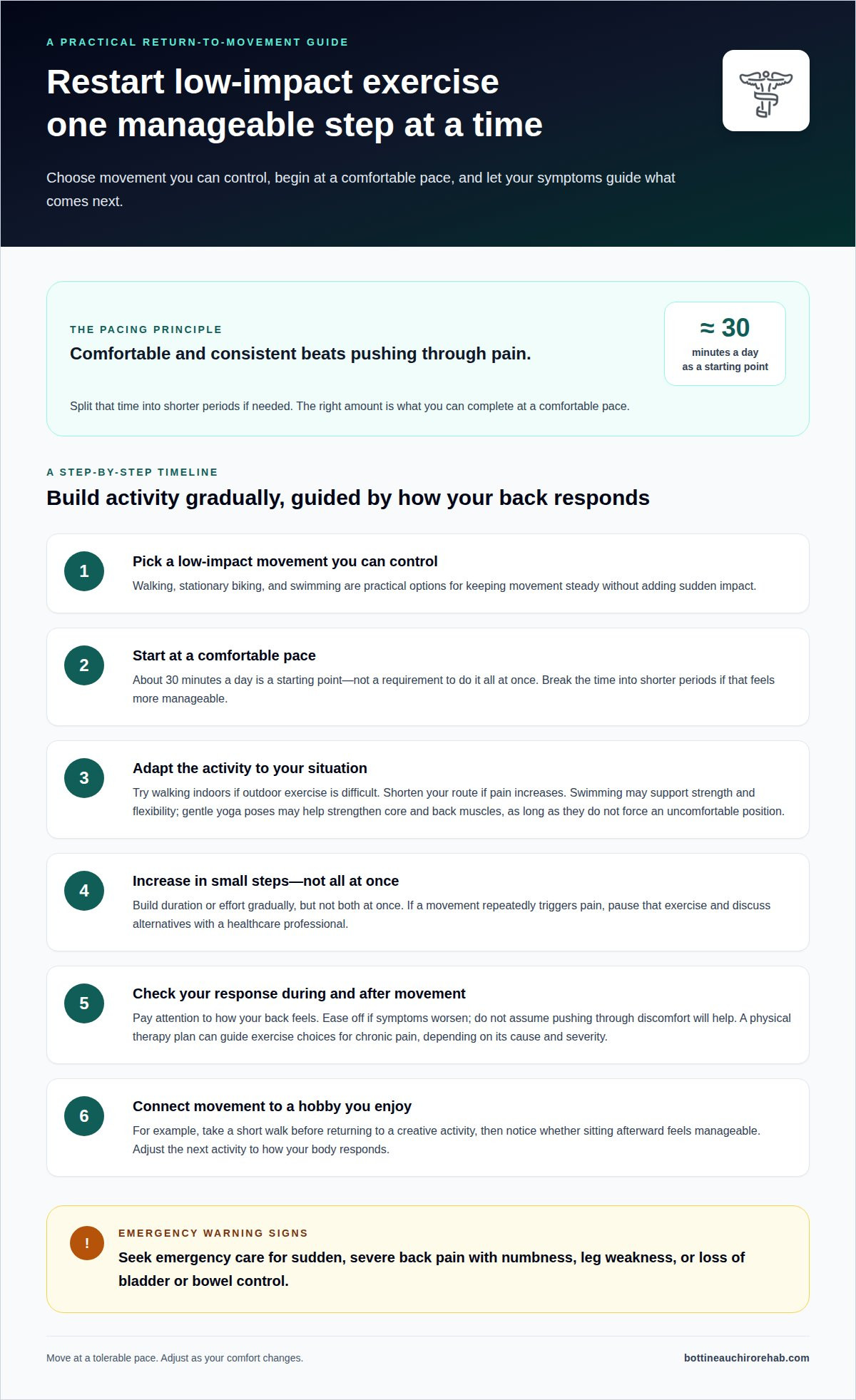
After inactivity, begin with low-impact movement that lets you control pace and effort. Walking, stationary biking, and swimming are practical options because you can keep movement steady without adding sudden impact. About 30 minutes a day is a starting point for returning to exercise, but split that time into shorter periods if needed. The right amount is the amount you can complete at a comfortable pace.
How can you gradually return to a hobby without pain? Start slowly, choose a tolerable movement, and build activity in small steps rather than jumping back into your old routine. If you’ve been inactive with low back pain, ask a doctor which exercises are suitable. Check before using stairs as exercise, too. The right choice depends on your symptoms and how the movement feels.
Try walking indoors if weather or access makes outdoor exercise difficult. Keep a comfortable pace, and shorten your route if pain increases. Swimming is another low-impact option that can support strength and flexibility. Gentle yoga poses may help strengthen core and back muscles, but choose movements that don’t force your body into an uncomfortable position.
Movement can feel challenging, especially when back pain involves a pinched spinal nerve. Don’t assume that pushing through discomfort will help. Pay attention to how your back responds during and after each session, and ease off if symptoms worsen. A physical therapy plan can help guide exercise choices for chronic pain, based on its cause and severity.
Pair exercise with a movement goal that supports your hobby. For example, take a short walk before returning to a creative activity, then notice whether sitting afterward feels manageable. Increase duration or effort gradually, but not both at once. If a movement repeatedly triggers pain, pause that exercise and discuss alternatives with a healthcare professional. Consistent, tolerable activity can help strengthen the spine and make everyday movement easier.
4. Choosing hobbies to suit pain levels
Let your current comfort level guide your hobby. Consider what an activity asks of your back, hips, hands, and joints. Tennis serves can strain the lower back, hips, and legs, while cooking involves light movement and room to adapt. If standing or bending is uncomfortable, modify the task or choose a gentler activity that preserves function without forcing painful movements. A practical way of getting back to hobbies without pain is to choose an activity that suits how you feel now, then adjust it as your comfort changes.
Match your technique to the task. When gardening, kneel or squat instead of repeatedly bending from your back, and avoid demanding yardwork while recovering from back pain. For dancing, keep movements gentle and within a comfortable range. When hiking, arrange backpack contents to distribute weight more evenly. Correct form matters in sports and other physical hobbies. Stop or modify any movement that increases pain instead of trying to push through it.
What low-cost ergonomic or adaptive equipment can make hobbies more comfortable? Try art tools with supportive handles or grips if hand or wrist pain makes standard tools difficult to hold. You can also rearrange existing supplies so frequently used items are within easy reach, reducing repeated reaching and carrying. Choose changes that address the specific strain you notice, rather than buying equipment that doesn’t improve how the activity feels. Practical adjustments can make getting back to hobbies without pain more manageable without a full equipment overhaul.
Use a simple activity check: notice which position feels manageable, which movement triggers discomfort, and how you feel after the activity. If sitting worsens symptoms, alternate seated tasks with light movement. If standing is difficult, try a shorter cooking task at a stable work surface. Take breaks before fatigue changes your technique, and return to the activity in a gentler form when needed. For help adapting movement to your comfort and function, get guidance on returning to activity.
Boundless Full Body Chiropractic & Rehab
Boundless Full Body Chiropractic & Rehab can be a next step when hobby-related back discomfort keeps limiting movement or returning as you resume activities. Its care includes physical therapy and spinal rehab, which may support a gradual return to comfortable movement. For pain connected to sports, Sports Injury Rehab may also fit; Full-Body Adjustments and Extremity Adjusting address other musculoskeletal concerns.
Consider reaching out when pain keeps interfering with a hobby, everyday movement, or your ability to gradually build activity back up. Explain which movements bring on discomfort and how it affects the activity you want to resume. That context can help guide an evaluation and discussion of next steps suited to your needs.
Contact Boundless Full Body Chiropractic & Rehab to discuss a comfortable next step.
Make Your Next Hobby Step Feel Manageable
Choose one activity you miss and define a version that feels possible today. You might set up supplies without starting a full project, practice one gentle part of a movement, or join a hobby group while adapting how you participate. These smaller steps keep your interests in view as you work toward getting back to hobbies without pain.
Notice what makes participation easier and what still limits you. If discomfort continues to disrupt daily movement or keeps returning as you resume an activity, professional guidance can help you consider a path forward that suits your needs. The goal isn’t to rush your return, but to make room for progress at a pace your body can manage.
Contact Boundless Full Body Chiropractic & Rehab to discuss a next step. Your hobbies can remain part of your life as you find a comfortable way to take part again.
Frequently Asked Questions
What can be done about back pain caused by hobbies, and when is it an emergency?
Reduce or pause the movement that triggers pain, then find a gentler way to take part. For persistent back pain, physical therapy may be considered depending on its cause and severity. Sudden, severe back pain with numbness, leg weakness, or loss of bladder or bowel control requires emergency care. Don’t try to manage these symptoms by changing your hobby routine.
How should I pace activity and increase duration or intensity safely?
Build activity in small steps, changing one thing at a time, such as session length, effort, or movement complexity. For example, add a short part of a familiar activity before returning to its most demanding part. Notice how your body responds during and afterward. If symptoms worsen, scale back instead of increasing both time and intensity together.
What warm-ups and stretches help prevent pain for common hobbies?
Warm up with gentle movements suited to the activity, and use proper form for sports such as golf or tennis. Stretching your hands before making art can prepare them for repeated use. No single stretch routine suits every back problem. Ask a healthcare provider which movements are appropriate, especially before trying morning stretches when you have low back pain.
What symptoms mean I should stop and see a doctor or physical therapist?
Stop an activity if pain becomes too strong or makes normal movement difficult. Seek medical advice if discomfort persists, keeps returning with the same task, or interferes with daily activities. Sudden, severe back pain with numbness, leg weakness, or loss of bladder or bowel control is different: seek emergency care rather than waiting for a routine appointment.
Which exercises help build strength and mobility for returning to hobbies?
Walking, stationary biking, and swimming are low-impact options; gentle yoga may help strengthen core and back muscles. Start with movement that feels tolerable and adjust your effort based on your response. Ask a doctor which exercises suit your back, particularly if you’ve been inactive or are considering stairs. Physical therapy can also help guide exercise choices for chronic back pain.


