

Finishing physical therapy doesn’t always mean your body is ready for every activity. Preventing re-injury after physical therapy takes more than waiting for pain to fade: strength, movement control, and tolerance for activity matter too.
It’s understandable to feel ready to return when discomfort improves. But weakness, stiffness, or movement habits linked to the original injury may still need attention. Returning to intense exercise, sports, or heavy lifting too soon can place more demand on healing tissues than they can handle.
This article explains why injuries can return after therapy and how strengthening, balance and coordination work, and sound body mechanics can help reduce risk. You’ll also learn how to maintain progress, build activity gradually, and recognize when returning symptoms need attention. The goal is a steadier transition from recovery to the activities you want to do.
Key Takeaways
- Build strength around the injured area, not just in it, to support more controlled movement as you return to activity.
- Use balance, coordination, and movement practice to address patterns that may place extra strain on your body.
- Keep warm-ups, cool-downs, and suitable maintenance exercises in your routine as activity resumes.
- Notice changes in pain or movement, and adjust your return to activity rather than pushing through new symptoms.
Targeted strengthening for injured and supporting muscles
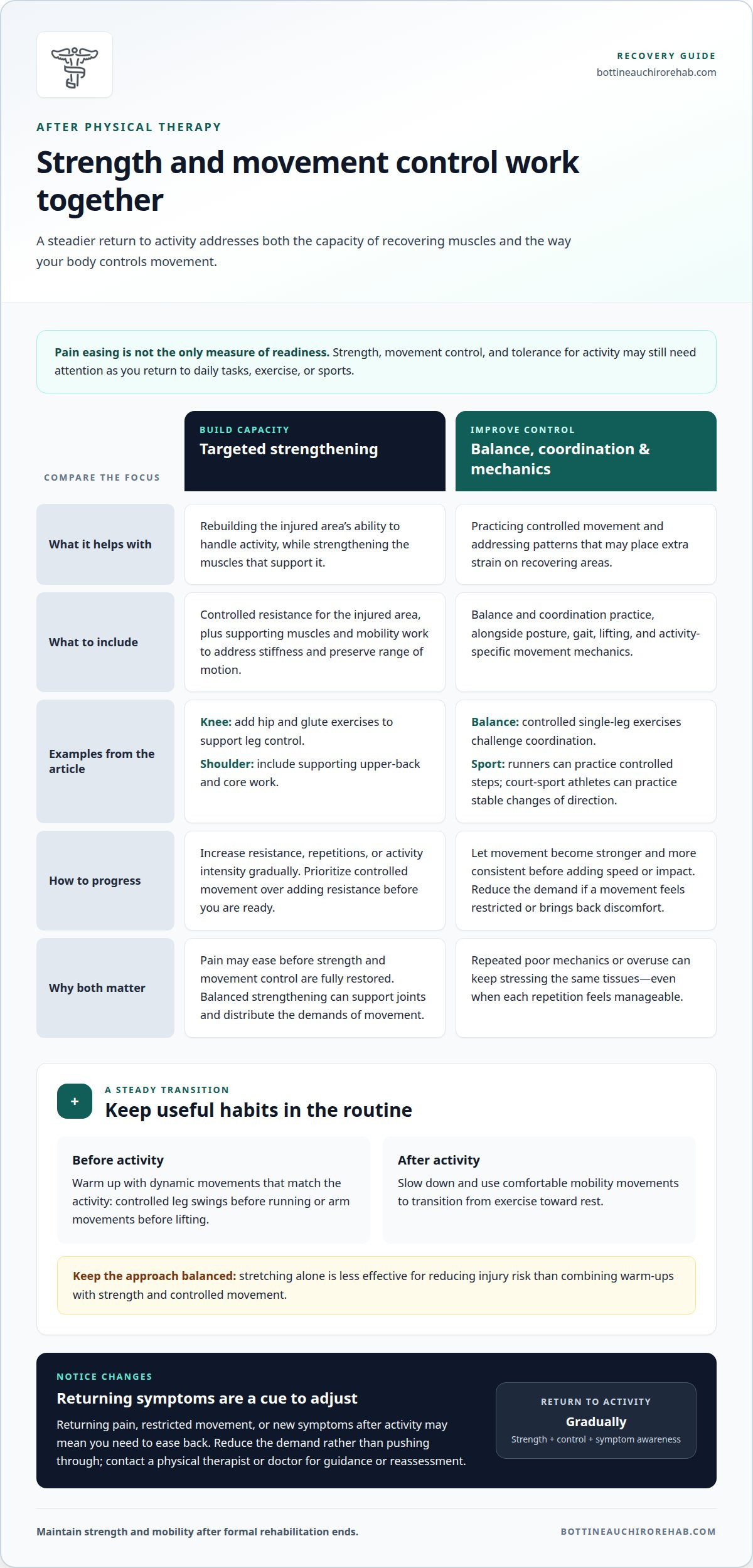
Rebuilding strength after an injury means training both the affected area and the muscles around it. For example, a knee recovery plan may include hip and glute exercises, not just knee movements.
Strengthening Injured Muscles
Strength training uses controlled resistance to rebuild an injured area’s ability to handle activity. This matters because pain may ease before strength and movement control are fully restored. Continuing suitable exercises helps maintain muscle engagement as you return to daily tasks or sports. A personalized plan can match exercises and resistance to your injury, current movement, and activity goals.
Progress gradually. Increasing resistance, repetitions, or activity intensity too quickly can overload tissues that are still adapting. For a shoulder injury, rebuilding strength may involve shoulder movements along with supporting upper-back and core work. Pairing strength exercises with flexibility work can help preserve joint range of motion. If stiffness limits movement, forcing a heavier lift may add strain instead of building useful strength.
Building Support Around Joints
Supporting muscles surround a joint and help control it. Strengthening them can improve joint support and distribute the demands of movement. This matters when an injured area needs to handle everyday tasks or a return to sports. For a knee injury, hip and glute exercises can support leg control; a shoulder plan may build upper-back and core strength.
Muscle imbalances can affect stability, so a balanced program should address both the injured area and its supporting muscles. Progressive resistance gives muscles time to adapt while helping limit strain on joints. The right movements depend on the injury and the activity you’re preparing for, whether lifting, running, or changing direction in sports. Prioritize controlled movement over adding resistance before you’re ready.
Keep strength work in your routine after formal rehabilitation ends. Exercises similar to those used during recovery can help maintain muscle engagement and stamina. Combine them with mobility work to address stiffness and support flexibility. Ongoing exercise prepares muscles and joints for activity demands, rather than treating pain relief as the only sign of progress.
Balance, coordination, and body mechanics
Balance, coordination, and sound mechanics help your body control movement during daily tasks and sports. Exercises can retrain movement patterns that place extra strain on recovering areas.
Returning pain, restricted movement, or new symptoms after activity can signal that you’re doing too much. For example, difficulty moving your shoulder as usual is a reason to ease back and seek professional guidance.
Posture, Gait, and Lifting
Posture, gait, and lifting mechanics describe how you hold your body, walk, and move loads. Improving them matters because poor form can concentrate stress on a joint or muscle. During a lift, controlled movement and balanced positioning can help reduce unnecessary strain. A physical therapist can assess gait and everyday movements, then use exercises to address specific weaknesses or imbalances.
Retraining Movement Mechanics
Movement retraining teaches safer, more controlled ways to perform motions linked to an injury. This matters because repeated poor mechanics or overuse can keep stressing the same tissues. A runner, for instance, may practice controlled steps, while an athlete returning to court sports may work on stable changes of direction. Coordination exercises build movement control, not just temporary relief.
Balance work can help you stay stable when a surface shifts or you change direction. Controlled single-leg exercises, for example, challenge coordination and make uneven control easier to notice. A physical therapist can progress the task as movement becomes stronger and more consistent. The aim is to restore function without rushing into speed or impact.
For athletes returning to play, sports injury rehab can address sport-related movement and technique as part of recovery. Repeating the same motion with poor form can overload muscles and joints, even when each repetition feels manageable. Guided practice helps identify movement patterns that need adjustment before activity demands rise.
Use sound mechanics beyond exercise, too. Notice how you walk, reach, and lift during everyday tasks. If a movement brings back discomfort or feels restricted, reduce the demand instead of forcing through it. Adjusting your technique early can help prevent a small movement problem from becoming a larger setback.
What Should You Do After Physical Therapy?
After therapy, maintain mobility and strength while returning to activity gradually. Warm-ups, cool-downs, and paying attention to symptoms can help guide your progress.
Warm-Up and Cool-Down Routines
A warm-up prepares your body for activity, while a cool-down helps you transition afterward. Both matter because starting intense exercise without preparation can strain muscles. Use dynamic movements that match the activity, such as controlled leg swings before running or arm movements before lifting. Stretching alone is less effective for reducing injury risk than combining warm-ups with strength and controlled movement.
After activity, slow down and use comfortable mobility movements. A cool-down can help your body transition from exercise toward rest. Physical therapy can help identify warm-ups, cool-downs, and stretches suited to your injury. Ask which movements fit your condition, especially if a stretch increases discomfort or stiffness.
Responding to Pain After Rehab
Pain that returns, restricted movement, or new symptoms after rehabilitation are reasons to contact a physical therapist or doctor. These changes may mean you need to adjust your activity or have the area reassessed. If a familiar movement becomes painful again, for example, reduce the demand instead of pushing through it.
Follow-up physical therapy visits should reflect your progress and activity demands. Periodic reassessments can help identify problems early, especially as you resume sports, lifting, or other challenging movements. Home exercises help maintain progress between visits. A transition plan may include maintenance exercises two to four times per week, with the routine adjusted as strength and mobility improve.
Braces, Supports, and Taping
Braces, supports, or taping may offer temporary stability, but they don’t replace rehabilitation. Strength, movement control, and suitable exercise remain important when returning to activity. For example, a support may help during a specific task, while targeted exercises address the strength and coordination needed for it.
Use supportive gear as one part of a broader recovery plan, not as a reason to increase activity quickly. A physical therapist can help determine how support fits alongside exercise, mobility work, and a gradual return to movement.
Why re-injury can happen after physical therapy
Less pain is an early sign of recovery, not proof that your body is ready for every activity. Later markers include tolerance for load and control of movement. Walking without discomfort, for example, doesn’t automatically prepare an injured ankle for repeated jumps. Sports or heavy lifting may demand more than your rehabilitation has prepared you to handle.
Returning to full activity too soon can overload tissues that are still adapting. Tendons and ligaments may continue remodeling for up to 12 months after an injury. That ongoing healing helps explain why a previously comfortable movement can become difficult when intensity or volume rises sharply. Build resilience by matching activity demands to your current strength and control.
Stopping the exercise program can also leave progress unsupported. Pain may return 4-8 weeks after stopping rehabilitation exercises. Muscle weakness, stiffness, or old movement patterns can develop again when training stops. For example, a runner who skips strength work may return to distance running without maintaining support for repeated impact.
The first 3-6 months after discharge are an important transition period, since most re-injuries occur within that window. Keep suitable exercises in your routine and increase training demands gradually. A sudden jump in lifting weight, running distance, or practice intensity can challenge healing tissues before they are ready. Rest between intense workouts gives muscles and joints time to recover.
Recurring strain can affect movement patterns, limit activity, and reduce quality of life. Treat returning pain, reduced range of motion, or new weakness as a reason to adjust activity and seek professional guidance. The useful question isn’t only whether pain has faded. It’s whether your body can repeat the movements your next activity requires. For help rebuilding function after a sports injury, explore sports injury rehabilitation.
Boundless Full Body Chiropractic & Rehab: Sports Injury Rehab
Boundless Full Body Chiropractic & Rehab provides Sports Injury Rehab and Physical Therapy in Bottineau, North Dakota, to support recovery and movement. Consider reaching out if symptoms return, activity remains difficult, or you need support planning a gradual return to sports.
Care can focus on restoring function and mobility after a sports injury. Physical therapy can also address strength and movement needs as you work toward daily activities or sport-specific demands. The right focus depends on your injury and the movements you’re preparing to resume.
For support with your recovery in Bottineau, contact Boundless Full Body Chiropractic & Rehab.
Keep Building Toward Confident Movement
Make your next step fit the movements you want to return to. Notice which activities feel difficult, what symptoms appear, and what you hope to do next. That information can guide a practical conversation about your progress and the support you need.
A thoughtful approach to preventing re-injury after physical therapy keeps your goals in view while respecting your body’s current abilities. Boundless Full Body Chiropractic & Rehab offers Sports Injury Rehab, Extremity Adjusting, and Full-Body Adjustments in Bottineau, North Dakota. These services may help address sports injuries and other musculoskeletal concerns.
Take the next step at a pace that feels manageable. Contact Boundless Full Body Chiropractic & Rehab to discuss your recovery needs. Keep moving forward with a clear plan and renewed confidence.
Frequently Asked Questions
How Long Should You Keep Doing PT Exercises?
Continue exercises as long as they support your strength, mobility, or activity goals. The right routine can change as your daily demands change. Someone returning to hiking, for example, may keep exercises that support balance on uneven ground. Ask your physical therapist which movements to keep, adjust, or stop as your activities and abilities evolve.
How can I prevent re-injury after physical therapy?
Maintain the habits that helped restore function, and avoid sudden increases in activity. Keep home exercises in your routine, prepare your body before demanding tasks, and notice changes in how you move. If a familiar workout starts causing restricted movement or returning pain, for example, scale back and seek professional guidance instead of pushing through.
How long should I continue exercises after physical therapy ends?
There’s no single end date for maintenance exercises. Continue appropriate movements as part of your fitness routine, especially when they help you manage work, recreation, or sports demands. Your exercise choices may shift as your goals change. If a movement becomes uncomfortable or no longer suits your needs, a physical therapist can help reassess your routine.
What exercises help maintain strength and flexibility after rehab?
A balanced maintenance routine can include strengthening, mobility, and balance exercises suited to your needs. Controlled bodyweight movements can build strength, while gentle joint movements support mobility. Choose exercises based on your injury and the activities you want to maintain. A physical therapist can tailor your home program and clarify which stretches fit your condition.
How should I safely return to sports, work, or exercise after physical therapy?
Build back toward the specific demands of your activity instead of restarting at full intensity. Returning to warehouse work may require practicing repeated lifting, while tennis involves quick changes of direction. Increase workload gradually, allow recovery time between demanding sessions, and pay attention to movement quality. Discuss the demands of your activities with your physical therapist before your final appointment.
How can I modify activities and improve ergonomics to prevent re-injury?
Change a task or setup that repeatedly aggravates the same area. At a desk, adjust your position and take movement breaks; when lifting, keep loads manageable and use controlled technique. Vary repetitive tasks when possible, and avoid working through restricted movement. A physical therapist can offer guidance on workplace and daily-activity ergonomics suited to your injury and routine.


