

The equipment matters, but the rehabilitation plan matters more. Understanding what a spinal rehab program involves means seeing how care is matched to a person’s injury, symptoms, and goals. Treatment may address pain and spasticity while building strength, mobility, transfer ability, and wheelchair skills.
It’s natural to wonder which technology may be part of care. Programs can use mobility aids, adaptive devices, and therapeutic equipment alongside guided movement and hands-on techniques. The right mix depends on what support and practice can help with daily activities and safe movement.
This guide explains how specialists shape rehabilitation, what mobility and wheelchair training can include, and how support may continue after discharge. It also covers how care can address everyday tasks and function, so you can understand what to expect and which questions to ask as a recovery plan takes shape.
Key Takeaways
- Learn how specialists tailor rehabilitation to a person’s injury, symptoms, and goals, including the role of therapeutic equipment and adaptive devices.
- See how guided practice can build bed mobility, transfers, and wheelchair skills for everyday movement.
- Understand how rehabilitation may continue after discharge through therapy sessions and a personalized home exercise plan.
- Explore the range of spinal conditions and recovery needs that rehabilitation can address, and where Boundless Full Body Chiropractic & Rehab’s spinal rehab fits.
Rehabilitation specialists and multidisciplinary care
A spinal cord injury can affect movement, sensation, breathing, bladder and bowel function, skin, and pain. In inpatient rehabilitation, a coordinated team sets goals based on the injury and the person’s daily needs. A physical therapist works on movement and strength, while an occupational therapist practices self-care tasks such as dressing or preparing food. Nurses support daily care, and rehabilitation physicians coordinate medical needs and progress.
Bladder and bowel routines are part of the plan because changes in spinal cord function can affect both. Nurses help establish and monitor routines, while the team addresses skin protection through regular checks and pressure relief. For example, a therapist may adjust positioning during a session to reduce prolonged pressure on one area.
Respiratory care depends on breathing ability and medical needs. For someone using a ventilator, clinicians may assess breathing and coordinate a ventilator-weaning plan. Spasticity, or involuntary muscle tightening, and pain can also affect movement and participation. The team tracks how symptoms affect transfers, exercise, and self-care, then adjusts treatment goals and activities.
How much does spinal rehabilitation cost in the United States, and does insurance cover it? Costs depend on the care setting and services, while coverage depends on the person’s plan and benefits. Review the plan terms for the proposed setting and treatment.
How long does a program last, and how often are sessions? Inpatient spinal cord injury rehabilitation typically lasts 2-5 weeks. In U.S. inpatient rehabilitation facilities, patients generally must be able to participate in at least 3 hours of therapy per day, 5 days per week, or 15 hours over 7 days.
What are the benefits and risks? Rehabilitation can build function, movement, and self-care skills. The team monitors symptoms and adapts activities to the person’s response. How do patients qualify and get a referral? An evaluation considers diagnosis, needs, and ability to participate. The referral process depends on the care setting and insurance plan. What should patients look for in a provider? Look for coordinated rehabilitation that addresses medical needs, daily activities, movement, and safe participation.
Bed mobility, transfers, and wheelchair skills
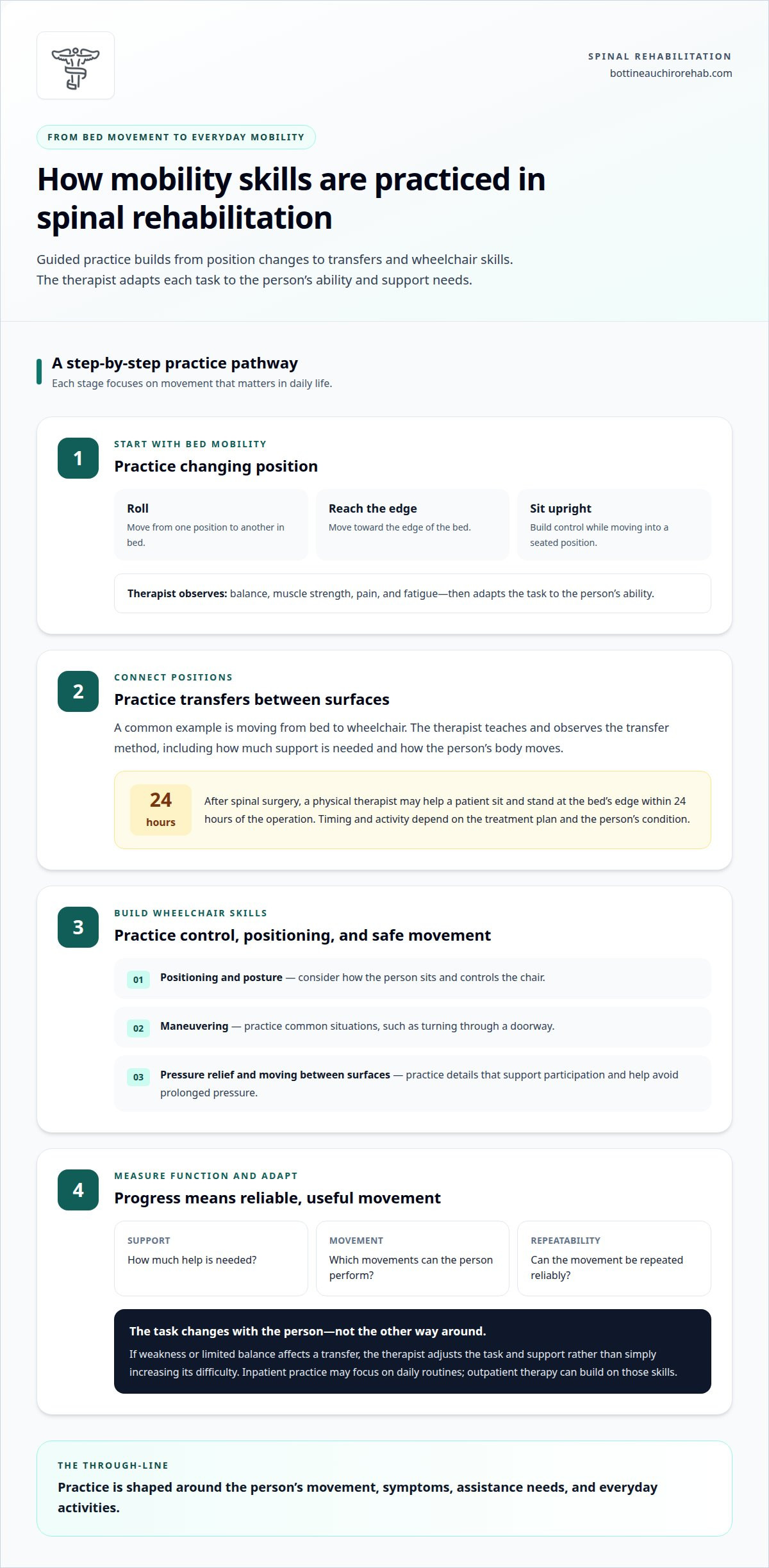
Rehabilitation turns basic position changes into practiced mobility skills. A therapist may guide someone through rolling, moving to the edge of the bed, and sitting upright. Each step builds control and shows where assistance or equipment is needed. The therapist observes balance, muscle strength, pain, and fatigue, then adapts the task to the person’s ability. This makes bed mobility relevant to everyday activities, not just exercise.
Transfers connect one position or surface to another, such as moving from bed to wheelchair. A therapist teaches and observes the transfer method, including how much support the person needs and how their body moves. After spinal surgery, a physical therapist may help a patient sit and stand at the bed’s edge within 24 hours of the operation. Timing and activity depend on the treatment plan and the person’s condition.
Wheelchair practice can include positioning, maneuvering, and moving between surfaces. A therapist can assess whether the person controls the chair safely and manages common situations, such as turning through a doorway. Training also addresses pressure relief and posture. These details matter because discomfort or prolonged pressure can interfere with participation and increase the risk of complications.
Progress is measured through function: how much help a person needs, which movements they can perform, and whether they can repeat them reliably. Inpatient care may focus on supported practice during daily routines. Outpatient treatment can build on those skills in further therapy sessions. If weakness or limited balance affects a transfer, the therapist adjusts the task and support rather than simply increasing its difficulty.
For guided support focused on movement and function, explore spinal rehabilitation care. A therapist can help shape practice around the activities that matter in daily life.
Continuing rehabilitation after discharge
Discharge changes the setting, not the need for rehabilitation. The next plan depends on surgery type, activity level, age, underlying health, and personal goals. A physical therapist can use these factors to select exercises and track functional outcomes. Progress might mean steadier walking, improved balance, or greater control during daily tasks. Staying active within the care plan helps maintain practice between appointments.
Inpatient care takes place during a hospital or rehabilitation stay, with therapy delivered in that setting. Outpatient rehabilitation happens after someone returns home or leaves another facility, with therapy sessions scheduled outside an inpatient stay. The transition can connect the two: inpatient goals inform outpatient exercises, while the outpatient therapist adapts practice to current function and recovery needs.
Home exercise can extend the work done during therapy. Many post-surgical programs include home exercises alongside supervised sessions. The American Academy of Orthopedic Surgeons recommends exercising for 10 to 30 minutes, one to three times daily, to build strength. A therapist matches the exercise plan to the procedure and recovery stage, rather than treating the recommendation as a universal prescription.
For example, a therapist may build a walking program around safe movement and gradually increasing activity. Balance and coordination exercises can support steadier movement and reduce fall risk. The therapist can adjust exercises if pain, stiffness, or fatigue affects performance. The aim is useful, repeatable practice that supports daily function.
Recovery progresses at an individual pace. Small functional gains after spinal cord injury may continue for up to one to two years. Psychological rehabilitation can help patients stay engaged and adapt to life after injury. Social rehabilitation can address barriers to mobility outside the home, including transportation, work, and social responsibilities. These supports connect exercise and therapy with meaningful outcomes in daily life.
What conditions are treated in spinal rehabilitation?
Spinal rehabilitation can address changes in movement and sensation after spinal cord injury. The plan depends on the diagnosis, the person’s well-being, and their functional needs. An incomplete spinal cord injury means some movement or sensation remains below the injury. Function may differ between the body’s two sides. A complete spinal cord injury can involve loss of movement and sensation below the level of injury. These distinctions help shape rehabilitation goals.
Rehabilitation can also support people managing the effects of spinal injuries, including weakness, reduced mobility, and difficulty with daily activities. Treatment may focus on strengthening available movement, practicing self-care, or finding ways to perform tasks despite lasting limitations. Prolonged immobility can contribute to muscle atrophy, general weakness, and impaired internal-organ function. Rehabilitation may include movement practice and general strengthening suited to the person’s condition.
People recovering after spinal surgery may also need rehabilitation. Their plan varies with surgery type, activity level, age, underlying health, and other individual factors. A therapist may help restore mobility and balance through guided exercises. Rehabilitation after spinal surgery can be tailored to support movement around the surgical site as recovery progresses. Exercise timing and activity follow the surgical recovery plan.
Symptoms such as pain and spasticity can affect participation in movement and daily tasks. Rehabilitation can address these barriers while developing strength, coordination, or alternative ways to complete activities. The treatment focus follows the person’s condition and goals rather than applying one routine to every spinal diagnosis. For someone with limited hand or leg movement, the team may prioritize practical function and safe mobility.
For care focused on spinal recovery and function, explore spinal rehabilitation options and identify goals that matter in your daily routine.
Boundless Full Body Chiropractic & Rehab: Spinal rehab
Boundless Full Body Chiropractic & Rehab provides spinal rehab in Bottineau, North Dakota, for people seeking professional support with spinal recovery, movement, and function. It may be a next step when pain or mobility limitations affect daily activities and you want rehabilitation-focused care. The right goals depend on your symptoms and needs, so start by describing the movements and tasks that feel difficult. Related services include Sports Injury Rehab, Extremity Adjusting, and Full-Body Adjustments when they fit your concerns.
Spinal rehabilitation complements the broader recovery process. For complex spinal cord injuries or care needs beyond outpatient rehabilitation, follow the treatment plan established by your medical team. To discuss spinal rehab and your movement goals, contact Boundless Full Body Chiropractic & Rehab.
Take the Next Step Toward Meaningful Progress
Understanding what a spinal rehab program involves can help you approach the next stage with clearer priorities. Recovery is not only about repeating exercises. It also means identifying which parts of daily life you want to make more manageable, then discussing those goals with a rehabilitation professional. A useful starting point is to name the movement or routine you most want to work toward, such as getting around your home or returning to a valued activity.
Your needs may shift as your function changes. Keep the conversation focused on what is difficult now, what matters most, and how care can support safe progress. A clear discussion can connect your priorities with support suited to your current stage of recovery.
If spinal rehab feels like a relevant next step, contact Boundless Full Body Chiropractic & Rehab to discuss your goals and care needs. Take the next step at a pace that feels manageable, and keep moving toward the daily life you want.
Frequently Asked Questions
What kind of technology is included in rehabilitation?
Rehabilitation technology can include mobility aids, adaptive devices, and equipment matched to a person’s movement goals. For walking practice, locomotor training uses a harness above a treadmill while therapists move the patient’s legs to simulate walking. Equipment supports specific tasks, such as supported stepping or positioning, rather than forming a standard package for everyone.
What therapies are included in the program?
Therapies can include physical therapy, occupational therapy, kinesiotherapy, electrotherapy, and massage. Occupational therapy can use special devices and techniques to practice dressing, cooking, or returning to school or work. Physical therapy can focus on movement and strength. What a spinal rehab program involves depends on the person’s diagnosis, well-being, and goals, so plans can differ.
What is a spinal rehabilitation program?
A spinal rehabilitation program coordinates care to address changes in function after spinal injury or surgery. For readers asking what a spinal rehab program involves, it connects therapeutic activities with practical goals, such as managing daily routines or improving mobility. Care may take place during a hospital admission, in inpatient rehabilitation, or through outpatient therapy after returning home, depending on needs and recovery stage.
What therapies and exercises are included in spinal rehab?
Exercises can target strength, balance, coordination, and mobility, while therapy can include guided movement and occupational activities. For example, a therapist may work on a task that combines standing balance with reaching for an object. Nerve glide exercises and walking practice are also used in some care plans. Activities depend on diagnosis, treatment stage, and functional goals.
What happens during a typical spinal rehab session?
A session centers on current goals and the activities being practiced. The therapist can observe movement during a task, such as reaching from a seated position, then adjust the support or exercise. Progress is assessed through functional performance and how the activity relates to daily needs. The session plan can change as abilities, symptoms, or recovery priorities change.
Who is on a spinal rehabilitation care team?
A care team can include rehabilitation physicians, physical therapists, occupational therapists, and nurses. Each role offers a different perspective: therapists address movement and daily tasks, while nurses support ongoing care needs. A physician coordinates medical aspects of rehabilitation. The team’s composition depends on the person’s needs. For example, breathing concerns can shape which clinical support is involved.


